
 Asep Darmawan
Welcome to Carbon Brief’s DeBriefed, your essential guide to the week’s most significant developments in the world of climate change. From historic heatwaves crippling Europe to landmark shifts in energy policy, we provide the context you need to understand our rapidly warming world.
The Main Facts: A Continent Under Pressure
This week, Europe found itself at the epicenter of a climate emergency, as a series of unprecedented heatwaves shattered temperature records across the United Kingdom, France, Spain, and Switzerland. As thermometers surged, the human and infrastructural costs became impossible to ignore.
The UK experienced its hottest June day on record twice within the same week, with the mercury hitting a staggering 36.7C in Somerset. The severity of the heat prompted a public health crisis; the London Ambulance Service reported its busiest day for life-threatening emergencies, highlighting the fragility of urban infrastructure in the face of extreme, climate-driven heat.
Simultaneously, France endured a grueling heatwave, with temperatures in the south-western commune of Pissos reaching 44.3C. Spain, too, recorded its highest daily average temperature for the month of June, while Switzerland saw the mercury climb to 37C in multiple locations. These are not merely anomalies; they are manifestations of a new, volatile climate reality.
Rapid attribution analysis from the World Weather Attribution service has confirmed what many observers feared: the current heatwave is the most severe and widespread in European history, directly exacerbated by fossil-fuel-driven climate change. The scientific consensus is becoming increasingly blunt—these events are no longer "freak" occurrences, but the predictable outcomes of a planet warming due to human activity.
Chronology of a Heatwave
- Monday: Initial warnings issued for Southern Europe as heat domes begin to migrate from the Iberian Peninsula toward the heart of the continent.
- Tuesday: France enters a state of high alert as 54 departments are placed under "vigilance rouge."
- Wednesday: Pissos, France, records a blistering 44.3C. Scientific consensus begins to coalesce around the role of anthropogenic climate change.
- Thursday: The UK shatters its June heat records. London emergency services reach a breaking point. Switzerland records its hottest June day in history.
- Friday: Post-event analysis begins, with experts from the World Weather Attribution service confirming the "impossible" nature of this heatwave without the influence of global warming.
Supporting Data: The Rising Toll
The human impact of these heatwaves is often measured in hospital admissions, but the ecological and agricultural toll is equally staggering. A recent investigation by Carbon Brief into the summer of 2025 revealed that 6,600 animals perished in transit due to heat across England and Wales—a figure that has doubled in just one year. This serves as a grim indicator of how our food supply chains and livestock management systems are failing to adapt to a world where "record-breaking" is the new annual baseline.

Furthermore, the "Project Cosmos" database—a newly launched, comprehensive repository of over 1.8 million climate research documents—provides a sobering look at the trajectory of our climate knowledge. While our understanding of the crisis has deepened exponentially since the first IPCC report in 1990, the research community faces significant structural challenges. Our preliminary analysis of the "Cosmos 500" reveals that only 4% of the world’s most cited climate scientists hail from the Global South, and only 10% are women. This lack of diversity in the intellectual leadership of climate science threatens to leave critical blind spots in our global response strategy.
Official Responses and the "Electrification" Mandate
Amidst the sweltering conditions in London for Climate Action Week, the discourse shifted from crisis management to systemic solutions. UN Secretary-General António Guterres, speaking to a packed auditorium, delivered a pointed message: "London is not just calling, it’s cooking."
Guterres utilized his platform to launch a "global call to action on methane," a potent greenhouse gas that requires immediate, targeted intervention. He also issued a direct challenge to the burgeoning artificial intelligence sector, demanding that AI firms disclose their full environmental impact and commit to sourcing 100% of their electricity from renewables by 2030.
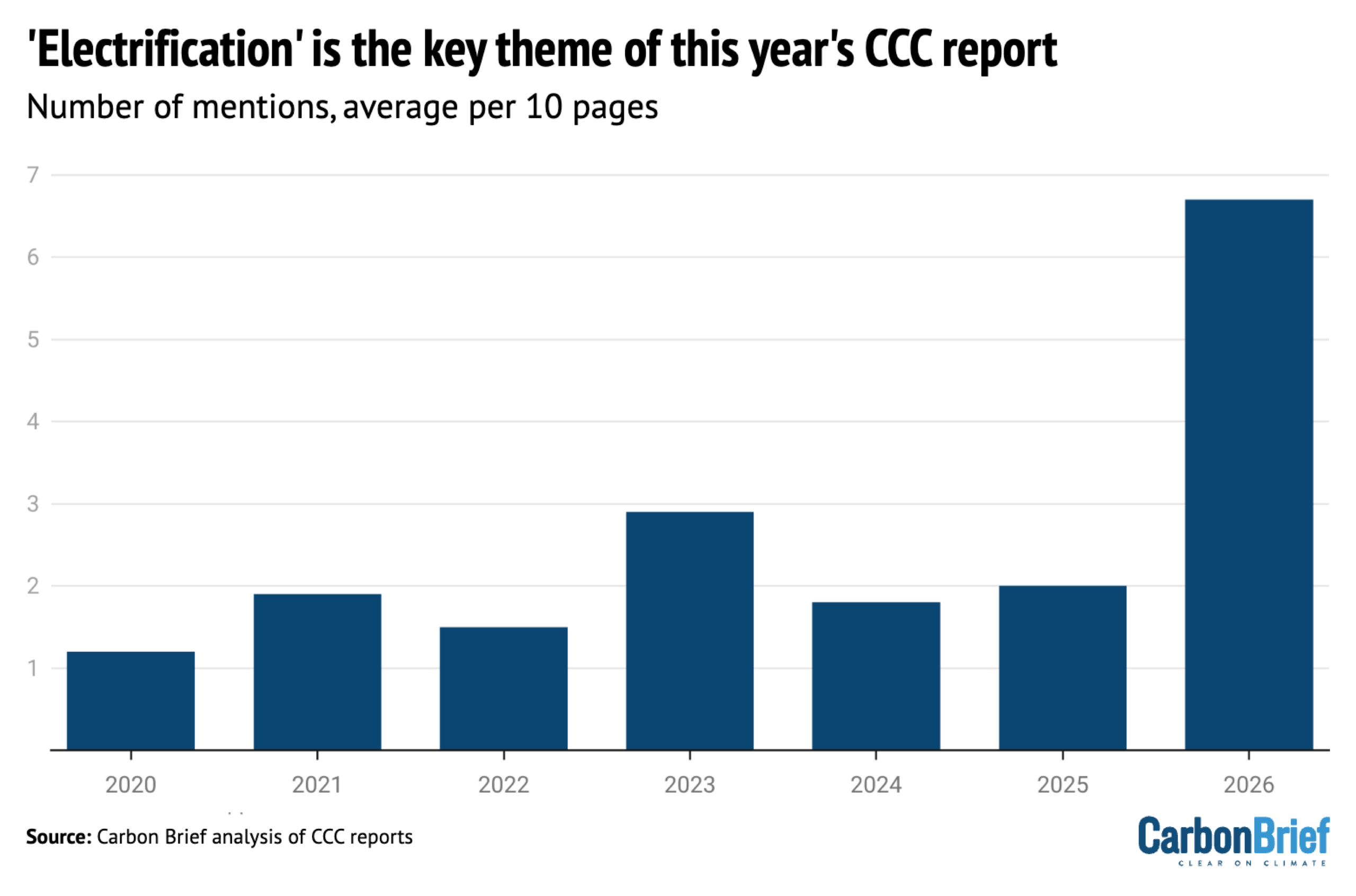
In a significant show of political alignment, a coalition of governments—led by the European Union and the United Kingdom—announced a renewed commitment to "electrify everything." At a high-level summit at Mansion House, energy ministers and industry titans called for the rapid phase-out of oil, coal, and gas in favor of clean electricity. This "electrification push" is now widely viewed as the most powerful weapon in the transition away from fossil fuels, with the Climate Change Committee (CCC) explicitly prioritizing it in their latest progress report. The report underscores that aggressive electrification is the most efficient path toward both lower energy bills and genuine energy security for the UK.
Implications: The Political and Scientific Future
The path forward, however, is far from smooth. The political landscape remains fraught with volatility. The recent ousting of the Colombian government—a leader in the global movement to transition away from fossil fuels—by a candidate aligned with the current US administration’s pro-fossil-fuel stance, casts a long shadow over international climate cooperation.
This political instability is compounded by systemic attacks on climate science. In the United States, federal climate scientists and essential data repositories are increasingly under threat from budget cuts and political interference. The "Cosmos" database analysis reveals that nearly half of the world’s most cited climate authors are based in the US, making the health of the American research environment a global concern. When these institutions are weakened, the world loses its "memory" of climate disasters and its ability to forecast future risks.
The "Cosmos" Opportunity
Despite these challenges, the launch of Project Cosmos offers a glimmer of hope. By mapping the vast "galaxy" of climate research, we have created a tool that can identify knowledge gaps, track the evolution of scientific consensus, and foster new, interdisciplinary collaborations. We invite academics, journalists, and policy analysts to engage with this data. The goal is to move beyond siloed research and build a collective, global understanding of the crisis—one that is diverse, inclusive, and actionable.
Investigating Influence
The week also saw significant reporting on the history of corporate interference in climate science. Investigations by ProPublica and Drilled into the "wedges" concept—a research framework once used to justify continued reliance on fossil fuels—demonstrate the long-term impact of industry-funded narratives. Similarly, reports of "doomsday cults" infiltrating climate policy circles remind us that the fight for a green future is also a fight against sophisticated, well-funded disinformation campaigns.
Looking Ahead: The Road to COP
As we look toward the coming months, the focus remains on the implementation of the "electrification" goals established in London. The COP31 presidency has set an ambitious target: for 35% of all final global energy consumption to be derived from electricity by 2035. Achieving this will require more than just political pledges; it will necessitate a fundamental restructuring of global power grids, massive investment in storage technologies, and a transparent, science-led approach to policy.
The data is clear, the warning signs are everywhere, and the solutions are within reach. The question remains whether the political will can match the urgency dictated by the thermometer. As we continue to track these developments, we encourage our readers to stay informed, stay engaged, and, as the CCC report suggests, keep the focus on the electrification of our economy.
For those interested in exploring the research landscape further, we invite you to sign up for our fortnightly newsletter, "Cited," where we dive deep into the papers and authors shaping our understanding of the climate crisis.
Carbon Brief is committed to providing the data and context necessary to navigate the climate transition. If you have feedback on this week’s DeBriefed, or wish to contribute to the ongoing development of the Project Cosmos database, please reach out to our editorial team.


 Raul Delapena Setiawan
 Laily UPN
 Reynand Wu
 Sagoh
Sagoh

 Azzam Bilal Chamdy
 Ali Ikhwan