
 Ammar Sabilarrohman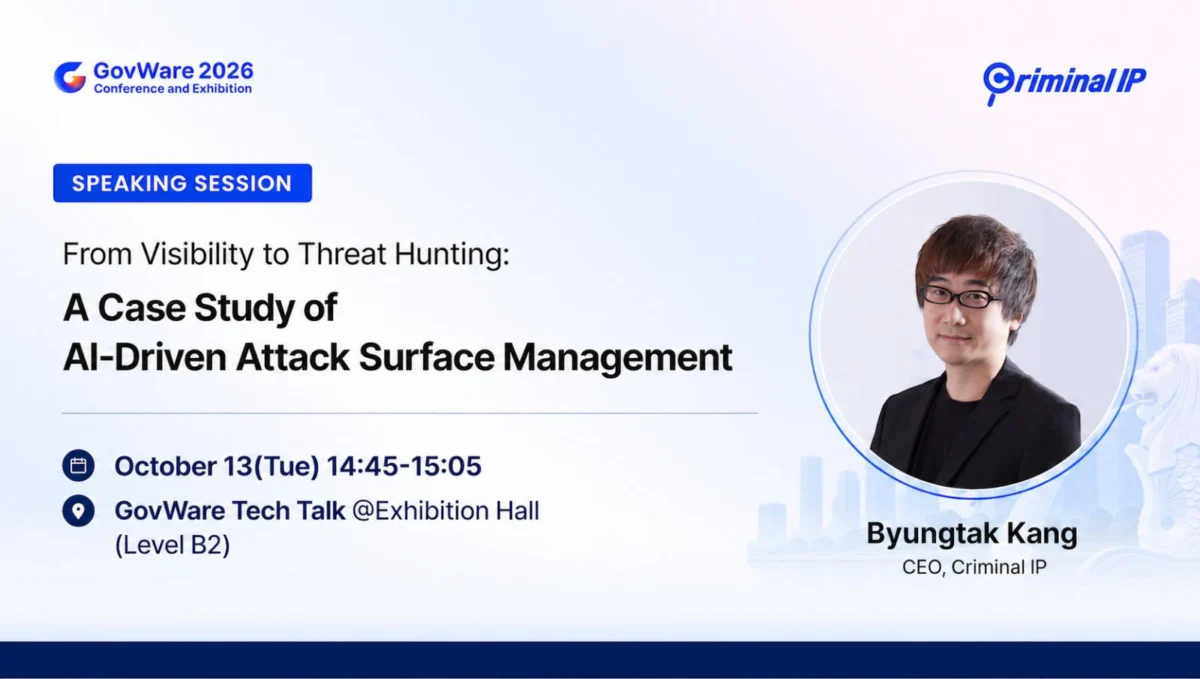
The cybersecurity landscape is undergoing a seismic shift. As the digital perimeter dissolves under the weight of cloud migration, remote work, and the proliferation of "Shadow AI," traditional defensive methodologies are struggling to keep pace. In this high-stakes environment, visibility—once the gold standard of security—is no longer sufficient. Recognizing this urgent industry transformation, AI SPERA, the innovator behind the cyber threat intelligence platform Criminal IP, is set to debut its next-generation vision for security operations: AITEM (AI-Powered Threat Exposure Management).
The announcement, timed to coincide with the prestigious GovWare 2026 conference in Singapore, marks a strategic pivot for the company. By moving beyond simple asset discovery, AITEM aims to provide security teams with the context, prioritization, and automated response capabilities required to neutralize threats before they materialize into full-scale breaches.
The Main Facts: Defining AITEM
At its core, AITEM represents the evolution of Attack Surface Management (ASM). For years, ASM tools focused on the "inventory" phase—cataloging domains, IP addresses, and open ports. While this provided a necessary map of the attack surface, it often left security operations centers (SOCs) drowning in a sea of data points, unable to distinguish between a benign misconfiguration and an exploitable entry point.
AITEM bridges this gap by integrating Criminal IP’s robust threat intelligence engine with advanced AI analysis. It treats exposure not as a static list of assets, but as a dynamic, evolving lifecycle. By synthesizing data from external infrastructure, dark web signals, open-source intelligence (OSINT), and internal network telemetry, AITEM provides a holistic view of an organization’s risk profile. It is designed to act as an "intelligence force multiplier," filtering out the noise of false positives so that human analysts can concentrate on high-fidelity, actionable threats.
Chronology: The Evolution of Modern ASM
To understand why AITEM is a critical development, one must look at the timeline of security infrastructure evolution:
- Pre-2020: The Inventory Era. Security teams relied on manual asset tracking and basic network scanners. The primary goal was simply knowing what hardware existed on the network.
- 2020–2023: The Visibility Boom. The COVID-19 pandemic accelerated digital transformation, forcing the adoption of ASM tools that provided "outside-in" visibility into internet-facing assets. However, these tools were reactive, providing snapshots of data that quickly became outdated.
- 2024–2025: The Noise Crisis. As attackers began leveraging AI to automate vulnerability scanning and exploit generation, the volume of security alerts surged. Organizations found themselves with "visibility" but without the capacity to act, leading to significant "alert fatigue."
- 2026 and Beyond: The Actionable Era (AITEM). With the launch of AITEM, AI SPERA positions itself at the forefront of the shift toward "Exposure Management." The focus has moved from discovering an asset to understanding its risk context, prioritizing the response, and automating the mitigation lifecycle.
Supporting Data: Why Visibility Alone Is Failing
The urgency for this evolution is supported by current industry trends. Threat actors have successfully lowered the barrier to entry for cyberattacks. The modern attacker no longer relies on bespoke, highly sophisticated code; instead, they use AI to scan the entire global internet for exposed credentials, unpatched vulnerabilities (CVEs), and misconfigured Shadow AI tools.

According to AI SPERA’s internal research, the "dwell time" between a vulnerability being published and an automated scan attempting to exploit it has shrunk to mere minutes.
The Challenges of Traditional ASM:
- Context Deficit: Traditional tools identify a port as "open," but fail to identify if that port is associated with a service commonly targeted by specific threat actors.
- Fragmented Data: Security teams often use one tool for vulnerability scanning, another for dark web monitoring, and a third for asset discovery. AITEM consolidates these silos into a single, cohesive pane of glass.
- Prioritization Failure: Without AI-driven context, security teams often prioritize vulnerabilities based on severity scores (CVSS) rather than business impact or active exploitability in the wild.
AITEM addresses these challenges by applying AI to the four stages of the exposure lifecycle: Detection, Enrichment, Prioritization, and Response.
Official Perspectives: CEO Byungtak Kang on the Future of Defense
During the upcoming GovWare 2026 conference, AI SPERA CEO Byungtak Kang will lead a session titled, "From Visibility to Threat Hunting: A Case Study of AI-Driven Attack Surface Management." His message is clear: the era of manual triage is over.
"Seeing a threat and responding to it are two completely different challenges," says Kang. "Many organizations have more visibility than ever, yet they remain vulnerable because they lack the ability to prioritize the risks that actually matter. The mission of AITEM is to turn insight into meaningful action. By utilizing AI to filter out the noise and enrich context, we allow human analysts to focus on what they do best: judgment and strategy."
Kang emphasizes that the competition in the ASM space is no longer about who can scan the most IPs. "It will be about who can operate faster and mobilize the organization more effectively. In the future, the machine handles the repetitive analytical work, while humans handle the accountability."
Implications: A Shift in Global Security Strategy
The launch of AITEM at GovWare 2026 mirrors a broader industry trend seen at events like RSAC 2026. The industry is moving away from disparate, "best-of-breed" tools that fail to communicate, and toward unified, agentic AI ecosystems.
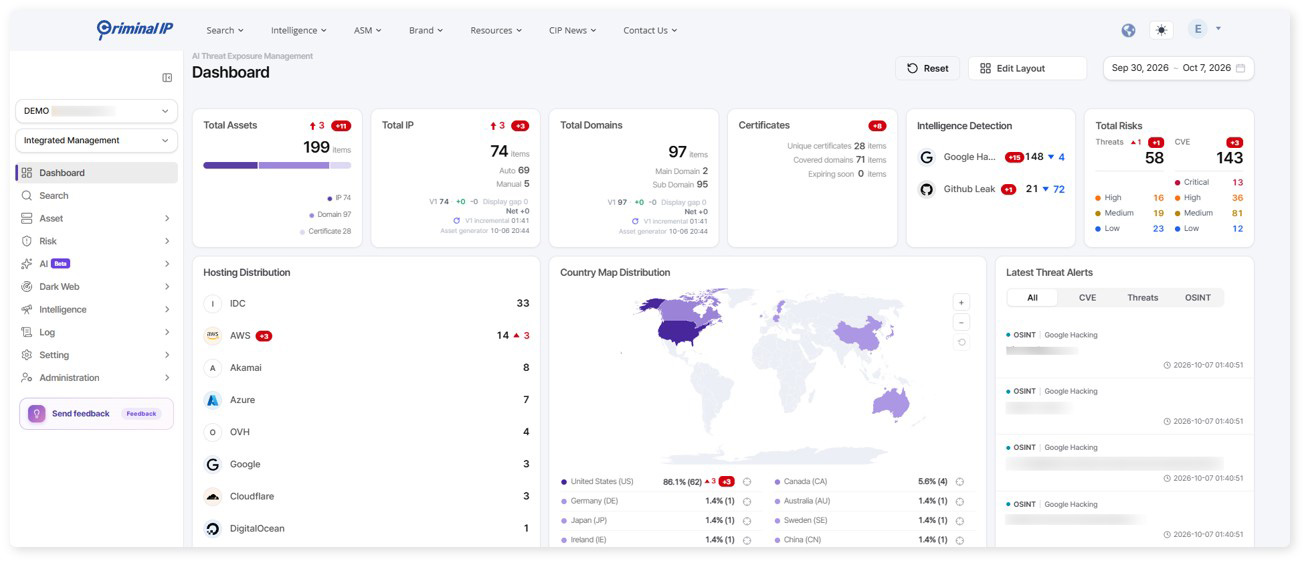
Key Implications for Security Teams:
- Operational Efficiency: By reducing the time spent on manual research and false-positive mitigation, teams can focus on proactive threat hunting.
- Integration of Shadow AI: As employees increasingly use unsanctioned AI tools that access corporate data, AITEM’s ability to detect "Shadow AI" provides a critical layer of governance that traditional ASM lacks.
- Strategic Resilience: Organizations can now map their defensive posture against real-world adversary behavior. If a threat actor is actively targeting a specific industrial sector, AITEM can prioritize assets that align with those specific TTPs (Tactics, Techniques, and Procedures).
Conclusion: The Path Forward
As we move further into 2026, the complexity of the global internet will only increase. The distinction between "Attack Surface Management" and "Threat Exposure Management" will become the primary differentiator for organizations that remain secure versus those that fall victim to automated attacks.
Criminal IP’s commitment to providing decision-ready intelligence, coupled with the introduction of AITEM, signifies a major milestone for AI SPERA. By integrating real-world threat context with rapid-response capabilities, they are empowering security teams to reclaim the initiative.
For security professionals and stakeholders attending GovWare 2026, the emergence of AITEM serves as a call to action: it is time to stop watching the perimeter and start managing the exposure.
For more information on how Criminal IP and AITEM are redefining the security landscape, visit www.criminalip.io.
This article is a sponsored feature presented by AI SPERA. The insights provided reflect the current state of cyber threat intelligence and the company’s strategic commitment to advancing the field of Attack Surface Management.


 Layla Zulfa
 Rifan Muazin
 Laily UPN
 Iffa Jayyana

 Suro Senen
 Lina Hope
 Lina Irawan