
 Reynand Wu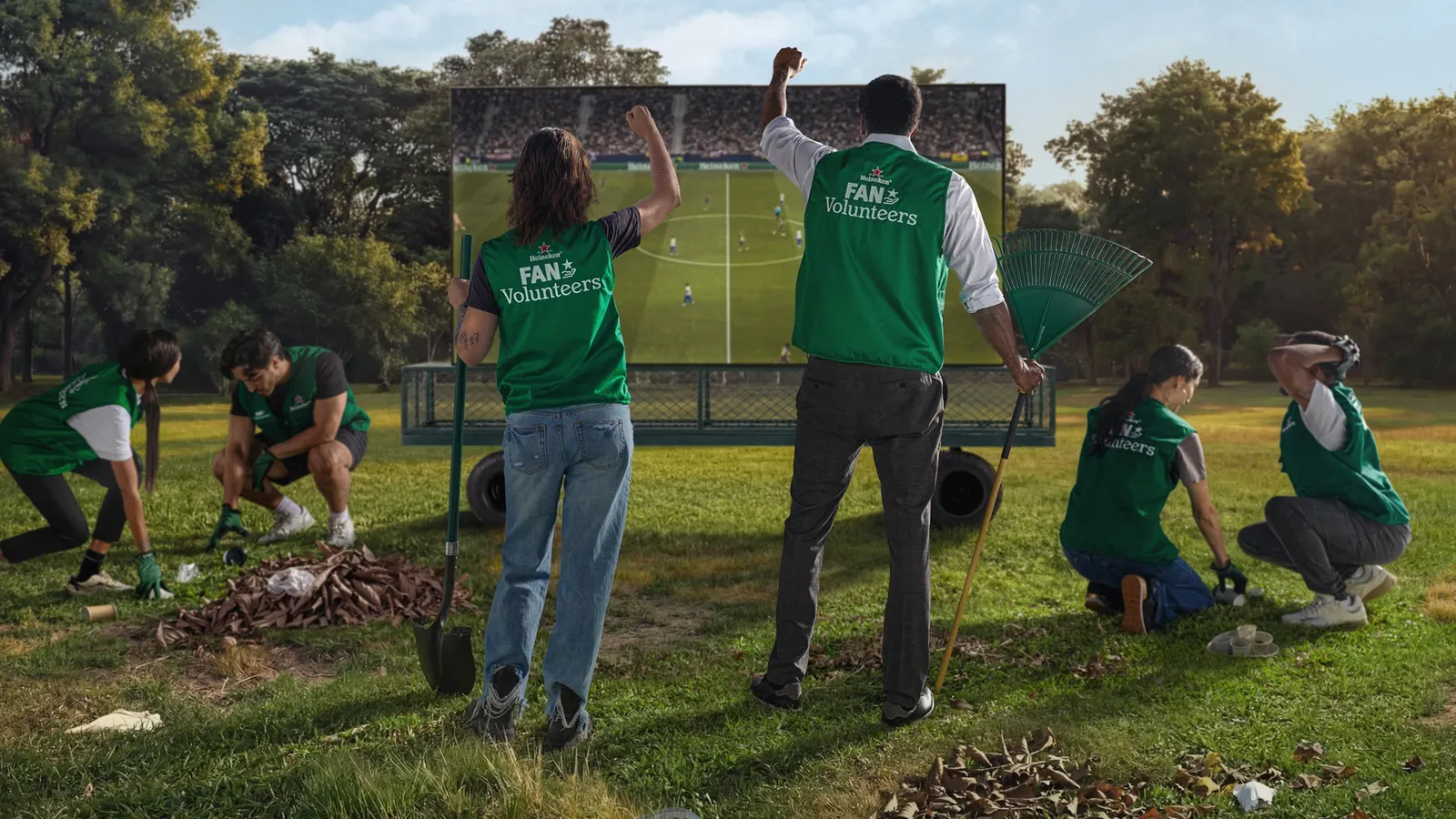
As the fervor for soccer in the United States reaches a fever pitch ahead of the 2026 FIFA World Cup, brands are scrambling to capture the attention of an increasingly diverse and passionate audience. Amidst this competitive landscape, Heineken has unveiled a clever, human-centric campaign titled "Heineken Fan Volunteers." By bridging the gap between professional responsibilities and fan devotion, the brewer is positioning itself not just as a beverage provider, but as a facilitator of community connection.
The campaign, which encourages fans to utilize Volunteer Time Off (VTO) to support their local communities during match days, marks a sophisticated pivot in how global brands can activate around sports sponsorships—even when they aren’t the official tournament sponsor.
The Core Concept: Redefining the "Work-Life" Balance
At the heart of the "Heineken Fan Volunteers" initiative is a pragmatic solution to a modern problem: the conflict between the 9-to-5 workday and the global timing of international soccer. Data indicates that approximately 40% of World Cup matches will occur during standard U.S. working hours, creating a logistical headache for millions of employees.
Heineken’s approach is characteristically subversive. Rather than simply encouraging fans to "call in sick," the brand is advocating for the strategic use of VTO—a benefit often left underutilized by the American workforce. By providing a dedicated digital hub, Heineken connects fans with local nonprofits for volunteer opportunities that align with match schedules. This allows fans to clear their calendars legitimately, engage in meaningful community service, and ultimately enjoy the match with a clear conscience.
A Chronological Evolution of Heineken’s Soccer Strategy
Heineken’s interest in soccer is far from a new development; it is a decades-long commitment that has defined the brand’s international identity.
- 1994–2024: Heineken established itself as a titan of sports marketing, most notably through its long-standing partnership with the UEFA Champions League. This 30-year relationship provided the blueprint for the brand’s ability to weave its identity into the fabric of elite European football.
- January 2026: Heineken launched its global "Fans Have More Friends" platform. This initiative served as a unifying umbrella for the brand’s disparate sponsorships, spanning Formula 1, music festivals, and, most crucially, soccer. It signaled a shift toward emphasizing human connection and shared experiences.
- May 13, 2026: The official launch of the "Heineken Fan Volunteers" campaign. This rollout coincided with the UEFA Champions League semi-finals, utilizing the high-profile matches as a springboard for the new initiative.
- The Future (2027 and beyond): Heineken’s current sponsorship of the UEFA Champions League is slated to conclude in 2027. The current campaign represents a "bridge" strategy, ensuring the brand maintains its cultural relevance as it prepares to pivot toward new, potentially more localized, sporting opportunities in the North American market.
Supporting Data: Why the "Fan Volunteer" Strategy Works
Heineken’s marketing team has clearly done their homework on the behavioral habits of the American soccer fan. The campaign is backed by compelling statistics that highlight the tension between professional life and sporting passion:
- The "Hooky" Factor: According to internal brand research, over half (52%) of U.S. desk employees have admitted to lying to their employers to watch an international soccer game.
- Secret Spectating: Among those who do attempt to work during matches, 75% report that they have either checked live scores at their desks or secretly streamed matches during business hours.
- Market Growth: Soccer has officially overtaken baseball as the third-favorite sport in the United States. This demographic shift is critical, as it suggests that the "soccer fan" is no longer a niche group but a massive cross-section of the U.S. workforce.
- Financial Stability: The parent company, Heineken N.V., reported a strong start to the 2026 fiscal year, with a first-quarter net revenue increase of 2.8% and a total volume growth of 1.2%. This financial health provides the necessary runway for experimental, high-touch marketing activations.
Industry Implications and Competitive Landscape
The U.S. soccer landscape is currently a "land grab" for marketers. With the World Cup approaching on June 11, the competition for "mindshare" is fierce.
The "Unofficial" Advantage
While brands like Coca-Cola and Coors Light have invested heavily in official sponsorships and high-budget television spots, Heineken is choosing a different path. By focusing on grassroots volunteering, Heineken avoids the prohibitive costs associated with official FIFA partnerships while simultaneously building a more authentic, community-driven narrative.

Agency Consolidation
The campaign also reflects Heineken’s broader organizational restructuring. The company has moved to streamline its agency roster, consolidating creative work under major holding companies like Publicis Groupe, WPP, and Stagwell. This "future-fit" strategy aims to reduce bureaucratic drag and allow for faster, more agile campaign launches—a necessity when reacting to the fast-paced nature of live sports.
Digital Strategy: Tapping into "Soccer Moments"
Heineken is not relying solely on the altruistic nature of the campaign to drive visibility. The brand has integrated a robust digital component, utilizing a "TikTok Top Feed" and a "Reddit Category Takeover." These platforms are where the most passionate, younger demographics congregate. By inserting themselves into the Reddit discourse and the high-energy environment of TikTok, Heineken ensures that the campaign remains top-of-mind during key tournament milestones.
Corporate Tone: Humor as a Catalyst
One of the most notable aspects of the campaign is the accompanying launch film. In a departure from the high-octane, adrenaline-fueled advertisements typical of sports marketing, Heineken’s film opts for a tone of dry, corporate-style humor.
The film acts as a "how-to" guide for employees, blending a parody of professional workplace training videos with the genuine utility of the VTO initiative. By mocking the "stuffy" nature of corporate life, the brand establishes itself as an ally to the employee, further cementing the "Fans Have More Friends" ethos.

Conclusion: A Masterclass in Contextual Marketing
Heineken’s "Fan Volunteers" campaign is a masterclass in contextual marketing. It acknowledges the reality of its consumers’ lives—that they are busy, working professionals who are also die-hard soccer fans—and provides a mechanism to reconcile those two identities.
By associating its brand with the act of community service, Heineken is doing more than just selling beer; it is manufacturing "goodwill." As the 2026 World Cup kicks off, the brand has effectively insulated itself against the noise of competitors. While other companies spend millions to plaster their logos on stadium walls, Heineken is betting that the most effective way to reach the American soccer fan is by helping them get off the clock and onto the pitch—or at least, into the community.
For Heineken, the goal is clear: even if they aren’t the "official" sponsor on the field, they are determined to be the preferred beverage at the table where the conversation about the beautiful game happens.


 Iffa Jayyana
 Raul Delapena Setiawan

 Sagoh
Sagoh
 Azzam Bilal Chamdy
 Ali Ikhwan