Nana Wu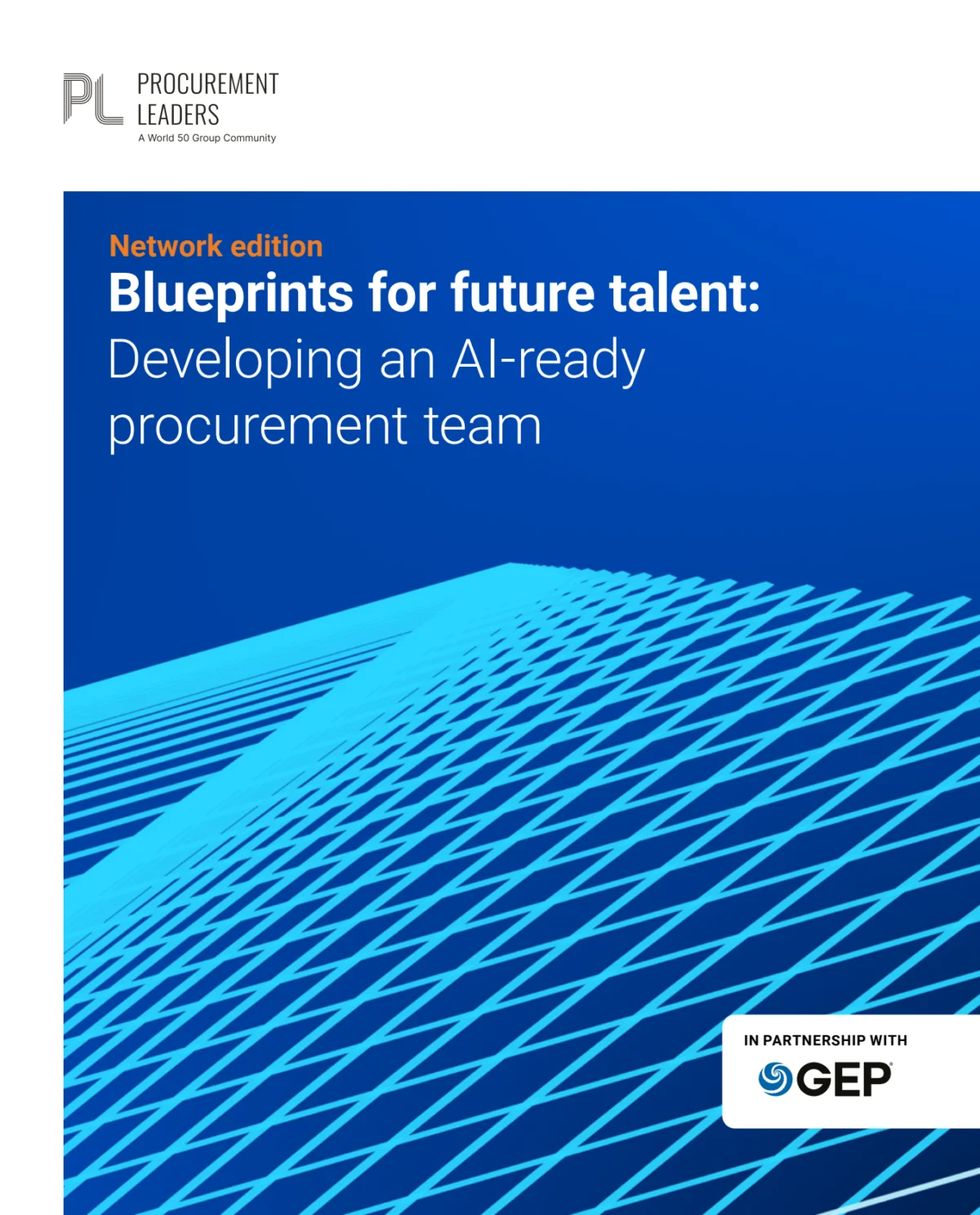
The landscape of global procurement is undergoing a tectonic shift. While the function has historically been characterized by its evolution from a transactional, back-office utility to a strategic boardroom partner, it now stands on the precipice of its most radical transformation to date: the integration of Artificial Intelligence (AI).
As generative AI, machine learning, and predictive analytics move from experimental pilots to core operational infrastructure, the very definition of a "procurement professional" is being rewritten. With over 70% of respondents to the Procurement Salary Survey 2025 confirming that AI is already performing tasks previously reserved for human staff, Chief Procurement Officers (CPOs) are faced with an urgent mandate: rethink the workforce, recalibrate skill sets, and cultivate a culture capable of thriving in an automated ecosystem.
The Main Facts: The New Procurement Reality
The primary driver of this shift is the transition from "manual oversight" to "algorithmic orchestration." Procurement is no longer merely about cost-saving or vendor management; it is becoming a data-centric function where AI serves as the primary engine for insight generation and decision support.
The core facts defining this era are:
- The Automation Mandate: AI is not replacing the procurement function; it is redefining the value-add. Automation now handles routine tasks—contract lifecycle management (CLM), invoice processing, and basic spend categorization—with near-zero error rates.
- The Data Paradox: Organizations are drowning in data but starving for insights. AI bridges this gap, enabling real-time supply chain visibility and risk management that human teams alone could never achieve.
- The Talent Gap: There is a growing disparity between the legacy skill sets of traditional procurement teams and the requirements of an AI-augmented environment. The ability to "talk" to AI, verify its output, and translate data into strategy is becoming the new gold standard.
Chronology: The Evolution of Procurement
To understand where procurement is going, we must trace the trajectory of its transformation over the last two decades.
Phase 1: The Administrative Era (2000–2010)
Procurement was largely clerical. Focus was placed on paper-based requisitioning, manual data entry, and basic competitive bidding. The value was measured almost exclusively in cost-avoidance.
Phase 2: The Strategic Pivot (2010–2020)
Cloud-based ERPs and Sourcing software introduced a degree of visibility. Procurement began to focus on category management, relationship management, and sustainability. The human role shifted from "processor" to "negotiator."
Phase 3: The AI Integration (2020–2024)
The sudden explosion of Generative AI and Large Language Models (LLMs) changed the game. Organizations began integrating AI into sourcing workflows, enabling automated RFPs and real-time market benchmarking.
Phase 4: The AI-Ready Future (2025 and Beyond)
We are currently entering the era of the "Autonomous Procurement Function." In this stage, the human professional acts as an architect and supervisor of AI agents. The focus shifts to high-level complex decision-making, ethical oversight, and cross-functional innovation.
Supporting Data: The 2025 Landscape
Data from the Procurement Salary Survey 2025 provides a sobering look at how deeply the shift has already permeated the industry.
- 70% of respondents indicate that AI is currently performing tasks that were once exclusively human-led.
- 45% of procurement leaders identify "data literacy" as the single most important skill for new hires, overshadowing traditional negotiation training.
- 62% of organizations have initiated formal "upskilling" programs for their procurement teams, yet fewer than 20% report being "highly satisfied" with the progress of these initiatives.
- Productivity Gains: Early adopters report a 30% reduction in time-to-contract and a 15% improvement in spend visibility within the first 18 months of full AI deployment.
These metrics underscore a critical reality: the technology is maturing faster than the human talent required to manage it. The lag in organizational readiness poses a significant risk to competitive advantage.
Official Responses: Insights from Industry Leaders
CPOs are navigating a dual challenge: maintaining service continuity while fundamentally restructuring the workforce. According to insights from the Procurement Leaders community, the sentiment is one of "cautious optimism."
The "Co-Pilot" Philosophy
Many executives are framing the shift as a "co-pilot" model rather than a "replacement" model. "Our goal is not to eliminate the procurement professional," says one CPO from a Fortune 500 manufacturing firm. "Our goal is to remove the ‘drudgery’—the manual data cleansing, the contract redlining, the repetitive vendor vetting—so that our team can focus on what humans do best: complex problem solving, relationship building, and strategic risk management."
The Call for Ethical Oversight
Industry experts warn that as we outsource decision-making to algorithms, we must bolster the human capacity for ethical judgment. "AI can analyze the price, but it cannot analyze the soul of a partnership," notes a lead consultant at GEP. "If an AI chooses the cheapest supplier based on data points but ignores the geopolitical risks or the ethical labor concerns of that supplier, the procurement function has failed. We need human ‘AI-guardians’ who can audit the logic behind the technology."
Implications for the Future of Work
The rise of the AI-ready procurement team has profound implications for how companies structure their teams, hire for roles, and define success.
1. The Redefinition of Roles
The traditional procurement career ladder—from analyst to category manager to director—is being flattened. In its place, we are seeing the emergence of new roles:
- Procurement Data Scientists: Professionals who bridge the gap between supply chain logic and data architecture.
- AI Orchestrators: Individuals responsible for managing the AI workflows and ensuring the output aligns with corporate goals.
- Supplier Experience Managers: As transaction processing becomes automated, human-to-human interaction will be reserved for high-value, strategic relationship building.
2. The Cultural Shift
Moving to an AI-ready team requires a culture of "continuous learning." Procurement teams can no longer rely on static knowledge bases or long-standing practices. The most successful teams will be those that embrace experimentation, treat failures as data points, and view AI not as a competitor, but as a force multiplier.
3. The New Skill Set
The "soft skills" are becoming the "hard skills." While technical proficiency in AI tools is vital, the ability to think critically, communicate cross-functionally, and manage change is paramount. As AI handles the "what" (data processing), humans must master the "why" (strategy and purpose).
4. Navigating the Transition
For CPOs, the roadmap to an AI-ready team is not a one-size-fits-all solution. It requires:
- Comprehensive Audits: Identifying which tasks are ripe for automation versus those that require human nuance.
- Targeted Upskilling: Focusing on data literacy, ethical AI awareness, and change management.
- Strategic Partnerships: Working with vendors like GEP to implement scalable technology while simultaneously investing in internal talent development.
Conclusion: The Human-Centric Advantage
As we look toward the future, the procurement function will undoubtedly be more automated, more data-driven, and more efficient. However, the ultimate success of an AI-ready procurement team will not be measured by the sophistication of the algorithms they use, but by the intelligence of the humans who direct them.
The transition to an AI-augmented model is not a threat to the profession; it is a long-overdue invitation for procurement professionals to step out of the shadows of clerical work and into the light of strategic influence. By downloading the Blueprints for future talent: Developing an AI-ready procurement team report, leaders can begin the crucial work of transforming their departments into engines of innovation and resilience. The future of procurement is not about machines versus people; it is about the synthesis of both to create a more agile, intelligent, and value-driven organization.
The blueprints are here. It is now time to build.

 Sagoh
Sagoh
 Ali Ikhwan
 Raul Delapena Setiawan
 Reynand Wu


 Azzam Bilal Chamdy