
 Layla Zulfa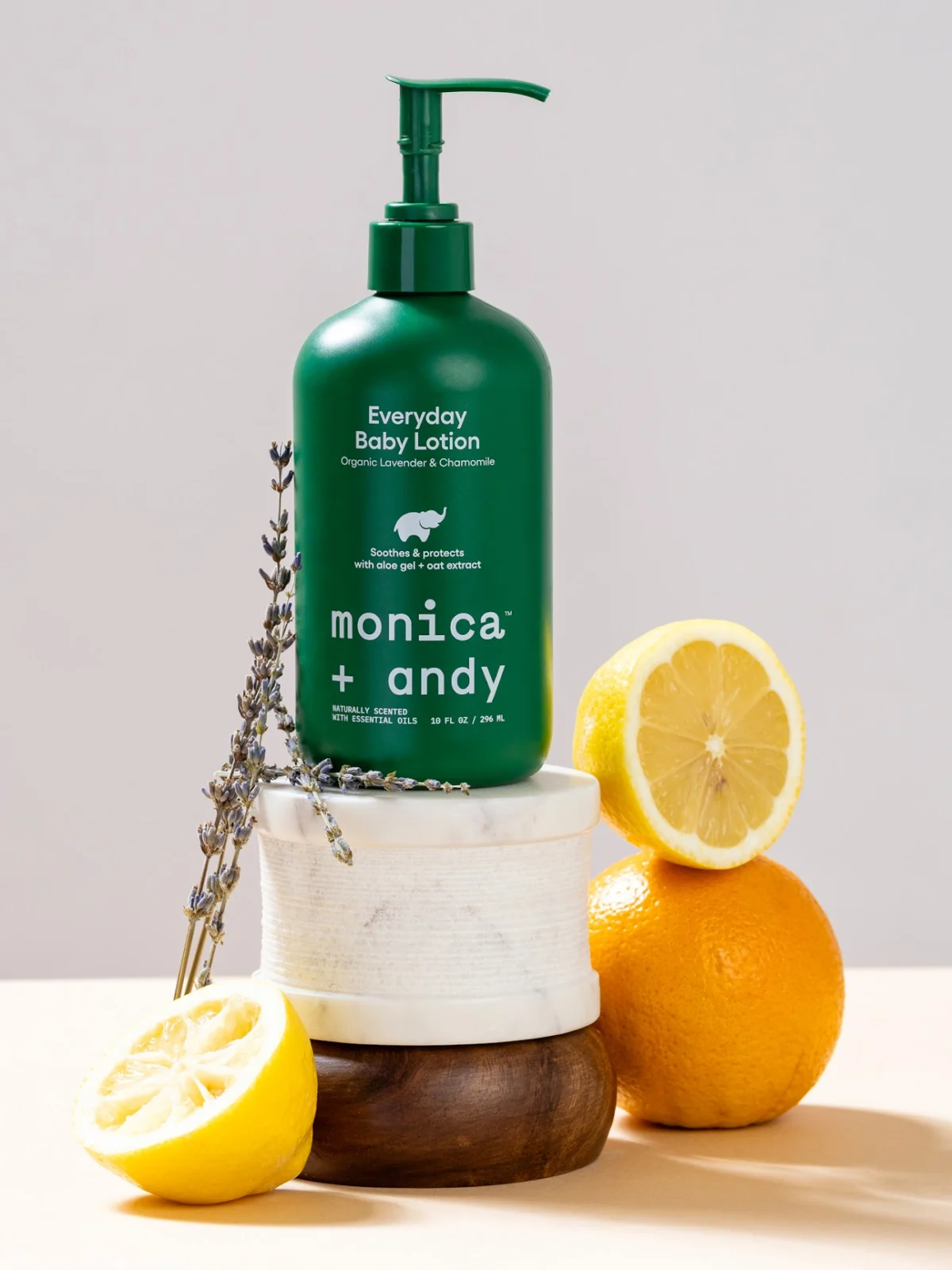
More than a decade after disrupting the children’s apparel industry with its commitment to GOTS-certified organic cotton, Monica + Andy is undergoing its most significant evolution to date. The direct-to-consumer (DTC) powerhouse, which built its reputation on premium baby clothes and "Mommy + Me" sets, is officially pivoting into the personal care space. This move marks the brand’s first major category expansion, signaling a broader vision to become a holistic lifestyle destination for modern parents.
The new product line, which hit shelves within the past month, includes a comprehensive suite of essentials: a 2-in-1 shampoo and body wash, a soothing bedtime cream, a protective balm, a gentle bar soap, and a hypoallergenic baby laundry detergent. By securing a footprint in over 1,400 Walmart locations and across Walmart.com, alongside its established digital storefront, Monica + Andy is positioning its "better-for-you" philosophy within the reach of the mass-market consumer.
The Chronology of a Brand Evolution
To understand the weight of this launch, one must look at the trajectory of Monica + Andy since its inception in 2014. Founded by Monica Royer, the brand emerged during the early peak of the DTC movement, promising parents that they wouldn’t have to sacrifice style or ethics for the sake of comfort.
- 2014: The brand launches with a singular, laser-focused mission: providing the softest, safest organic cotton clothing for newborns and infants.
- 2015–2019: Monica + Andy scales its operations, expanding its footprint through both pop-up shops and a robust e-commerce engine. The product range grows to include maternity wear and coordinated family sets, solidifying the brand’s community-centric identity.
- 2023: A landmark year for the company as it secures a major retail partnership with Walmart, significantly expanding its physical presence and proving its ability to operate at a mass-retail scale.
- 2024: The brand officially breaks the "clothing-only" mold. After years of product research and development, the "Baby Care" line is introduced, marking the first time the company has applied its ingredient-conscious ethos to topical, consumable goods.
For Royer, this move was never a matter of "if," but "when." While the operational demands of the 2023 Walmart clothing launch required her full attention, the foundational work for the baby-care line began years prior. "The idea of what touches children’s skin first was always something I felt incredibly passionate about," Royer noted. This expansion is the physical manifestation of that passion—a transition from dressing the child to protecting the child.
The "Clean" Mandate: Ingredient Integrity at Scale
Transitioning from textiles to chemistry presents a unique set of challenges. In the apparel world, Monica + Andy had mastered the supply chain of organic cotton, tracing fibers back to the fields in India—a personal mission for Royer, whose mother was born in a refugee camp in the region. Maintaining that same level of transparency in skincare required a similar, rigorous vetting process.
The Search for Purity
The development phase was marked by an exhaustive search for the "cleanest" possible ingredients. Royer insisted on an organic-first approach, a requirement that necessitated extensive testing. The R&D team experimented with a wide array of plant-based and non-plant-based ingredients, a process that ultimately reaffirmed the brand’s commitment to its botanical roots.
"I wanted to make sure I learned everything about different types of ingredients and had an open mind for what I thought were going to be the best ingredients for these products, in particular," Royer explained.
Product Highlights
The final formulations are a testament to this research. The 2-in-1 shampoo and body wash, for instance, leverages the soothing properties of aloe, oat, and organic calendula. The bedtime cream relies on the nutrient-dense profiles of avocado and mango extracts. These choices were not merely aesthetic; they were functional, designed to address the specific dermatological needs of newborns and toddlers.
Balancing Premium Quality with Mass-Market Accessibility
One of the most daunting aspects of this expansion was pricing. Bringing a "premium" product to a "mass" audience—specifically the Walmart shopper—requires a delicate balancing act. The baby-care products are priced between $10 and $20, a range that allows for high-quality, plant-based formulations while remaining accessible to a broad demographic.
Royer acknowledges that cost was a paramount constraint during development. To hit these price points without compromising on ingredient quality, the brand had to optimize its supply chain, relying on the same operational efficiencies that made the Walmart apparel partnership a success.
Implications: The Shift to Outcome-Based Shopping
Perhaps the most significant takeaway from this launch is the brand’s shift in marketing strategy. Royer observes a fundamental change in how modern parents approach their shopping habits. According to her, consumers are moving away from "category-based" shopping (e.g., "I need a shirt" or "I need a soap") toward an "outcome-based" approach.
"We want better sleep, anti-aging, whatever the things are that we’re looking for," Royer says, drawing a parallel between the adult skincare market and the needs of parents. By framing its baby-care line around outcomes—soothing skin, calming before bed, providing protection—Monica + Andy is aligning itself with the psychological drivers of the modern consumer. The packaging reflects this, with prominent callouts explaining exactly how each ingredient serves the child’s comfort or health.
Influencer Marketing and Community Engagement
As a brand that grew through authentic connection, Monica + Andy is relying on its internal, in-house influencer network to drive the launch. Rather than relying on cold advertising, the company is leaning into "social proof."
The brand has mobilized its network of micro-influencers—parents who are already deeply integrated into the Monica + Andy ecosystem—to visit local Walmart stores, test the products, and share their raw, unfiltered experiences on social media. By putting the product in the hands of real parents and allowing them to document the "trial and error" process, the company is building a level of trust that traditional television or print advertising simply cannot replicate.
"We’re really excited to get as many moms to try and test the product as possible," says Royer.
Future Outlook: A New Chapter
The expansion into baby care is more than a line extension; it is a declaration of intent. By moving into the personal care aisle, Monica + Andy is effectively competing with legacy baby brands that have dominated the space for decades.
However, the brand enters this space with a distinct advantage: a decade of trust. Parents who have dressed their children in Monica + Andy’s organic cotton are already predisposed to trust the brand’s standards of quality and ethics. If the baby-care line succeeds, it could pave the way for further expansions into other household or wellness categories.
As the retail landscape continues to prioritize "better-for-you" transparency, Monica + Andy appears perfectly positioned to capitalize on the shift. By staying true to the "organic-first" principles that defined its clothing line, the brand is attempting to prove that a small, values-driven company can scale without losing the very essence that made it a household name in the first place.
For now, the focus remains on the basics: sleep, protection, and the gentle touch of plant-based ingredients. As Royer looks toward the future, the goal is clear: to be the trusted partner in every aspect of a child’s early development, one bottle of bedtime cream at a time.


 Rifan Muazin
 Azzam Bilal Chamdy

 Nana
Nana
 Pevita Pearce

 Iffa Jayyana