
 Azzam Bilal Chamdy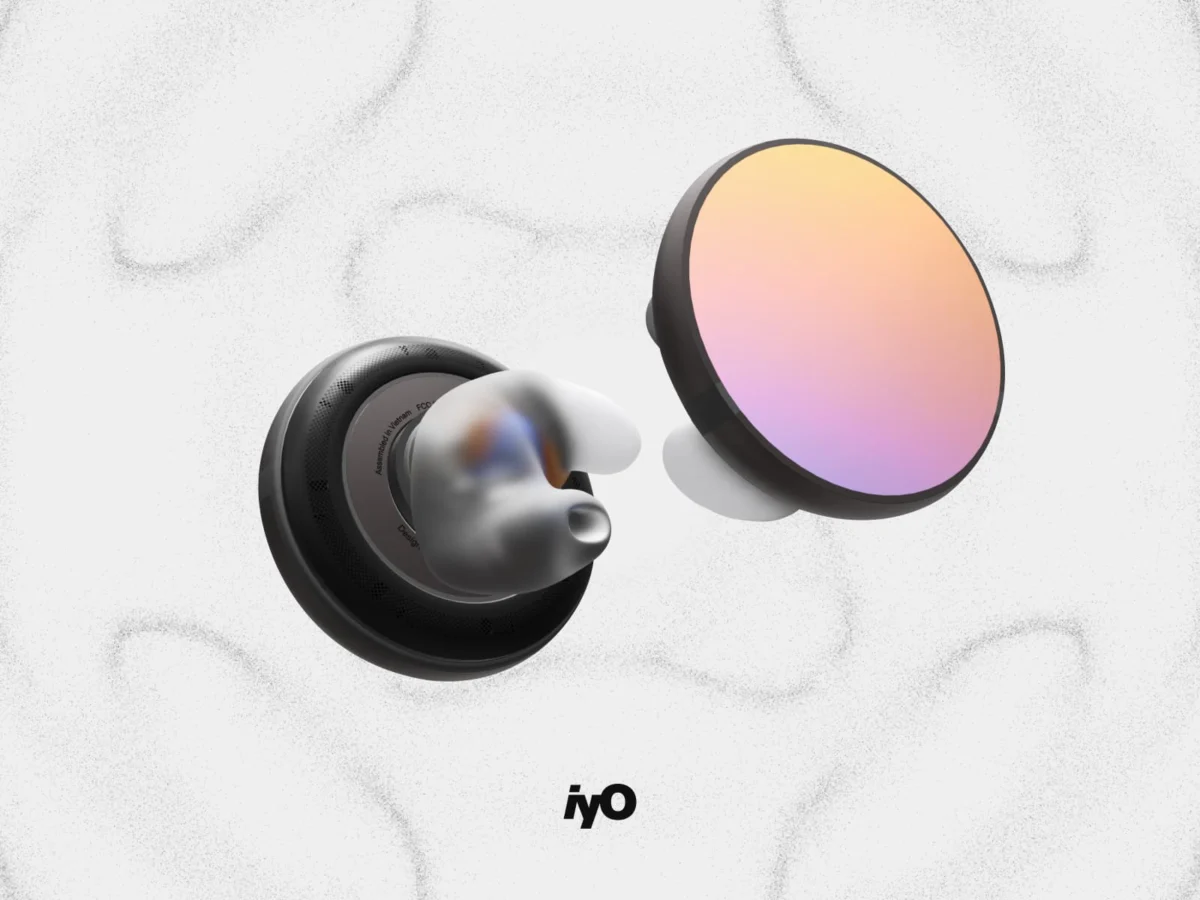
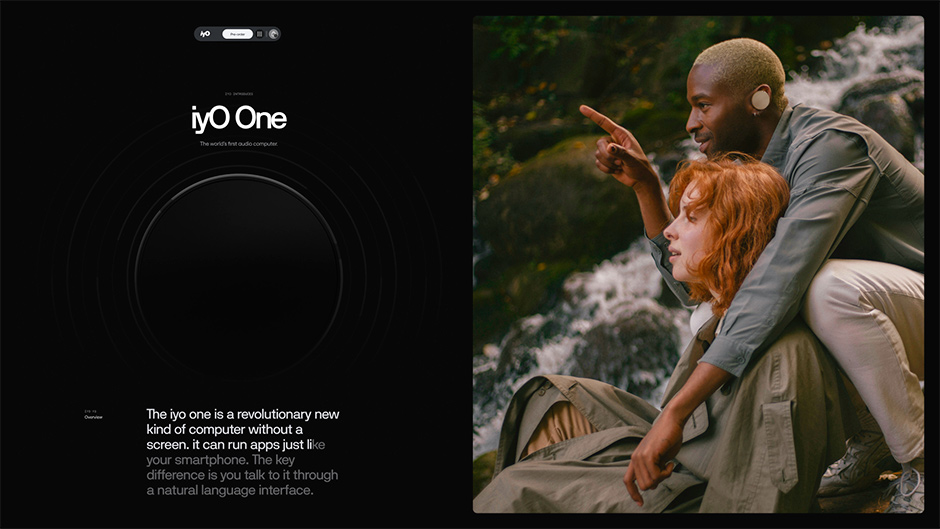
In an era defined by the "black mirror"—the relentless, glowing rectangles of our smartphones—a new startup is attempting to pull humanity back into the physical world. iyO, a venture spun out of Google’s legendary "moonshot" factory, Google X, has officially unveiled the iyO One. It is billed as the world’s first "audio computer": a voice-first, screen-free device designed to be worn in the ear.
While the hardware promises to liberate users from the attention economy, the company faced a significant hurdle: how do you sell a revolutionary, invisible, and screen-free device using a screen-based medium? The answer lies in a masterclass of web engineering and digital storytelling, turning the act of shopping into an immersive, sensory-driven journey.
The Challenge: Translating Innovation into Experience
When iyO founder Jason Rugolo approached the creative team, the mission was clear but daunting. After six years of deep research and development in agentic computing, the company was preparing to scale, needing to secure investor confidence and capture the imagination of early adopters.
The existing digital presence, however, failed to capture the product’s soul. It was a flat, informational site that lacked the tactile, high-fidelity nature of the hardware itself. The challenge was to bridge the gap between abstract technology and tangible desire. The team realized that for a device meant to move people off screens, the web experience had to be so compelling, so "alive," that it served as a digital showroom—not just a landing page.
A Three-Act Journey: The Web as a Canvas
The design team structured the user experience as a cohesive, three-act narrative. Because the iyO One is a category-defining product—a device most people have never seen, let alone held—the site could not simply rely on standard e-commerce tropes. It had to serve as an educational, emotional, and technical bridge.
Act I: The Sound is the Message
The homepage abandons the traditional "hero image" of a product box. Instead, it prioritizes a conceptual opening centered on sound. Utilizing WebGL, the designers created a field of 1.6 million interactive particles that form Chladni patterns—the physical geometric shapes created when sound vibrates a surface.
These patterns are not static; they are dynamic manifestos. The particles resolve into poignant, provocative haikus, such as: "Life is out there, friend / Do not stare into the light / Look up and be here." These words serve as a direct challenge to the attention-draining status quo of modern tech. The system is a GPGPU (General-Purpose computing on Graphics Processing Units) simulation; as users move their cursor, the particles ripple, creating a sense of "realness" that invites the user into the iyO philosophy before they even see the device.
Act II: Looking Under the Hood
The second act moves from philosophy to engineering. Recognizing that the hardware—a complex assembly of acoustic chambers, custom earmolds, and micro-computing power—is the core of the product, the team avoided static photos. Instead, they implemented an interactive, scroll-driven 3D exploded view.
By "down-rezzing" the device’s industrial CAD files into browser-friendly assets, they allowed users to pull the hardware apart along the Z-axis. Hovering over a component reveals a hotspot, demystifying the dense, high-tech interior. This transforms a technical spec sheet into a tactile exploration, turning passive readers into active observers of the engineering marvel.
Act III: The Digital Showroom
The final act is the shopping experience itself. Recognizing that standard e-commerce layouts kill the allure of high-end hardware, the designers built a "configurator" rather than a checkout page.
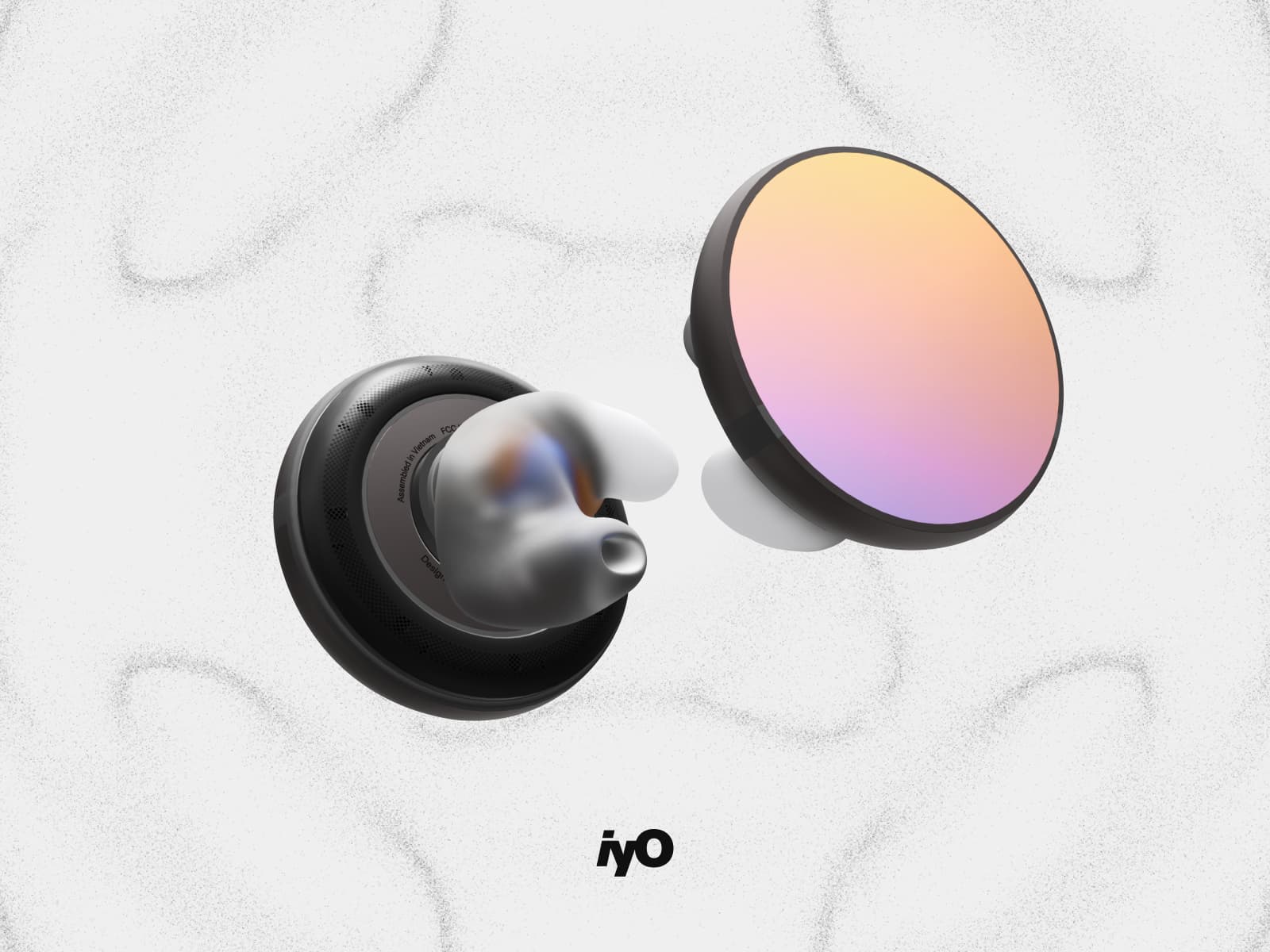
The shop features a glassmorphic interface paired with an infinite slider of polished, high-fidelity renders. A simple toggle allows the user to switch from a 2D view to a live 3D model. This model allows users to rotate the device, inspect the finish, and watch as color changes ripple through the material like sound waves. This is not just a checkout; it is an attempt to replicate the sensation of holding the object in a retail boutique.
Supporting Data: Engineering the Impossible
The transition from raw engineering files to consumer-facing web assets was a massive technical undertaking. The original CAD files contained thousands of components, far too heavy for a web browser. The team had to perform "retopologizing"—rebuilding the geometry to be lightweight while preserving visual integrity.
- Optimization: To ensure the site ran smoothly across all devices, the particle system scales dynamically. On older smartphones, the system reduces the particle count to maintain a constant 60 frames per second.
- Visual Fidelity: The most challenging material to replicate was the "dusk" finish, which features a dichroic coating that shifts colors depending on the viewing angle. The team worked alongside the product’s industrial designers to rebuild 27 distinct materials, ensuring the digital renders matched the physical prototypes with near-perfect accuracy.
- Seamless Flow: The site utilizes
taxi.jsto manage transitions, eliminating full-page reloads. By cleaning up memory and listeners between "scenes," the team ensured that the experience remained fluid and snappy, regardless of the user’s hardware.
Official Perspectives: The Philosophy of the Founder
Jason Rugolo, the mind behind iyO, views the website as an extension of the product’s mission. In a crowded landscape of thousands of startups competing for attention, the ability to communicate the feeling of a product is just as critical as the hardware itself.
"There are thousands of people like me all trying to build the future," Rugolo noted. "A huge part of it is how well you can capture the imagination of the general public and your future customers."
The site succeeds because it avoids "showing off" for the sake of it. The complex WebGL animations and 3D modeling were not chosen as vanity features; they were chosen because they were the only way to convey the weight, texture, and ingenuity of an invisible computer. For a device that aims to change how we interact with the world, the site functions as the closest possible proxy for the actual user experience.
Implications for the Future of E-commerce
The iyO One website represents a shift away from the "commodity" model of e-commerce. As we move toward more complex, wearable, and AI-integrated hardware, the traditional grid of product images and bullet points will become increasingly obsolete.
This project suggests a new standard for high-end product launches:
- Experience-Led Sales: If a product is revolutionary, the website must be an interactive demonstration, not a brochure.
- CAD-to-Browser Pipelines: The future of retail lies in bringing high-fidelity engineering models into the hands of the consumer, allowing them to "disassemble" and interact with their potential purchase.
- The "Human" Metric: By using digital tools to advocate for a reduction in screen time, iyO has achieved a rare irony—using the browser to advocate for life outside of it.
The iyO One is not just selling a piece of hardware; it is selling a shift in lifestyle. By turning the digital storefront into a "digital showroom," the team has successfully demonstrated that even in the virtual world, the most effective way to capture a customer’s heart is to give them something to explore. As the company looks toward its next round of funding and its full-scale launch, it stands as a testament to the power of design to render the complex simple, and the invisible, tangible.


 Reynand Wu
 Iffa Jayyana
 Laily UPN

 Rifan Muazin
 Suro Senen
 Lina Hope
 Lina Irawan