
 Ammar Sabilarrohman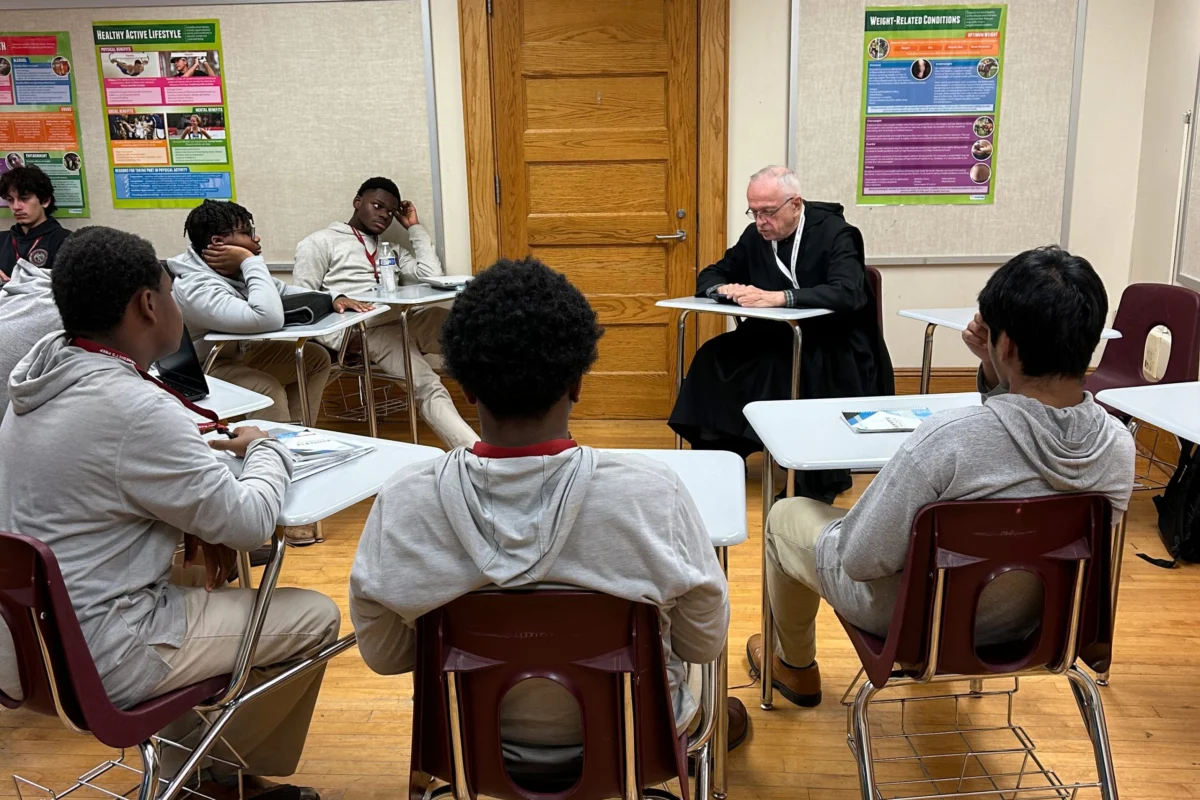
In the modern educational landscape, schools routinely administer rigorous academic assessments to gauge a student’s cognitive baseline. Educators map out curriculum paths, identifying gaps in knowledge to ensure that every pupil can eventually master algebra, literacy, and the sciences. Yet, there is a glaring, systemic blind spot in this data-driven approach: the internal lives of students. While schools track test scores with clinical precision, they often remain indifferent to the emotional turbulence that can render a student incapable of learning in the first place.
According to a growing body of educators—and a singular, proven model in the heart of Newark, New Jersey—it is time for schools to adopt the same systematic rigor for emotional health that they currently reserve for academic performance. By taking a page from the playbook of St. Benedict’s Preparatory School, a 150-year-old institution run by Benedictine monks, policymakers may find the missing link in addressing the mental health crisis currently sweeping through American classrooms.
The St. Benedict’s Blueprint: Tending to the Heart
St. Benedict’s is widely regarded as one of the most successful inner-city educational movements in the United States. Its philosophy is deceptively simple: It is useless to attempt to reach a student’s mind until you have first tended to their heart.
For the past several decades, the school has operated on the principle that emotional health is a prerequisite for academic achievement. This is not merely a soft-hearted pedagogical theory; it is a structured, data-informed practice. Every incoming student at St. Benedict’s undergoes a comprehensive emotional health intake assessment. This customized tool, modeled after the classic "Problem Experiences Checklist" for adolescents, asks students to identify from a list of over 200 potential stressors—ranging from being teased by peers and parental disapproval of friends to the systemic trauma of having a family member incarcerated.
The intake forms are not one-time bureaucratic exercises. They are dynamic documents, updated frequently to reflect the shifting realities of the students’ lives. In recent years, for instance, the school added specific inquiries regarding the profound isolation caused by the COVID-19 pandemic. These assessments provide, in the words of Associate Headmaster and certified school psychologist Ivan Lamourt, "real-time data of the kids who are in front of us."
A Historical Reckoning: From Near-Collapse to Rebirth
To understand the efficacy of this model, one must look at the crucible in which it was forged. Founded in 1868, St. Benedict’s served for over a century as a vital pillar for a poverty-stricken Newark community. However, as the city’s demographic and racial landscape shifted throughout the mid-20th century, the school faced an existential crisis. Enrollment plummeted, and in 1972, the Benedictine monks voted to shutter the school entirely.
The decision appeared final. Yet, a small cohort of monks refused to surrender to the inevitability of the school’s closure. They chose to reimagine the purpose of a prep school from the ground up.

When the school reopened just one year later with a modest class of 89 students, the mission had fundamentally changed. The new leadership extended the academic year to 11 months, established a rigorous honor code, and enshrined brotherhood and empathy as the primary pillars of the curriculum. They introduced experiential learning, including a mandatory week-long hike on the Appalachian Trail for all freshmen—a trial by fire intended to build resilience and foster communal bonds.
Most importantly, they explicitly prioritized emotional counseling over the narrow metrics of standardized testing. Over the decades, this commitment paid dividends. Today, St. Benedict’s serves a student body of approximately 1,000, primarily Black and Latino students. The school has expanded to include elementary and middle school divisions and, as of 2020, a dedicated girls’ prep division. Despite the systemic challenges facing their urban environment, the school maintains a daily attendance rate of 95 percent, and nearly every graduate matriculates to college.
Data-Driven Empathy: The Mechanics of Support
The effectiveness of the St. Benedict’s model lies in its integration of clinical psychology with the daily life of the school. The intake forms act as a triage system. Administrators use the data to identify which students require immediate, intensive intervention and which can be placed on a "watch list" for monitoring.
This infrastructure is not merely a passive record-keeping system; it is a gateway to one of the most innovative features of the school: its group counseling sessions. Because St. Benedict’s is a private institution, it bypasses the bureaucratic quagmire of requiring parental consent for every session, allowing students to access care with remarkable speed.
The sessions are themed to address the specific developmental and social challenges faced by the students. The "Blue Man Group" provides a forum for discussing depression; "Women of Wisdom" focuses on the coming-of-age hurdles for young girls; and "Unknown Sons" offers a space for students navigating the absence of parents—whether physical or emotional.
During these sessions, which take place while the rest of the school attends morning assembly, students mix across grade levels. Younger students observe and learn from upperclassmen, discovering the vocabulary to express complex emotions that urban youth—particularly young men—are rarely encouraged to discuss in traditional settings.
In one "Unknown Sons" session, the discussion turned to the weight of external comparisons. Students spoke with raw, unfiltered honesty about the resentment and jealousy that arise when they are constantly measured against siblings or peers. A senior led the group, helping a younger student articulate the pain of being told he is "just like his father," a comment that carried the baggage of his mother’s bitterness toward his absent parent. Such breakthroughs, occurring in a safe, peer-led environment, are the bedrock of the school’s culture.

Official Perspectives and Professional Implications
The approach at St. Benedict’s challenges the prevailing orthodoxy of the American public education system. While most administrators are tethered to academic metrics and high-stakes testing, the team at St. Benedict’s argues that these metrics are incomplete at best and misleading at worst.
Ivan Lamourt emphasizes that the cost of these emotional assessments is negligible—often little more than the price of the paper and the time to administer them—yet the insights gained are transformative. "They challenge us to grow to meet the needs of those kids," Lamourt notes.
However, translating this to the public sector is not without its hurdles. Public school districts operate under rigid budgetary constraints and, in many states, legislative guardrails that restrict how schools interact with students’ mental health. Implementing a fully staffed, on-site counseling center with psychiatrists and psychologists remains an expensive endeavor for the average public school.
Yet, experts suggest that the St. Benedict’s approach is scalable if broken down into its core components. Even in districts with limited resources, schools could:
- Adopt Abbreviated Screenings: Implementing a simple, non-invasive emotional health checklist during freshman orientation to identify students at risk of falling through the cracks.
- Prioritize Peer-to-Peer Support: Establishing group counseling models that normalize the discussion of mental health, thereby reducing stigma.
- Shift the Cultural Narrative: Moving away from the singular focus on standardized testing as the sole indicator of school success and instead valuing the "heart" of the student as a measurable, actionable metric.
Conclusion: A New Standard for Student Success
The success of St. Benedict’s Prep is a testament to the fact that when schools invest in the emotional well-being of their students, academic success follows as a natural byproduct. By addressing the trauma, isolation, and developmental struggles of youth before they manifest as disciplinary issues or academic failures, schools can create a more humane and effective learning environment.
As we look to the future of education, the "St. Benedict’s model" offers a necessary critique of our current obsession with testing. If we truly want to prepare the next generation for the challenges of adulthood, we must recognize that a student’s emotional stability is just as critical as their ability to solve a quadratic equation. It is time to treat the heart with the same level of concern we have historically reserved for the report card.
Anthony DePalma, a former education reporter for The New York Times, explores these themes extensively in his book, "On This Ground: Hardship and Hope at the Toughest Prep School in America."


 Nana Muazin
 Layla Zulfa
 Raul Delapena Setiawan
 Reynand Wu
 Sagoh
Sagoh

 Azzam Bilal Chamdy
 Ali Ikhwan