
 Ali Ikhwan
In the modern digital landscape, most ecommerce brands are operating with a critical blind spot. You are sending carefully crafted email campaigns to thousands of subscribers who, within your Email Service Provider (ESP), appear identical. You treat them as a monolith—a single list, a handful of broad segments, and a standardized series of promotional blasts.
However, beneath those rows of data, the reality is far more nuanced. Consider a skincare brand: within that "purchased in the last 90 days" segment, you have the customer who bought a moisturizer to treat chronic dry skin, the shopper who purchased it as a last-minute birthday gift for a friend, and the long-term enthusiast managing a specific, complex skin condition. These are three distinct individuals with three distinct motivations. Yet, they are receiving the same generic email.
This disconnect is where "zero-party data" changes the game. By pivoting from passive observation to active, transparent communication, brands can stop guessing and start listening.
What Is Zero-Party Data and Why Is It Essential?
Coined by Forrester Research, zero-party data refers to information that a customer intentionally and proactively shares with a brand. Unlike first-party data—which relies on behavioral tracking such as clicks, browsing history, and purchase frequency—zero-party data requires no inference.
When a user interacts with a brand and explicitly states their budget, their specific pain points, or their communication preferences, they are handing the brand a roadmap for personalization.
The Shift in the Data Landscape
The urgency of this shift is driven by the erosion of traditional tracking methods. With third-party cookies effectively rendered obsolete and privacy-focused updates from Apple and Google limiting the accuracy of first-party tracking, the "old way" of collecting data is failing. Brands that rely on quietly scraping browsing behavior are finding that their signals are becoming noisier and less reliable.
In contrast, zero-party data is inherently durable. Because it is shared by the subscriber with the expectation of receiving something of value in return, it fosters a relationship built on consent and transparency rather than surveillance.
The Power of the Pre-Purchase Quiz
If zero-party data is the fuel, the interactive quiz is the engine. A well-designed quiz serves three critical functions: it collects structured, actionable data; it provides an engaging, value-add experience for the customer; and it establishes a sophisticated segmentation point before a transaction has even occurred.
Why Quizzes Outperform Standard Forms
Most email personalization is reactive, triggered only after a customer has made their first purchase. A quiz, however, allows for proactive personalization. A customer lands on your site, answers five to eight targeted questions, and receives a curated product recommendation. Simultaneously, those answers are funneled into your ESP, triggering a welcome flow that speaks directly to their stated needs.
However, a quiz is only as good as its execution. High-performing quizzes are driven by clear intent. Every question must feel like a step toward a better outcome for the user. If the results page is not genuinely useful, the entire exercise feels like a data-extraction scheme rather than a helpful consultation. Furthermore, mapping is crucial: if an answer regarding "oily skin" does not trigger a different automated flow than "dry skin," the data remains stagnant and useless.
Beyond the Sale: The Role of Surveys and Preference Centers
Once a customer has made a purchase, the data collection journey should not end—it should evolve.
Leveraging Post-Purchase Insights
A post-purchase survey sent 24 to 48 hours after delivery is one of the most underutilized tools in the ecommerce toolkit. By asking specific questions—such as "What were you hoping this product would solve?" or "Was this a gift?"—brands can uncover motivations that analytics would never reveal.
For instance, identifying that a significant percentage of your customers are purchasing items as gifts allows you to pivot your marketing strategy entirely. The messaging for a repeat, self-use buyer should be fundamentally different from that of a gift-giver.
The Power of the Preference Center
Too many brands treat the "unsubscribe" link as the only way out for a customer. This is a strategic error. A robust preference center allows subscribers to self-select their desired content frequency and topics, moving the relationship from an "all-or-nothing" binary to a customized experience.
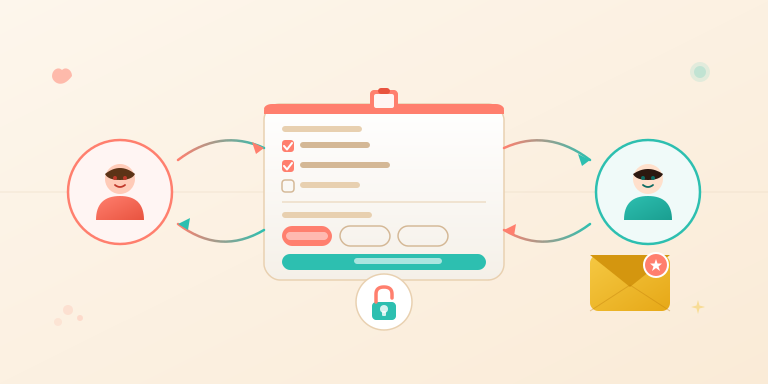
When a user takes the time to update their preferences, they are signaling a desire to stay. They are no longer "tolerating" your emails; they are curating them. By offering choices—such as "weekly updates," "product launches only," or "educational content"—you significantly reduce churn while increasing the lifetime value of the subscriber.
Turning Data into Actionable Email Programs
Collecting data is the easy part; the challenge lies in the orchestration. Every data point you collect must be tethered to a specific segment, automated flow, or content strategy.
Dynamic Segmentation and Automation
If a subscriber identifies as a "beginner" in your niche, they should receive an onboarding sequence that educates and eases them into the product ecosystem. Conversely, an "advanced" user should receive more technical, high-value content.
Combining zero-party data with first-party behavioral signals provides the most complete picture possible. When you layer "what they said they want" (zero-party) with "what they actually bought and clicked" (first-party), you create a high-precision profile that allows for hyper-relevant messaging at scale.
Platforms like Omnisend have become leaders in this space by allowing brands to store custom properties at the subscriber level. This enables dynamic segmentation where, for example, a post-purchase complaint about delivery times can be noted in a subscriber’s profile, allowing customer service or future marketing to acknowledge that context.
Implications for Future Growth
The brands that win in the coming years will not necessarily be the ones with the largest email lists. They will be the ones with the most intelligent, high-fidelity data and the systems in place to act on it.
The Ethical Advantage
There is an inherent honesty in zero-party data. It respects the subscriber’s autonomy. When you ask a customer what they need and then act upon that information, you build a foundation of trust that is difficult for competitors to replicate.
Technical Infrastructure
For founders and marketers, the barrier to entry for these systems is lower than ever. The modern stack—which includes tools for quiz integration, dynamic segmentation, and automated workflows—is designed to handle this data at scale.
If you are currently relying on an outdated platform, the cost of switching is often offset by the gains in efficiency and deliverability. Many modern providers, including Omnisend, offer white-glove migration services to move lists, flows, and templates, ensuring that the transition is seamless. Furthermore, with the rising costs of paid acquisition, the ROI of a well-segmented email program is not just a "nice to have"—it is an essential hedge against rising customer acquisition costs (CAC).
Conclusion: A New Era of Email Marketing
The era of "spray and pray" email marketing is ending. In its place is an era of precision, personalization, and mutual value. By treating your subscribers as partners who are willing to share information in exchange for a better experience, you stop being a source of noise and start being a trusted resource.
Whether through the interactive, high-intent nature of a product quiz, the deep insights of a post-purchase survey, or the collaborative control of a preference center, zero-party data is the key to unlocking true personalization.
The goal is simple: create an email program that earns its place in the inbox every single day. For those ready to make the switch, the infrastructure is already here—it’s time to stop guessing and start building a more responsive, profitable, and human-centric marketing machine.
Ready to modernize your marketing? With tools like Omnisend, you can leverage custom properties and dynamic segments to turn subscriber data into real growth. Use code FOUNDR50 to receive 50% off your first three months and begin building a more meaningful connection with your audience today.


 Iffa Jayyana
 Raul Delapena Setiawan
 Laily UPN
 Rifan Muazin
 Suro Senen
 Lina Hope
 Lina Irawan