
 Nila Kartika Wati
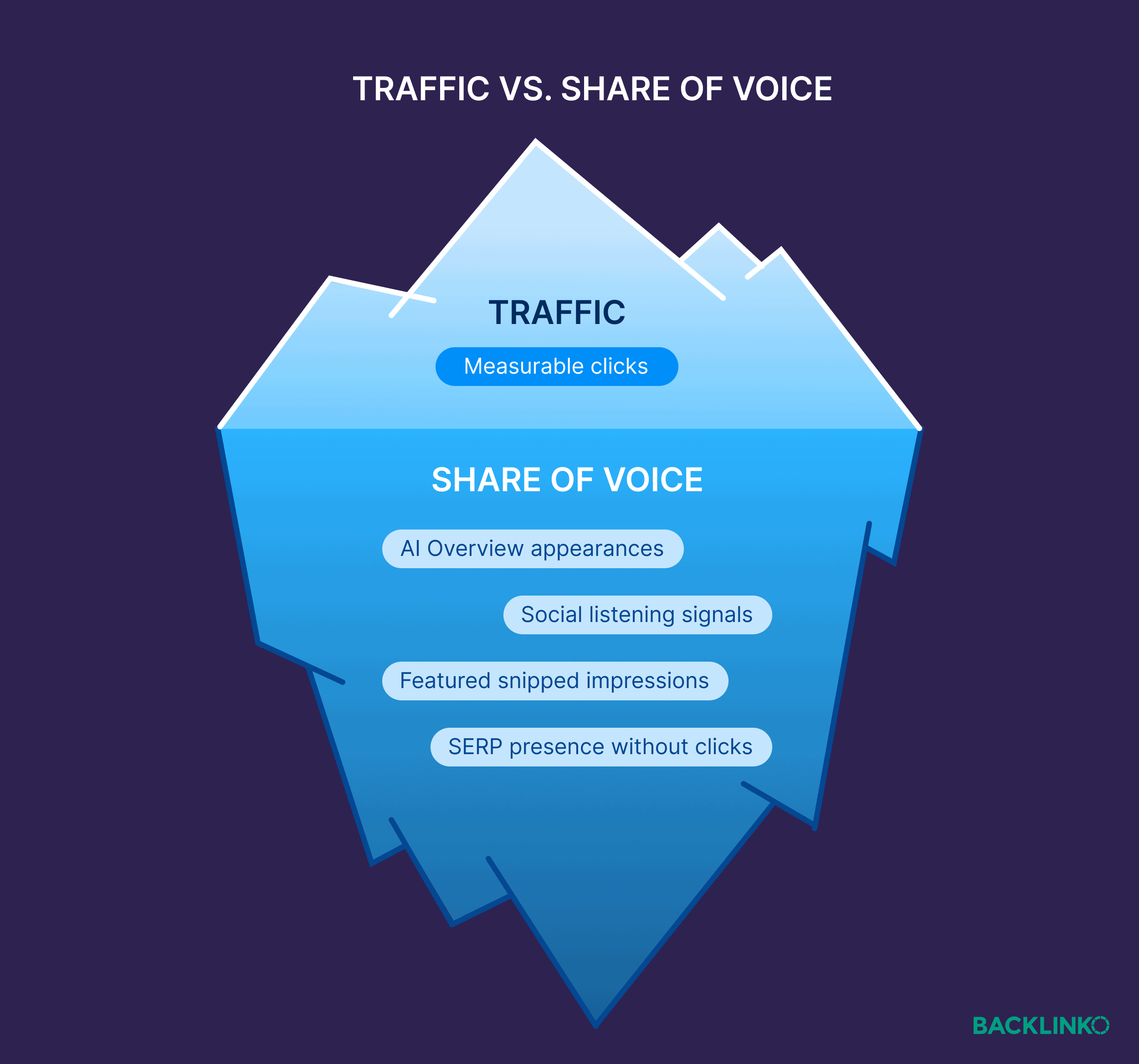
In the traditional digital marketing playbook, success was defined by a single, seductive metric: the click. We tracked sessions, we measured bounce rates, and we obsessed over conversion funnels. But as the digital landscape undergoes a radical transformation, the dashboard that once told you everything is now telling you only half the story.

Today, a buyer might read an AI-generated summary that highlights your competitor, or scroll through a Reddit thread about software solutions where your brand is conspicuously absent. That is lost visibility—a critical missed connection that never registers in Google Analytics or your standard traffic reports. As search behavior shifts from simple keyword queries to complex AI-assisted research, your reliance on "traffic" as a primary KPI is becoming a liability.
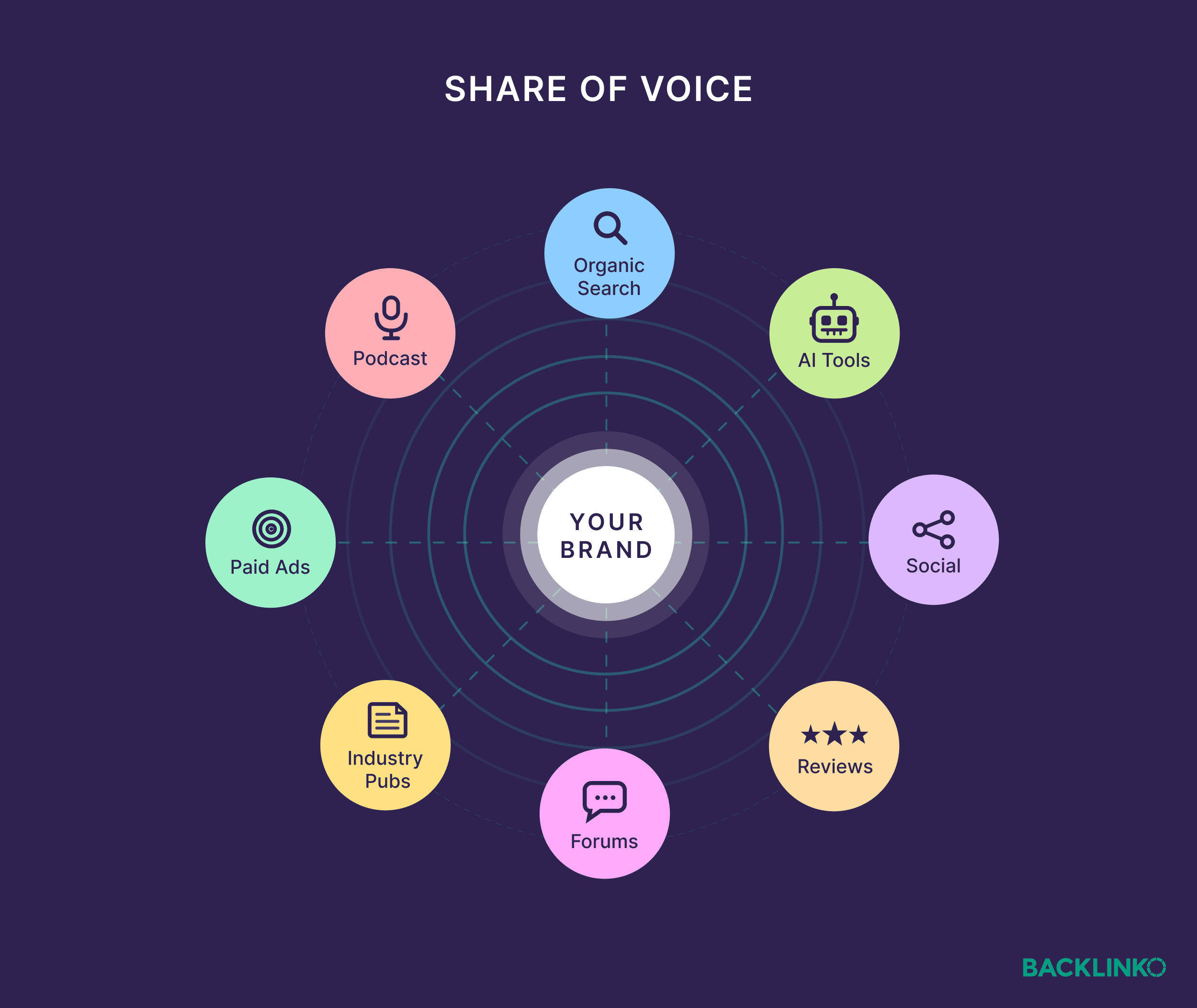
It is time to pivot toward Share of Voice (SoV). Once a legacy metric used by advertisers to measure ad spend, SoV has evolved into the most potent indicator of brand health in an era of fragmented, AI-driven discovery.
What Is Share of Voice in 2026?
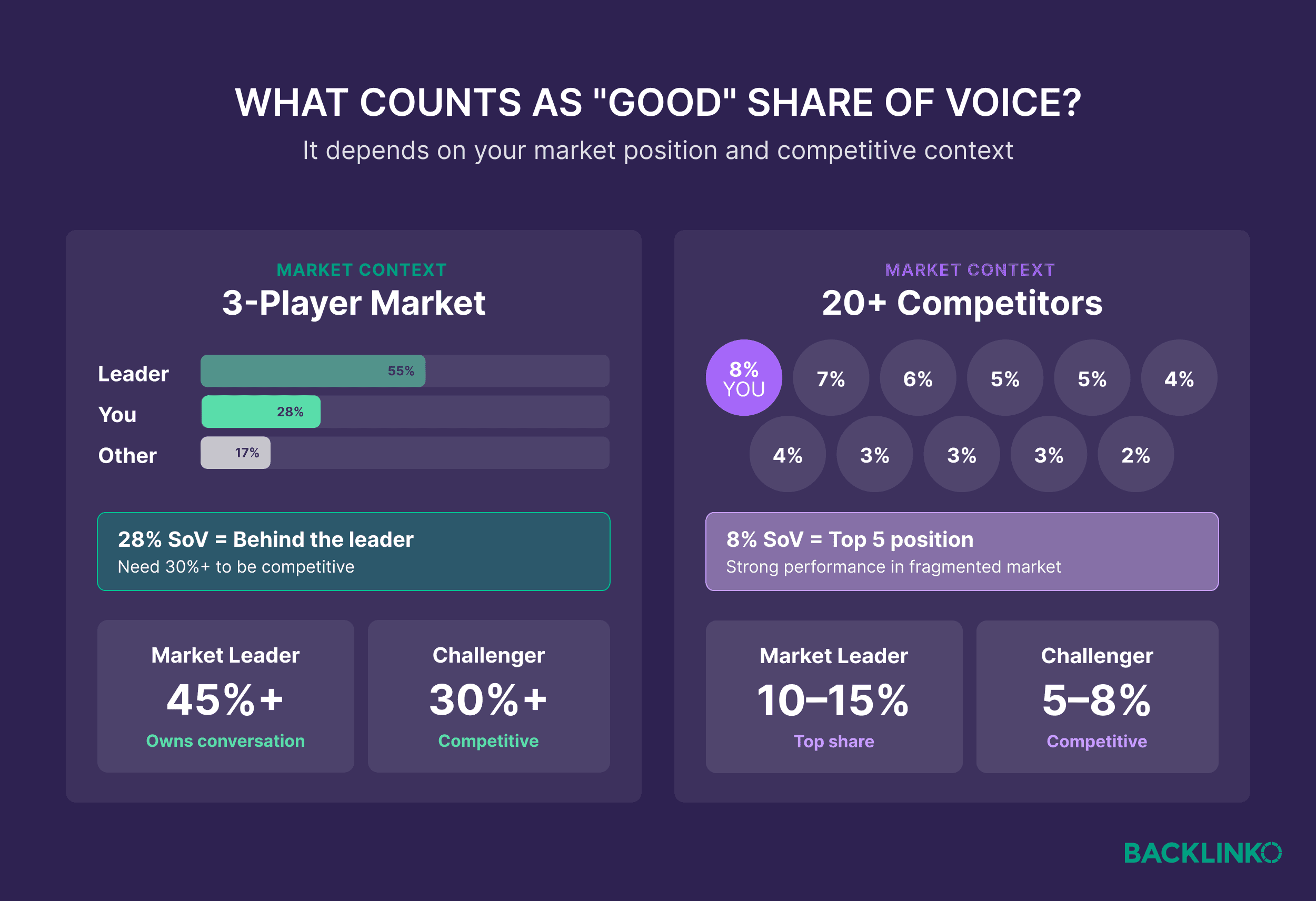
At its core, Share of Voice measures your brand’s visibility relative to your competitors across the channels where your customers actually make decisions. It is the percentage of the "category conversation" that you own.
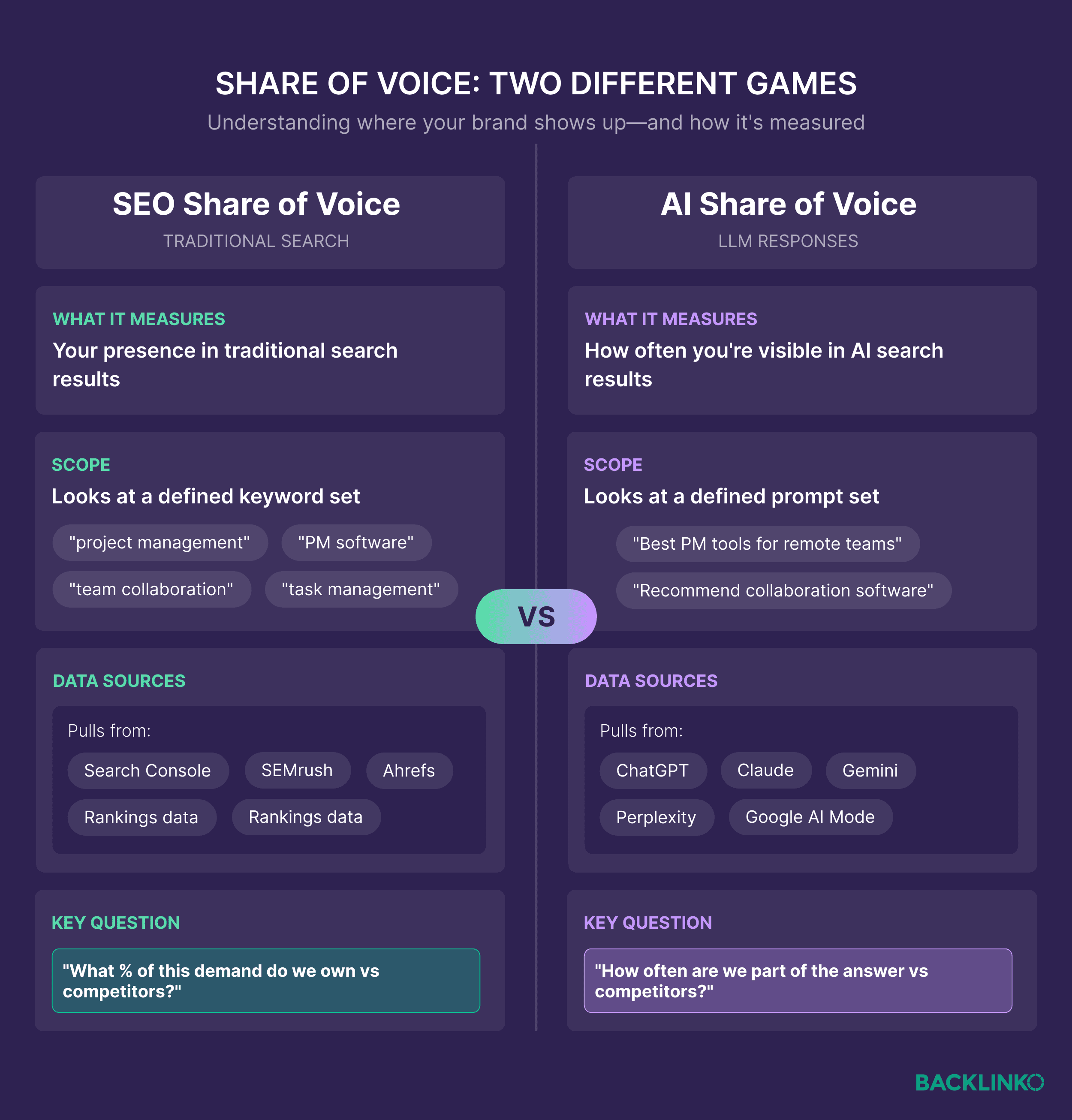
While SoV spans social media, public relations, and paid advertising, the most immediate battleground is search. This includes both traditional organic results and the emerging realm of AI search (LLMs like ChatGPT, Perplexity, and Google’s AI Overviews). Because search remains the primary destination for users with high purchase intent, it is the most reliable place to start measuring your competitive footprint.
Why Traditional Traffic Data is Failing
Your analytics platform is, by design, a lagging indicator. It tells you what happened after a user landed on your site. It cannot tell you how many users saw your competitor in an AI overview and chose them instead. With the rise of "zero-click" searches—where the search engine provides the answer directly—the window of opportunity to earn a click is closing. SoV solves this by measuring your presence in the consideration set, regardless of whether a user eventually clicks through to your landing page.
Chronology of a Search: From Keyword to Conversation
To understand the shift in SoV, we must look at how the buyer’s journey has evolved:
- The SEO Era (Pre-2023): Users searched for a specific problem. They clicked the top result, scanned the page, and potentially converted. Success was measured by rank and traffic.
- The Hybrid Era (2024-2025): Users began using AI to synthesize answers. Brands had to compete for both the "blue link" (SEO) and the "answer box" (AI).
- The Cognitive Era (2026 and beyond): Discovery is now fragmented. Buyers ask LLMs for advice, browse peer-to-peer community forums, and rely on synthesized summaries. If you aren’t being cited in those summaries, you are effectively invisible.
Measuring Your Share of Voice: A 4-Step Framework
Calculating SoV might seem daunting, but it becomes actionable when broken into four distinct steps.

Step 1: Define Your Industry Landscape
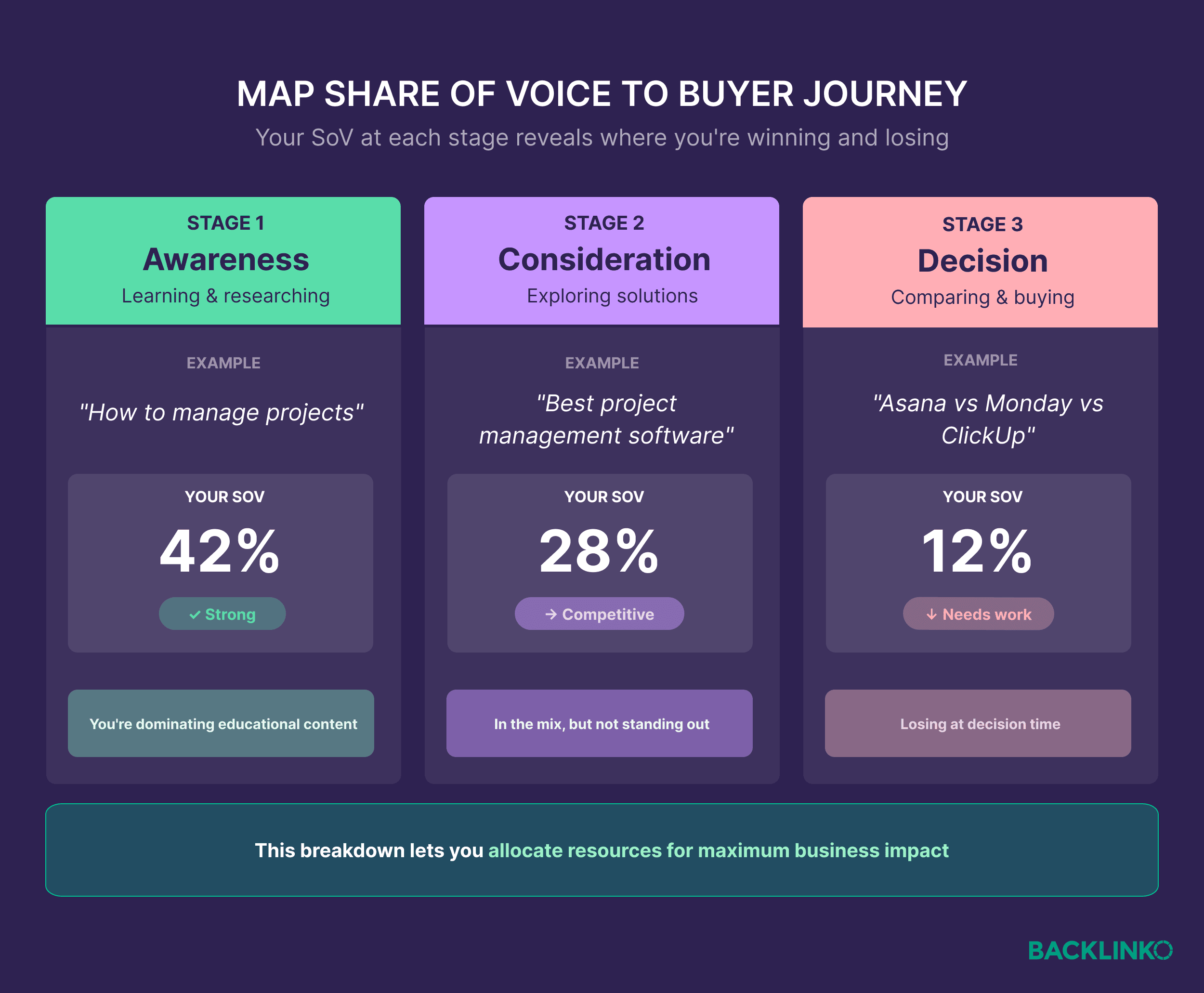
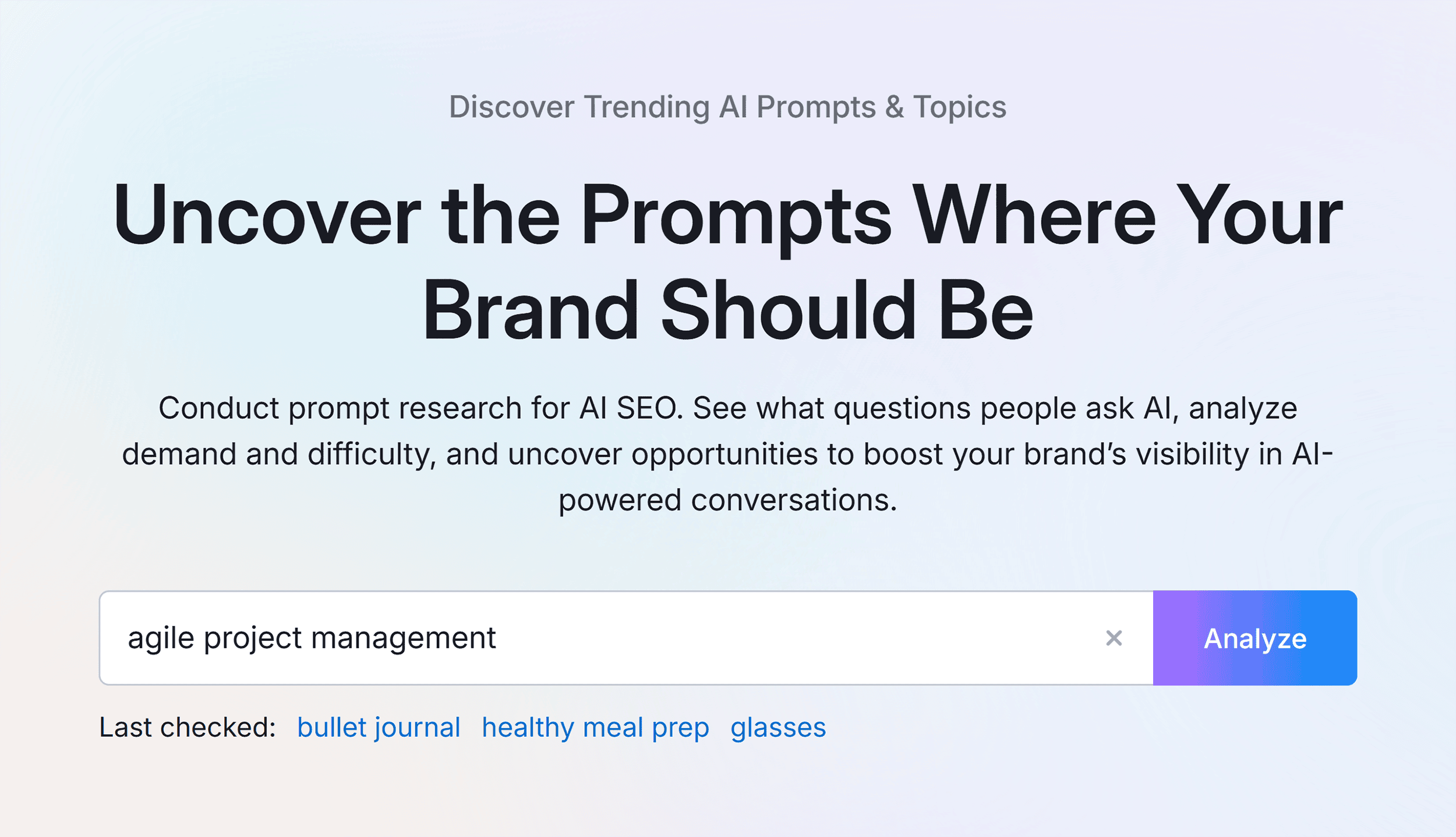
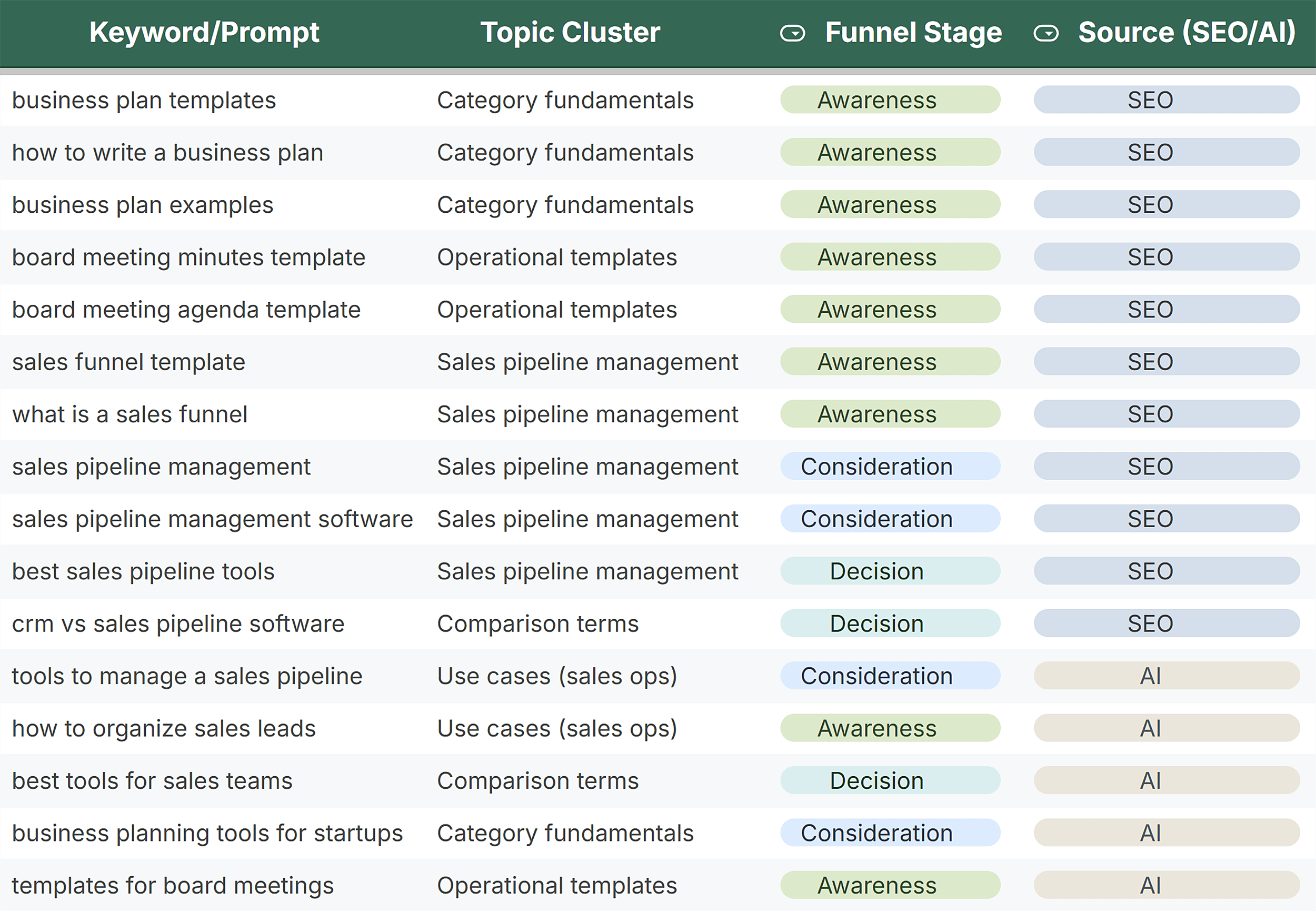
You cannot measure what you haven’t bounded. Start by identifying your "Topic Clusters"—the core themes that drive your revenue. For a project management software company, these might be:
- Awareness: "What is agile project management?"
- Consideration: "Best project management tools for remote teams."
- Decision: "[Your Brand] vs. [Competitor]" or "Alternative to [Competitor]."
Categorizing these by funnel stage allows you to see where you are winning and where your brand is leaking potential revenue.
Step 2: Build Your Keyword & Prompt Library
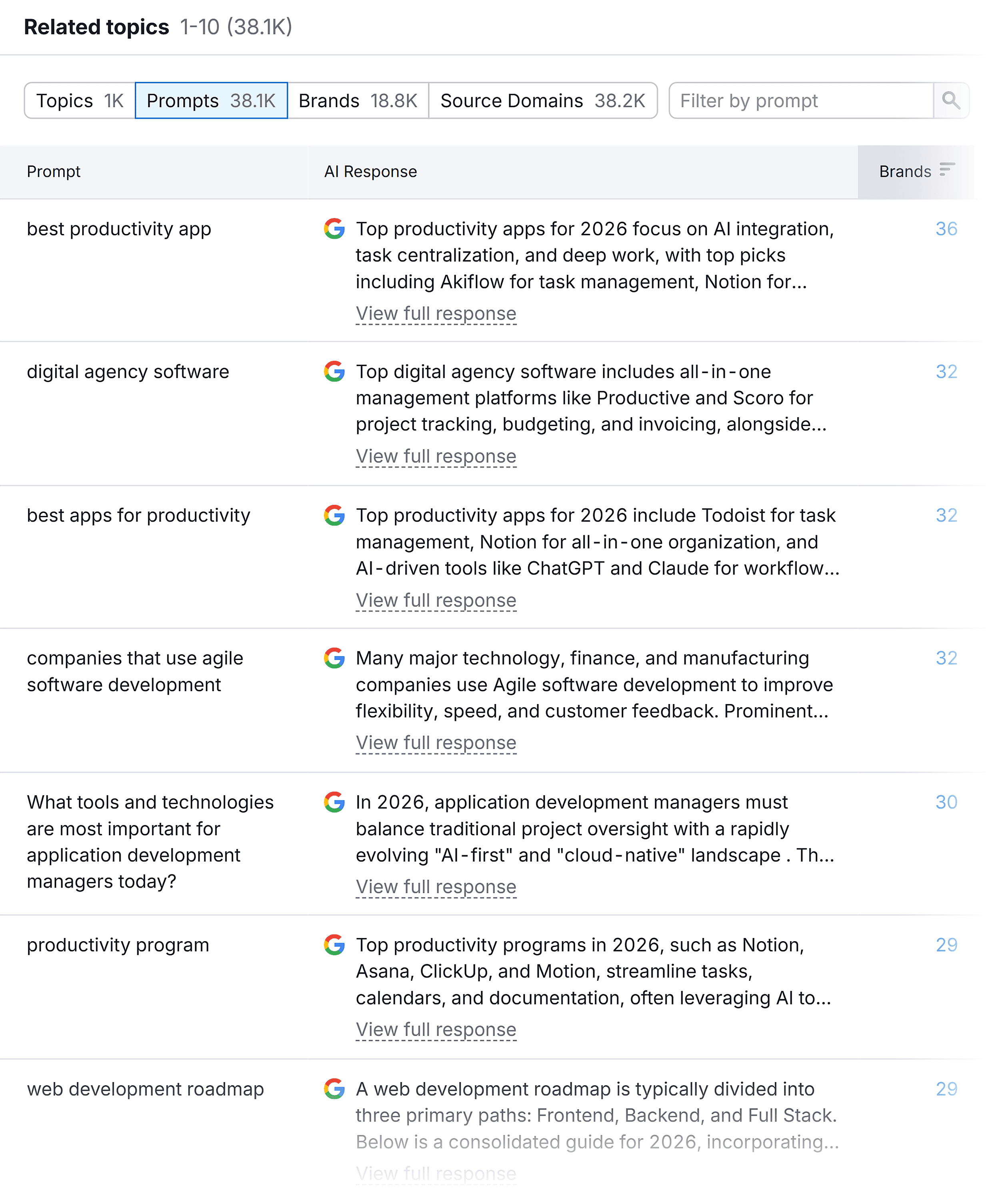
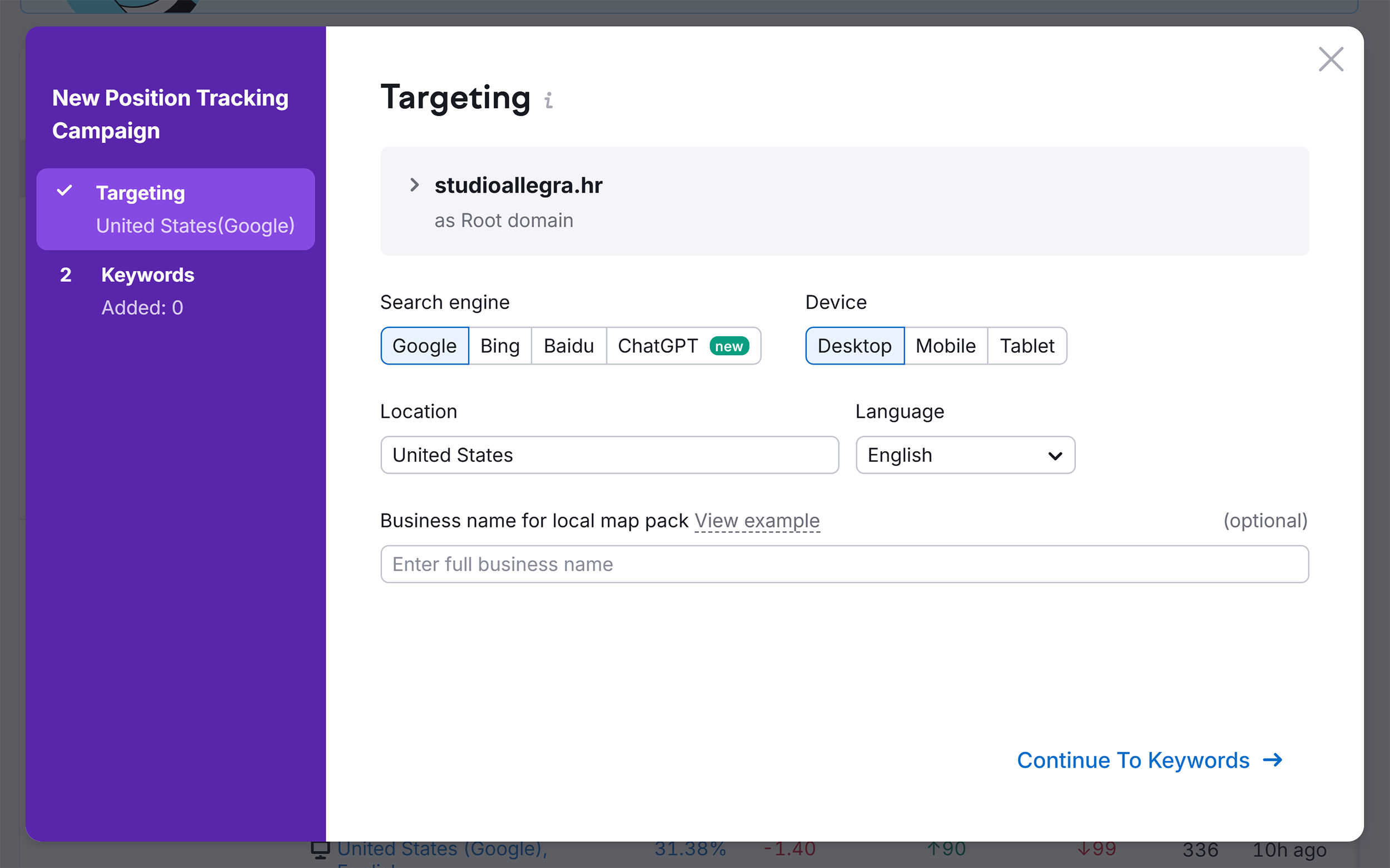
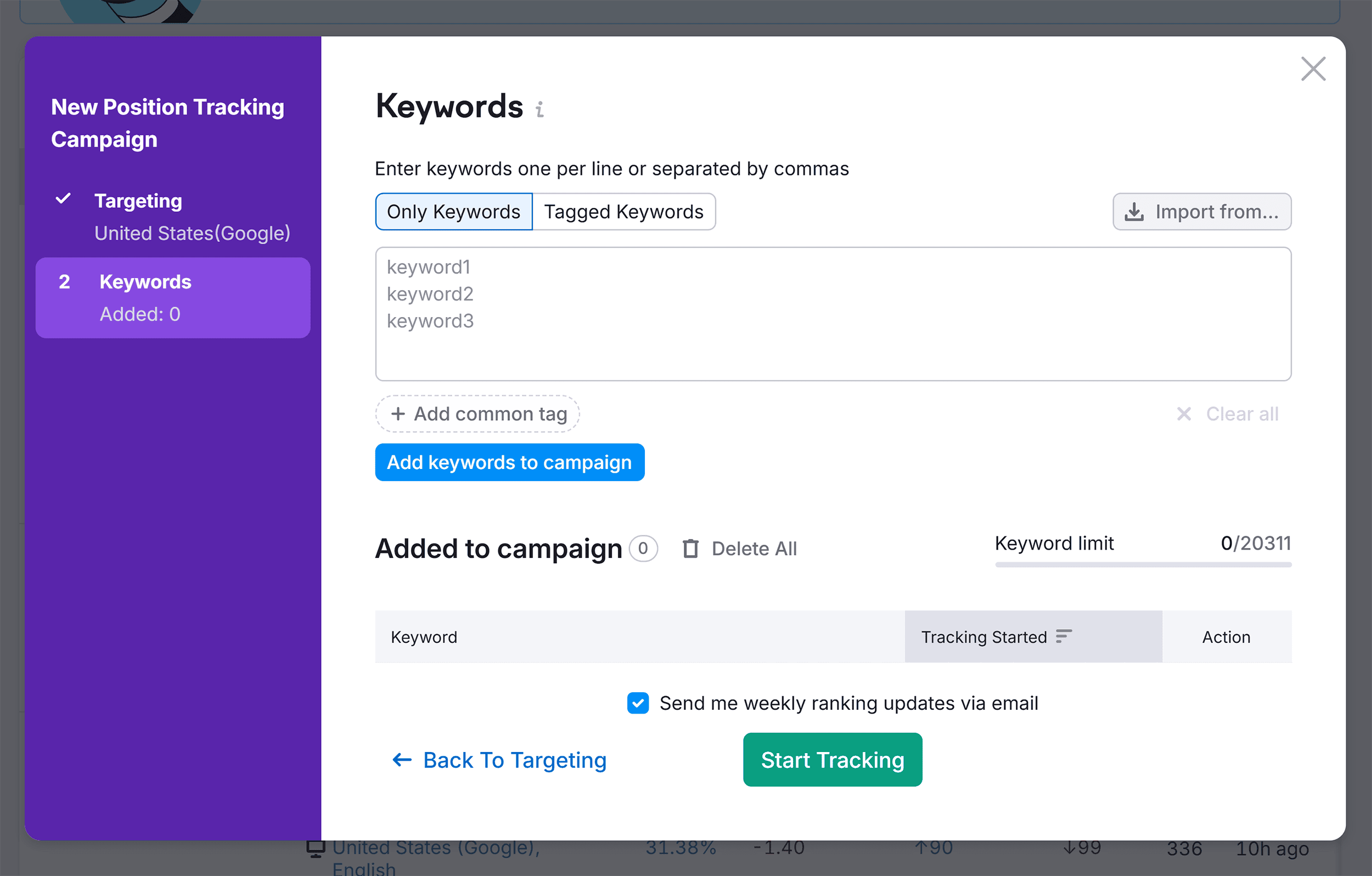
You need to track both keywords (what people type into search bars) and prompts (what people ask AI models).
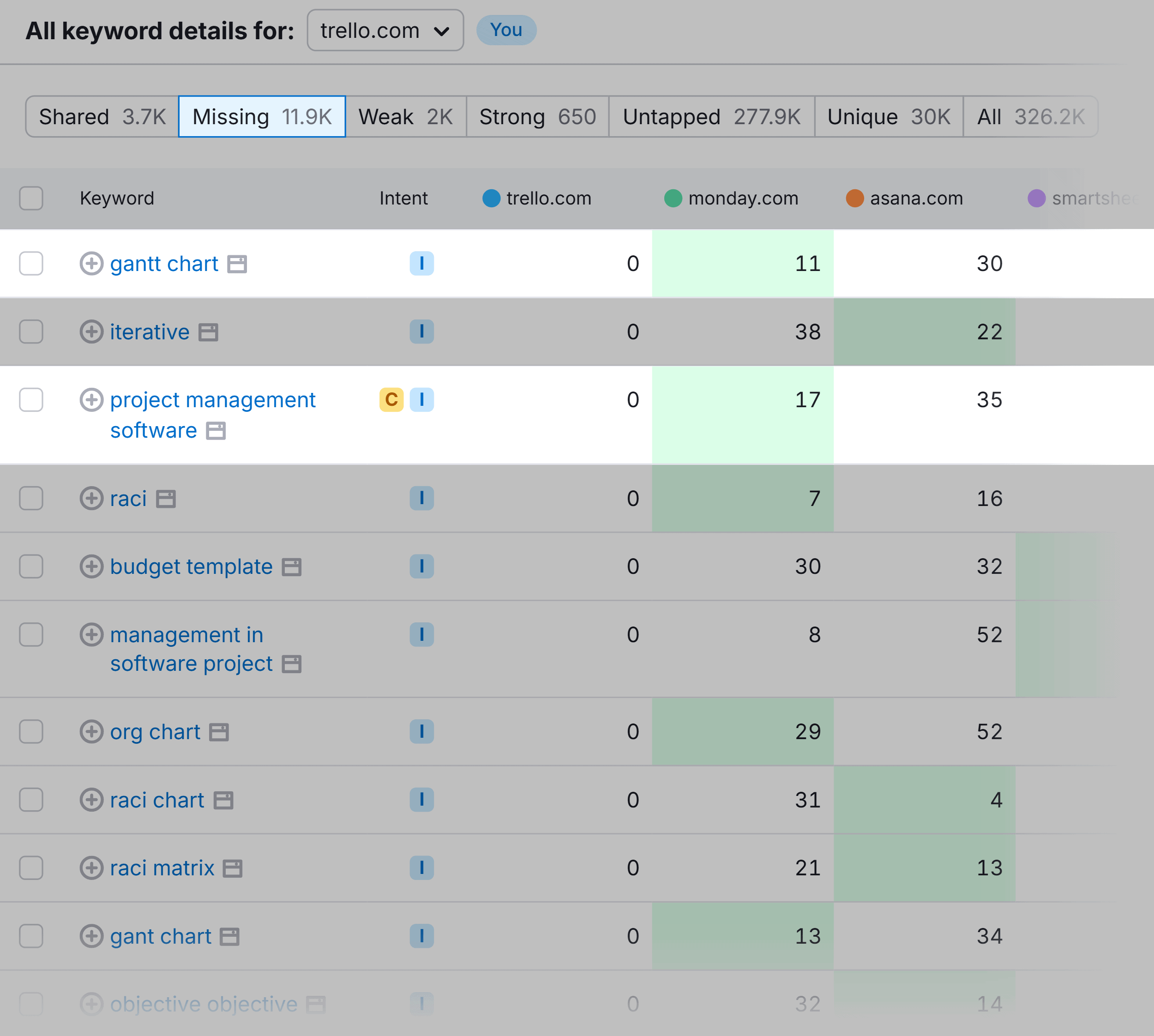
- SEO Data: Export your "Impressions" report from Google Search Console. Impressions are the best proxy for brand awareness, as they record every time you appear in a user’s peripheral vision.
- AI Data: Browse communities like Reddit to see the specific pain points your customers describe. If a user asks, "What’s the most user-friendly tool for a creative agency?", that is your target prompt.
Step 3: The Calculation Mechanics
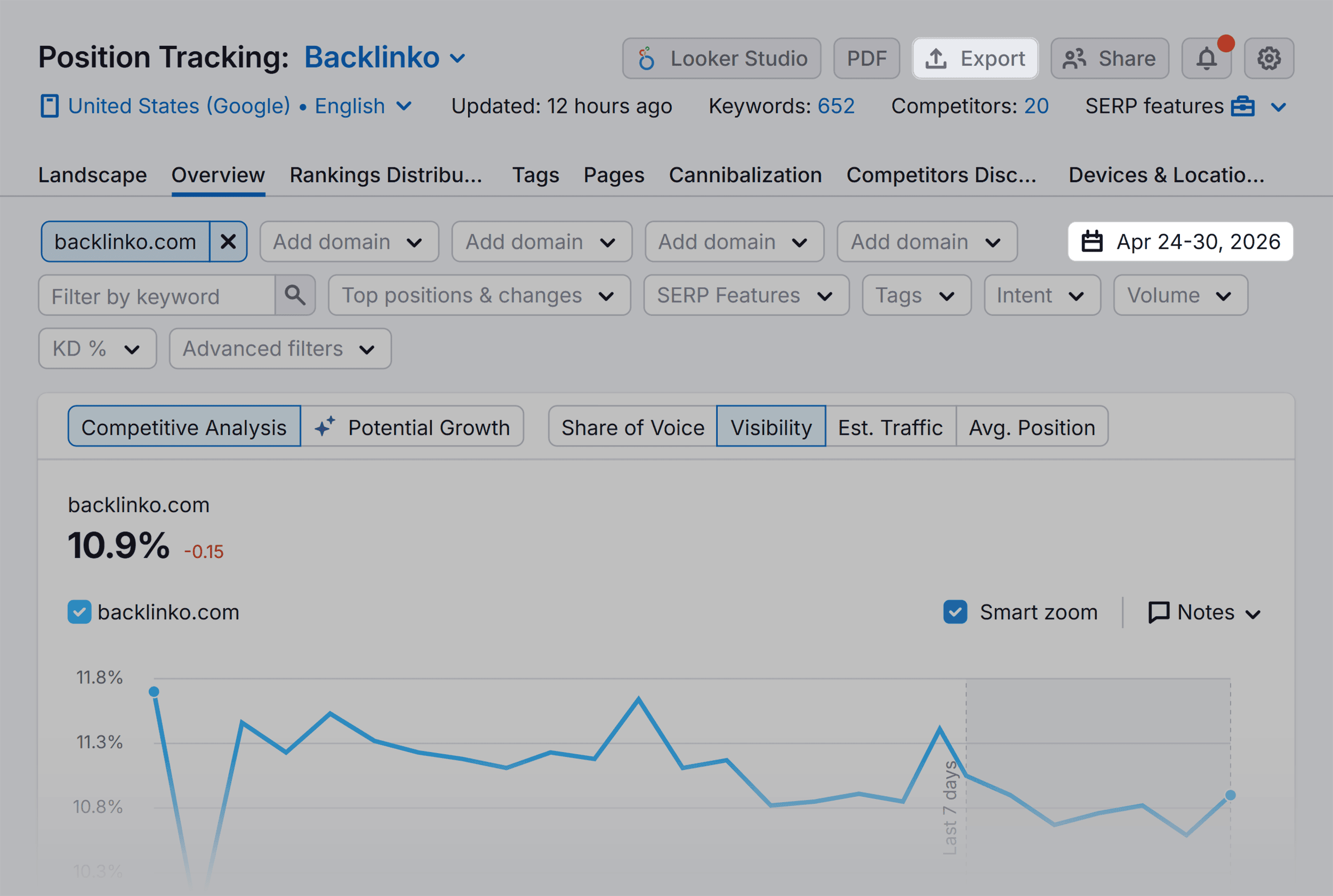
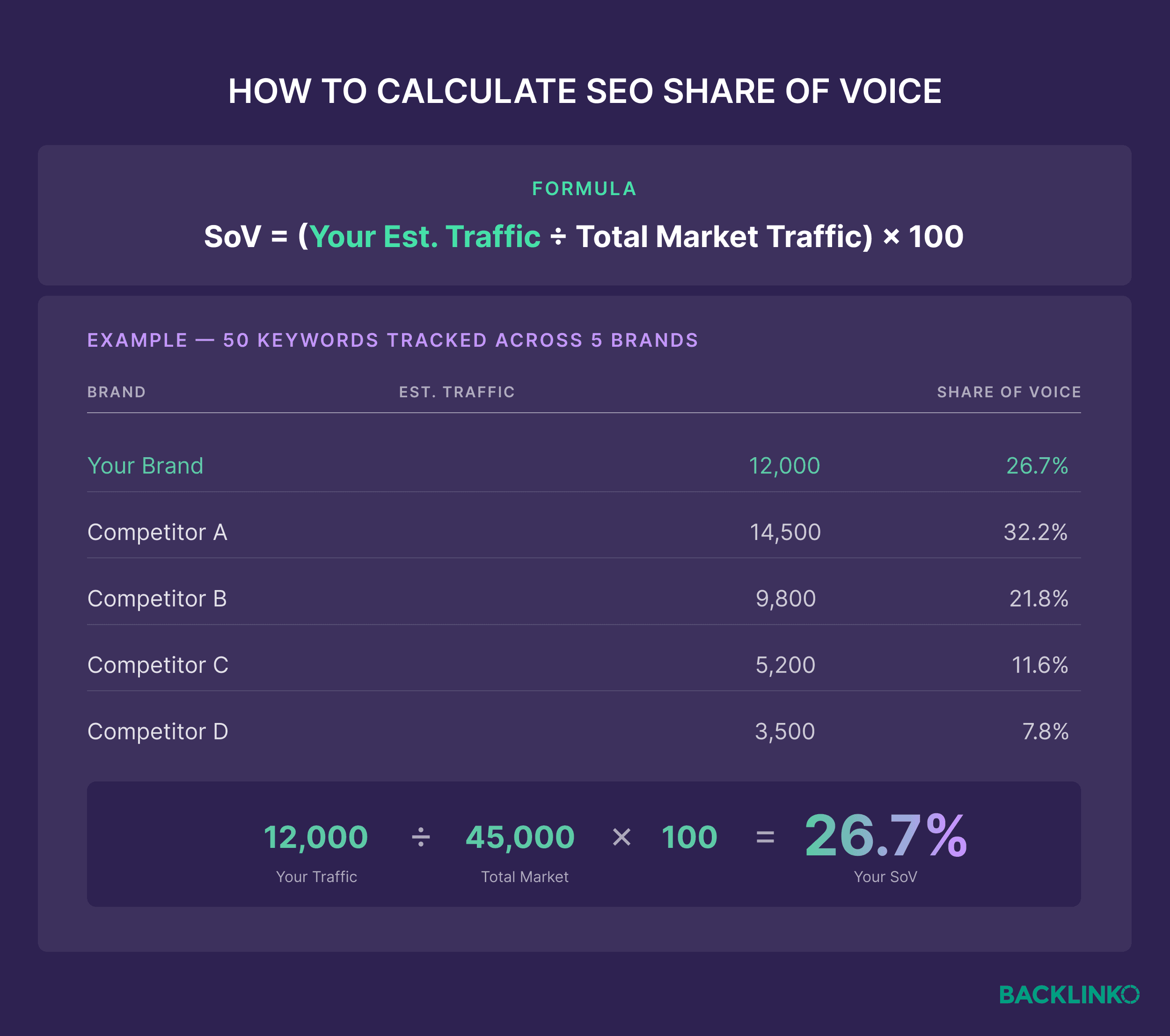
Your SoV is calculated as: (Your Estimated Traffic / Total Market Traffic) x 100.

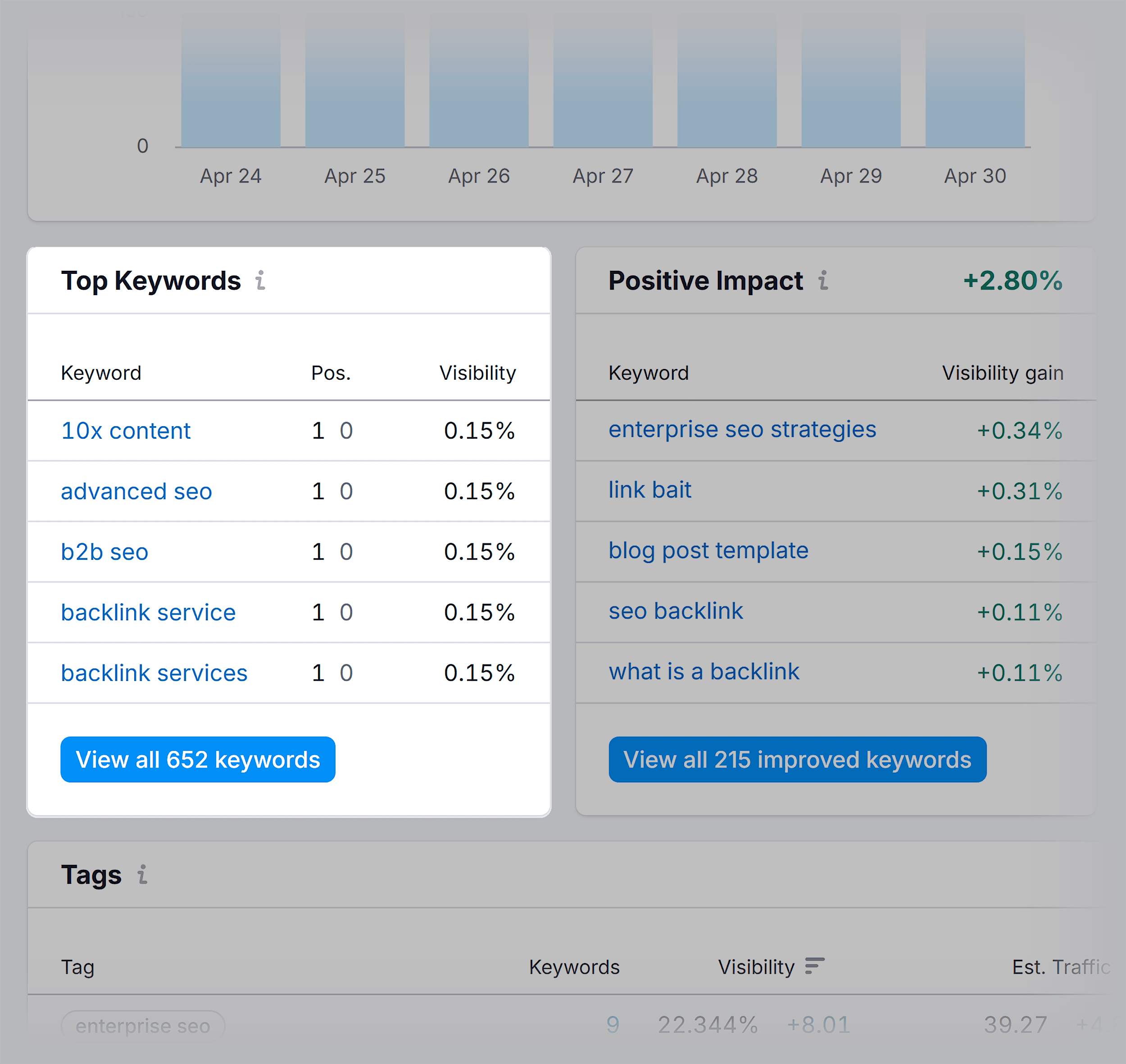
For SEO SoV, track your ranking positions against your top four competitors. Since position #1 captures roughly 27% of clicks, you can use these industry-standard benchmarks to estimate your traffic share.
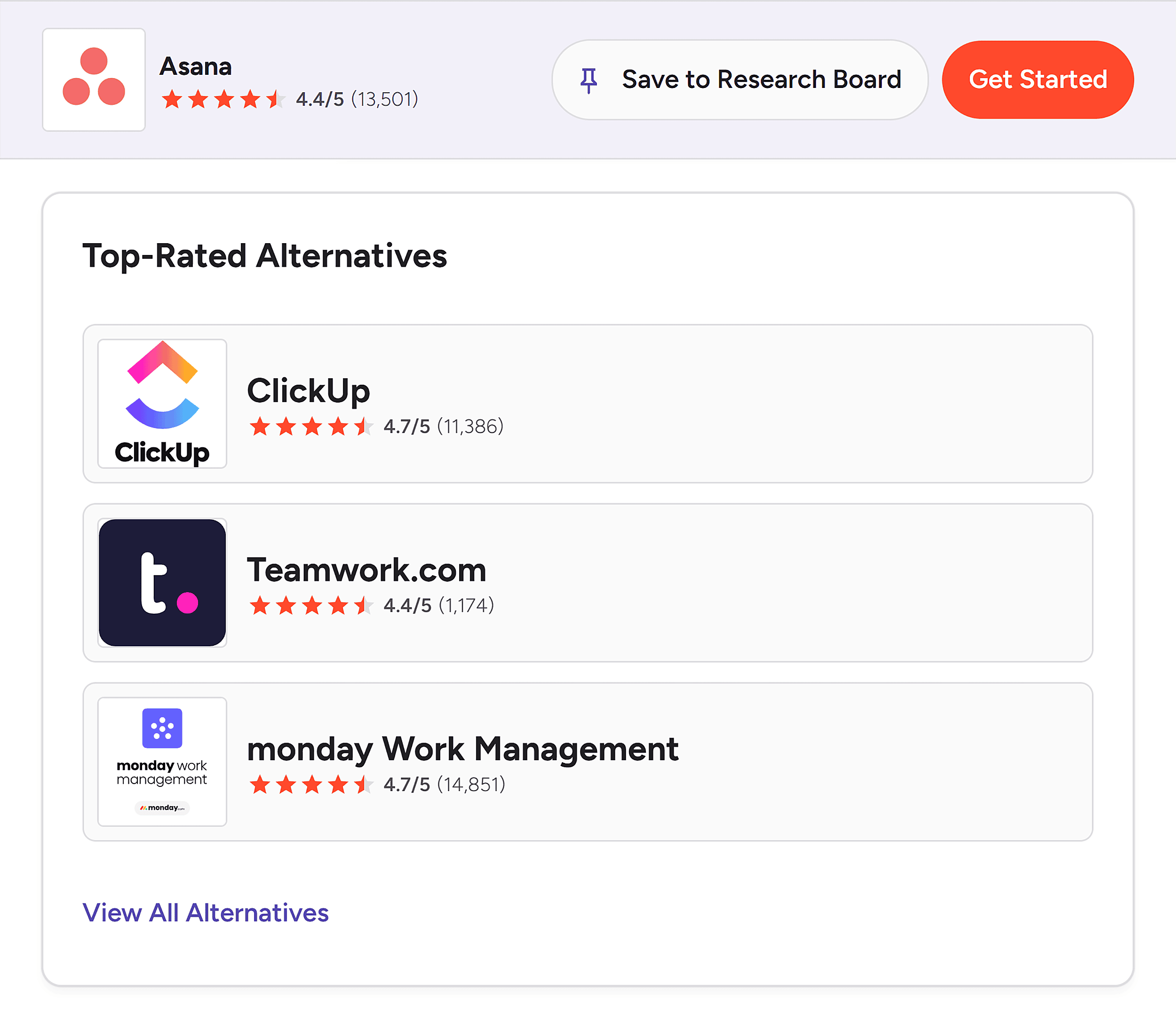
For AI SoV, the process is more qualitative. Test your prompt library across different LLMs. Count how many times your brand is mentioned or cited compared to your competitors. While this provides a "directional" rather than exact metric, it is an essential gauge of how AI models perceive your brand’s authority.
Step 4: Establish Your Baseline and Track Trends
Once you have your numbers, stop looking at them in isolation. Create a dashboard that tracks your SoV over time. A monthly cadence is usually sufficient to spot trends without reacting to daily noise. Use quarterly deep dives to adjust your content strategy based on which clusters are gaining or losing ground.
Strategic Implications: How to Move the Needle
Once you have the data, you need the strategy to improve your standing.
1. Close the Visibility Gaps
If you have less than 10% SoV in a key cluster, you are effectively invisible. To fix this, build "Topical Authority." Create a central pillar page for the topic, surrounded by smaller, supporting articles that link back to the core asset. This signals to both Google and LLMs that you are a comprehensive resource on the subject.
2. Solve for Efficiency
Do not chase vanity metrics. If you have high SoV for a broad, low-intent term like "What is project management," but your conversion rate is abysmal, you are winning the wrong game. Shift your resources toward bottom-of-funnel content—comparison pages, case studies, and ROI calculators—where the intent is highest.
3. Address Competitive Threats
If a competitor begins gaining 5% or more of SoV in your "stronghold" clusters, take it as an early warning. If they are winning on review sites like G2 or Capterra, launch a campaign to source more customer reviews. If they are dominating AI responses, revisit your content to ensure it is structured in a way that AI models can easily parse, cite, and recommend.
The Verdict: A New Way Forward
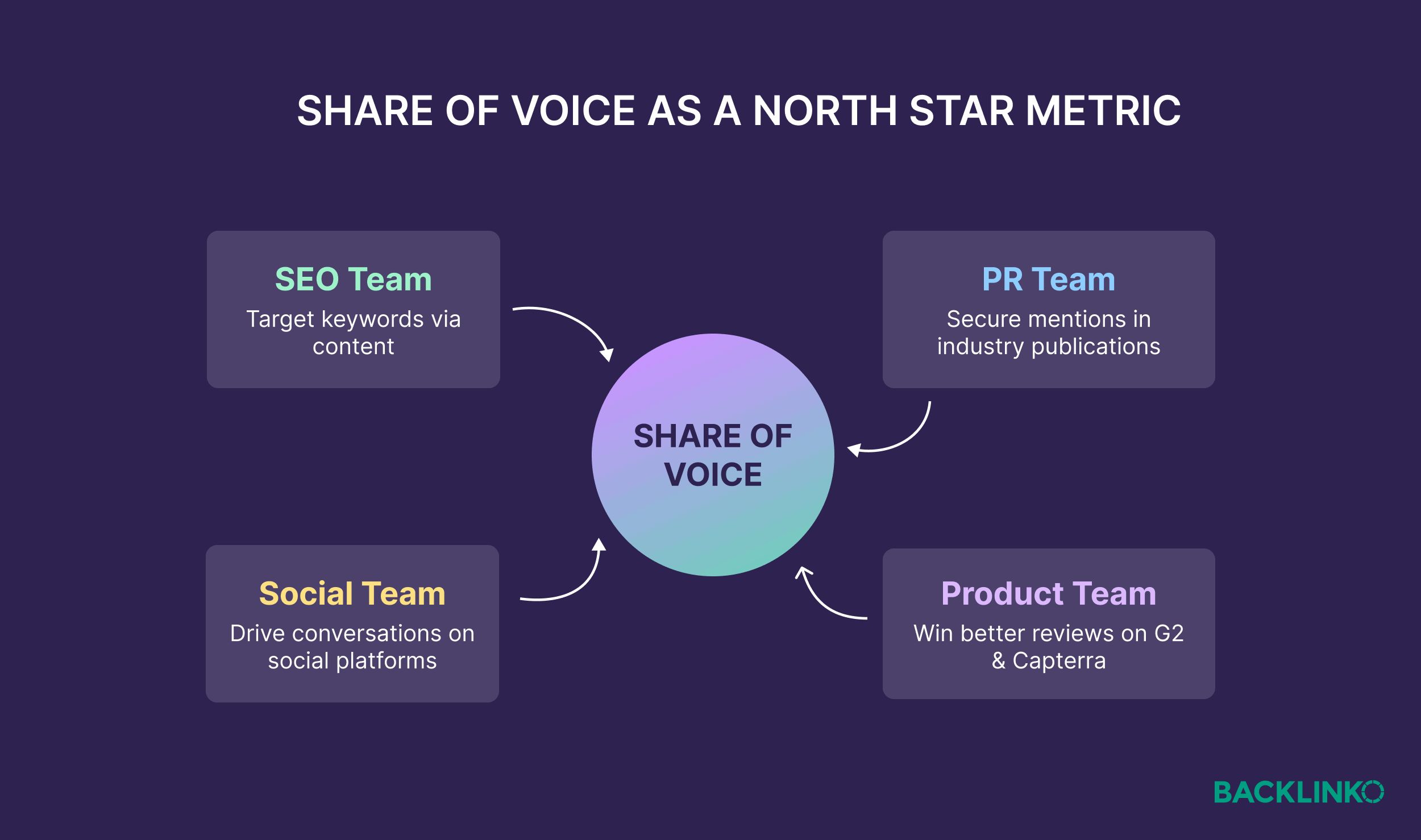
The marketing team of 2026 cannot afford to operate in silos. The SEO team wants traffic, PR wants mentions, and the social team wants engagement. Share of Voice is the only metric that bridges these silos. When every department rallies around a single percentage of "category ownership," the strategy becomes unified.
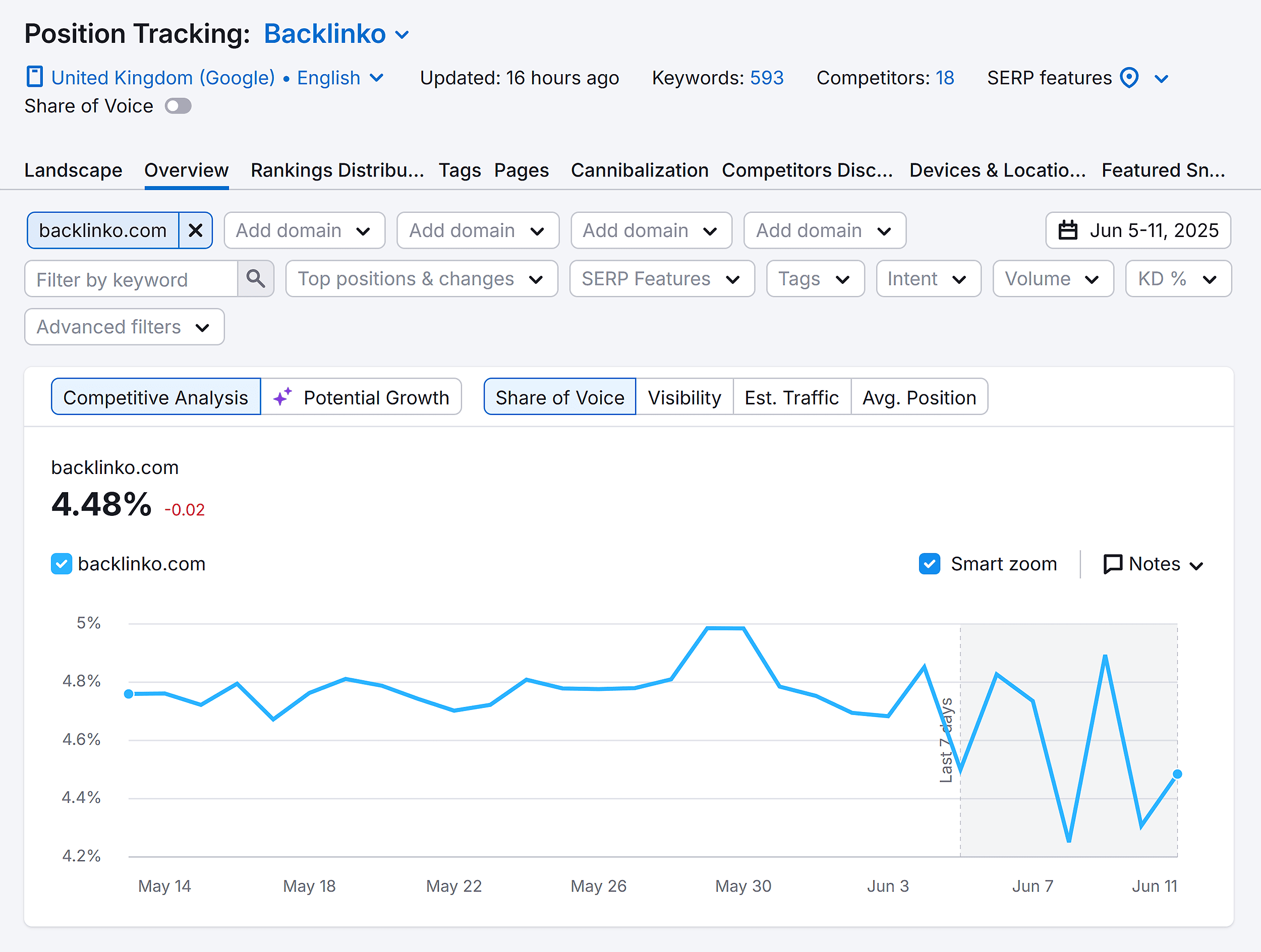
Ultimately, SoV is about more than just numbers on a screen. It is about understanding the conversation in your category and ensuring that when your customer asks for help, your brand is the first one they hear.

Note: Backlinko is owned by Semrush. This content was developed to provide actionable insights into the evolving landscape of search visibility, ensuring brands remain competitive in the age of AI.


 Asro
Asro
 Layla Zulfa
 Rifan Muazin
 Nana
Nana
 Asep Darmawan

 Muslim