
 Lina Hope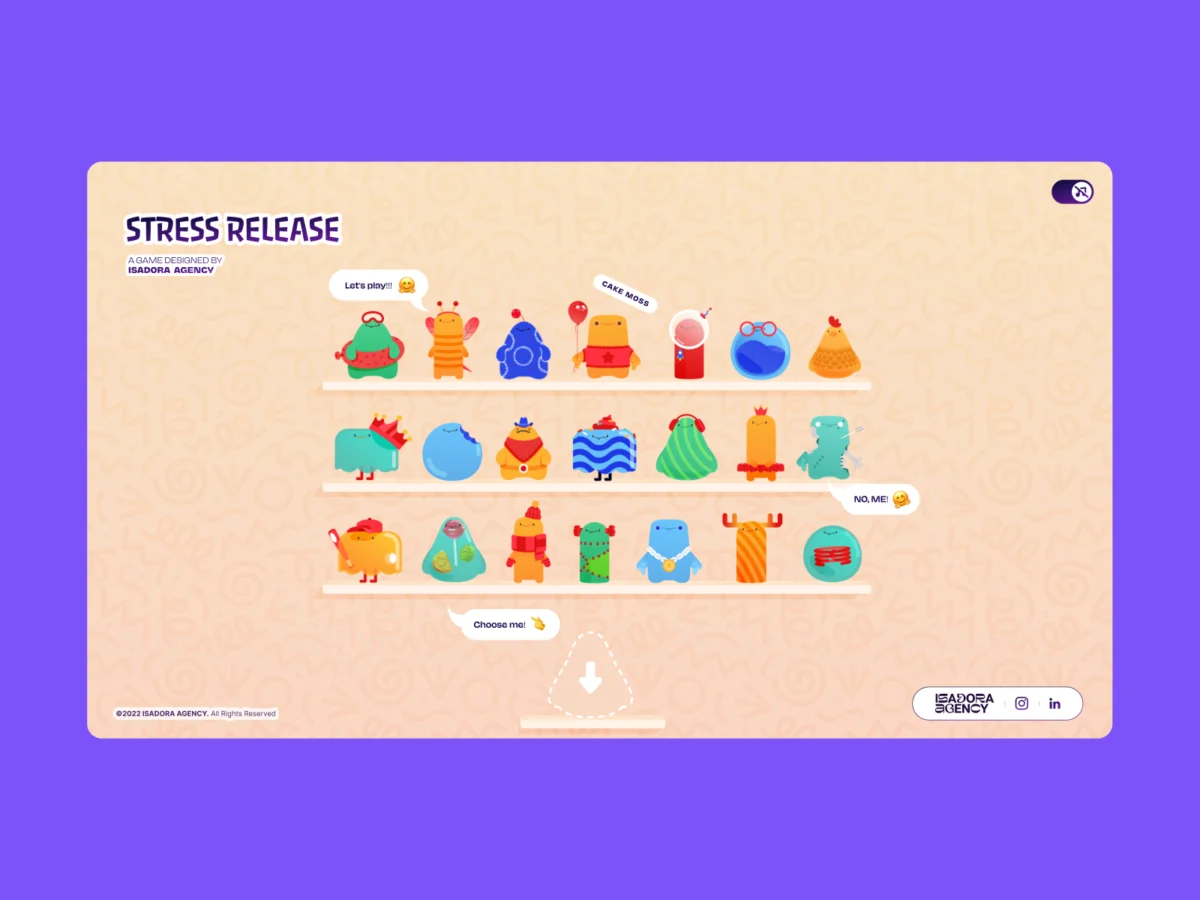
In the modern web development landscape, the pursuit of "tactile" digital experiences is often synonymous with the integration of physics engines. From the weightless bounce of a menu item to the chaotic collision of elements in a browser-based game, libraries like Matter.js and Cannon.js have become the standard toolkit for developers aiming to add a layer of physical realism to the screen. However, for the creative team at Isadora Agency, this industry-standard approach proved to be a fundamental mismatch for their latest project, Stress Release.
Tasked with building a digital stress-relief toy that allowed users to squish, distort, and interact with animated characters, the team faced a dilemma: should they simulate reality, or should they honor the designer’s intent? Their decision to abandon traditional physics in favor of a bespoke, deterministic architecture provides a masterclass in how to prioritize art direction through code.
The Design Requirement: Prioritizing "Intentional Motion"
When the team at Isadora Agency conceptualized Stress Release, they weren’t aiming to replicate the physics of a rubber ball or a bouncy cube. They were aiming for a specific, emotional, and highly polished interaction. Their animators had spent weeks crafting bespoke JSON-based Lottie files, each containing precisely timed, frame-by-frame sequences that captured the "squishiness" of the characters.
"We realized early on that physics engines produce plausible motion, but our animators had produced intentional motion," explains Alexey Kopytin, the lead developer on the project.
In a traditional physics-driven environment, an object’s reaction is dictated by velocity, friction, and mass—variables that are notoriously difficult to force into a specific, artistic keyframe sequence. If the team had opted for a physics engine, they would have been forced to approximate the animators’ work, essentially overwriting hand-crafted keyframes with algorithmic guesswork. For a "mega squeeze" reaction that required a 181-frame build-up followed by a specific release, this approximation would have destroyed the artistic integrity of the work. The team needed a system that allowed for absolute deterministic control.
A Chronology of Implementation: From Concept to Code
The development cycle of Stress Release can be viewed through the lens of a transition from simulation to orchestration.

Phase 1: Breaking Free from the Engine
The first step was the "Great Decoupling." By stripping away the requirement for a physics engine, the team moved the project into the DOM. This shift meant that the browser’s native rendering capabilities—specifically for SVGs—would handle the heavy lifting. By treating Lottie animations as standard DOM elements, the team was able to manipulate them using CSS and standard JavaScript event listeners, effectively turning the browser into a high-fidelity animation stage.
Phase 2: Radial Input Mapping
With the architecture set, the team needed a way to translate user clicks into meaningful, tactile feedback. They implemented a radial input mapping system. By measuring the distance between the center point of a character and the user’s click coordinate, the team created a "concentric zone" scoring system.
Using the Pythagorean theorem—Math.hypot(a, b)—the team calculated the distance of the click from the character’s core. This distance became the single source of truth for the entire interaction:

- The Bullseye: A click within 10 pixels yields maximum points and the most intense animation.
- The Peripheral Zones: As the distance increases, the points and feedback intensity scale down, creating a natural, rewarding feedback loop.
Phase 3: Synchronized Animation States
Once the click was mapped, the final piece of the puzzle was the execution of the animation. The team defined animation segments as specific frame ranges (e.g., [41, 80] for a light reaction). Upon a click, the code would instantly stop the current loop, force a jump to the exact frame range required for the reaction, and lock out further input until the sequence completed. This prevented "animation jitter" and ensured the user felt the weight of their interaction.
Supporting Data: The Efficiency of the DOM
While many developers fear that moving away from WebGL will result in performance bottlenecks, Isadora Agency’s approach proved otherwise. By using the DOM, the team avoided the overhead of managing complex WebGL hitboxes and collision vectors.
The responsive nature of the app was handled entirely through CSS custom properties. As the window size changes, the application recalculates the --doc-height and --doc-width variables, allowing the SVGs to scale proportionally without the need for intensive re-renders or coordinate re-mapping.

However, the team did face a significant challenge: file size. With 21 distinct characters, the total weight of the Lottie JSON files could have easily ballooned, leading to slow load times. To mitigate this, they implemented a two-tiered optimization strategy:
- Shelf Level: When viewing the character selection screen, they set the Lottie quality to 0.5 and reduced the speed to 0.6. This significantly lowered the CPU cost of rendering 21 concurrent animations.
- Play Level: Once a user selects a character, the application switches to full quality, focusing all processing power on the single active, high-fidelity interaction.
Official Responses and Philosophical Shifts
The industry at large has often viewed "tactile" as a synonym for "physics-based." This project challenges that assumption. By treating the browser as a canvas for intent rather than a laboratory for simulation, the Isadora Agency team has sparked a conversation about the role of the developer in modern UX design.
In their internal post-mortem, the team emphasized that the "tactile feel" of Stress Release is not a result of realistic physics, but of spatial accuracy. By ensuring that the explosion animation, the score feedback, and the character distortion all trigger at the exact vector of the click, they created an illusion of physicality that feels more deliberate and "human" than any physics simulation could achieve.

The Broader Implications for Web Design
The implications of this approach are significant for UX designers and front-end engineers.
- Design-Led Architecture: This project underscores the necessity of choosing a tech stack that serves the art direction. If the goal is a specific artistic outcome, forcing that outcome into a generic simulation framework is often a mistake.
- Deterministic UX: For highly interactive interfaces, being able to predict exactly what will happen on frame 181 of an animation is a massive advantage. Deterministic systems allow for tighter integration between UI elements and creative assets.
- The Renaissance of SVG/DOM Animation: As the power of browsers increases, the need to rely on complex, heavy frameworks decreases. Simple, well-calculated math and efficient use of native DOM events can often yield a smoother, more performant, and more "intentional" result.
Ultimately, Stress Release stands as a testament to the fact that the most sophisticated digital experiences are not always the ones that use the most complex libraries. Sometimes, the best way to make a user feel like they are touching a digital object is to step back from the physics engine and let the code, the math, and the artist’s vision work in perfect, deterministic harmony.

 Sagoh
Sagoh
 Asep Darmawan
 Raul Delapena Setiawan
 Reynand Wu


 Azzam Bilal Chamdy
 Ali Ikhwan