
 Azzam Bilal Chamdy
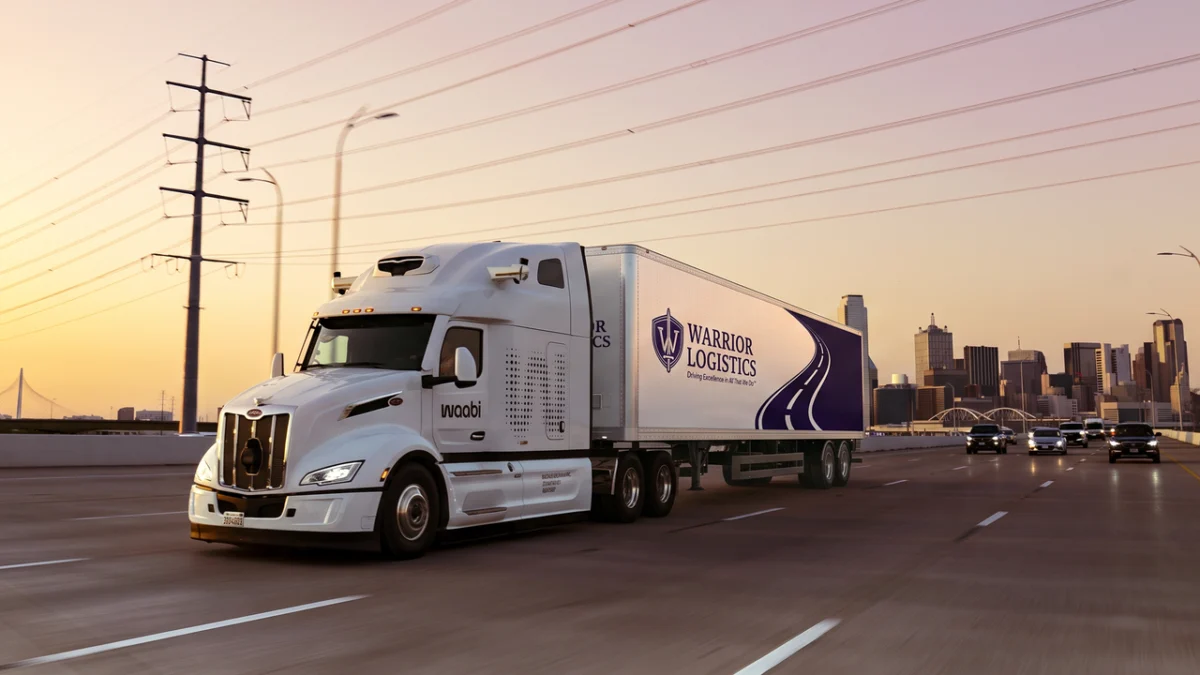
The landscape of American freight is undergoing a seismic shift as autonomous trucking transitions from a futuristic concept to a pragmatic, operational reality. In a move that underscores the rapid maturation of self-driving technology, Waabi, an AI-powered autonomous trucking leader, and Warrior Logistics, a Texas-based asset-based carrier, announced a landmark commercial partnership this Wednesday. This collaboration focuses on the high-traffic corridor between Dallas and Houston, integrating Waabi’s sophisticated "Waabi Driver" technology into the day-to-day operations of one of the region’s most established logistics providers.
For the industry, this partnership represents more than just a technological pilot; it signals the integration of artificial intelligence into the traditional trucking stack, aimed at solving chronic capacity constraints and improving fleet utilization.
A Strategic Alliance for the Texas Corridor
Warrior Logistics, headquartered in Coppell, Texas, has been a fixture in the regional supply chain since its founding in 2015. With a fleet of over 200 trucks, the carrier has long navigated the complexities of hauling consumer goods, food, and beverage products across the Lone Star State. By incorporating a fleet of Waabi-powered autonomous trucks into their network, Warrior is effectively creating a hybrid operational model.
The partnership, which quietly commenced commercial operations earlier this year, has already yielded impressive performance metrics. According to data released by Waabi, the autonomous trucks have achieved a 100% on-time pickup and delivery rate across their completed routes. Perhaps more importantly for the skeptics of autonomous deployment, the operations have recorded zero safety incidents to date. While the companies have maintained discretion regarding the specific size of the autonomous fleet or the total volume of loads hauled, the move represents a significant commitment from Warrior to leverage AI as a primary tool for business growth.
Chronology: From Concept to Commercialization
The trajectory of Waabi’s growth in Texas has been marked by calculated, incremental milestones. The company’s presence in the Dallas-Houston corridor—the lifeblood of Texas logistics—has evolved rapidly over the past two years:
- September 2023: Waabi officially initiated its first revenue-generating loads on the Interstate 45 corridor, coinciding with the announcement of a massive 10-year strategic partnership with Uber Freight. This established a foundation for high-frequency, reliable autonomous freight movement.
- Early 2026: Waabi and Warrior Logistics began their integration phase, testing the technology against the rigors of real-world customer freight.
- July 2026: In a major technical milestone, Waabi demonstrated the "generalization" capabilities of its software. The AI, which had been primarily trained on Peterbilt 579 platforms, successfully piloted a Volvo VNL Autonomous truck without requiring extensive new data sets or manual fine-tuning.
- October 2026: Waabi and Volvo Autonomous Solutions announced the commencement of freight hauling operations for Warp, further expanding the footprint of the Waabi Driver.
- October 14, 2026: The official announcement of the partnership with Warrior Logistics confirmed the expansion of these commercial operations, highlighting the transition from test-bed status to fully integrated business utility.
Why Warrior Logistics Bet on Autonomy
For Scott McFarlane, CEO of Warrior Logistics, the decision to adopt autonomous technology was driven by the fundamental pressures facing the modern carrier: capacity demand and operational consistency.
"Our customers want more capacity on our core lanes, and they want it to be consistent," McFarlane noted during the partnership announcement. "Our partnership with Waabi gives us the flexibility to deliver that. Waabi Driver-powered trucks complement our professional drivers, build density on our power lanes, and add capacity on the routes that are less desirable for our drivers."
The "why" behind the partnership rests on three pillars: leadership, innovation, and transparency. McFarlane expressed deep confidence in the Waabi leadership team, citing a "co-development approach" that allowed Warrior to peer under the hood of the AI, seeing firsthand how the system handles edge cases and road safety. For a carrier that prides itself on reliability, this level of technical transparency was a prerequisite for moving beyond theoretical interest to actual implementation.
The Technological Edge: How Waabi Differentiates
Waabi’s approach to autonomous driving differs significantly from many of its competitors. Rather than relying solely on traditional "if-then" programming or massive, brute-force road testing, Waabi utilizes a sophisticated, AI-first approach to simulation and generalization.
The successful transition of their software from a Peterbilt platform to a Volvo platform in July serves as the primary proof point for their "brain-first" development philosophy. By training the Waabi Driver in a virtual, high-fidelity environment, the company has created an AI that understands the underlying physics and logic of driving, rather than just memorizing specific map data.
Lior Ron, COO of Waabi, emphasized the collaborative nature of the success with Warrior. "Warrior has helped shape our technology over the course of our partnership, and the impact we’re seeing across their operations shows how we can help carriers take on more freight, serve more customers, and grow their business," he said.
Operational Implications: Side-by-Side Integration
The most compelling aspect of the Warrior-Waabi partnership is the envisioned future of the "hybrid" fleet. McFarlane describes a future where autonomous trucks and human-operated vehicles run in tandem. This is a critical distinction from the "replacement" narrative that often dominates media coverage of autonomous trucking.
By offloading the long-haul, repetitive, or less desirable routes to autonomous systems, Warrior can better allocate its professional drivers to complex, high-touch, or last-mile delivery tasks. This increases overall fleet utilization while simultaneously improving driver job satisfaction—a major win in an industry that consistently struggles with driver turnover.
Furthermore, the scale of the operation is expanding. Waabi reports that commercial load volume on the Dallas-Houston corridor has increased by over 80% this year. While the company has not provided a specific baseline figure, this percentage growth indicates that customers are increasingly comfortable—and even eager—to integrate autonomous shipping into their supply chains.
The Road to Driverless Operations
Despite the success of the current program, it is crucial to note that these trucks are not yet operating without human supervision. Every autonomous truck currently hauling for Warrior or other Waabi partners is equipped with a safety observer in the driver’s seat.
However, the industry is approaching a tipping point. Lior Ron has been transparent about the company’s roadmap, noting that the removal of the driver will occur only when the hardware—a fully redundant, OEM-manufactured platform—is deemed entirely ready.
"We are fully on track for driverless next year, with Volvo as the first OEM platform," Ron confirmed this month. This sets the stage for a 2027 that could see the first truly commercial, un-crewed autonomous freight operations at scale in the Texas market.
The Future of Freight: A Broader Context
The partnership between Waabi and Warrior Logistics takes place against the backdrop of an industry in transformation. As carriers look to the future, events like the upcoming "Future of Freight Festival" (F3) in Chattanooga, Tennessee, underscore the necessity of this technological adoption.
The logistical challenges of 2026—ranging from rising insurance premiums and fuel volatility to the ongoing necessity for regulatory compliance—are pushing firms toward automation. Companies that can successfully blend the efficiency of AI with the reliability of human logistics will likely define the winners of the next decade.
As Waabi and Warrior Logistics look toward the next year, their joint agenda involves identifying and developing new lanes within the Warrior network. If the current trajectory holds, the Dallas-Houston corridor will be merely the beginning of a broader, autonomous, and highly efficient network that reshapes how goods move across the American South.
The success of this partnership serves as a barometer for the industry at large. It proves that when autonomous technology is implemented not as a competitor to human drivers, but as a strategic tool for capacity and operational stability, the results can be transformative. The data is clear: the technology is stable, the customers are demanding it, and the industry is ready to take the next step toward a fully autonomous future.

 Sagoh
 Ali Ikhwan

 Raul Delapena Setiawan

 Reynand Wu




