
 Suro Senen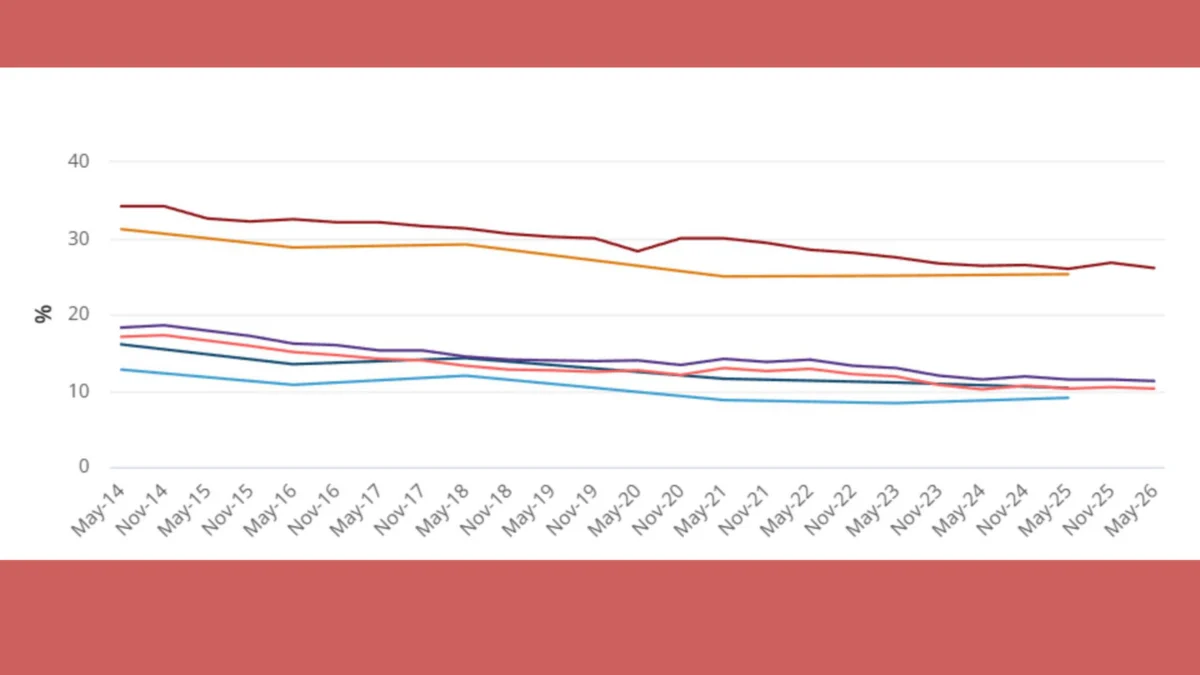
CANBERRA – New comprehensive data released by the Australian Bureau of Statistics (ABS) in August 2026 has unveiled a complex portrait of gender equality in Australia. While the nation’s women are reaching historic highs in educational attainment and maintaining a robust presence in the labor market, significant structural hurdles remain. The findings, which aggregate data from May and June 2026, suggest that while the "glass ceiling" may be cracking in education, the "sticky floor" of unpaid labor and part-time work continues to suppress women’s lifetime earnings and retirement security.
The report highlights a persistent dichotomy: Australian women are more qualified than ever before, yet they continue to navigate a workforce that remains rigid in its expectations of "full-time" availability, leading to a significant disparity in take-home pay and long-term financial health.
Main Facts: A Dual-Speed Progress Report
The August 2026 ABS Gender Indicators report serves as a vital barometer for the nation’s social and economic health. The most striking takeaway is the divergence between potential and realization. On one hand, women have surpassed men in nearly every metric of formal education. On the other, the translation of this intellectual capital into economic parity remains stalled by the "hours gap."
Key statistics from the release include:
- The Earnings Spectrum: The gender pay gap is no longer viewed as a single figure. Depending on the metric, the gap ranges from a narrow 9.1% (median hourly earnings) to a staggering 26.1% (mean weekly cash earnings).
- The Hours Discrepancy: In June 2026, women worked an average of 31.6 paid hours per week, whereas men averaged 38.4 hours.
- Educational Dominance: 64.9% of women aged 15–74 hold a non-school qualification, and 37.4% hold a bachelor’s degree or higher, significantly outperforming their male counterparts.
- The Retirement Deficit: The cumulative effect of these disparities is most visible in superannuation balances, where men aged 65 and over hold a median of AUD$208,200, compared to just AUD$168,000 for women.
Chronology: From Data Collection to National Realization
The data released this August is the culmination of a rigorous tracking period throughout the first half of 2026.
- May 2026: The ABS conducted its biennial Survey of Employee Earnings and Hours. This survey provided the granular detail needed to distinguish between "hourly rates" (which measure equal pay for equal work) and "weekly earnings" (which measure total economic take-home).
- June 2026: Labour force surveys focused on participation rates and the employment-to-population ratio. This period saw women’s participation hit 63.3%, a figure that has remained relatively stable but continues to trail the male participation rate of 70.8%.
- July 2026: Analysts processed the "unpaid work" modules, which look at housework and childcare. This data is often lagged but provides the "why" behind the workforce participation figures.
- August 2026: The full "Gender Indicators" suite was published, prompting immediate calls from advocacy groups and policymakers for a re-evaluation of workplace flexibility and childcare subsidies.
This release comes at a sensitive time in Australian industrial relations, following the Victorian government’s recent decision to delay the implementation of proposed work-from-home laws until July 2027—a move that many experts fear will disproportionately impact women who rely on such flexibility to balance professional and domestic duties.
Supporting Data: Deconstructing the Pay Gap and the "Care Penalty"
The Six Measures of the Pay Gap
The ABS now utilizes six distinct measures to provide a 360-degree view of earnings equity. The 2026 data reveals that the "base rate" of pay is closer to parity than the "total take-home" pay.
- Median Hourly Cash Earnings (9.1%): This is the narrowest gap, suggesting that when looking at the base rate for every hour worked, the discrepancy is shrinking.
- Mean Hourly Cash Earnings (10.4%): Slightly higher, reflecting the concentration of men in very high-paying executive roles.
- Mean Weekly Ordinary-Time Cash Earnings (10.3%): Specifically for full-time adults, this shows that even when working full-time, women earn about 90 cents for every dollar earned by a man.
- Median Weekly Cash Earnings (25.3%): This figure jumps because it includes part-time workers, the majority of whom are women.
- Mean Weekly Cash Earnings (26.1%): The widest gap, highlighting the combined impact of fewer hours worked and lower representation in high-salary tiers.
Education: The Talent Pipeline is Female
The 2025–2026 data confirms a decade-long trend: women are the more educated cohort in the Australian economy.
- Non-school qualifications: Women (64.9%) vs. Men (63.4%).
- Bachelor’s Degree or higher: Women (37.4%) vs. Men (30.1%).
Despite this, the "employment-to-population" ratio for women sits at 60.5%, compared to 67.7% for men. This suggests a "leaky pipeline" where highly educated women are either opting out of the workforce or are being forced out due to a lack of support for caring responsibilities.
The Unpaid Work Burden
The 2024–2026 data on unpaid work remains the most significant predictor of the gender pay gap.
- Housework: 56.9% of women engaged in daily housework compared to 34.8% of men.
- Childcare: Women spend an average of 4 hours and 38 minutes per day on childcare, nearly an hour and ten minutes more than men (3 hours and 29 minutes).
Official Responses: Calls for Systemic Change
The release of the data has sparked a wave of responses from government officials, industry leaders, and economic analysts.
The Australian Bureau of Statistics (ABS) Perspective:
A spokesperson for the ABS noted, "These indicators show that while the ‘rate’ of pay is becoming more equitable, the ‘volume’ of work remains the primary driver of the earnings gap. It is no longer just about equal pay for equal work; it is about equal access to hours and the removal of barriers that prevent women from working the hours they desire."
Workplace Gender Equality Agency (WGEA):
The WGEA issued a statement emphasizing that the 26.1% mean weekly earnings gap is a "national call to action." The agency argued that the data proves that "flexibility cannot be a perk for the few; it must be a structural norm for the many. When we see women outperforming men in education but trailing in superannuation, we are seeing a systemic failure to value the female career path."
Industry HR Leaders:
Prominent HR consultants have pointed to the Victorian government’s delay in work-from-home legislation as a step backward. "The data clearly shows that women’s workforce participation is tied to their ability to manage unpaid care," said one senior HR director. "By delaying laws that protect flexible work, we risk stagnating the progress shown in the ABS report. Employers need to lead where the government hesitates, by offering predictable scheduling and better support for returning mothers."
Implications: The Long-Term Economic Outlook
The implications of the August 2026 data extend far beyond the current fiscal year. The findings suggest three critical areas of concern for Australia’s future:
1. The Retirement Crisis
The $40,000 gap in median superannuation balances for those over 65 is a precursor to a potential "feminization of poverty" in old age. Because the Australian retirement system is tied directly to lifetime earnings, the "hours gap" during a woman’s 30s and 40s compounds into a significant shortfall by her 70s. Without intervention, such as superannuation payments on government-funded parental leave, this gap is unlikely to close.
2. Economic Productivity
With women holding more degrees than men, the fact that they work fewer hours and have lower participation rates represents a massive "underutilization" of human capital. Economists argue that closing the participation gap could boost Australia’s GDP by billions. The current data suggests that the economy is essentially "leaving talent on the table."
3. The Cultural Shift Toward "Shared Care"
The data on unpaid housework and childcare suggests that the "breadwinner/caregiver" model, while fading, still dictates the Australian household. For the gender pay gap to narrow significantly, there must be a cultural shift where men take on a larger share of unpaid labor. This would allow women to increase their paid hours and men to reduce theirs, normalizing a 35-hour work week for both genders rather than the current 31/38 split.
4. Policy Pressures
The findings will likely increase pressure on the Federal Government to expand childcare subsidies and introduce more robust "use-it-or-lose-it" parental leave for fathers. Furthermore, the delay in Victorian WFH laws may become a political flashpoint, as the ABS data provides a statistical basis for the necessity of remote and flexible work options in achieving gender parity.
Conclusion
The August 2026 ABS Gender Indicators provide a sobering reminder that education is not a panacea for inequality. Australia has successfully created a generation of highly skilled, highly motivated women. However, the nation’s workplaces and domestic structures have yet to catch up. The "mixed picture" described by the ABS is one of a country at a crossroads: it can either embrace the structural reforms necessary to support its most educated workforce or continue to see a significant portion of its economic potential sidelined by the weight of unpaid care and rigid employment models.


 Nana
Nana
 Siti Muinah
 Raul Delapena Setiawan
 Reynand Wu
 Sagoh
Sagoh

 Azzam Bilal Chamdy
 Ali Ikhwan