
 Evan Lee Salim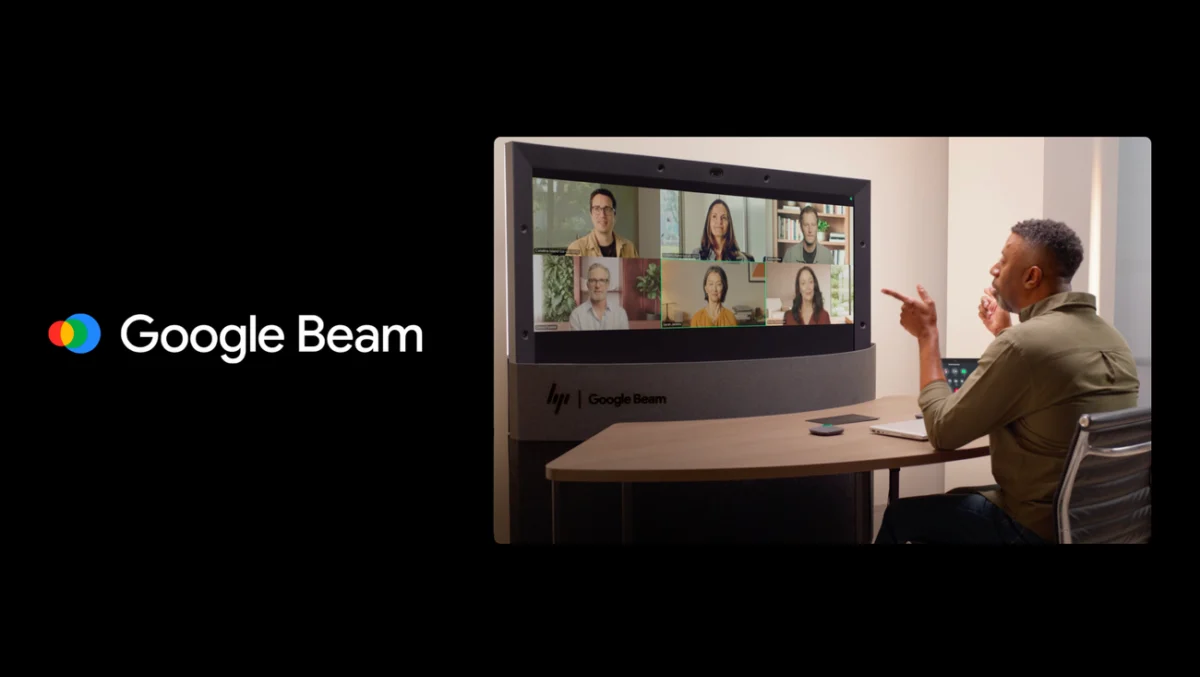
In the contemporary professional landscape, the transition to hybrid work has brought both freedom and frustration. While video conferencing platforms have undoubtedly kept global teams connected, they have also introduced a pervasive sense of digital detachment. The "sea of tiny boxes" that defines standard video calls often strips away the nuance of human interaction, leaving remote participants feeling like passive observers rather than active collaborators.
Google is now taking a decisive step toward dismantling this barrier with the latest experimental update to Google Beam, its flagship immersive communication platform. By integrating advanced spatial rendering and high-fidelity hardware partnerships, Google aims to dissolve the "inclusion gap," effectively bringing the boardroom to the living room—and vice versa.
Main Facts: The Immersive Revolution
The core of Google’s latest experiment lies in its ability to translate standard video streams into lifelike, spatially aware interactions. Leveraging the sophisticated display technology provided by HP Dimension, Google Beam is no longer merely projecting a video feed; it is rendering remote participants at their true-to-life proportions.
The system utilizes advanced depth-sensing and rendering algorithms to position remote attendees as if they were physically seated around a conference table. This visual immersion is bolstered by spatial audio, which anchors a person’s voice to their specific position on the display. When a colleague speaks from the "left" of the virtual table, the audio is delivered with pinpoint accuracy to match that spatial coordinate.
This isn’t just a cosmetic upgrade; it is a fundamental shift in how the brain processes digital information. By aligning visual and auditory cues with the natural physics of a real-world room, Google Beam reduces the cognitive load required to track conversations, leading to more fluid, natural interaction.
Chronology: From Concept to Spatial Reality
The journey to this moment began with the foundational research behind Project Starline, Google’s long-standing effort to create "magic windows" for communication.
- Initial Research Phase: Google researchers identified that the lack of eye contact and natural spatial cues in traditional 2D conferencing platforms was the primary driver of "Zoom fatigue" and social disconnection.
- Prototype Development: The team experimented with light-field displays and complex sensor arrays, realizing that the technology needed to be scalable to have a meaningful impact on the global workforce.
- The Beam Transition: With the rebranding and expansion of the technology into Google Beam, the focus shifted from pure hardware innovation to software-led integration.
- Current Milestone: Today’s announcement marks the integration of the "True Size" rendering experiment. By moving beyond custom-built booths and utilizing existing high-end display hardware like the HP Dimension, Google is demonstrating a path toward mass-market accessibility.
Supporting Data: Quantifying the "Inclusion Gap"
The shift toward immersive communication is backed by rigorous internal research conducted by Google’s experience labs. The "inclusion gap"—the disparity in perceived value and social connection between in-room and remote participants—has been a persistent metric of failure for traditional platforms.
Google’s recent studies on the impact of spatial rendering and true-to-life proportions reveal compelling statistics:
- 50% Increase in Social Connection: Participants using the Beam immersive interface reported a 50% stronger sense of social connection compared to those using standard 2D grid-based platforms.
- 21% Boost in Contribution: Perhaps most critical for business productivity, there was a 21% increase in the reported ability of remote participants to contribute to conversations. This suggests that when the barriers to presence are removed, the barriers to collaboration follow suit.
- Reduced Latency in Turn-Taking: By providing clear visual cues of who is looking at whom, the system significantly reduces the "talking over each other" phenomenon common in standard video calls.
These figures underscore a vital truth: technology that mimics human intuition is not just a luxury; it is a catalyst for higher-quality collective intelligence.
Official Responses: Strategic Partnerships
The success of this experiment relies heavily on interoperability. Google has acknowledged that for Beam to be a viable enterprise solution, it must work seamlessly with the tools teams already use. This has led to a deepening of the partnership between Google and Zoom.
Jeff Smith, Head of Product at Zoom Workplace, commented on the collaboration:
"Zoom is known for meetings that just work, and now we’re bringing our most-loved features into Google Beam for Zoom to deliver a best-in-class collaboration experience for every meeting."
This statement highlights a broader industry trend: the "walled garden" approach to communication is fading. By allowing Zoom’s robust meeting infrastructure to plug into Google Beam’s immersive engine, the companies are creating a hybrid environment where enterprise-grade reliability meets futuristic user experience.
Implications: The Future of Distributed Work
The implications of Google’s latest work extend far beyond the conference room. As we look toward the future of work, several key shifts are becoming apparent:
1. The Death of the "Second-Class" Remote Citizen
Historically, remote workers have often been treated as secondary participants in hybrid meetings. They are relegated to a screen on the wall, often ignored by the primary conversation happening around the table. Google Beam’s spatial rendering mandates equality; by placing remote participants in the "room," it forces a social dynamic that naturally draws them into the fold.
2. Cognitive Efficiency and Meeting Fatigue
Current video conferencing requires the brain to perform constant, taxing translation. We have to map a voice from a speaker to a name on a box, then remember to look at the camera lens rather than the screen to simulate eye contact. By offloading these tasks to the software—which handles spatial positioning and depth—users can focus on the content of the meeting rather than the mechanics of the technology.
3. Hardware Interoperability
By leveraging the HP Dimension display, Google is signaling that the future of immersive work isn’t tied to a single proprietary device. As display technology becomes thinner, cheaper, and more ubiquitous, the "Beam experience" could eventually transition from high-end corporate boardrooms to home offices.
4. Cultural Shifts in Remote Management
Managers and team leaders will need to adapt to these new spatial realities. When a remote participant feels "physically" present, the expectations for their participation change. The days of "multitasking" through a meeting while on mute will likely face increased social pressure when the remote participant is rendered as a life-sized presence in the room.
Conclusion: Looking Ahead
The experiment launched by Google is a testament to the idea that technology should be an invisible bridge, not a barrier. While we are still in the early stages of spatial computing, the strides made with Google Beam suggest that the next decade of work will be defined by "presence" rather than "connectivity."
As the platform evolves, users can expect more integrations with Google Workspace, further refining the ease with which these meetings are scheduled and joined. The promise of the technology is clear: to ensure that no matter where you are, your voice, your presence, and your contributions are as impactful as if you were sitting at the head of the table.
For those interested in the ongoing development of this technology and how it may eventually redefine their own professional life, Google encourages stakeholders to track progress via beam.google. The sea of tiny boxes may be starting to recede, replaced by a more human, and more inclusive, digital horizon.


 Nana
Nana
 Siti Muinah
 Raul Delapena Setiawan
 Reynand Wu
 Sagoh
Sagoh

 Azzam Bilal Chamdy
 Ali Ikhwan