
 Raul Delapena Setiawan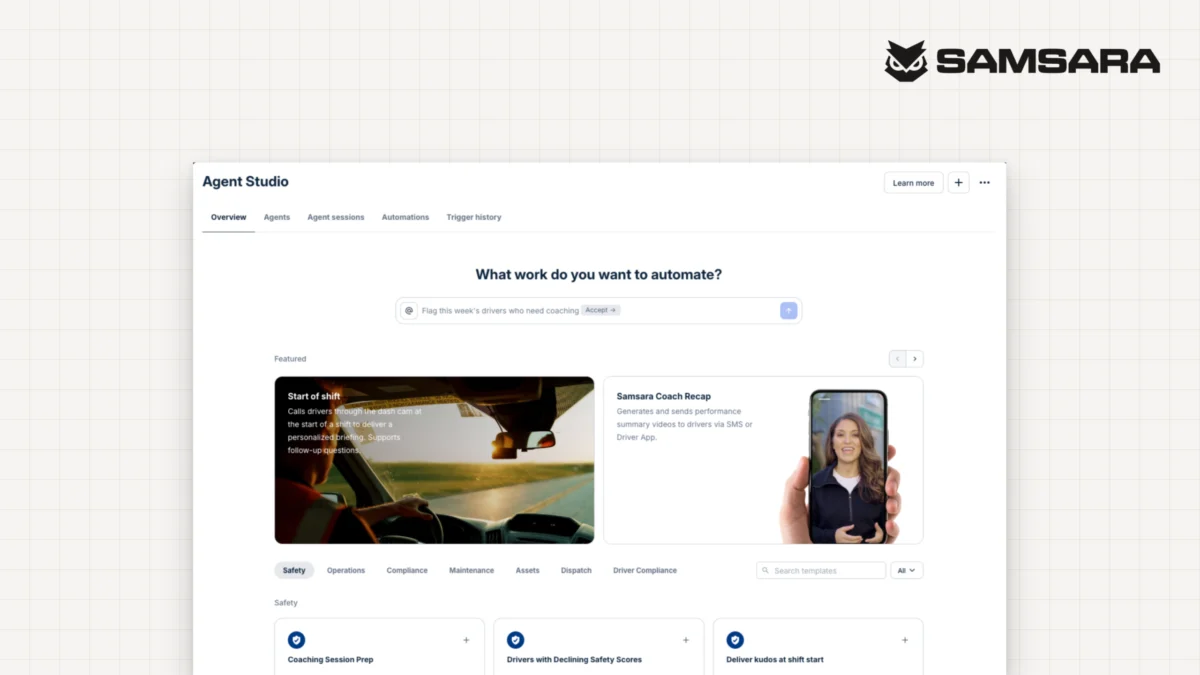
The logistics and transportation sector has spent the better part of the last two years testing the waters of artificial intelligence. While pilot programs have proliferated, the industry has struggled with a common "valley of death"—the inability to move beyond experimental sandbox environments into meaningful, scalable, and revenue-generating operational workflows.
Samsara, a leader in connected operations, is looking to bridge this divide. On Tuesday, the company announced the general availability of its "Agent Studio," a no-code platform that empowers fleets and industrial businesses to build custom AI agents. By leveraging the vast streams of operational data already flowing through the Samsara ecosystem, the company is betting that the key to AI adoption isn’t just better models, but agents that understand the specific, rugged realities of physical operations.
The Acceleration of AI Interaction
The data surrounding Samsara’s AI deployment suggests a rapid shift in user engagement. Since the platform’s initial launch in June, the velocity of AI-agent interactions has increased sevenfold. Samsara, which defines an "interaction" as a complete session—whether via chat or voice—noted that its most recent 500,000 interactions were logged in just 16 days. By comparison, the first 500,000 interactions took 112 days to accumulate.
This exponential growth curve indicates that once fleet managers and operational teams find utility in an AI tool, they integrate it into their daily rhythms almost immediately. Perhaps most telling is the rise of voice-based AI. Within four weeks of its introduction, voice interactions surpassed chat volume, a trend that has held steady every week since.
While Samsara reports that over 1,000 organizations are actively using these agents on a weekly basis, the company has yet to disclose the exact breakdown of voice versus chat usage or the total number of custom agents currently live in production.
A Chronology of Deployment
The trajectory of Samsara’s AI strategy reflects a calculated evolution toward "Agentic AI":
- June 2026: Samsara introduces Agent Studio in a limited capacity, allowing early-adopter customers to experiment with custom agents.
- Summer 2026: As usage patterns emerge, voice-based agents—deployed through vehicle dash cams—begin to see higher engagement than traditional text-based interfaces.
- Late Summer 2026: The company refines its integration layer, connecting its data with broader LLM tools like ChatGPT, Claude, and Microsoft Copilot via "Samsara MCP."
- October 2026: General availability is granted to all customers, with the tool now bundled into existing subscriptions, signaling a push for mass-market adoption.
The "Last Mile" of Data: Solving for Operational Friction
For the logistics industry, the hurdle to AI adoption is rarely the technology itself, but the lack of "context-aware" data. Operational data—such as Hours of Service (HOS) logs, driver locations, and inspection reports—is notoriously messy. Agent Studio aims to act as the translation layer, allowing companies to build agents that perform specific, high-value tasks.
Real-World Use Cases and Documented Efficiency
Several early adopters have reported significant gains, though these figures remain self-reported by the customers and facilitated by Samsara:
- Grand Isle Shipyard: By using an AI agent to compile forms, inspection reports, and asset data into monthly summaries, the firm reduced report-generation time by 99%. The process, which previously took hours, now completes in five minutes per division, freeing up an estimated $100,000 in annual specialist capacity.
- S. Bertram Foods: The company deployed an agent to monitor real-time driving data, comparing it against HOS regulations. By flagging potential violations three hours in advance, they achieved an 84% reduction in manual review time.
- StreamTech Industrial: To combat the common issue of "unassigned driving," StreamTech’s agent flags trips where drivers fail to log into their vehicles. Over a two-month period, this resulted in a reduction of 500 hours of unassigned driving.
Voice Agents: Moving AI into the Cab
Perhaps the most significant innovation is the deployment of voice-based agents directly through in-cab dash cams. Because federal regulations (such as those enforced by the FMCSA) strictly prohibit commercial drivers from holding mobile devices, the hands-free nature of these agents is a regulatory "must-have."
These agents can be configured to trigger based on specific geofenced events. For example, when a truck arrives at an unfamiliar facility, the agent can initiate a call to the driver, providing specific instructions on yard speed limits, entrance protocols, and mandatory safety equipment. This turns the dash cam from a passive recording device into an active, intelligent co-pilot, reducing the cognitive load on drivers who are navigating complex, high-traffic environments.
The Industry Context: A Challenging Landscape for AI ROI
The push for broader adoption comes at a time when the logistics industry is becoming increasingly skeptical of "AI hype." A March 2026 study by the Boston Consulting Group (BCG) surveying 180 logistics providers revealed a sobering reality: while 40% of firms had moved beyond pilot programs, a mere 10% had managed to scale AI across their core operations. Only 13% of respondents reported measurable financial value from their AI investments.
A follow-up survey in September 2026 by Descartes further validated this, finding that only 15% to 19% of industry players were utilizing AI at scale. The primary barriers cited include unclear ROI, a lack of internal technical talent, and the difficulty of integrating AI with legacy infrastructure.
Johan Land, Samsara’s Chief Product Officer, acknowledges this skepticism, stating, "AI is quickly adopted when it’s useful, and in physical operations that means an agent has to understand the operation and meet people where the work happens."
Implications: The Shift Toward Measurable Returns
The "general availability" of Agent Studio marks a pivot point. Samsara is no longer just selling a platform; it is selling a capability for companies to own their AI roadmap. By bundling these tools into existing subscriptions, Samsara is effectively lowering the barrier to entry, removing the financial friction that often halts AI experimentation.
However, for this to represent a true shift in the industry, the next six months will be critical. The logistics sector is waiting for more than just anecdotes of "time saved." It is looking for hard evidence that these agents can withstand the volatility of real-world operations—supply chain disruptions, driver turnover, and extreme seasonal demand.
If Samsara can continue to demonstrate that these agents reduce costs and compliance risks consistently, they may help shift the industry from a state of "AI curiosity" to "AI utility." If not, the platform may simply join the growing list of underutilized tools in the logistics tech stack.
Looking Ahead: The Future of Freight
The industry’s appetite for these technologies will be a central theme at the upcoming F3: Future of Freight Festival in Chattanooga this October. As leaders gather to discuss everything from fraud exposure and carrier liability to the next generation of AI-driven logistics, the success of platforms like Samsara’s Agent Studio will serve as a bellwether for the broader transportation sector.
The question remains: Can custom AI agents truly transform a traditionally low-margin, labor-intensive industry, or is this merely the latest iteration of digital efficiency? For now, the answer lies in the 16-day window—the speed at which businesses are choosing to turn these tools on and keep them running.

 Pevita Pearce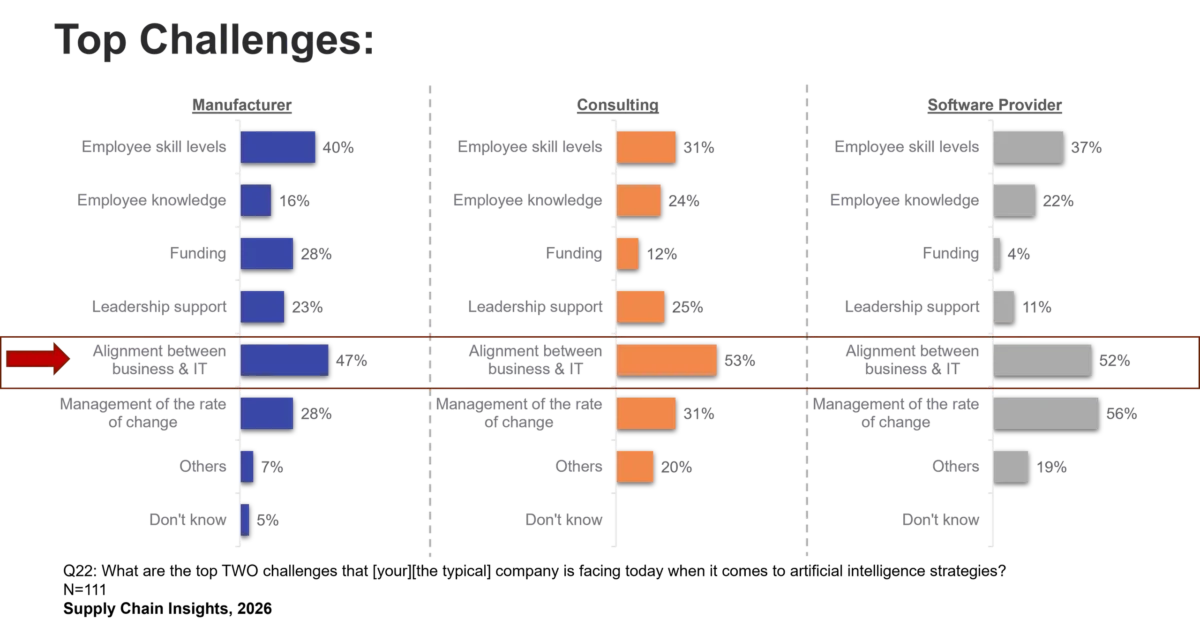
 Lina Hope
 Ali Ikhwan

 Nana
Nana
 Muslim
 Asep Darmawan
 Neng Nana