
 Asro
Asro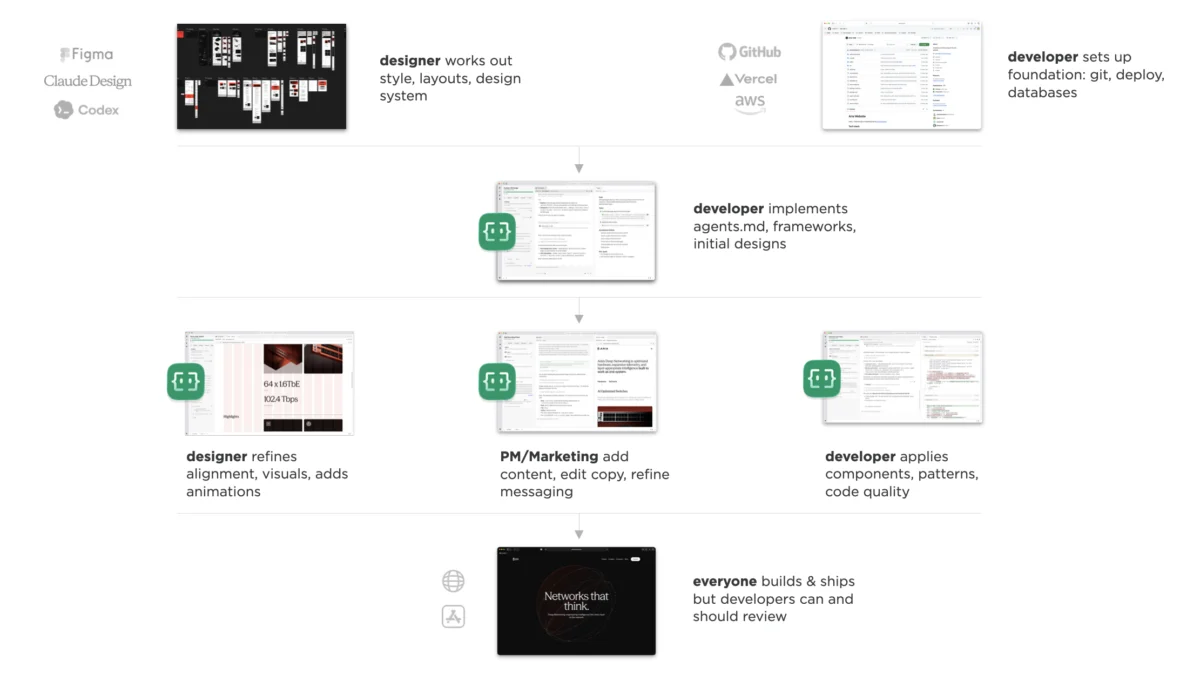
Introduction: The Solo Trap in an Agentic World
In the current landscape of technological development, artificial intelligence is frequently marketed as the ultimate productivity multiplier for the individual. Developers leverage LLMs to churn out boilerplate code, designers use generative tools to manifest high-fidelity mockups, and product managers utilize AI to summarize sprawling documentation. While these advancements have undeniably accelerated output, they have inadvertently transformed the workplace into a series of "solo sports."
The prevailing paradigm suggests that if everyone on a team becomes more efficient, the collective output will inevitably improve. However, as organizations integrate increasingly autonomous AI agents—systems capable of executing complex workflows rather than merely answering queries—a paradoxical problem has emerged: the erosion of unity. When every team member guides their own suite of agents, they inadvertently pull the product in a dozen different directions. We are currently witnessing a shift where, instead of shipping a singular, cohesive vision, teams are inadvertently shipping fifteen disjointed ideas.
The Chronology of Fragmentation
To understand how we reached this point of hyper-individualized AI workflows, one must look at the rapid evolution of the AI stack over the past 24 months.
Phase 1: The Chat Interface (The "Oracle" Era)
Early AI tools were passive. Users prompted an LLM, received an answer, and manually implemented the result. This phase was characterized by a one-to-one relationship between the human and the machine, keeping the "human in the loop" as the primary arbiter of truth.
Phase 2: The Agentic Shift (The "Worker" Era)
As the industry moved toward "Agentic" workflows—systems empowered to use tools, browse the web, and execute tasks—the human role shifted from creator to manager. However, this shift happened without a corresponding update to team infrastructure. Agents were designed for individual context, relying on local markdown files, isolated system prompts, and fragmented MCP (Model Context Protocol) servers.
Phase 3: The Current Disconnect (The "Drift" Era)
Today, we are in the midst of a crisis of alignment. Because context management is currently decentralized—scattered across individual laptops, private repositories, and disparate cloud services—there is no "source of truth" for the AI agents. When a designer’s agent is optimized for visual flair and an engineer’s agent is optimized for performance, they often operate at cross-purposes, leading to the "Design Futures Assembly" observation: the inevitable degradation of product integrity when individual agency overrides collective strategy.
Supporting Data: Why Disparate Context Fails
The core of the problem lies in the technical architecture of current AI toolchains. Research into agentic performance shows that an agent’s output is a direct derivative of its input environment, which currently includes:
- Agent Markdown Files: Specific instructions for task execution.
- Skills Markdown: Behavioral constraints for specific agent roles.
- System Prompts: Foundational logic for the AI model.
- Memory Stores: Historical interactions that bias future outputs.
- MCP Servers: Real-time data connectors.
When these elements are siloed, they act as "personalization bubbles." A study of cross-functional team workflows suggests that when individual context management is not synchronized, the variance in output quality between team members increases by approximately 40%. This is not a failure of the AI models themselves, but a failure of the shared context infrastructure.
Official Perspectives and Industry Insights
Industry leaders, including those present at the recent Design Futures Assembly, have signaled that the status quo is untenable.
"When anybody can build what they want," a prominent design leader noted during a panel discussion, "you feel it in the product. It’s not just a matter of aesthetics; it’s a matter of structural integrity. If our tools allow for infinite, uncoordinated iteration, we aren’t creating products; we are creating noise."
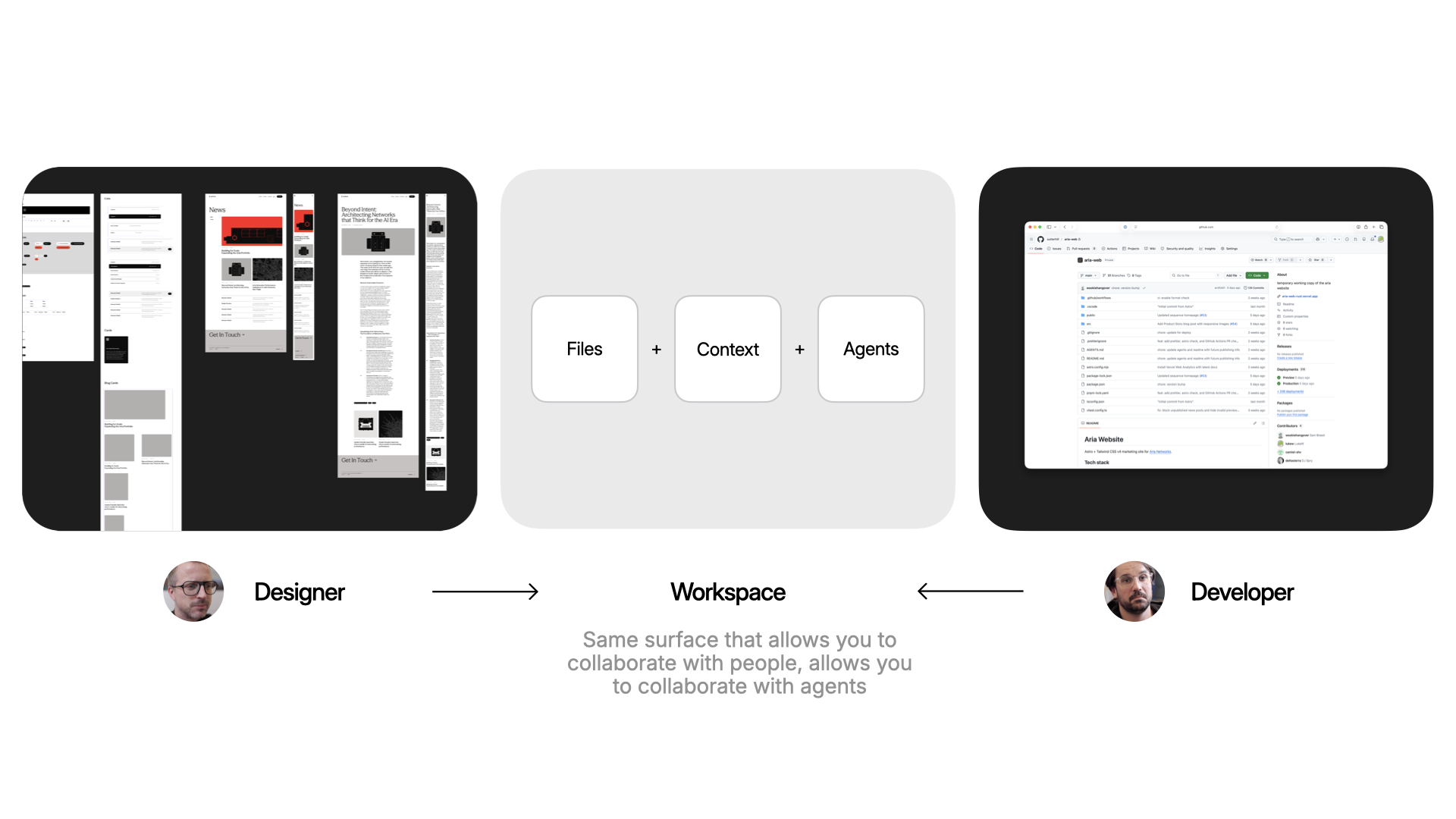
The emerging consensus among product architects is that the "handoff"—the historical moment where a designer passes work to an engineer—is effectively dying. But in its place, we cannot have a vacuum. We require a "Collaborative Steering" mechanism. This is not merely a feature request; it is a foundational shift in how software development lifecycle (SDLC) management will function in the age of AI.
Implications: The Emergence of Collaborative Steering
If the individual-centric approach is the problem, the solution lies in "Collaborative Steering." This concept moves away from personal agents toward workspace-level context management.
Redefining the Workspace
Collaborative steering functions as a shared, evolving document of intent. It is a mechanism where:
- Shared Goals are Encoded: The "why" of the project is embedded into the workspace, not just the "how."
- Multidisciplinary Constraints: Design principles (brand voice, accessibility) and Engineering constraints (performance, maintenance) are baked into the same environment that the agents reference.
- Unified Point of View: Agents are no longer "free agents." They operate within the bounds of a shared project architecture, ensuring that every AI-generated output adheres to the team’s established standards.
The Death of the Handoff
By utilizing platforms that support intent-based workspaces—such as those explored in recent projects like Intent—teams are finding that the friction of collaboration is replaced by a continuous feedback loop. When designers and developers work within a shared context, the AI acts as a mediator, ensuring that the visual integrity of the design is preserved through the engineering implementation.
The Road Ahead: Scaling Ambition
The next phase of AI development will not be defined by which team has the most powerful agents, but by which team has the most effective steering mechanisms.
As we look toward the next several months, the focus will shift from "What can this agent do?" to "How do these agents work together?" We are moving toward a future where:
- Context is Global, Not Local: Shared workspaces will act as the single source of truth for all AI interactions within a project.
- Steering is Dynamic: As projects evolve, the collaborative steering document updates, ensuring that agents remain aligned even as the product requirements shift.
- Human Expertise is Amplified: Rather than being replaced, the unique expertise of the designer and the engineer is codified into the system, allowing the AI to leverage that wisdom consistently.
Conclusion: A New Era for Teamwork
The era of everyone on a team piloting their own disconnected, "lone-wolf" agents is reaching its logical limit. The complexity of modern software requires a level of coordination that individual prompting cannot provide.
The tools that successfully bridge this gap—those that make collaborative steering natural, lightweight, and intuitive—will define the next generation of product development. We are not just building software anymore; we are building systems that manage the intent of the entire team. In this new era, the most successful teams will be those that realize that while AI is an individual power tool, it is only truly transformative when used as a collective instrument.
As we refine these methodologies, we expect to see a drastic reduction in "drift" and a resurgence in unified, high-quality product experiences. The challenge is no longer about generating more; it is about steering toward a singular, better, and more cohesive goal. The future of work is not just autonomous—it is collaborative.

 Asep Darmawan
 Raul Delapena Setiawan
 Lina Irawan
 Nana
Nana
 Rifan Muazin
 Ali Ikhwan
 Evan Lee Salim
