
 Asep Darmawan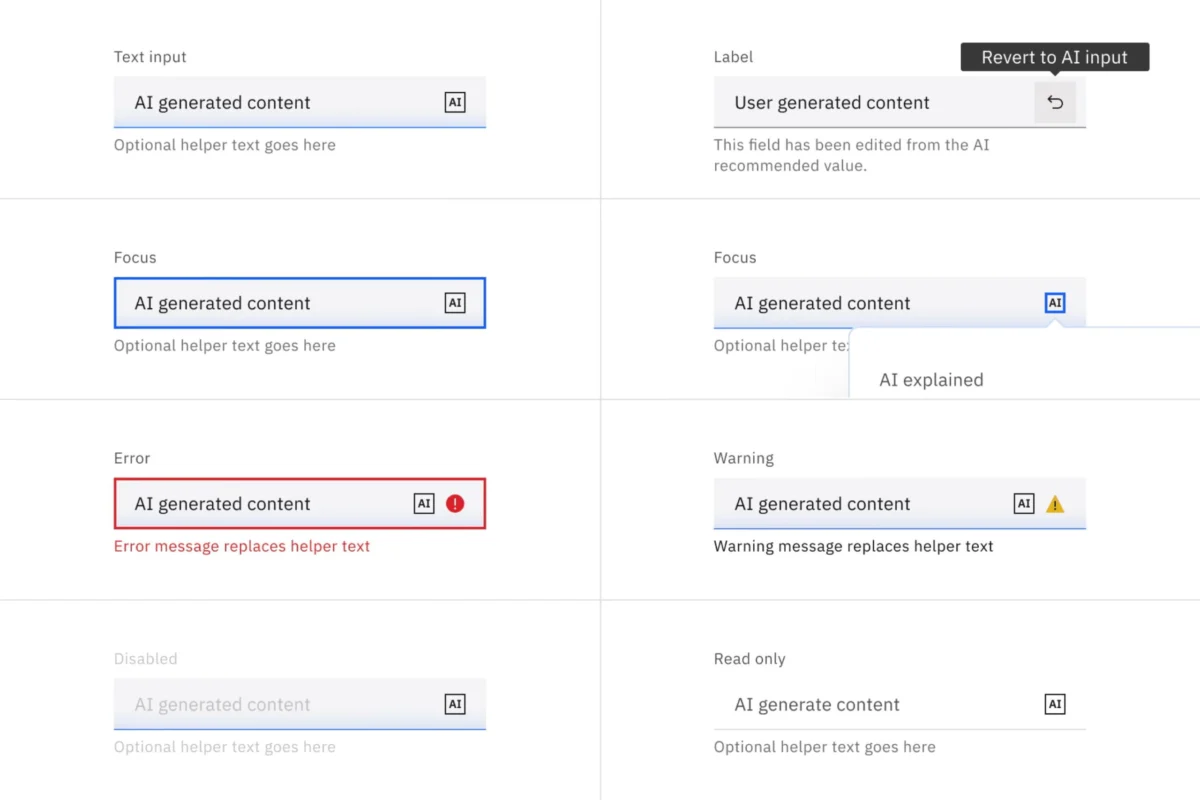
As of August 2, 2026, the digital landscape for companies serving European Union citizens has fundamentally shifted. The enforcement of new transparency obligations under the EU AI Act has triggered a wave of industry-wide soul-searching, moving the conversation from "how can we integrate AI?" to "how must we disclose it?"
While the initial announcement sparked widespread confusion and whispers of "drastic measures" and "crippling fines," the reality is far more pragmatic. The EU is not seeking to stifle innovation; rather, it is enforcing a standard of digital honesty. The core mandate is straightforward: when artificial intelligence is used to generate or manipulate content, the end-user deserves to know.
The Scope: Who is Affected?
A common misconception is that these rules apply only to tech giants headquartered in Brussels or Berlin. In reality, the EU AI Act functions similarly to the GDPR and the European Accessibility Act (EAA): if you serve a user within the EU, you are subject to the regulation, regardless of whether your headquarters are in Silicon Valley, Tokyo, or London.
The legal burden falls on two primary actors:

- Providers: Those who develop or supply the AI systems.
- Deployers: Organizations that integrate these AI systems into their products and customer-facing interfaces.
Crucially, companies cannot shift liability by claiming they merely licensed an external AI tool from a third party. If your interface serves content to a European user, you are responsible for ensuring that content is properly labeled, regardless of the underlying engine’s origin.
Chronology and Compliance: The Path to August 2026
The lead-up to the August 2026 enforcement date was marked by years of deliberation, debate, and the eventual publication of the European Commission’s Code of Practice.

- The Regulatory Framework: The AI Act was designed to classify AI systems by risk levels, with transparency obligations occupying a significant portion of the legislation (specifically Article 50).
- The Transition: Throughout 2025, industry leaders and legal teams scrambled to interpret the "clear and distinguishable" requirements.
- The Enforcement Era: Since August 2, 2026, the compliance window has officially closed. Regulatory bodies now have the authority to audit digital products, and the focus has turned to the "Code of Practice on the Marking and Labelling of AI-Generated Content."
Decoding "AI-Generated": What Requires a Label?
The EU’s guidance distinguishes between "assistive" tools and "generative" content. This is the crux of the new compliance challenge.
What Does Not Require Labeling
The regulation does not aim to label every keystroke. AI-driven features that perform minor assistive tasks—such as spellcheck, grammatical corrections, basic formatting, color correction, or real-time language translation—are generally exempt from the strict disclosure requirements. The logic here is that these features enhance human productivity without replacing the human author’s core intent or creation.

What Does Require Labeling
Transparency is mandatory when the content could be mistaken for human work. This includes:
- Synthetic Media: Images, videos, or audio that mimic real people, places, or events.
- Substantive AI Generation: Any content where the core structure and narrative are generated by an AI model, even if a human "skimmed" it afterward.
- Product Claims: If AI generates content that influences public interest—specifically in fields like health, safety, the environment, finance, or politics—disclosure is non-negotiable.
The "human-in-the-loop" defense is often misunderstood. Simply having a person review an AI-generated draft does not exempt it from labeling. The Commission is explicit: the human intervention must be substantive, and there must be a named individual or entity taking legal responsibility for the editorial output.

The "Sparkle" Problem: Why Symbols Aren’t Enough
For years, the industry has relied on the "sparkle" icon (✨) to denote AI-powered features. While visually appealing, the European Commission has signaled that this is insufficient.
The primary issue is ambiguity. In many UX environments, the sparkle icon is used to indicate an "AI-enhanced" feature, but it fails to communicate whether the specific content currently on the screen is AI-generated or merely AI-assisted.

The Official EU Icon Set
To address this, the Commission has introduced a standardized set of icons. However, even these icons are not a "get out of jail free" card. Using the icon alone is not sufficient for legal compliance. The requirements mandate:
- Clarity and Distinguishability: The label must be impossible to miss.
- Plain Language: Pairing the icon with clear text (e.g., "AI-generated content").
- Persistence: If a user downloads or shares the content, the disclosure must travel with it.
- Accessibility: The label must be readable by screen readers and other assistive technologies.
Hidden footers, ephemeral "flash-in-the-pan" labels, or low-contrast icons are explicitly non-compliant.

Global Implications: A Pattern of Regulation
While the EU is at the forefront, it is not acting in a vacuum. Similar transparency patterns are emerging globally. In the United States, several states have already moved to pass legislation governing "synthetic performers" and political advertising transparency.
For developers and product designers, this represents a fundamental shift in the "Design Patterns for AI." It is no longer acceptable to treat AI integration as a "black box." Instead, companies must treat transparency as a core UX feature. Organizations that proactively design for transparency—integrating clear labeling into their design systems, much like the IBM Carbon Design System—will find themselves better positioned than those attempting to retrofit compliance later.

Official Stance and Future Outlook
The European Commission’s message remains consistent: when AI content could easily be mistaken for human content, creators must say so. This isn’t just about avoiding fines; it’s about rebuilding trust in a digital environment increasingly saturated with synthetic material.
For businesses, the path forward requires a clear, internal policy:

- Inventory your AI features: Determine which outputs are generated and which are merely assisted.
- Audit your UI: Assess whether your current labeling is "clear, obvious, and unambiguous."
- Appoint Responsibility: Ensure that there is a clear chain of editorial accountability for AI-generated assets.
As we move further into the post-August 2026 landscape, the industry will likely see a move toward more standardized, transparent, and user-centric AI interfaces. By distinguishing "AI slop" from genuine human-driven content, both creators and consumers stand to benefit from a more transparent digital ecosystem.
For those looking to deepen their understanding of these requirements, further training and resources—such as the "Design Patterns for AI Interfaces" course—are helping product designers navigate this complex, yet necessary, evolution of the web.


 Raul Delapena Setiawan
 Azzam Bilal Chamdy
 Lina Irawan
 Nana
Nana
 Rifan Muazin
 Ali Ikhwan
 Evan Lee Salim
