
 Asep Darmawan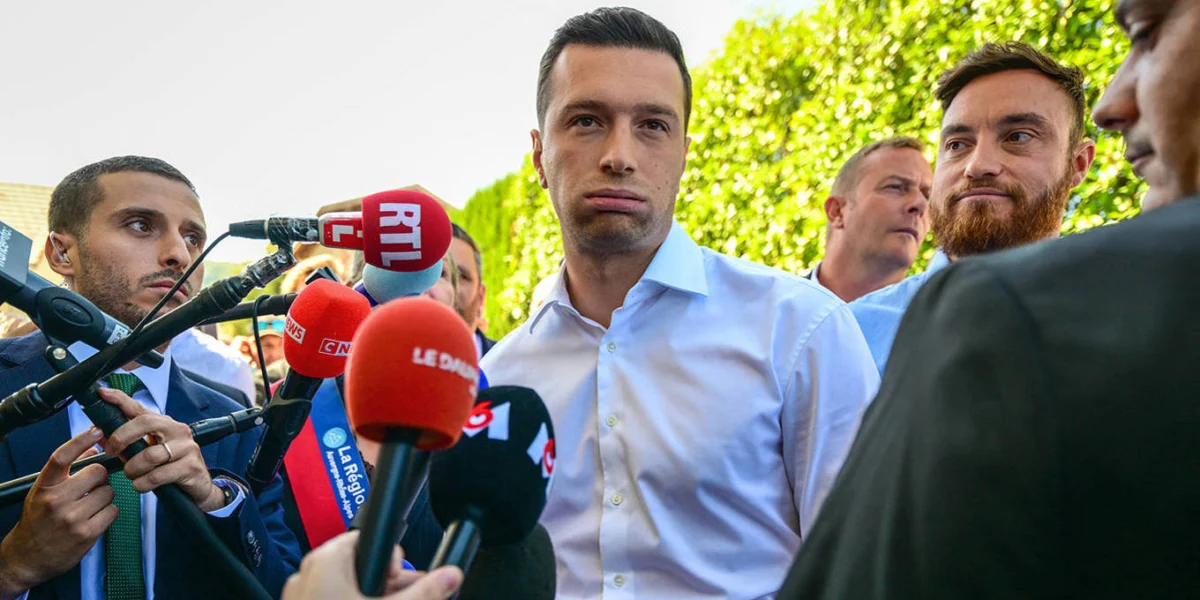
By Zaki Laïdi
October 12, 2026
The French political landscape is currently dominated by a singular, looming question: Is the ascension of Jordan Bardella to the Hôtel de Matignon a fait accompli, or has the golden boy of the National Rally (RN) finally become a liability too heavy for Marine Le Pen to carry?
As France approaches the 2027 presidential election, the polling data suggests a historic breakthrough for the far-right. Yet, beneath the veneer of a polished, social-media-savvy campaign, a tremor has emerged. A scandal involving allegations of antisemitic rhetoric attributed to Bardella threatens to shatter the carefully constructed image of "de-demonization" that Le Pen has spent a decade cultivating. While the party’s machinery is currently working in overdrive to neutralize the fallout, the incident has exposed deep-seated anxieties about the party’s true ideological core.
Main Facts: The Anatomy of a Scandal
The controversy centers on reports of private comments allegedly made by Jordan Bardella, which critics and political opponents have characterized as deeply antisemitic. While the National Rally has categorically denied the allegations, characterizing them as a coordinated smear campaign by the "establishment media," the gravity of the accusations has reverberated through the halls of the National Assembly.
Bardella, who has served as the face of the RN’s modernization, is central to Le Pen’s strategy. By positioning the young, telegenic leader as her designated Prime Minister, Le Pen aims to project an image of generational renewal and stability. However, the current scandal threatens to alienate the centrist voters Le Pen needs to secure a governing majority. The core issue is whether the RN has truly moved beyond its xenophobic roots or if the "new look" is merely a thin layer of paint over a foundation of intolerance.
Chronology: A Trajectory Under Fire
- 2022–2024: Bardella consolidates his power within the party, successfully rebranding the RN as a populist, Euro-skeptic movement focused on inflation and national identity.
- Early 2026: Le Pen explicitly names Bardella as her choice for Prime Minister, betting that his popularity with younger demographics will bridge the gap to victory.
- September 2026: The first whispers of the controversy emerge, originating from investigative reporting into historical communications.
- October 2026: The allegations go mainstream. Major French news outlets publish detailed accounts, forcing the RN into a defensive posture.
- October 12, 2026: As of today, the party is attempting to pivot the conversation back to economic policy, even as political rivals demand an independent investigation into the claims.
Supporting Data: The Fragile Path to Power
The political math for 2027 is clear: Marine Le Pen is closer to the presidency than any of her predecessors. According to recent surveys by IFOP, the RN has maintained a consistent lead in hypothetical runoff scenarios.
However, the "Bardella factor" is a double-edged sword. Data suggests that while Bardella is highly effective at mobilizing the RN’s base, he is significantly less popular among voters aged 65 and older—a crucial demographic that traditionally decides French elections.
Recent polling indicates a 4-point dip in support among independent, moderate voters in the wake of the latest scandal. While this does not yet jeopardize Le Pen’s lead, it underscores the fragility of her coalition. If the scandal persists, the "glass ceiling" that Le Pen has struggled to break for years may solidify once again. The question for the RN is whether the voters who have flirted with the party are willing to overlook potential prejudice in exchange for a change in economic direction.
Official Responses and Political Maneuvering
The reaction from the Élysée and the established parties has been swift and unforgiving. The current government, fearing a seismic shift in the political order, has utilized the scandal to highlight what they describe as the "inherent danger" of an RN administration.
"We are seeing the mask slip," noted a spokesperson for the ruling centrist coalition. "The National Rally remains a party built on the foundations of exclusion. Mr. Bardella’s comments, if true, reflect a culture that has no place in the French Republic."
In response, the RN has adopted a "siege mentality." Marine Le Pen has issued public statements of unwavering support for her protégé, framing the attacks as evidence that the "elites" are terrified of a democratic transition. Internally, the party has clamped down on unauthorized communication, demanding total message discipline from its MPs. There is a palpable tension within the party ranks; some long-standing members worry that Bardella’s personal baggage is now overshadowing the party’s policy platform.
Implications: Three Scenarios for 2027
The trajectory of this scandal will ultimately define the outcome of the next presidential cycle. Based on current political dynamics, three distinct scenarios have emerged:
1. The "Weathering the Storm" Strategy
In this scenario, the scandal is treated as a passing news cycle. The RN doubles down on its messaging, arguing that the public is more concerned with the cost of living than with "historical whispers." Le Pen continues her march toward the presidency, and Bardella remains the chosen Prime Minister. If this succeeds, it will prove that the RN has effectively neutralized the stigma that once kept it from power.
2. The Strategic Sacrifice
If the polls begin to show a sustained erosion of support among the moderate middle, Le Pen may be forced to make a cold, calculated decision. She could distance herself from Bardella, perhaps by "postponing" his nomination as Prime Minister in favor of a more technocratic, less polarizing figure. While this would save her campaign, it would create a significant internal rift, potentially alienating the party’s youth wing and creating a power vacuum within the RN.
3. The "Glass Ceiling" Collapse
The worst-case scenario for the RN is that the scandal becomes a catalyst for a broader investigation into the party’s membership and internal communications. If further evidence surfaces, the "de-demonization" project could collapse entirely. This would likely drive centrist voters back to the mainstream, potentially creating a "Republican Front" similar to those seen in previous decades, effectively blocking the RN from power once again.
Conclusion: The Weight of History
Jordan Bardella is, in many ways, the ultimate test of the National Rally’s evolution. He represents a generation that has grown up with the internet and social media, viewing politics through the lens of engagement and rapid-fire discourse. However, the historical echoes of the far-right in France are loud, and the burden of that history is not easily discarded.
As we look toward 2027, the Bardella scandal is not just about one man’s words; it is about the soul of the Fifth Republic. France stands at a crossroads. One path leads to a radical shift in leadership, testing the resilience of democratic institutions in the face of populism. The other leads to a return to the status quo, albeit one that is increasingly fragile and disconnected from a large segment of the population.
For Marine Le Pen, the coming months will be the most difficult of her career. She must decide whether to stand by the man she has groomed for power or to abandon him to save her own aspirations. Whatever she chooses, the shadow of this scandal will linger, serving as a reminder that in French politics, history is never truly in the past. The voters will ultimately decide if Bardella is a forward-looking leader or merely a relic of a darker chapter that France was hoping to leave behind.

 Evan Lee Salim

 Nana Wu
 Azzam Bilal Chamdy
 Lina Hope
 Pevita Pearce
 Sagoh
Sagoh