
 Sagoh
Sagoh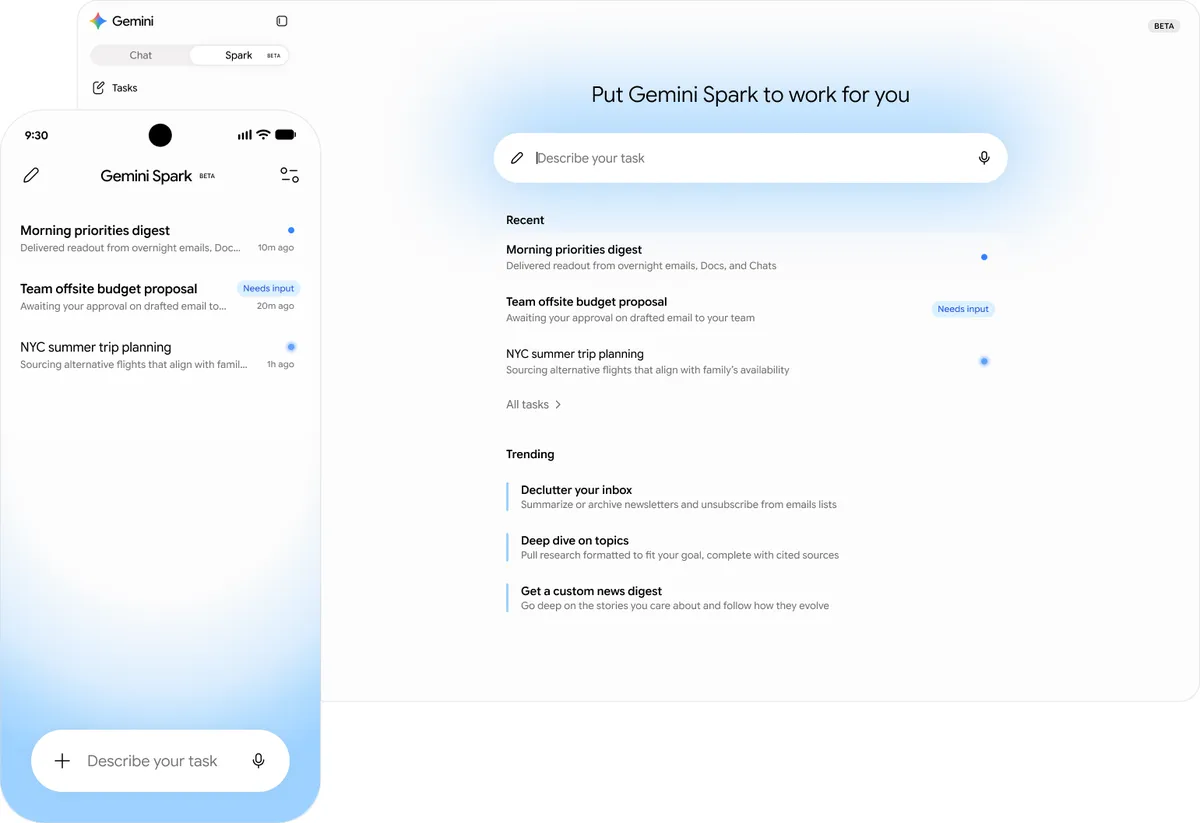
Google has long maintained that the future of productivity lies at the intersection of human intent and machine intelligence. With over 4 billion users relying on the Google Workspace ecosystem—spanning Gmail, Docs, Drive, and beyond—the stakes for the company’s artificial intelligence strategy have never been higher. At the annual Google I/O developer conference, the company took a definitive leap forward, unveiling a suite of generative AI tools designed to move beyond simple automation and into the realm of proactive, autonomous assistance.
Led by Yulie Kwon Kim, VP of Product for Google Workspace, the announcement details a fundamental shift in how professionals will interact with their digital environments. From conversational voice interfaces that handle complex document drafting to the introduction of a 24/7 autonomous AI agent, Google is effectively rewriting the "rules of engagement" for the modern digital workplace.
The Core Innovations: A New Era of Collaboration
The updates announced at I/O 2026 center on four pillars: conversational voice integration, advanced visual creation through "Google Pics," enhanced intelligent inbox management, and the debut of the Gemini Spark AI agent.
1. Conversational Voice: Productivity at the Speed of Thought
Google is introducing new, high-fidelity conversational voice capabilities across Gmail, Docs, and Keep. This is not merely basic voice-to-text dictation; it is an interactive dialogue. Users can now speak naturally to their devices to brainstorm ideas, organize complex thoughts, and initiate actions.
In Gmail, the new "Gmail Live" feature allows users to query their inbox via voice. A user might ask, "What do I need to bring to kindergarten today?" and the AI will synthesize information from past emails and calendar invites to provide a coherent, context-aware answer. In Google Docs, users can dictate complex outlines or have Gemini act as a collaborative "thought partner," structuring and refining document drafts hands-free.
2. Google Pics: Precision in Visual Creation
One of the most persistent critiques of early generative AI image tools was the lack of "creative control." If a generated image was 90% correct, the user often had to discard the entire result to fix a minor detail. Google is addressing this with Google Pics, a new tool built on the proprietary "Nano Banana" model.
Designed for precise editing, Google Pics allows users to move objects, adjust lighting, and rewrite text directly within a generated image. Whether creating social media assets, marketing flyers, or digital illustrations, Pics provides a granular level of control that bridges the gap between AI generation and professional graphic design.
3. AI Inbox: Beyond Categorization
The "AI Inbox" feature in Gmail, which debuted earlier this year, is receiving a significant upgrade. Originally designed to prioritize incoming emails, the new iteration transforms the inbox into a task-oriented workspace. By identifying time-sensitive requests and embedding "To-Do" actions directly into the interface, Gmail now helps users clear their mental load. As tasks are marked complete, the inbox dynamically adapts, ensuring the most pressing responsibilities remain front and center.
4. Gemini Spark: The Autonomous Agent
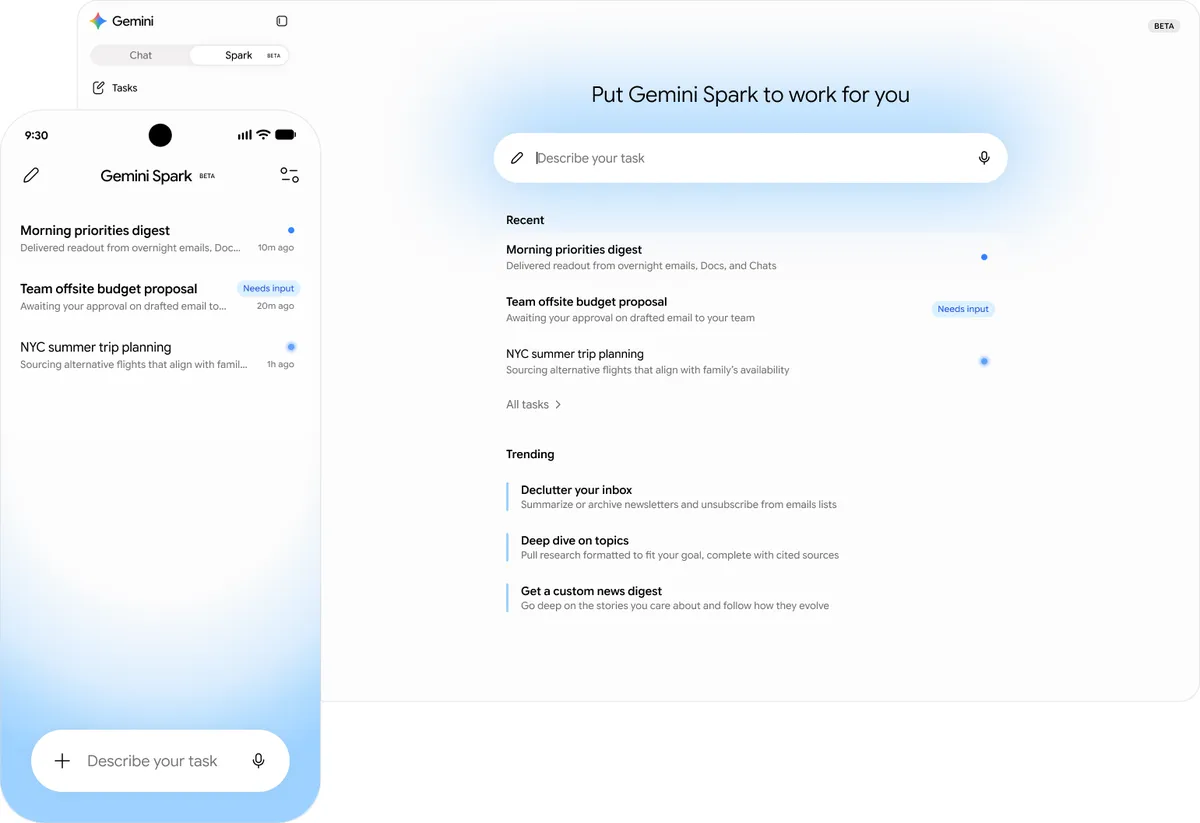
Perhaps the most significant announcement is the introduction of Gemini Spark. Moving away from the static, prompt-response model of traditional chatbots, Spark acts as a 24/7 personal AI agent. It is designed to navigate a user’s digital life by taking action on their behalf.
Crucially, Google has implemented a "human-in-the-loop" safety protocol. Before performing high-stakes tasks—such as sending a formal email or scheduling a high-priority meeting—Gemini Spark is programmed to seek user confirmation. This balance of autonomy and oversight marks a pivotal evolution in the Gemini ecosystem, signaling Google’s intent to make AI a proactive partner rather than just a passive tool.
Chronology: A Roadmap to Integration
The rollout of these features follows a strategic timeline designed to balance testing with rapid deployment:
- Immediate Availability: A limited group of "Trusted Testers" has gained early access to Google Pics as of today.
- Summer 2026 Rollout: Conversational voice features in Gmail, Docs, and Keep will reach Google AI Pro and Ultra subscribers, with business customers gaining access via a preview program.
- Ongoing Expansion: AI Inbox is currently expanding to all Google AI Plus and Pro subscribers in the U.S.
- Future Preview: Gemini Spark is slated to arrive in preview for business customers within the Gemini app shortly, marking the next phase of enterprise-grade AI integration.
Supporting Data and Technical Foundations
The scale at which Google is deploying these tools is supported by its massive infrastructure. The decision to integrate the "Nano Banana" model into Google Pics underscores a shift toward more specialized, efficient AI models that can run locally or with minimal latency.
According to Google, the integration of these tools is specifically targeted at the massive demographic of 4 billion Workspace users. By embedding these capabilities directly into the flow of work—rather than requiring users to switch between disparate applications—Google aims to drastically reduce "context switching," a phenomenon identified by researchers as a primary driver of workplace burnout and lost productivity.
Official Perspective: The Vision for 2026
Yulie Kwon Kim’s address emphasized that these tools are not intended to replace the human element of work, but to augment it. "Creating with AI should feel like creative direction, not a roll of the dice," Kim stated during the presentation.
The underlying philosophy is to reduce the friction of the "blank page." By allowing voice, visual, and task-management AI to handle the rote work of organizing and drafting, Google believes it can liberate users to focus on higher-order creative and strategic tasks. The emphasis on "creative control" in Pics and "user confirmation" in Spark demonstrates a clear acknowledgment of the ethical and practical concerns surrounding AI autonomy.

Implications: The Changing Landscape of Work
The introduction of these features has several far-reaching implications for the enterprise and individual users alike:
The Professional Paradigm Shift
For the modern worker, the digital assistant is evolving from a repository of data to an executor of tasks. The ability to use voice to manage email and document structures suggests that the future of desktop work may be increasingly mobile and hands-free. Professionals who can effectively "direct" these agents—much like a manager directing a team—will likely see a significant multiplier in their output.
Enterprise Security and Trust
For business customers, the introduction of Gemini Spark is a litmus test for corporate trust. By requiring user consent for high-stakes actions, Google is attempting to mitigate the risks associated with AI errors. However, the success of these tools will depend heavily on how organizations govern AI access and data privacy, particularly in sensitive sectors like legal, finance, and healthcare.
Competitive Dynamics
Google’s aggressive integration of these tools directly into the Workspace suite provides a competitive moat against standalone AI startups. By offering an integrated ecosystem where Gmail, Docs, and Gemini Spark talk to one another, Google is betting that convenience and seamless workflow will outweigh the utility of siloed, third-party AI tools.
Conclusion: A New Standard for Digital Efficiency
The announcements at I/O 2026 represent a clear maturation of generative AI. We are moving past the "novelty phase," where the value of AI was simply its ability to generate text or images. We are entering the "integration phase," where the value is found in the AI’s ability to act as a reliable, context-aware extension of the user.
As these tools roll out over the coming months, the measure of their success will be the extent to which they genuinely save time and reduce cognitive load. If Google can deliver on the promise of an "autonomous yet controlled" assistant, the 4 billion users of Google Workspace will soon find their daily routines fundamentally reshaped. The goal is no longer just to "get things done," but to do them with a degree of speed, precision, and creativity that was previously unattainable. The era of the proactive, AI-driven workspace has arrived.

 Asep Darmawan
 Lina Irawan
 Nila Kartika Wati
 Reynand Wu
 Nana Wu
 Nana Muazin