
 Asep Darmawan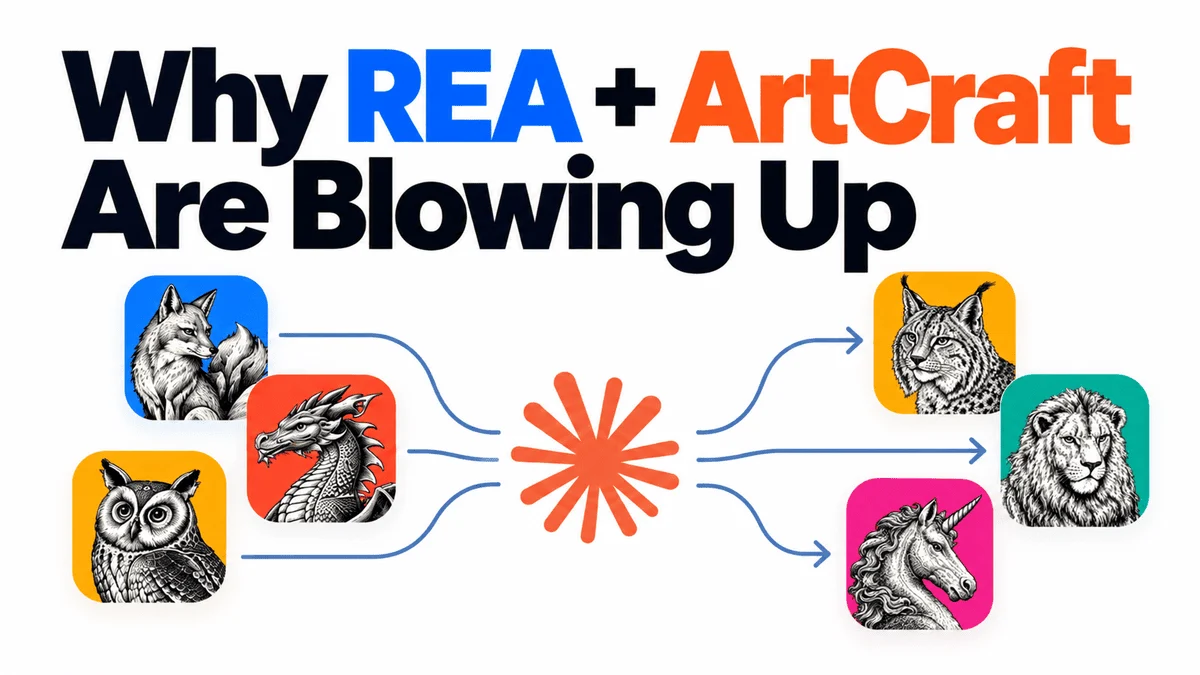
The landscape of software development is undergoing a tectonic shift, one that threatens to upend the dominance of Silicon Valley’s largest incumbents. For decades, the software industry has been defined by the "walled garden" model: massive, proprietary suites like Adobe Creative Cloud and Microsoft Office, protected by high development costs and even higher switching costs. Today, however, a new breed of AI-powered development tools is enabling individual programmers to replicate the functionality, layout, and workflows of these industry giants in a fraction of the time.
We are witnessing the rise of "AI Software Clones"—a movement characterized by projects like Reverse Engineer Anything (REA) and the ArtCraft ecosystem. This is no longer about simple "vibe coding" of landing pages; it is about the systematic deconstruction and recreation of commercial-grade software, potentially signaling the end of the subscription-based hegemony.
The Core Phenomenon: Breaking the Switching Cost Barrier
For years, the open-source community has provided functional alternatives to industry standards. Projects like GIMP, Inkscape, and LibreOffice have long offered robust, free alternatives to Photoshop, Illustrator, and Microsoft Office. Yet, they have consistently failed to capture mass market share. The culprit? Switching costs.
Professional workflows are deeply ingrained in muscle memory. A graphic designer who has spent 15 years mastering Adobe’s keyboard shortcuts and interface layout finds the cognitive load of learning a new, "open-source style" interface to be prohibitive. The result is a perpetual lock-in, where users continue to pay premium subscription fees not because they are enamored with the software, but because they cannot afford the productivity loss associated with migrating to a different tool.
The new generation of AI-assisted developers is tackling this head-on. Rather than reinventing the user experience to be "better" or "more open," they are utilizing AI to replicate the exact look, feel, and shortcut taxonomy of the incumbents. The goal is a "drop-in" replacement—an application that looks and behaves so much like the original that a user can switch without needing to read a single manual.
Chronology: A Rapid Acceleration in Development
The velocity of this movement is staggering.
- Pre-2024: Developers relied on manual reverse engineering, requiring deep knowledge of assembly, disassemblers, and binary analysis. The barrier to entry was immense.
- Early 2024: The proliferation of advanced coding agents like Claude Code, Cursor, and GitHub Copilot began to change the math. Developers started using these tools to accelerate boilerplate code generation.
- The REA Breakthrough (November 2024): The project "Reverse Engineer Anything" (REA) gained massive traction on GitHub, garnering over 130,000 stars in a matter of days. By providing a bridge between high-level AI agents and low-level tools like Ghidra and IDA, REA automated the analysis of compiled binaries.
- The ArtCraft Emergence: Simultaneously, developers like Brandon Thomas began publicly documenting the development of "Craft" suites (PhotoCraft, VectorCraft, FilmCraft). Using Rust and AI agents, these projects aimed for full feature parity with Adobe suites, pushing the limits of what a single developer could achieve.
REA: Making Reverse Engineering Accessible to the Masses
At the heart of this disruption is Reverse Engineer Anything (REA). Historically, reverse engineering—the process of analyzing software to determine how it functions without access to source code—was the domain of elite security researchers and specialized engineers.
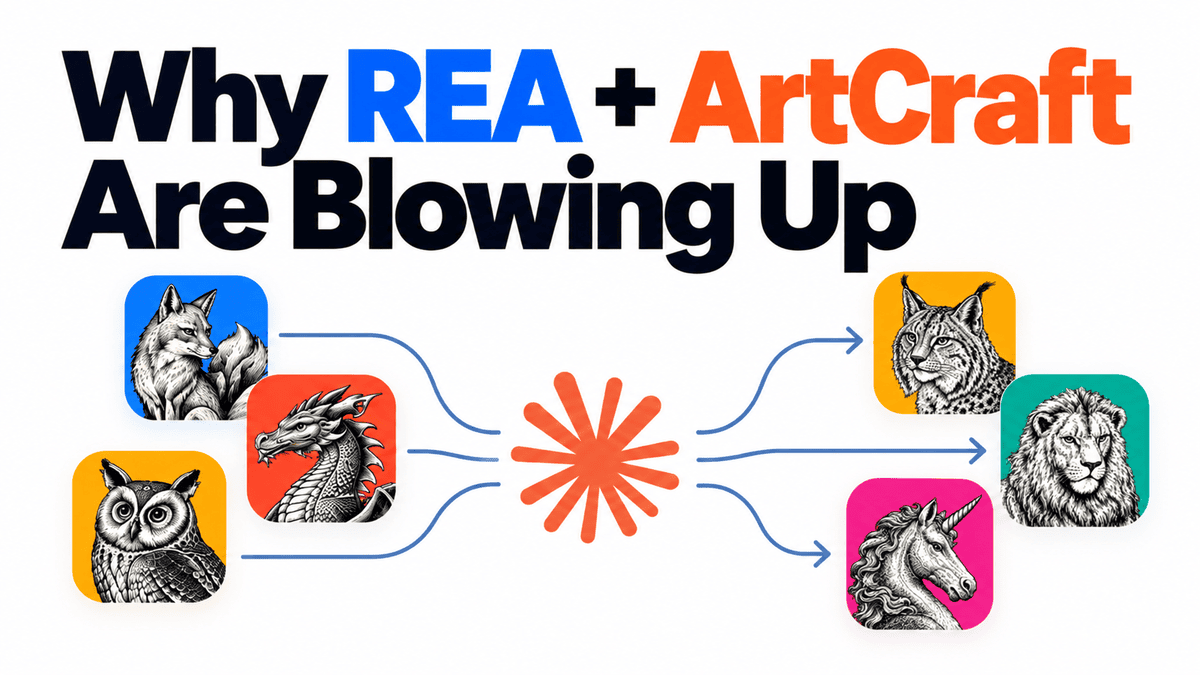
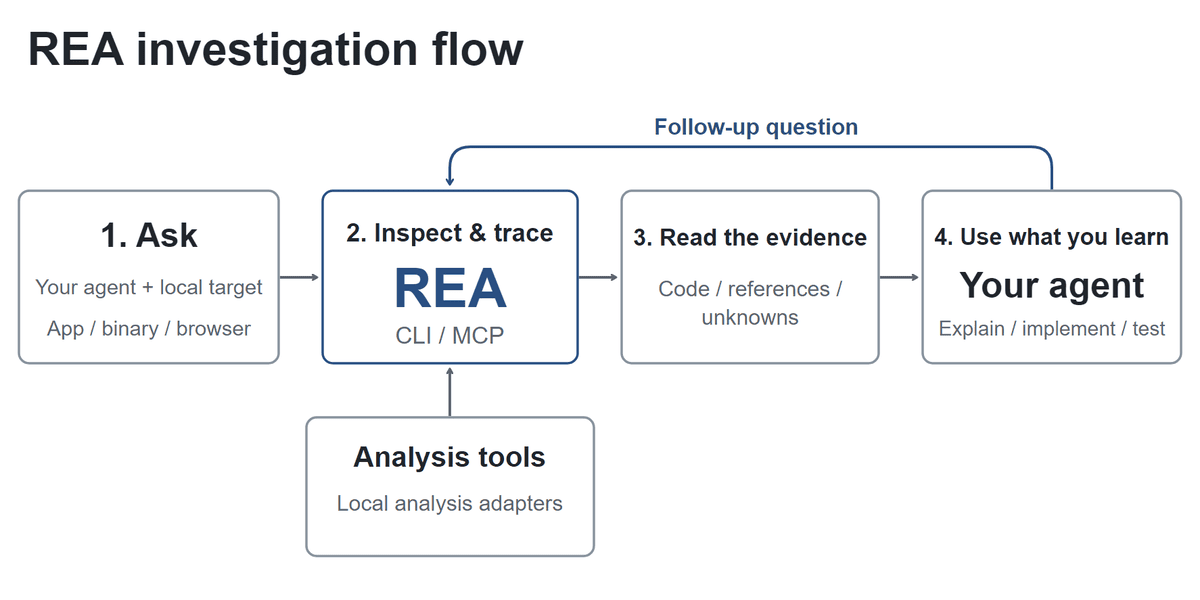
REA changes this paradigm by serving as a connective tissue. It feeds binary data into sophisticated Large Language Models (LLMs), which can then interpret the architecture, dependencies, and internal logic of the software. When a developer feeds an application binary into the REA pipeline, the AI agent performs the "heavy lifting," identifying the functions responsible for specific UI elements or calculations.
This has already yielded tangible results. Early experiments have successfully reconstructed Notion’s clipboard logic and recovered complex mathematical routines from legacy gaming software. By making the "how-to" of commercial software transparent, REA effectively lowers the moat surrounding proprietary software, allowing independent developers to build compatible alternatives faster than ever before.
ArtCraft: The Ambitious Pursuit of Feature Parity
While REA focuses on analysis, the ArtCraft project represents the "construction" side of the movement. Spearheaded by developer Brandon Thomas, the initiative aims to build a suite of creative applications—PhotoCraft (Photoshop), VectorCraft (Illustrator), and FilmCraft (Premiere)—using modern programming languages like Rust for high performance and AI for rapid interface development.
The ambition of ArtCraft has sparked a fierce debate within the developer community. Critics point out that "feature parity" is a moving target. Adobe Photoshop, for instance, has decades of "edge-case" code—handling obscure file formats, legacy color profiles, and complex hardware acceleration—that an AI agent might struggle to reproduce perfectly.
However, proponents argue that 80% of users only utilize 20% of the features. By focusing on the core toolsets that professionals use daily, ArtCraft aims to deliver a "good enough" experience that eliminates the need for a $600/year subscription. If the AI can handle the foundational architecture, the community can then step in to fill the gaps, turning a niche project into a viable ecosystem.
The Implications: A Shift in Software Ownership
The rise of these clones brings profound implications for the future of the digital economy.
1. The Death of the Subscription Model
The software industry has moved toward a "Software as a Service" (SaaS) model, where users rent their tools. If AI can lower the development cost of creating a "professional" app from $100 million to $100,000, the justification for high-margin, perpetual subscription models weakens. We may see a return to "ownable" software, where the user controls their data and environment.
2. Legal and Intellectual Property Challenges
The elephant in the room is copyright. While it is generally legal to build software that performs similar functions as another, the line between "inspired by" and "illegal copy" is thin. If AI agents are trained on proprietary source code (or if they are used to replicate protected UI elements), legal battles between legacy tech giants and the open-source community are inevitable.
3. Democratization of Development
The most significant impact may be the democratization of software creation. We are entering an era where an individual or a small team can produce software that competes with the output of a 500-person corporation. This shifts the power dynamic from the company that owns the "distribution channel" to the developer who can build the most user-centric, efficient tools.
Skepticism and the Road Ahead
Despite the viral excitement, it is important to maintain a sense of proportion. The current state of "vibe-coded" applications is often buggy, insecure, and lacking in performance optimization. Reliability is the hallmark of professional software, and it is here that established players like Microsoft and Adobe still hold a significant advantage.
Furthermore, these AI-built clones often lack the ecosystem integration—cloud syncing, collaborative features, and third-party plugin support—that keep enterprise users tethered to existing platforms. An AI-built Photoshop clone is useless to a marketing team that relies on shared Creative Cloud libraries.
Conclusion: Why the Incumbents Should Be Concerned
The real threat to the software giants is not that these clones will perfectly replace Photoshop or Excel tomorrow. It is that they are building a familiar, functional, and free foundation today.
As AI coding agents become more autonomous and capable of handling complex system architecture, the gap between "indie project" and "enterprise-grade tool" will shrink. When a user can achieve 90% of their workflow in an open-source, local, and free application, the "switching cost" drops to near zero.
We are at the beginning of a cycle where the software we use will become increasingly modular, open, and owned by the user rather than the corporation. Whether this results in a vibrant new era of creative freedom or a legal minefield of copyright disputes remains to be seen. But one thing is clear: the era of the impenetrable software moat is coming to a close. The tools are being rebuilt, and this time, they belong to the developers—and ultimately, to the users.


 Dwi Wanna


 Muslim
 Nana Wu

 Rifan Muazin
 Asro
Asro