
 Evan Lee Salim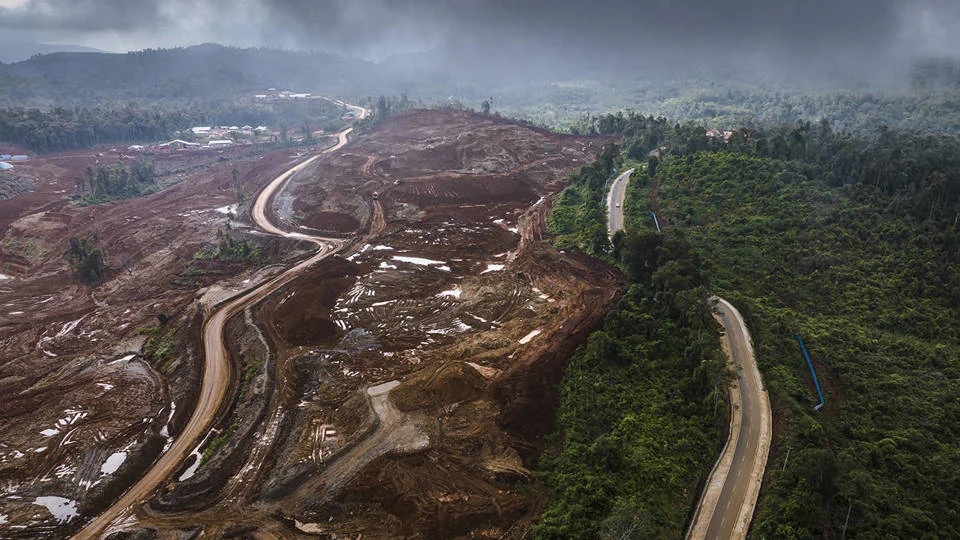
The global energy transition is moving at breakneck speed, but beneath the glossy veneer of "green" electric vehicles and wind turbines lies a gritty, often contentious reality. As the world pivots away from fossil fuels, the race to secure critical minerals—lithium, cobalt, nickel, and copper—has intensified. This scramble has sparked a complex tug-of-war between the urgent need for sustainable, ethical mining and the geopolitical pressure to hoard resources at any cost.
As highlighted during the recent annual meeting of the Intergovernmental Forum on Mining, Minerals, Metals, and Sustainable Development (IGF) in Geneva, "interdependence" is the buzzword of the day. Yet, the reality on the ground is one of fierce competition. For mineral-rich nations in the Global South, the current trajectory presents a paradox: how to capitalize on their natural wealth without falling prey to the "resource curse" or sacrificing the environmental and social welfare of their local communities.
The Data: A Tripling of Demand
The International Energy Agency (IEA) has provided a stark forecast: to meet global net-zero emissions targets, demand for critical minerals is projected to triple by 2030 and quadruple by 2040. This surging demand has fundamentally altered the global economic landscape.
Mineral-rich nations, wary of historic patterns where wealth was extracted without leaving a legacy of development, are increasingly looking inward. Many have begun implementing export bans on raw materials, hoping to force "downstream industrialization"—essentially, moving from being mere excavators to becoming processors and manufacturers. However, as the experience of Indonesia demonstrates, this transition is fraught with challenges.
Chronology of a Shifting Landscape
- Early 2020s: Indonesia leads the charge in banning raw nickel exports to incentivize domestic smelting and downstream value addition.
- 2024: The United Nations Secretary-General’s Panel on Critical Energy Transition Minerals releases a suite of "guiding principles," signaling a global shift toward a paradigm of justice and equity in resource governance.
- 2025: The OECD Forum on Responsible Mineral Supply Chains becomes a flashpoint for activists, including Publish What You Pay Indonesia, who demand higher governance standards for the nickel sector.
- October 2025: The ASEAN Principles for Sustainable Minerals Development are codified, attempting to align regional growth with sustainability.
- October 2026: The IGF Annual Meeting in Geneva emphasizes the need for global cooperation, yet reports continue to show a massive disconnect between policy declarations and the reality of "sacrifice zones" created by mining expansion.
The Indonesia Case Study: Industrialization vs. Equity
Indonesia, as the world’s largest nickel producer, serves as the primary laboratory for modern mineral policy. By mandating domestic processing, Jakarta successfully sparked a boom in nickel-rich provinces. However, the economic benefits have been uneven.
Critics point to the emergence of "sacrifice zones"—marginalized areas transformed into industrial hubs where the environmental and social costs are staggering. While national GDP may show gains, local communities often bear the brunt of polluted water tables, deforestation, and the displacement of indigenous populations. Furthermore, downstream industrialization is not a silver bullet. Without democratic oversight and robust environmental safeguards, these investments risk creating industrial enclaves that operate in a vacuum, detached from the broader welfare of the national population.
The inconsistency of international trade agreements also hampers progress. For instance, the EU-Indonesia Comprehensive Economic Partnership Agreement treats palm oil and nickel with vastly different standards. While the EU mandates strict sustainability benchmarks for palm oil, nickel—essential for the "green" transition—is often subject to far looser scrutiny. This double standard creates a perverse incentive: the world demands "green" minerals, but often ignores the "brown" reality of how they are extracted.
Official Responses and Global Frameworks
The international community is not blind to these issues. Several high-level frameworks have been established to mitigate the risks of unregulated mining:
- UN Secretary-General’s Panel: Emphasizes that mining must be rooted in justice, ensuring that host countries receive a fair share of the wealth and local populations are protected.
- Africa Mining Vision (AU): A long-standing framework aimed at ensuring that Africa’s vast mineral wealth serves the continent’s own development goals rather than just export markets.
- ASEAN Principles for Sustainable Minerals Development: A regional effort to standardize practices across Southeast Asia, encouraging countries to adopt shared environmental and social governance (ESG) metrics.
Despite these blueprints, they remain largely aspirational. When countries engage in bilateral trade deals that prioritize market access over all else, these frameworks are frequently sidelined. The challenge is not a lack of rules, but a lack of enforcement and the absence of a unified front among producers.
The Strategy for Change: Consolidating the Global South
The path forward lies in the consolidation of Global South policy and advocacy networks. Rather than acting as isolated competitors, nations like Indonesia, Chile, Zambia, and the Democratic Republic of the Congo could wield significant influence by aligning their strategies.
South-South Learning Platforms
Initiatives like the Natural Resource Governance Institute’s South-South Transition Minerals Learning Platform are already beginning to bridge this gap. By sharing lessons learned—what worked, what failed, and why—policymakers can avoid the "one-size-fits-all" trap. For example, a policy that works for copper in Chile may require significant modification to be effective for cobalt in the DRC. This peer-to-peer exchange is critical for building resilient, inclusive economies.
Transnational Advocacy Networks
Equally vital are the grassroots movements that connect civil society across borders. When local governments or corporations fail to provide accountability, these transnational networks act as a circuit breaker.
The campaign against Vale Indonesia’s Sorowako nickel project is a textbook example. When domestic advocacy by the Indonesian NGO WALHI was combined with pressure from Friends of the Earth Japan, it created an international coalition that could not be ignored. By targeting the shareholders—the financiers and corporate backers of these projects—activists forced a level of transparency that would have been impossible to achieve through local courts alone. Similarly, campaigns by organizations like Mighty Earth and Global Witness have forced automakers and battery producers to apply stricter due diligence to their supply chains, directly influencing the behavior of mining firms on the ground.
Implications: The Road to Accountability
The movement toward ESG guidelines in Indonesia, triggered by pressure from civil society, signals that the era of "resource extraction at any cost" is under fire. The Indonesian government is currently assessing the gap between its national regulations and global standards, a direct result of being held accountable by both international investors and local activists.
The implications for the global market are clear: transparency is no longer optional. As the energy transition continues to accelerate, companies and nations that prioritize equitable and sustainable practices will likely gain a competitive advantage in the long term, while those that continue to rely on exploitation will face increasing regulatory risk, divestment, and reputational damage.
Conclusion: A Call to Action
The pieces of the puzzle are already on the table. We have the frameworks (the UN guidelines, the Africa Mining Vision, the ASEAN principles), we have the learning platforms (the South-South exchange), and we have the advocacy networks (the cross-border coalitions).
The final, and most difficult, step is to integrate these pieces into a cohesive strategy. The goal of the IGF meeting in Geneva was to foster inclusion, but inclusion will not happen by accident. It will require the Global South to move beyond the scramble for market share and toward a collective defense of their social and environmental sovereignty. By strengthening policy ties and deepening transcalar advocacy, mineral-producing nations can ensure that the "green" transition is not just a technological success, but a victory for justice and equity on a global scale. The future of mining will be determined by whether these nations choose to compete against one another—or to act as a unified, empowered bloc.



 Ali Ikhwan
 Dwi Wanna
 Muslim
 Nana Wu

 Rifan Muazin
 Asro
Asro