
 Ammar Sabilarrohman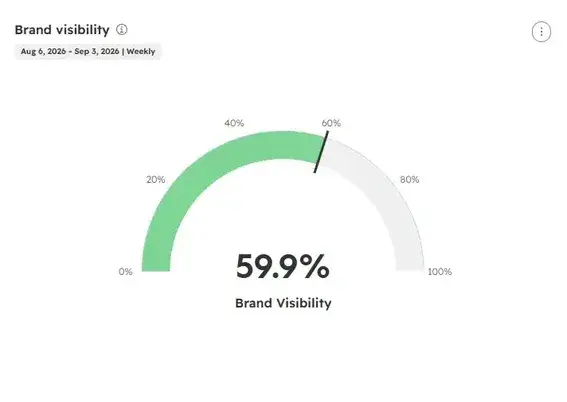
For decades, the holy grail of digital marketing was the "blue link." Content teams obsessively optimized their pages to climb the ranks of traditional search engines, believing that a top-three position was the ultimate arbiter of brand authority and lead generation. However, the rise of Generative AI has fundamentally altered the buyer’s journey. Today’s consumers are increasingly bypassing traditional search results in favor of AI assistants and answer engines—platforms that synthesize information and provide direct answers, often without requiring the user to click through to a source website.
This shift has created a "zero-click" reality that demands a new strategic imperative: Answer Engine Optimization (AEO). For the modern content marketer, AEO is not merely a replacement for SEO; it is an evolution that requires a more nuanced approach to visibility, trust, and attribution.
The Evolution of Search: From Keywords to Conversations
The chronology of search has been defined by a rapid transition from simple keyword matching to complex intent fulfillment. In the early 2000s, search engines functioned as directories. By the 2010s, they became semantic engines capable of understanding context. Today, we are in the era of "Answer Engines"—platforms like ChatGPT, Google’s Gemini, and Perplexity that act as digital research assistants.
For content marketers, the traditional playbook—consistently publishing high-quality content and tracking page rankings—is no longer sufficient. When a buyer asks an AI, "What are the best CRM solutions for a mid-sized e-commerce company?" they are looking for a definitive answer, not a list of ten websites to visit. If your brand is not integrated into the AI’s synthesized response, you effectively do not exist in that buyer’s research process.
The Three Pillars of AEO Strategy
To stay relevant, content teams must rethink their measurement models. It is no longer enough to know if a page ranks; you must know if your brand is being cited as a primary authority by AI models. AEO builds on the familiar fundamentals of SEO—understanding audience intent and creating high-quality content—but introduces three critical new layers of data:

- AI Visibility Baseline: Tracking how often your brand is mentioned or cited across various AI platforms for high-intent queries.
- Source Citation Analysis: Understanding which content pieces are being pulled by AI engines to satisfy user queries.
- AI-Referral Attribution: Tracking the downstream impact when a user does choose to click through to your site from an AI answer.
Without establishing this baseline, marketing teams are flying blind. They risk optimizing for keywords that no longer drive traffic, while ignoring the emerging queries that define the AI-driven research phase.
Data-Driven Visibility: The HubSpot AEO Advantage
Recognizing this market shift, industry leaders like HubSpot have introduced dedicated AEO tools designed to provide a "Brand Visibility Score" across platforms like ChatGPT, Gemini, and Perplexity. By monitoring prompt-level tracking and competitor comparisons, companies can gain a real-time pulse on their digital presence.
Supporting data highlights the urgency of this pivot. According to recent internal data from HubSpot, customers who actively optimize for AI search demonstrate significantly stronger performance metrics than those who rely on legacy strategies. Specifically, brands that prioritize AEO generate 170% more Marketing Qualified Leads (MQLs) than their counterparts. This is not merely a branding win; it is a direct contributor to the revenue pipeline.
Official Perspectives: The Integration of AI and Content
Industry experts emphasize that AEO is not about "gaming the system" in the way black-hat SEO once was. Rather, it is about aligning content with the way AI models prefer to consume and summarize information.
"The goal is to become the ‘source of truth’ for the AI," says a spokesperson for HubSpot. "When we look at the recommendations provided by our AEO tool, we see a clear pattern: AI engines prioritize content that is direct, factual, and logically structured. By leveraging these insights, content teams can act on recommendations directly within their existing marketing infrastructure, ensuring that their content is not just found, but featured."

This integration into platforms like Marketing Hub Professional and Enterprise marks a significant milestone in martech development. By centralizing AEO within the same environment where campaigns are executed, marketers can bridge the gap between AI visibility and downstream demand.
Implications for the Modern Content Marketing Organization
The shift to AEO carries profound implications for the structure and strategy of marketing departments.
The Death of the "Click-Only" Metric
For years, the Click-Through Rate (CTR) was the primary metric of success. In an AI-first world, "exposure" becomes a valid metric. Even if a user does not click, having your brand cited as a primary solution within an AI response builds brand equity and mental availability. Marketing teams must now learn to value "AI mentions" alongside traffic.
The Feedback Loop
AEO creates a practical, closed-loop system:
- Track: Monitor where your brand appears (or doesn’t appear) in AI responses for your core topics.
- Optimize: Use citation data to identify content gaps. If a competitor is being cited for a specific query, analyze their content—is it more concise? Does it use better data?
- Measure: Monitor "AI-Referral" traffic as a distinct source in your analytics platform, ensuring that these visitors are tracked through the entire funnel to deal closure.
Strategic Content Creation
Content marketers must shift their writing style to favor "answer-first" structures. While long-form content remains essential for depth, the introduction of every piece should clearly and concisely address the core query. AI models are designed to extract specific snippets of information; by providing these snippets clearly, marketers increase the probability of being cited as a source.

The Future of the Buyer’s Journey
The transition to AEO is not a temporary trend; it is a fundamental shift in how information is synthesized and distributed. As AI assistants become more deeply integrated into operating systems and browsers, the "zero-click" trend will only accelerate.
For the modern marketer, this creates a dual-track responsibility. You must continue to produce content that satisfies the human need for depth, storytelling, and brand engagement, while simultaneously ensuring that the "machine" can easily digest and surface your brand as a trusted authority.
The companies that succeed in the next five years will be those that view AI as a partner in discovery rather than an adversary of traffic. By adopting a rigorous, data-backed approach to Answer Engine Optimization, marketing teams can ensure that when their customers ask questions, the industry’s most trusted AI engines are pointing directly at them.
Summary Checklist for AEO Success:
- Audit your current visibility: Use tools to identify which prompts trigger your brand as a source.
- Analyze the competition: Why are they being cited? What information do they provide that you are missing?
- Refine your content structure: Are you providing clear, direct answers at the top of your content?
- Update your attribution model: Ensure your CRM is configured to capture "AI Referral" as a distinct traffic source.
- Iterate: Use the feedback loop from your AEO dashboard to prioritize your content calendar for the coming quarter.
The era of searching is over; the era of answering has begun. Is your brand prepared to be the voice of the machine?

 Layla Zulfa
 Evan Lee Salim
 Dwi Wanna
 Muslim
 Nana Wu

 Rifan Muazin
 Asro
Asro