
 Layla Zulfa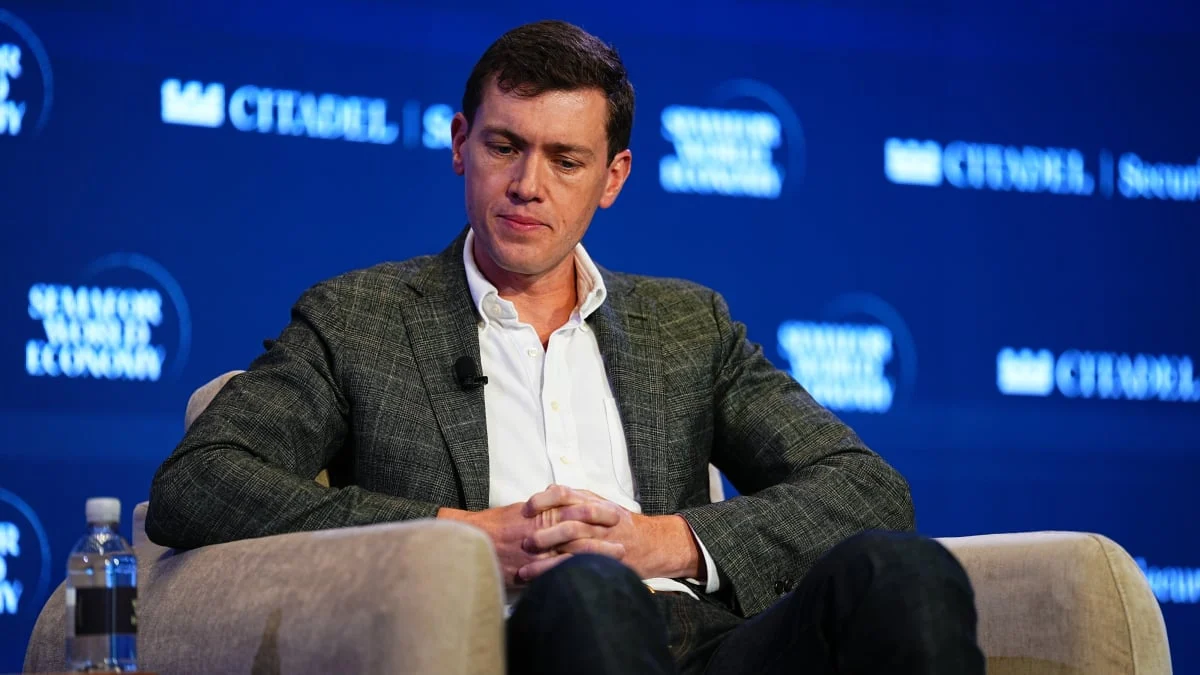
In the quiet corridors of the U.S. Senate, the debate over privacy in the age of omnipresent technology has reached a boiling point. Last week, as whistleblowers and privacy advocates testified before the Subcommittee on Crime and Counterterrorism regarding the systemic flaws and ethical implications of Flock Safety’s technology, one chair remained conspicuously empty. Garrett Langley, the CEO of the $8 billion surveillance giant, opted to remain at home, offering a written statement in lieu of a personal appearance.
For many, this absence was the final straw. What began as a legislative inquiry into the efficacy and ethics of mass surveillance has morphed into a digital crusade, with an ignited online populace targeting Langley with the very tactics his company is accused of facilitating: relentless, unblinking scrutiny.
The Chronology of a Digital Siege
The tension between Flock Safety and the public has been simmering for months, but the events of the last week mark a significant escalation. The catalyst was the Senate hearing, which cast a harsh spotlight on Flock’s Automatic License Plate Readers (ALPRs)—a network of high-definition, AI-powered cameras that allow law enforcement to track, profile, and store the location data of drivers, often without warrants or specific criminal suspicion.
Following the hearing, the digital resistance moved from the halls of Congress to the chaotic landscape of social media. On platforms like X (formerly Twitter) and Reddit, users began circulating what they claimed was the private residential address of Langley. In an act of "poetic justice," as one user described it, anti-surveillance activists labeled the property as a "public toilet" on digital maps, a symbolic mockery intended to mirror the lack of privacy afforded to everyday citizens under the gaze of Flock’s cameras.
The backlash quickly evolved into organized doxxing. Users encouraged one another to share Langley’s personal information, arguing that the CEO should experience the "endless surveillance" his company profits from. The irony was not lost on the public: eagle-eyed observers noted that Langley had taken steps to blur his own home on Google Maps’ Street View—a privacy protection feature available to any homeowner. This act of personal discretion, while standard, ignited a firestorm of criticism. In response, protesters began circulating unverified images of the residence, with some openly speculating about "egging" or "toilet papering" the property during the upcoming Halloween season.
The Mechanics of the Anti-ALPR Movement
The movement against Flock is no longer a fringe endeavor; it is a burgeoning, bipartisan grassroots phenomenon. At the center of this resistance is the "DeFlock" movement, which has transitioned from online discourse to physical, and at times, "guerilla" action.
The DeFlock America Facebook group, which serves as a central clearinghouse for information and mobilization, has surpassed 820,000 members. This massive collective is fueled by a growing body of evidence that Flock’s network is being used as a pervasive dragnet. Critics argue that the company’s "security solution" is, in reality, a tool for social control.
The strategy employed by these groups is twofold:
- Political Pressure: Lobbying local town councils and state legislatures to terminate existing contracts with Flock.
- Direct Action: Documenting the locations of surveillance devices and, in some cases, advocating for their physical removal or obstruction, framing these acts as a necessary defense of public civil liberties.
Legislators are beginning to feel the heat. From small-town council meetings to state house floors, the argument that "privacy rules should apply to everyone, not just tech executives" has gained significant traction. Bipartisan efforts to regulate, restrict, or outright ban the use of ALPR technology are currently moving through various legislative pipelines, driven by a constituency that no longer views these devices as mere crime-fighting tools, but as an infringement on the fundamental right to travel and exist in public space without being cataloged.
Supporting Data and Ethical Implications
The controversy surrounding Flock highlights a broader tension between technological innovation and democratic norms. According to industry reports, Flock’s valuation has skyrocketed to $8 billion, backed by heavyweight venture capital firms like Andreessen Horowitz and Tiger Global. This investment signals that the surveillance industry is not a fleeting trend but a core component of the modern "smart city" infrastructure.
However, the efficacy of this infrastructure remains under intense scrutiny. While Flock markets its technology as a method to deter violent crime, critics, including the ACLU and various privacy watchdogs, point to the potential for "mission creep." Once a massive database of location history is created, it is rarely limited to its original purpose. It becomes a resource for government agencies to track protestors, monitor political dissidents, and cross-reference data with other state databases, creating a comprehensive picture of an individual’s life.
The ethical dilemma is compounded by the "black box" nature of the AI used in these cameras. Decisions regarding who is flagged as a "threat" or a "person of interest" are often made by proprietary algorithms that lack transparency. When these errors occur, the result is not just a digital nuisance; it is a potential interaction with law enforcement based on faulty, machine-generated assumptions.
Official Responses and the Corporate Silo
Flock Safety has consistently defended its mission, framing its products as the primary defense against the rising tide of property crime and vehicle-related offenses. In their official communications, they emphasize that their data is controlled by local law enforcement agencies and that strict privacy policies are in place to prevent misuse.
However, the company’s recent silence—or rather, their reliance on written statements—has deepened the divide. By avoiding the public stage of a Senate hearing, Langley and his leadership team have inadvertently confirmed the perception that they are an elite class, insulated from the very surveillance ecosystem they are helping to build.
Observers note that this corporate posture is a high-risk strategy. In the era of social media, the distance between the "consumer" and the "creator" is thinner than ever. When a company’s product fundamentally changes the nature of public life, the public expects a level of accountability that cannot be satisfied by press releases or legal teams.
The Future of the Surveillance State
The current backlash against Flock and its CEO is a microcosm of a much larger battle for the future of digital society. We are witnessing the first major "privacy revolt" in the United States, where the tools of the digital age—social media, crowdsourced mapping, and decentralized organizing—are being turned against the surveillance industry itself.
As the movement grows, the implications for the tech industry are profound. If surveillance companies cannot convince the public of their necessity, they face the prospect of a legislative winter. The bipartisan nature of the anti-Flock movement suggests that the divide over privacy does not follow traditional party lines; instead, it is a conflict between those who believe in a "safety-first" world of total observation and those who prioritize the traditional American value of being left alone.
For Garrett Langley, the coming months will be a test of whether his company can survive not just the legislative scrutiny, but the loss of the public’s "license to operate." The digital doxxing and the threats of vandalism, while ethically fraught, serve as a stark warning: the era of silent, passive acceptance of mass surveillance is over. The observers are now being observed, and the hunters are finding themselves in the crosshairs of a public that is increasingly unwilling to trade their anonymity for a promise of security.
As the DeFlock movement continues to grow, it is clear that the discourse surrounding surveillance has shifted. It is no longer a question of if we should use technology to monitor our streets, but whether we can tolerate a future where the architects of that monitoring are shielded from the very scrutiny they impose on the rest of us.

 Ammar Sabilarrohman
 Evan Lee Salim
 Dwi Wanna
 Muslim
 Nana Wu

 Rifan Muazin
 Asro
Asro