
 Rifan Muazin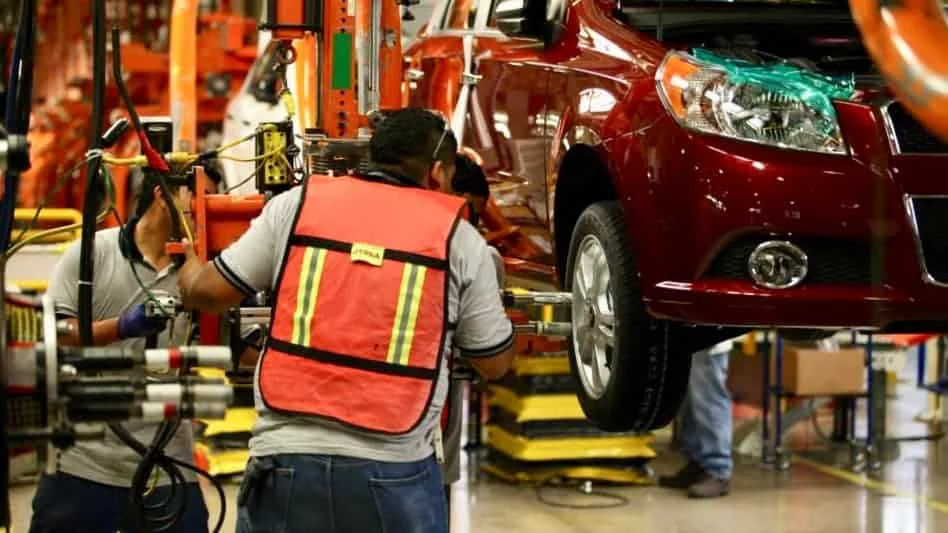
Weekly Rundown: In this edition of Borderlands Mexico, we analyze the shifting currents of North American trade. As Mexico’s automotive sector faces a challenging September with double-digit production declines, the reliance on the U.S. market remains the industry’s bedrock. Meanwhile, logistics giant DSV is deepening its footprint in the Rio Grande Valley, and academic institutions are leveraging artificial intelligence to untangle the complexities of the Laredo border crossing.
1. Main Facts: The State of North American Automotive Trade
The symbiotic relationship between Mexican manufacturing and the United States consumer market remains the primary engine of North American logistics. According to the latest data released by Mexico’s National Institute of Statistics and Geography (INEGI), the United States continues to be the dominant destination for Mexican light-vehicle exports, absorbing 76.4% of total shipments during the first nine months of 2026.
Despite this strategic importance, September proved to be a volatile month for the industry. Mexican automotive manufacturers saw a sharp contraction, with worldwide exports falling by 11.9% year-over-year. Production metrics told a similarly sobering story, with total light-vehicle output sliding by 15.1% compared to September 2025.
While export-oriented manufacturing faced headwinds, the domestic Mexican market displayed surprising resilience. New light-vehicle sales within Mexico rose by 7.9%, suggesting a widening divergence between the nation’s internal economic health and the external pressures impacting its massive export-manufacturing sector.
2. Chronology: Mapping the September Contraction
The data for September 2026 marks a deviation from the year-to-date trends observed throughout the first three quarters. To understand the current climate, one must look at the timeline of production and export figures:
- January – September 2026: Mexico exported a total of 2,528,623 light vehicles worldwide. While this represents a modest 1.5% decline from the same period in 2025, the trajectory shifted downward as the year progressed.
- September 2026 Production: Manufacturers assembled 301,803 units, a significant drop of 53,786 units compared to the 355,589 produced in September 2025.
- September 2026 Exports: The industry shipped 277,369 vehicles abroad, down from 314,656 units in the same month last year.
- Year-to-Date Production: Total production reached 2,946,943 units through the first nine months of 2026, marking a 2.4% contraction from the 3,020,006 units produced in the same window in 2025.
This data suggests that while the first half of the year maintained a relatively stable output, the late-summer and early-autumn months have introduced significant friction into the supply chain, likely influenced by global component shortages, labor fluctuations, and shifting demand cycles within the North American automotive sector.
3. Supporting Data: Market Distribution and Production Breakdown
The concentration of trade remains heavily tilted toward North American partners. The United States leads the list of destinations by a wide margin, followed by Canada.
Export Destinations (Jan–Sept 2026)
- United States: 1,931,750 units (76.4%)
- Canada: 314,185 units (12.4%)
- Germany: 64,963 units (2.6%)
- Brazil: 43,821 units (1.7%)
- Rest of World: 173,904 units (6.9%)
Manufacturing Composition
The composition of production continues to favor light trucks over passenger cars, a trend that has defined the Mexican automotive landscape for years. Of the nearly 3 million vehicles produced through September 2026:
- Light Trucks: 2,329,189 units (79%)
- Passenger Cars: 617,754 units (21%)
Manufacturer Performance (September 2026)
The production declines were not distributed evenly across the major automakers:
- General Motors: Experienced a 27.1% year-over-year production decline (58,949 units).
- Nissan: Reported a 26.3% decrease (44,355 units).
- Ford Motor: Saw production fall by 16.4% (29,480 units).
- Volkswagen: Reported a more modest 5.9% decrease (27,475 units).
- Stellantis: bucked the trend with a 4.4% production increase (35,834 units).
4. Official Responses: Expanding Logistics Infrastructure
While manufacturers grapple with production volatility, the logistics sector is doubling down on its commitment to the border region. Global logistics provider DSV has officially expanded its footprint with a new office in McAllen, Texas.
This move is designed to bolster support for the maquiladora industry in northern Tamaulipas, Mexico. By establishing a physical presence in McAllen, DSV aims to streamline cross-border freight services for companies that rely on high-frequency, just-in-time delivery cycles.
"The expansion strengthens our connections with manufacturers in the region, particularly those that depend on cross-border freight services," said a company representative. This new location will work in tandem with existing DSV border hubs in Laredo, Brownsville, El Paso, Los Indios, and San Diego, creating a more integrated network for ground, air, and ocean transport.
5. Implications: The AI-Powered Future of Logistics
The final piece of this week’s border analysis concerns the modernization of the Laredo port of entry, the busiest commercial gateway in the United States. Texas A&M International University (TAMIU) is spearheading a $772,700 federal funding initiative to launch the "Port Laredo Logistics Ecosystem Project."
The Digital Twin Concept
The project, supported by U.S. Rep. Henry Cuellar (D-Texas), aims to establish a "Digital Twin and Logistics Resilience Lab." By utilizing artificial intelligence, real-time sensors, and big-data analytics, the lab will create a virtual replica of the freight movement ecosystem at the Laredo border.
The implications of this technology are profound:
- Bottleneck Mitigation: By simulating traffic flows, researchers can identify potential congestion points before they manifest on the ground.
- Resilience Planning: The system will allow logistics companies to stress-test their supply chains against potential disruptions, such as infrastructure failures or sudden spikes in cross-border volume.
- Data-Driven Policy: Policymakers will have access to granular data regarding cargo flows, which could lead to more effective infrastructure investment and port staffing strategies.
The funding for this project, included in the fiscal year 2027 appropriations legislation, remains subject to final approval. However, the move signals a clear shift in how the U.S.-Mexico border is being managed: moving away from reactive management and toward a proactive, AI-integrated logistics framework.
Final Analysis: Why It Matters
The current economic landscape at the border is a study in contrasts. While the automotive production sector is currently facing a period of contraction—driven by factors that are likely a mix of shifting consumer demand and supply chain recalibration—the infrastructure surrounding that trade is becoming more sophisticated and deeply entrenched.
The 76% reliance of Mexico’s vehicle exports on the U.S. market is not merely a statistical figure; it is the fundamental pillar upon which North American logistics infrastructure is built. When production slows in Mexico, the ripple effects are felt immediately across the trucking and rail corridors that link the two nations.
However, the investments being made by players like DSV and the technological advancements being pursued by TAMIU suggest that industry leaders are looking past the short-term dips in output. They are investing in the long-term reality that the U.S.-Mexico commercial corridor is the most critical trade artery in the Western Hemisphere. As the automotive industry navigates its current production challenges, the logistics sector is preparing for a more digitized, resilient, and efficient future—one where the border is no longer a bottleneck, but a seamless hub of intelligent commerce.


 Laily UPN
 Siti Muinah
 Pevita Pearce
 Dwi Wanna
 Lina Hope
 Layla Zulfa
 Asep Darmawan
 Azzam Bilal Chamdy