
 Jia Lissa
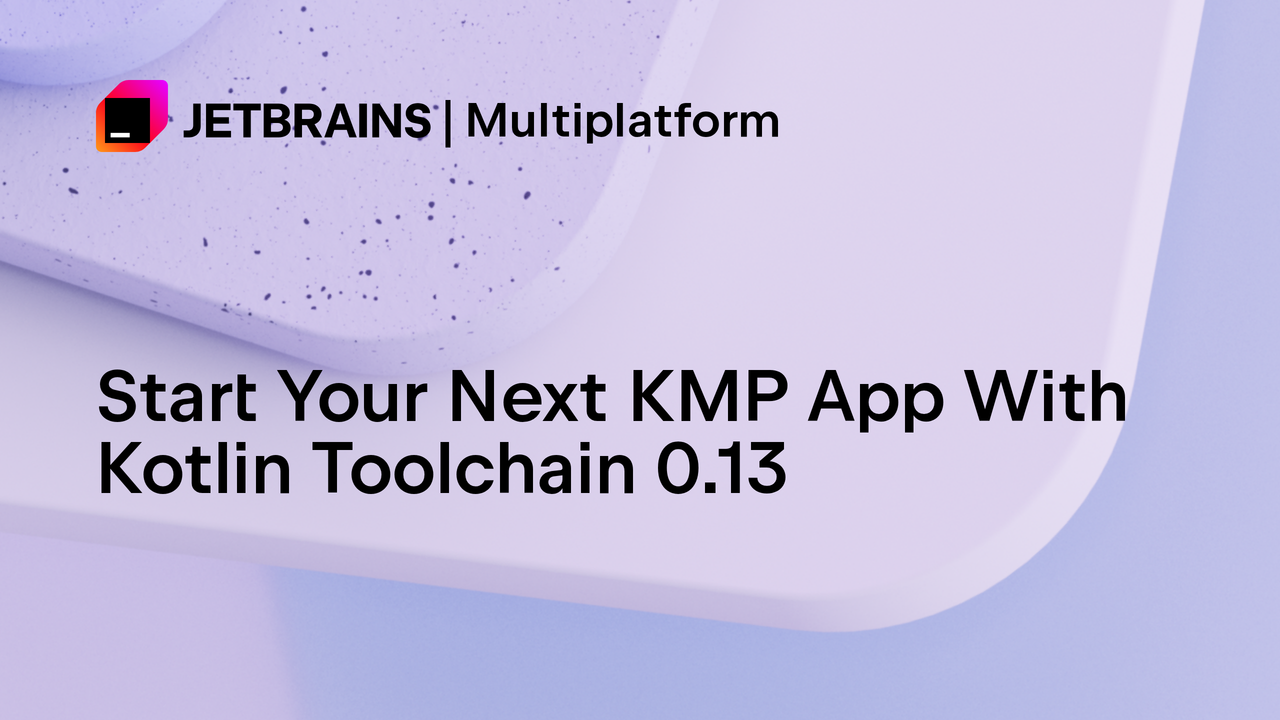
The landscape of cross-platform development is undergoing a seismic shift. For years, Kotlin Multiplatform (KMP) developers have navigated a complex ecosystem of build configurations, environment dependencies, and platform-specific hurdles. Today, that complexity takes a significant step toward simplification. JetBrains has officially released Kotlin Toolchain v0.13, marking a transition from experimental status to a recommended standard for new KMP projects.
This release is not merely a collection of bug fixes; it represents a fundamental change in how developers interact with the Kotlin ecosystem. By providing a unified, declarative entry point for JVM, Android, iOS, and server-side development, the Kotlin Toolchain aims to eliminate the "it works on my machine" phenomenon that has long plagued multi-platform engineering.
The Core Evolution: From Alpha to Industry Standard
Main Facts at a Glance
The Kotlin Toolchain serves as the command-line orchestrator for the entire Kotlin lifecycle. Version 0.13 introduces a suite of features designed to automate environment provisioning—a task that historically consumed hours of developer time.
Key highlights of the 0.13 release include:
- The
kotlin newcommand: A new interactive CLI experience that streamlines project scaffolding. - Enhanced AI Integration: Direct support for agentic workflows, including dedicated AI agent skills.
- Improved iOS/Android Onboarding: Seamless automated provisioning of SDKs and runtimes.
- Swift Package Manager (SPM) Support: Enabling native dependency management for Apple platforms.
- Compiler Caching: Significant performance boosts for Kotlin/Native rebuilds.
A Chronology of the Toolchain
The journey to 0.13 began with the ambitious goal of abstracting away the friction of multi-platform development.
- Early 2026: JetBrains formally introduced the project, signaling a move toward more declarative build systems.
- Mid-2026: The Toolchain was promoted to Alpha. This period was characterized by intense community feedback, with developers on Slack and the official issue tracker pushing for better cross-platform parity.
- October 2026: The release of v0.13. JetBrains has officially moved from testing to recommending the Toolchain for new KMP applications, signaling maturity and stability.
Supporting Data: Efficiency and AI Synergy
One of the most compelling aspects of the 0.13 release is its focus on "Agentic Workflows." As AI-driven coding assistants become ubiquitous, the structure of project files and the reliability of build environments become critical.
The AI Advantage
JetBrains reports that AI agents—when interacting with projects configured via the Kotlin Toolchain—generate and maintain code with higher reliability while consuming significantly fewer tokens. This is due to the Toolchain’s declarative configuration, which provides a clean, predictable context for Large Language Models (LLMs). By installing the official skills (npx skills add kotlin/kotlin-agent-skills), developers can now empower their AI agents to handle complex build tasks that would otherwise require manual intervention.
Performance Benchmarks
The introduction of Kotlin/Native compiler caches addresses a major pain point: the time required for incremental builds. By caching compiled native dependencies across projects and using per-file caches for application code, the Toolchain drastically reduces the edit-build-run cycle. For native apps and testing suites, this means that small code changes no longer trigger a full recompilation, saving developers precious minutes throughout the workday.

Simplifying the Developer Experience
Breaking Down the kotlin new Command
Previously, setting up a KMP project required navigating the web-based KMP Wizard or manually configuring Gradle files. The kotlin new command brings this capability directly to the terminal. It provides an interactive prompt that guides the user through application types and platform targets, ensuring that the necessary boilerplate is correctly scaffolded from the outset.
Android and iOS: Bridging the Gap
A perennial headache for cross-platform teams is the disparity between Android Studio and Xcode environments. Version 0.13 tackles this by:
- Aligning CLI and IDE behavior: Missing Android SDK components are now provisioned automatically upon project import, preventing the dreaded "SDK not found" errors that often greet new developers.
- SPM Integration: The inclusion of Swift Package Manager support allows teams to import Objective-C and Swift dependencies directly into their KMP modules. The ability to namespace these dependencies using the
swiftPMImportprefix provides a clean, manageable way to integrate external Apple libraries without polluting the project scope.
Official Perspective: The Path Forward
In recent discussions, the engineering team at JetBrains has emphasized that the Kotlin Toolchain is not intended to replace Gradle, but to sit above it as a high-level, human-readable configuration layer.
"Our goal is to lower the barrier to entry for developers moving into the multi-platform space," said a spokesperson for the Kotlin team. "Whether you are a seasoned Android dev exploring iOS, or a server-side engineer building your first mobile app, the Toolchain provides a unified language for your environment. We have seen significant internal adoption, and our dogfooding efforts have given us the confidence to invite the wider community to build their next projects with this tool."

JetBrains has also committed to a transparent roadmap. Future updates will focus on:
- Closing the Gap for Existing Projects: Developing migration strategies for legacy Gradle-heavy projects.
- Expanded IDE Integration: Deepening the sync status feedback within IntelliJ IDEA and Android Studio.
- Community-Driven Features: Continuing to refine the CLI based on the feedback loop from the #kotlin-toolchain Slack channel.
Implications for the Industry
The move toward the Kotlin Toolchain 0.13 has profound implications for the mobile development industry.
1. Standardization of KMP
By recommending the Toolchain for new projects, JetBrains is effectively defining a "canonical" way to build KMP apps. This reduces fragmentation, making it easier for companies to hire and onboard developers who are familiar with the standard tooling.
2. Democratization of Cross-Platform Development
The automated provisioning of SDKs and the intuitive CLI make KMP accessible to smaller teams that may not have dedicated DevOps resources to manage complex build environments. This lowers the cost of entry for building high-quality, native-feeling apps across platforms.

3. AI-First Engineering
The explicit focus on AI agent support signals a shift in the development lifecycle. As IDEs become increasingly autonomous, the tools that provide the most "context-friendly" interfaces will win. By designing the Toolchain to be agent-compatible from the ground up, JetBrains is positioning Kotlin at the center of the future of AI-augmented software engineering.
Conclusion: How to Get Started
For developers ready to embrace the future of the Kotlin ecosystem, the upgrade process is intentionally frictionless. Existing users can simply execute kotlin update in their terminal to access the latest features. For those starting fresh, the documentation at kotlin-toolchain.org serves as the primary gateway.
As the industry moves toward increasingly modular and cross-platform architectures, the Kotlin Toolchain stands as a testament to the idea that complex technology should not result in a complex developer experience. With v0.13, JetBrains has provided the community with the tools to build faster, test smarter, and spend less time fighting their build system and more time delivering value to their users.
Join the conversation: The Kotlin team continues to iterate based on user feedback. Whether you encounter a bug or have a suggestion for the CLI, the #kotlin-toolchain Slack channel remains the best place to engage with the architects of the platform and the broader developer community.

 Muslim
 Ali Ikhwan
 Ammar Sabilarrohman
 Laily UPN
 Nana
Nana