
 Basiran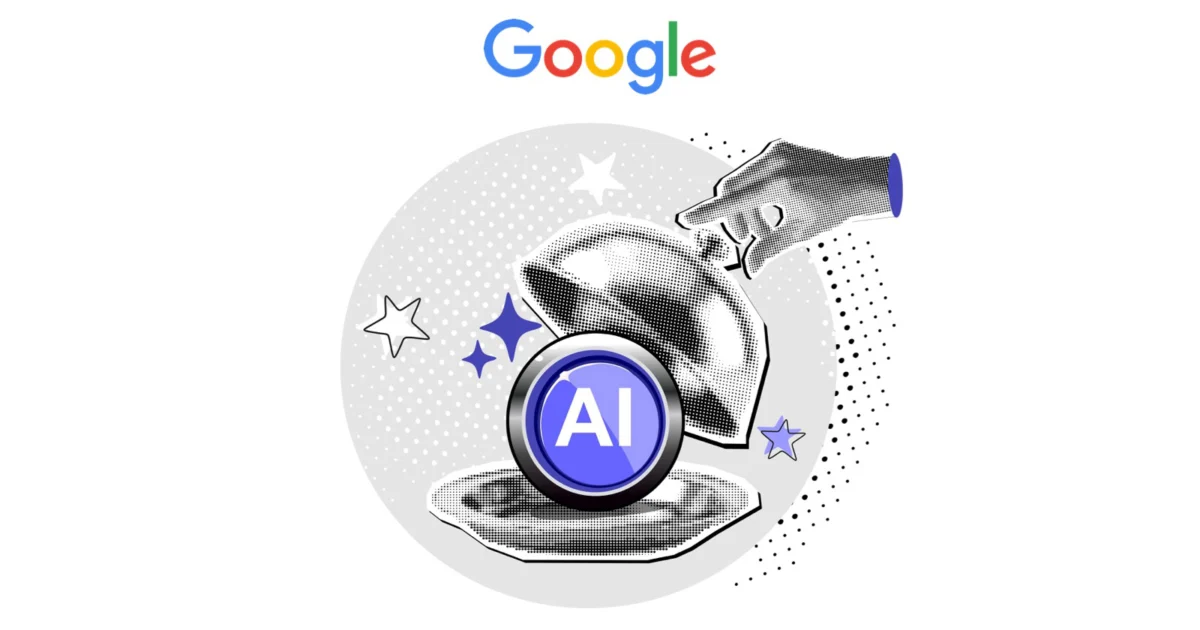
Google is aggressively pivoting its massive "Discover" feed toward a future defined by generative artificial intelligence. Recent activity on the company’s official careers portal reveals that the search giant is recruiting high-level engineering and design talent to fundamentally rewire the Discover experience, shifting it from a traditional content-discovery tool into a "proactive, hyper-personalized concierge."
This strategic shift, first highlighted by industry observers like Damien Andell, signals that Google intends to move beyond merely aggregating web links. Instead, the company is aiming to use agentic AI flows to curate, summarize, and generate content directly within the user’s feed, fundamentally altering how 500 million daily active users interact with information.
The Strategic Shift: Engineering an AI-Native Feed
At the heart of this transformation are several high-profile job listings that outline a new architecture for the Discover feed. A listing for a Staff ML Engineer on the Discover Feed Recommendation team explicitly states that the team "leads by recommending AI-generated content (AIGC) to fulfill user interests."
Technical Objectives for the Engineering Team
The scope of work for these incoming engineers is expansive, moving well beyond simple ranking algorithms. Key technical mandates include:
- Agentic Workflows: The roles involve building "agentic flows" that proactively generate content for Discover and notification surfaces. This suggests that the feed will no longer rely solely on external publishers to populate content; the AI will act as a creator, synthesizing information to meet user needs.
- Quality and Trust Frameworks: Recognizing the inherent risks of generative AI, the listings emphasize robust "checks for factuality, freshness, coherence, and tone." The engineers will be tasked with building feedback loops designed to ensure that the content delivered to users remains high-quality and trustworthy.
- Scale and Global Delivery: The mission is to deliver engaging, AI-synthesized stories to a global audience, requiring a sophisticated understanding of topic extraction and content comprehension at a massive scale.
A Senior Staff ML Software Engineer listing further clarifies that the team’s goal is to integrate AI-generated content across all major Google surfaces, reinforcing the idea that Discover is intended to be the central hub for this "concierge" experience.
Redefining UX: The "Concierge" Vision
Perhaps the most revealing insight into Google’s long-term vision comes from a Principal UX/Director-level design lead role based in Mountain View or New York. With a compensation package reaching up to $382,000 in base salary—plus equity and bonuses—the role is clearly a high-priority leadership position.
Moving from Inspiration to Action
The job description explicitly calls for the transformation of Discover into a "proactive, hyper-personalized concierge experience." This is a departure from the current passive consumption model. The objective is to help users "make progress on their goals," moving them from simple inspiration to actionable outcomes.
The scope of this role is cross-functional, requiring the lead to collaborate with teams across the Google ecosystem, including YouTube, Shopping, Chrome, and Android. By scaling AI-enabled formats across these platforms, Google aims to create a unified experience where the user’s intent is understood and fulfilled without forcing them to navigate through multiple distinct applications.
Crucially, the listing acknowledges the delicate balance between automation and human connection. It tasks the director with "balancing AI capabilities while keeping human voices and sources at the center." Furthermore, it highlights the importance of "building value exchanges with creators and publishers," suggesting that Google is acutely aware of the potential friction this AI-centric shift may cause with the web ecosystem.
Chronology: A Timeline of AI Integration
The move toward an AI-driven Discover did not happen overnight. It is the culmination of several strategic tests and product rollouts over the past 18 months:
- August 2025: Google introduced granular controls for Discover, allowing users to explicitly tune their feed by describing what they want to see more or less of. This provided the training data and user-intent mapping necessary to build a more "personalized" AI.
- September 2025: Robby Stein, VP of Product for Google Search, announced a test of a "Dive deeper" button. This feature offers short, AI-generated topic overviews that provide quick summaries followed by links to related videos and stories.
- October 2025: Google launched AI-generated previews for trending topics in the U.S., South Korea, and India. These previews serve as a bridge between the feed and the open web, ensuring that while the summary is AI-generated, the traffic still flows to original sources.
- Ongoing Recruitment: Throughout late 2025 and into 2026, the influx of specialized job listings for AI quality, ML engineering, and product design indicates that the current features are merely the "Version 1.0" of a much larger initiative.
Implications for Publishers and SEO
As Google shifts toward this concierge model, the relationship between search engines and web publishers is entering a period of significant volatility.
The Search Console Generative AI Report
Google has already begun providing transparency into this transition via the Search Console. Publishers can now view a report that details when their links appear in Discover’s generative AI features. This report provides impressions, broken down by page, country, and date.
However, there are notable limitations:
- Metric Transparency: The report tracks impressions, but it does not provide granular data on click-through rates (CTR) or how the AI feature impacted the user’s journey.
- Attribution Complexity: The pages listed are the canonical URLs that supplied the information, which may not always be the page the user lands on, creating a potential "black box" for publishers trying to measure ROI.
- Control: Through the "Search generative AI control" in Search Console, publishers can choose to exclude their site from generative AI features. While this offers an "opt-out," the potential cost is a significant reduction in visibility within the new, AI-dominated Discover interface.
The "Value Exchange" Dilemma
The inclusion of "building value exchanges with creators and publishers" in the Director-level job description is a tacit admission that Google recognizes the existential threat this poses to the web. If AI provides the answer directly in the feed, the incentive for users to click through to a publisher’s site diminishes. Google’s challenge, and the central task of the new design team, is to find a way to maintain the "concierge" experience without cannibalizing the traffic that sustains the very ecosystem they rely on for data.
Why This Matters: The Scale of the Change
Data from a Senior Product Data Scientist listing for the Discover Experience team reveals that Discover currently boasts more than 500 million daily active users. This makes it one of the largest content-delivery platforms on the planet.
When a product of this scale changes its fundamental interaction model—from a link-based feed to an AI-curated, proactive concierge—the ripple effects are felt across the entire digital economy. If these AI agents begin to summarize, analyze, and "answer" questions directly within the feed, the definition of a "successful" piece of content will change. Publishers will need to pivot from writing for search intent to writing for "AI-compatibility"—ensuring their content is rich enough for AI agents to digest and reference, while compelling enough to encourage a click-through when the AI offers a "Dive deeper" opportunity.
Conclusion: A New Era of Proactive Information
While Google has not provided a specific timeline for when these new AI features will roll out in full, the sheer volume of high-level hiring suggests that the development is moving at a breakneck pace. The vision is clear: Google wants to stop being a destination you visit to search, and instead become a partner that anticipates your needs before you express them.
For now, the best strategy for publishers and SEO professionals is to monitor the Search Console generative AI report closely. By tracking how their content performs in these early, limited generative AI features, site owners can begin to understand what kind of information Google’s algorithms favor.
As we look ahead, the evolution of the Discover feed will serve as the primary bellwether for the future of the open web. The shift toward a "concierge" experience is a testament to the power of generative AI, but it also underscores the growing tension between the efficiency of automated information and the necessity of sustaining a vibrant, human-centric web ecosystem.

 Lina Irawan
 Iffa Jayyana
 Ali Ikhwan

 Reynand Wu
 Nana Wu
 Jia Lissa
 Lina Hope