
 Rifan Muazin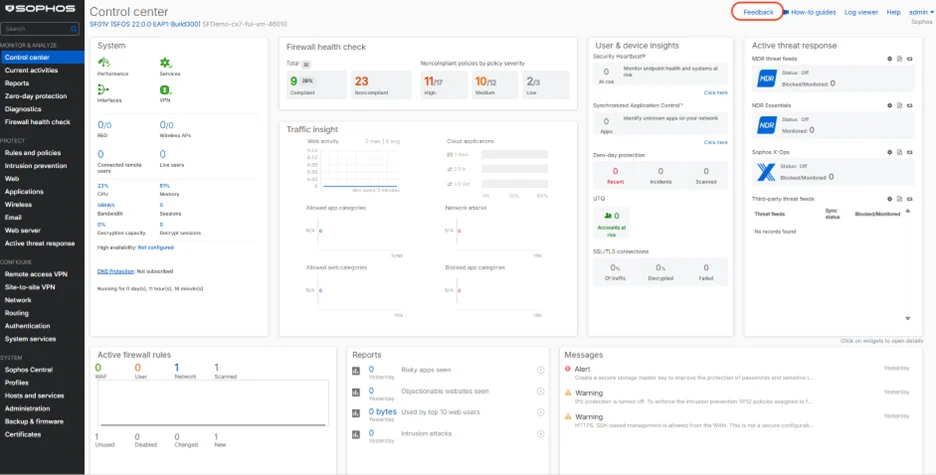
The cybersecurity landscape is undergoing a seismic shift. As network perimeters dissolve into hybrid cloud environments and the threat surface expands through sophisticated automated attacks, the tools used to defend these infrastructures must evolve in lockstep. Enter Sophos Firewall v23—a comprehensive update that represents the culmination of user-driven feedback and a forward-looking strategy focused on automation, AI-assisted defense, and architectural resilience.
With the release of v23, Sophos has signaled a clear intent: to transform the firewall from a static gatekeeper into an intelligent, programmable, and highly scalable engine of network orchestration.
Main Facts: The Core Pillars of v23
Sophos Firewall v23 is not merely a collection of minor patches; it is a feature-packed release that addresses over 30 of the most frequently requested enhancements from the global user community. The update is built upon five foundational pillars designed to reconcile the modern demand for high-speed connectivity with the absolute necessity of robust security.
1. AI-Powered Intelligence
The integration of Sophos AI Defense brings a new layer of visibility to the network edge. Organizations can now identify and control AI-driven traffic patterns with unprecedented granularity. Perhaps most impressively, the introduction of an AI-assisted firewall rule constructor aims to reduce the "configuration fatigue" often experienced by IT teams, allowing for the rapid creation of secure, optimized policies without manual guesswork.
2. The Modernized REST API
For organizations embracing Infrastructure-as-Code (IaC), the v23 update delivers a modernized REST API. This move is critical for DevOps-heavy environments, enabling teams to automate the deployment, configuration, and monitoring of firewalls across distributed sites. This shift minimizes the potential for human error—a leading cause of security breaches—by standardizing policy enforcement through code.
3. Streamlined Rule Management
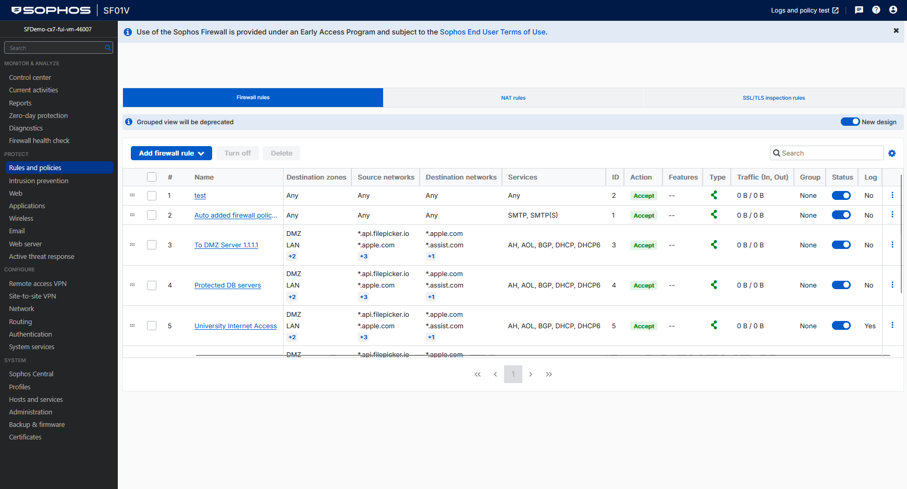
The "Firewall Rule Management" interface has been completely overhauled. Recognizing that managing thousands of rules across dozens of devices is a logistical nightmare, Sophos has introduced a refined, intuitive dashboard that emphasizes visibility, context, and ease of modification.
4. Resilience and High Availability
Sophos has significantly bolstered the high-availability (HA) capabilities within v23. By enhancing failover mechanisms and synchronization, the firewall ensures that mission-critical traffic continues to flow even under extreme stress or hardware degradation, providing a "Secure by Design" guarantee that remains reliable during the most demanding conditions.
5. Identity-Centric Access
As hybrid work becomes the permanent norm, Sophos has expanded its identity integration. v23 provides tighter coupling with cloud and on-premises identity providers, simplifying multi-factor authentication (MFA) onboarding and extending support for a wider array of modern endpoints and remote deployment scenarios.
Chronology: The Journey to v23
The development of Sophos Firewall v23 did not happen in a vacuum. It was the result of a deliberate, iterative process that prioritized transparency and community involvement.
- Phase 1: Gathering Intelligence (Q1-Q2 2024): Sophos engaged its global user base through the Sophos Firewall Community, gathering feedback on pain points ranging from rule management complexity to the need for better IPv6 support.
- Phase 2: The EAP (Early Access Program) Launch: By opening the Early Access Program, Sophos allowed enterprise administrators to stress-test the new features in controlled environments. This phase was crucial for ironing out bugs in the new DHCP service and verifying the efficacy of the AI rule assistant.
- Phase 3: Refinement and Stability: Based on telemetry data and direct feedback from the EAP participants, Sophos finalized the firmware, focusing heavily on the performance overhead of the new security inspection engines.
- Phase 4: Official Release: The rollout of v23 marks the transition from community-driven experimentation to enterprise-grade deployment, providing a stable foundation for the next generation of security policy.
Supporting Data: Why Scalability Matters
The necessity for v23 is underscored by the current state of network infrastructure. According to internal Sophos metrics and industry trends:
- Rule Density: Large-scale enterprises now manage, on average, over 500 active firewall rules. The complexity of these rule sets historically led to "policy bloat," where unused or redundant rules created security gaps. The v23 redesign is specifically engineered to mitigate this.
- AI Traffic Explosion: Enterprise utilization of AI-based SaaS tools has surged by 300% over the last 18 months. The new visibility features in v23 provide the telemetry required to monitor these connections, which were previously obfuscated by standard web traffic filters.
- HA Efficiency: Testing during the EAP phase demonstrated a 40% reduction in failover time compared to previous versions, ensuring that connectivity is maintained during firmware updates or unexpected hardware events.
Official Perspectives: The "Secure by Design" Philosophy
In official statements, Sophos leadership has emphasized that v23 is a direct response to the "complexity crisis."
"We listened," a Sophos representative noted during the launch. "The feedback from our community highlighted that while security is paramount, the management of that security was becoming a bottleneck for scaling. v23 is our answer to the demand for a system that is not only secure by design but also programmable and intelligent enough to handle the pressures of modern digital business."
The "Secure by Design" initiative is not just a marketing catchphrase for Sophos; it is a foundational architecture that ensures security is embedded at the kernel level rather than applied as an afterthought. By securing DNS traffic natively and providing greater transparency into automated updates, Sophos is attempting to shift the burden of security from the human administrator to the system itself.
Implications: A New Era for Network Administrators
The introduction of v23 has profound implications for IT departments, managed service providers (MSPs), and security architects.
Shift in Administrative Burden
With the new AI-powered assistance, the role of the firewall administrator is evolving. Rather than spending hours manually calculating rule precedence, administrators can move toward an "intent-based" configuration model. By describing the desired outcome to the AI assistant, administrators can generate optimized rules, effectively reducing the time-to-deployment for new security policies.
The Rise of Programmatic Security
The modern REST API is perhaps the most significant long-term change in v23. It enables organizations to treat their firewall fleet as part of their CI/CD pipeline. Security policies can now be version-controlled, audited, and deployed automatically, ensuring that security configurations remain consistent across development, staging, and production environments.
Scalability and Networking
For growing organizations, the improvements to Web Application Firewall (WAF) and the redesigned DHCP service offer better performance under load. As companies continue to move services to the cloud while maintaining on-premises legacy systems, the improved service discovery and IPv6 support ensure that Sophos firewalls can bridge the gap between disparate network architectures.
The Path Forward: How to Engage
Sophos has made the transition to v23 straightforward. The "What’s New" guide serves as the definitive roadmap for organizations looking to map these features to their specific infrastructure needs.
Administrators are encouraged to:
- Review the Documentation: Download the official "What’s New" guide to understand the specific impacts on their current firewall configurations.
- Join the EAP: Use the Sophos Firewall EAP Registration Page to gain early access and participate in the community forums.
- Audit Current Policies: Utilize the new management screen to identify and purge redundant rules before migrating to the v23 architecture.
Conclusion: Setting the Standard
Sophos Firewall v23 is a testament to the power of community-driven innovation. By balancing the need for deep, technical security controls with the pragmatic requirements of daily operations, Sophos has delivered a release that is as much about productivity as it is about protection.
In an era where the network is the lifeblood of the organization, v23 provides the visibility, automation, and resilience necessary to defend against an increasingly automated threat landscape. As enterprises continue to grow and diversify their technical stack, the ability to rely on a "Secure by Design" platform that evolves alongside them will be the deciding factor in maintaining an effective security posture. Whether managing a single office or a global, multi-site network, administrators now have a toolset that is not just a wall, but an intelligent, adaptive guardian of their data.


 Iffa Jayyana
 Layla Zulfa
 Neng Nana
 Raul Delapena Setiawan
 Asro
Asro
 Reynand Wu