
 Layla Zulfa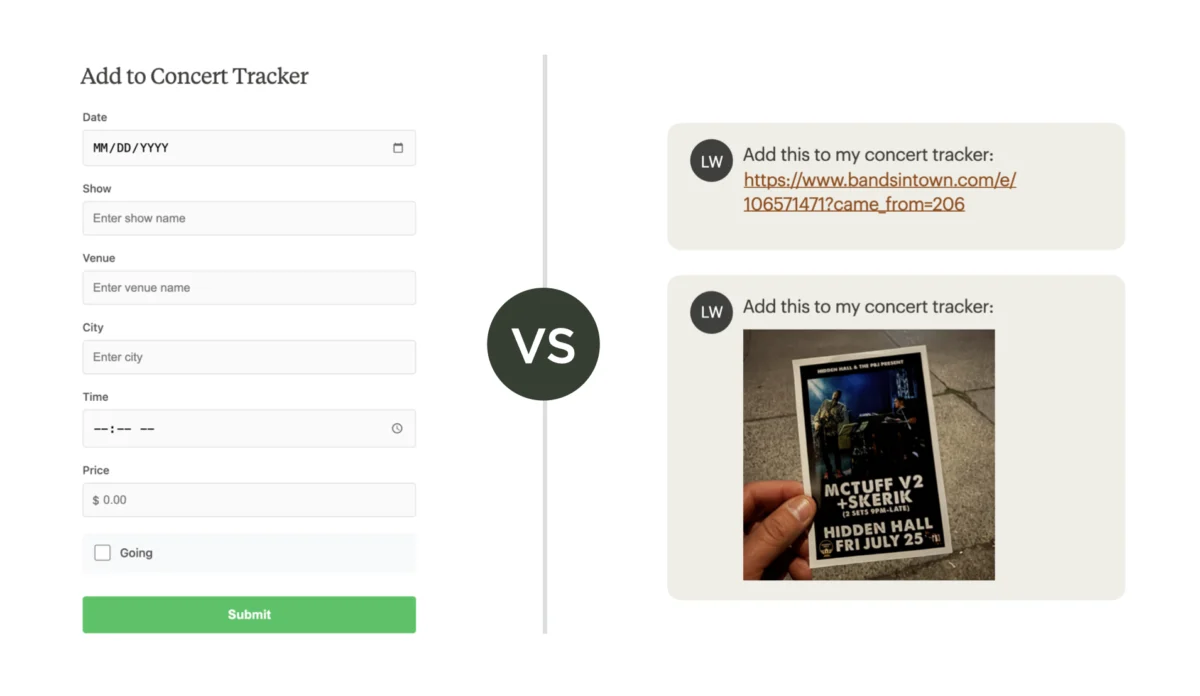
For the past two years, the global conversation surrounding Artificial Intelligence has been dominated by "foundation models"—the massive, power-hungry behemoths like GPT-4, Claude, and Gemini. These headline-grabbing LLMs (Large Language Models) are often framed as the future of intelligence itself. However, a quiet revolution is happening beneath the surface, one that is arguably more impactful for the daily user experience: the proliferation of fast, inexpensive, and highly efficient smaller AI models.
These "bits of intelligence," as they are increasingly called, are moving out of the cloud and into the very fabric of our software applications. This shift marks the beginning of a fundamental transformation in how we interact with technology. We are moving away from an era of rigid, deterministic software toward a future where computing bends to the human, rather than forcing the human to adapt to the computer.
The Deterministic Legacy: Why We Learned to "Think Like Computers"
To understand why this shift is so significant, one must look at the history of software development. Since the inception of the graphical user interface (GUI), software has been inherently deterministic. A programmer’s job was to map out every possible user action and provide a corresponding output. If a user made a mistake—such as entering a date in the wrong format or failing to fill out a mandatory field—the software was programmed to reject the input, often with a cryptic error message.
This rigidity created a "computer-speak" environment. We, the users, had to learn the system’s language. We memorized the locations of nested menu items, learned the specific syntax required for search queries, and conditioned ourselves to work within the confines of rigid, multi-page forms. We became human adapters to machine limitations, spending countless hours wrestling with UI (User Interface) patterns that were designed for data integrity rather than human convenience.
A Chronology of Interaction: From Command Lines to Cognition
The evolution of human-computer interaction (HCI) has been a slow climb toward naturalism.
- 1970s–1980s (The Command Line Era): Users were required to memorize exact syntax. The machine dictated the rules, and the human was essentially a data entry clerk for the computer.
- 1984–2000s (The GUI Revolution): With the introduction of the Macintosh and Windows, we moved to visual representations. While easier, it still required learning the "iconography of the machine." We learned where to click, but we still had to follow the developer’s predefined paths.
- 2007–2015 (The Mobile/Touch Era): Touchscreens introduced direct manipulation, which felt more natural, but the backend architecture of apps remained largely deterministic.
- 2023–Present (The Generative/Small-Model Era): We are currently witnessing the end of the "deterministic" monopoly. By embedding lightweight AI models into software, developers are allowing applications to handle ambiguity. The software now interprets the intent of the human, rather than just the input of the human.
Supporting Data: The Efficiency of "Small" Intelligence
The shift toward smaller, localized AI models is driven by economic and technical necessity. Large-scale models, while powerful, are expensive to run and often suffer from high latency, making them unsuitable for real-time UI interactions.
According to recent benchmarks in machine learning efficiency, small-language models (SLMs) with fewer than 7 billion parameters are now capable of performing specific tasks—such as text classification, semantic search, and data extraction—with near-human accuracy at a fraction of the cost.
- Latency: Small models can operate on-device or on edge servers, reducing latency to milliseconds. This is critical for UI interactions where even a half-second delay can break the feeling of "flow."
- Cost: API costs for massive models can be prohibitive for high-frequency, low-stakes tasks (like reformatting a form field). Smaller models offer a cost-to-performance ratio that allows them to be used for every single interaction, not just complex queries.
- Data Integrity: By using specialized, smaller models for specific UI tasks (e.g., a form-parsing model), developers can achieve higher reliability than general-purpose models, which are prone to "hallucination."
Implications: The Death of the "Computer-Speak" UI
The most profound implication of this technology is the potential death of the "form" and the "search filter" as we know them.
Semantic Search vs. Filtered Searching
Traditionally, if you wanted to find a document, you had to use a complex series of filters: "Date: 2023," "Author: John," "File Type: PDF." Today, semantic search uses AI to understand the meaning behind your query. If you type, "Show me the report John wrote last year," the software translates that natural language into the necessary database queries automatically. The computer does the heavy lifting, not the user.
Multi-modal Parsing in Forms
Forms have long been the bane of digital efficiency. Today, multi-modal parsing allows a user to upload a photo of a document or a screenshot, and the software automatically extracts the relevant information into the correct database fields. The UI is no longer a series of empty boxes to be filled manually; it is an intelligent agent that reads the world around it and populates itself.
The Apple Knowledge Navigator: A Vision Realized
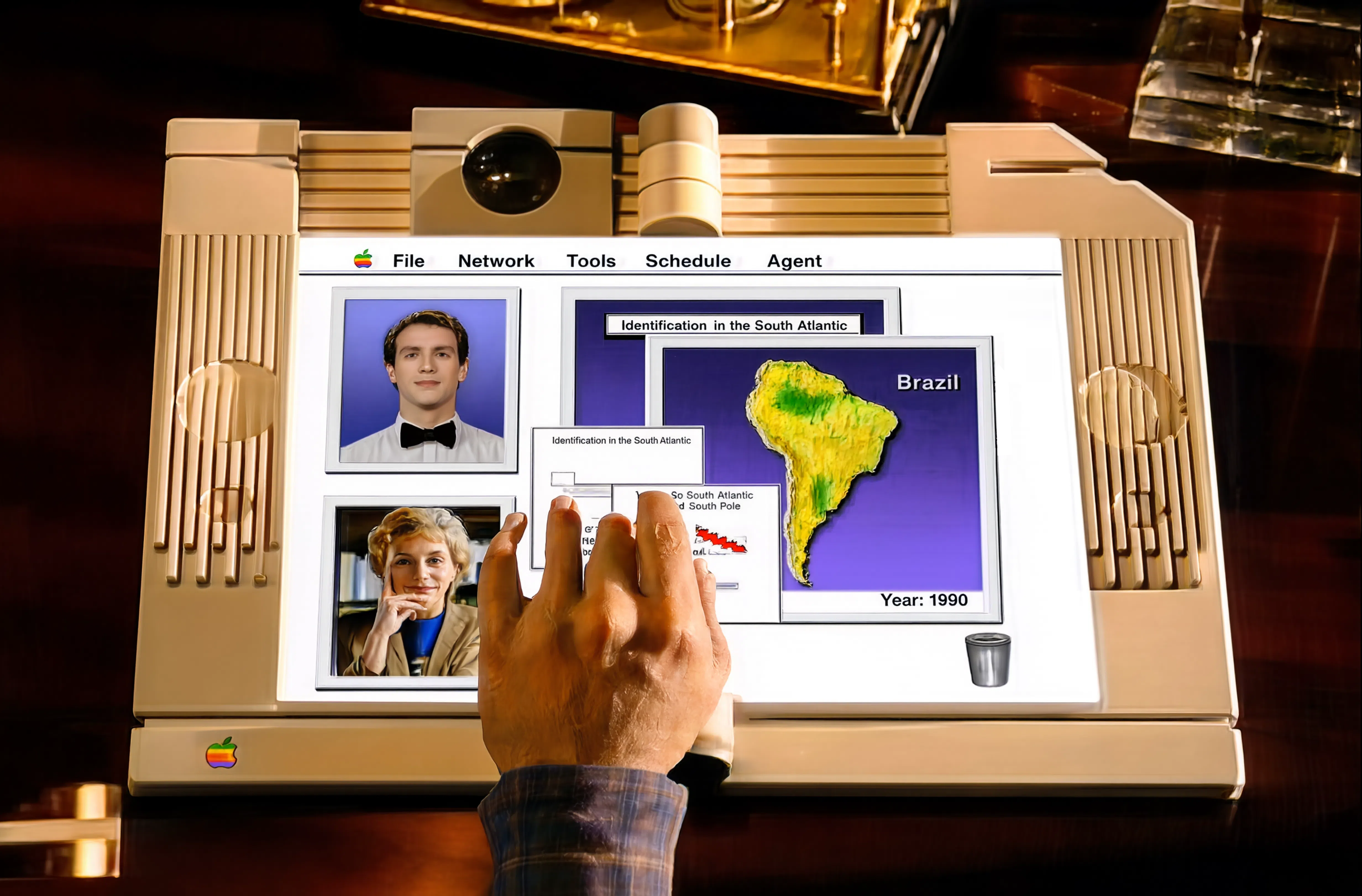
In 1987, Apple produced a seminal video titled Knowledge Navigator. It depicted a researcher using a tablet-like device to organize his day. The device acted as an intelligent partner, responding to voice commands, performing complex information retrieval, and adapting to the user’s needs in real-time.
For decades, this remained a science-fiction pipe dream. But with the current explosion of small, embedded AI models, we are finally reaching the stage where the Knowledge Navigator vision is becoming reality.
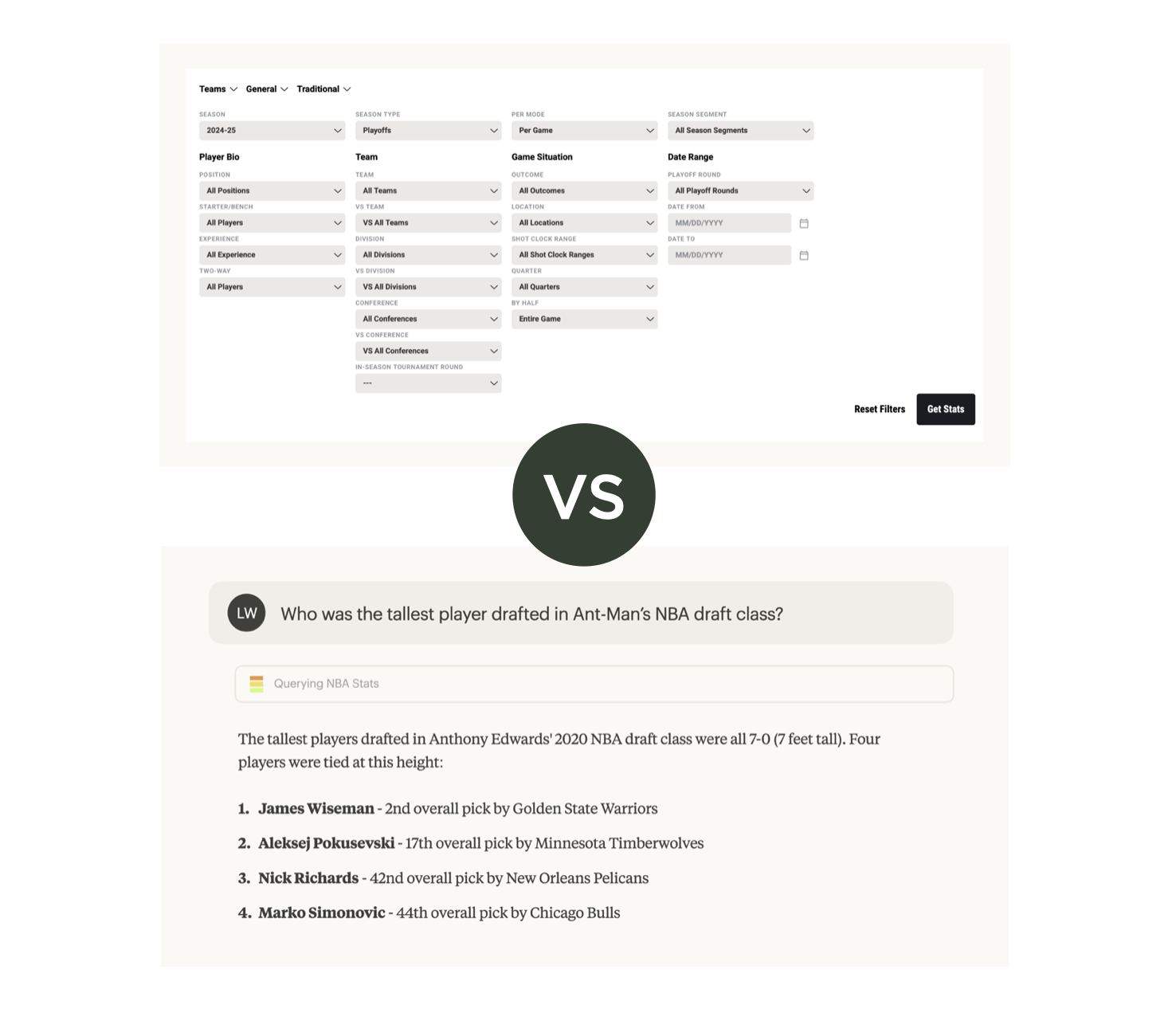
In this new UI paradigm, we see the following pillars of natural interaction:
- Natural Language, Not Syntax: The computer understands what you mean, regardless of how you phrase it.
- Fuzzy Logic, Not Boolean Constraints: The search engine doesn’t just look for keywords; it looks for conceptual matches.
- Direct Manipulation, Not Menu Diving: Software learns your habits and brings the tools you need to the surface before you even ask for them.
Official Responses and Industry Outlook
Leading researchers in HCI are cautiously optimistic. Dr. Fei-Fei Li, a pioneer in the field of computer vision, has frequently noted that "AI should be a tool that augments human capability rather than replaces it." The industry consensus is moving toward the "Co-pilot" model—software that acts as a collaborative partner rather than a cold, deterministic tool.
However, challenges remain. Privacy advocates raise concerns about the amount of data processed by these models, and developers face the difficult task of re-architecting decades of legacy software. Despite these hurdles, the momentum is undeniable. The era of the "user-hostile" interface is ending.
Conclusion: The Humanization of Technology
The goal of computing has always been to extend the capabilities of the human mind. Yet, for too long, we have been forced to act like machines to make the most of our digital tools. By embedding bits of intelligence into every layer of software, we are finally reversing that dynamic.
When software can think, it can observe, interpret, and adapt. It can look at a messy calendar and suggest an itinerary. It can look at a confusing spreadsheet and summarize the findings. It can, in short, act like a human assistant rather than a robotic gatekeeper.
As these small, fast models continue to drop in price and rise in capability, the distinction between "the computer" and "the user" will continue to blur. We are entering a future where the interface disappears, leaving only the task at hand and the natural, intuitive flow of human thought. The machines are finally learning to speak our language, and in doing so, they are becoming truly useful for the first time in history.


 Reynand Wu
 Iffa Jayyana
 Laily UPN

 Rifan Muazin
 Suro Senen
 Lina Hope
 Lina Irawan