
 Asep Darmawan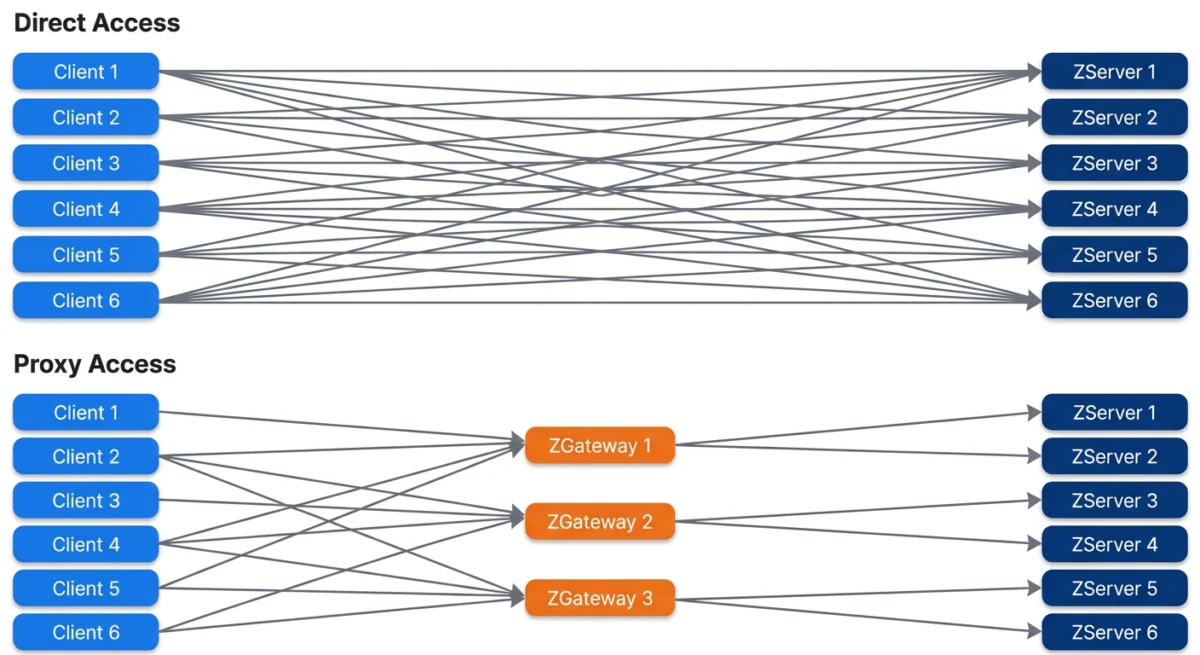
At the heart of Meta’s global infrastructure lies ZippyDB, a high-performance, globally distributed key-value store. It is the silent engine powering the company’s product metadata, system counters, and critical configuration data, facilitating billions of operations every second. However, as Meta’s ecosystem grew, the "direct-access" model—where clients communicated directly with database hosts—hit a breaking point. To address this, Meta engineered ZGateway, a sophisticated proxy tier that has fundamentally transformed how data is accessed across the company’s massive server fleet.
Main Facts: Solving the Many-to-Many Dilemma
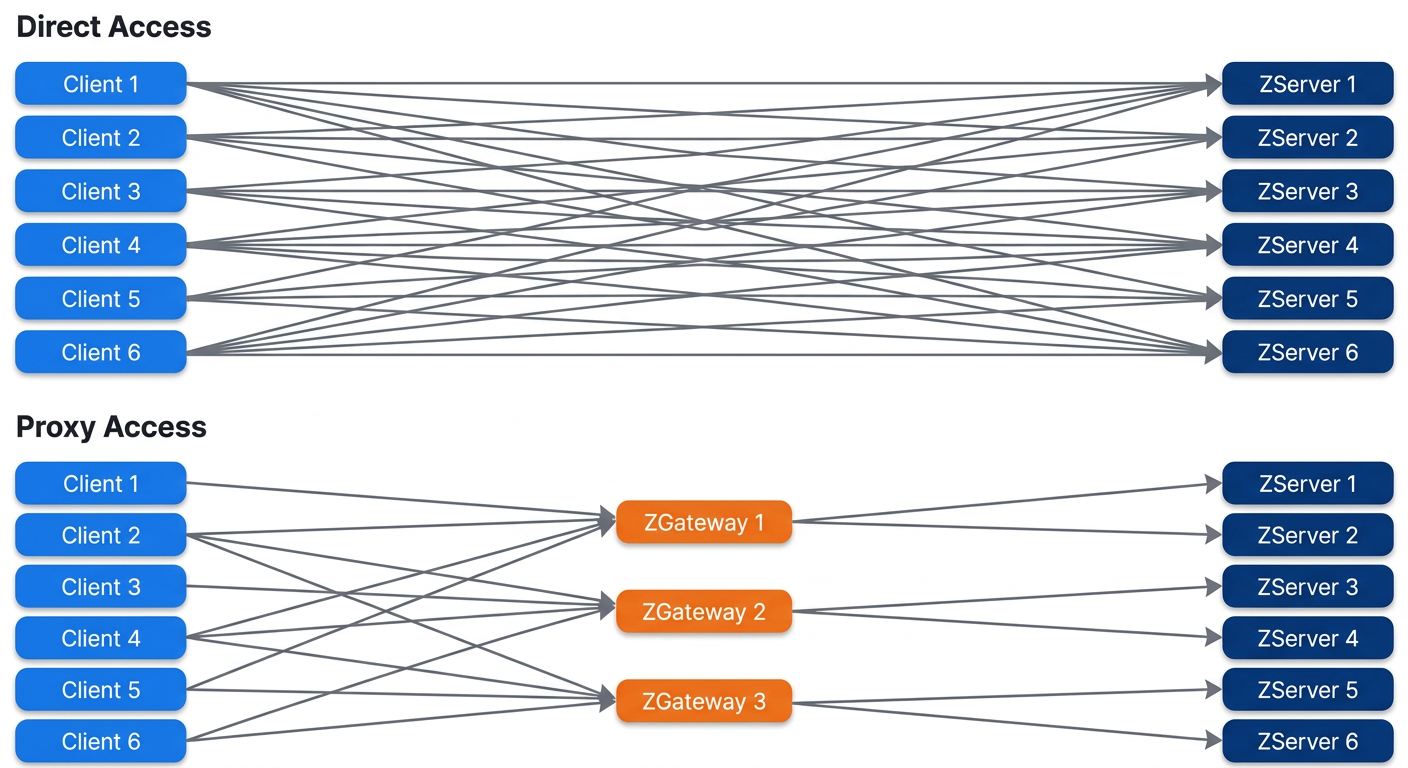
The primary challenge with the original ZippyDB architecture was the "many-to-many" connection mesh. In a direct-access model, every client host must establish and maintain connections to every database shard it requires. Given that a single client might need to access tens of thousands of shards spread across hundreds of thousands of database hosts, the result was an unmanageable explosion of TLS connections.
This architecture was inherently fragile. Each connection consumed precious memory, CPU cycles, and file descriptors. During deployment cycles or sudden traffic shifts, the "reconnection storms" triggered by client restarts would often overwhelm the database fleet, leading to file-descriptor exhaustion and out-of-memory (OOM) crashes.
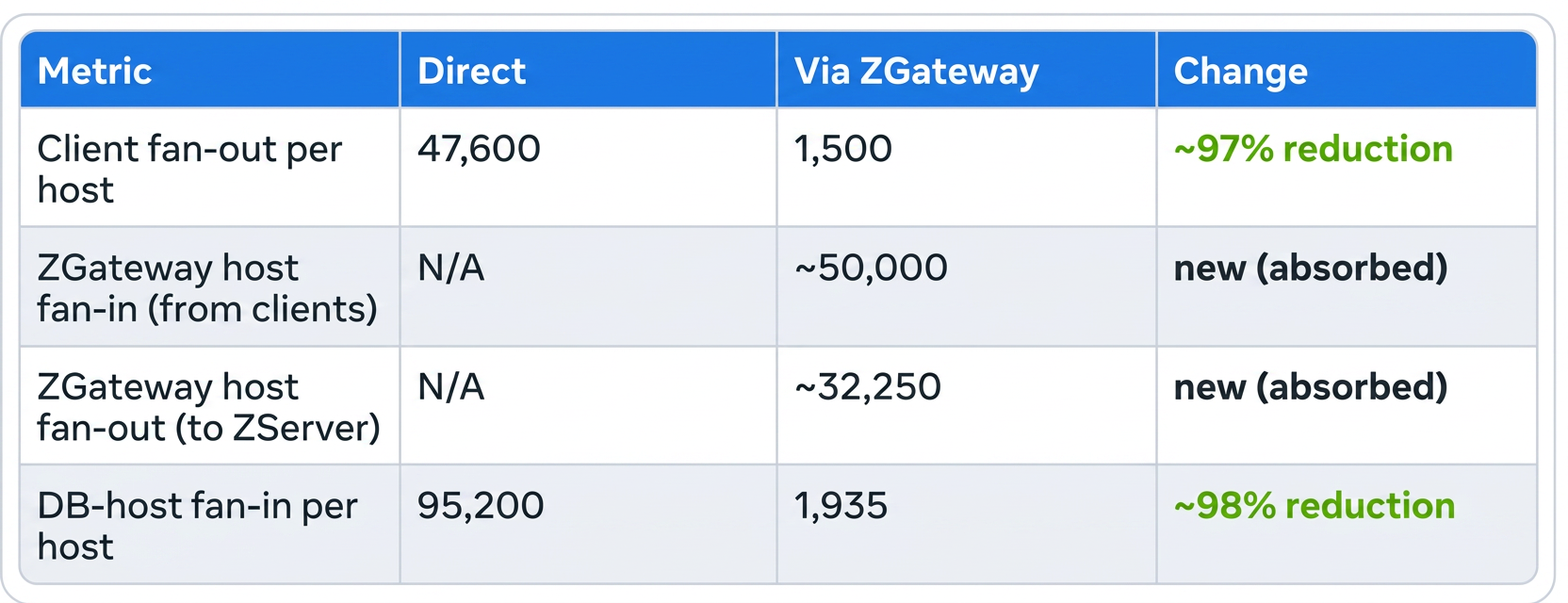
ZGateway was introduced as a stateless proxy layer to decouple the client fleet from the database (ZServer) fleet. By sitting in the middle, ZGateway collapses the sprawling connection mesh into two bounded, predictable hops. It now carries approximately 40% of all ZippyDB traffic—a figure projected to exceed 60%—while maintaining an impressive efficiency profile, adding only about 6% computational overhead to the average request.
Chronology: From Direct Access to Managed Proxy
The evolution of ZGateway is a study in necessity-driven engineering.
- The Direct-Access Era: During the early years of ZippyDB, direct access provided the lowest possible latency and sufficient performance. As the client population remained relatively modest, the inefficiency of the mesh was manageable.
- The Scaling Crisis: As Meta’s service catalog exploded, the number of clients and the diversity of their requirements made the direct-access model unsustainable. "Connection storms" became a recurring reliability threat, leading to localized outages that were difficult to mitigate on a per-client basis.
- The Introduction of ZGateway: Recognizing that they could not manually update millions of client binaries, engineers built a centralized proxy tier. By controlling the "middleman," Meta gained the ability to apply fleet-wide hardening, connection pooling, and traffic shaping without requiring modifications to the underlying client code.
- Maturation and Expansion: Over time, ZGateway evolved from a simple proxy into a feature-rich infrastructure service, incorporating read-through caching, transaction management, and cross-region failover capabilities.
- The Path to Universal Adoption: Currently, Meta is moving toward unifying all ZippyDB traffic through the gateway, treating it as the primary interface for all database interactions.
Supporting Data: Quantifying the Efficiency Gains
The mathematical impact of ZGateway on Meta’s infrastructure is profound. By modeling the fleet as a "balls-into-bins" problem, Meta engineers calculated that per-host connection counts could be reduced by approximately 97% to 98% through the proxy layer.
The Power of Batching and Coalescing
One of the most significant advantages of ZGateway is its ability to aggregate work across unrelated callers. Unlike client-side batching, which is limited to the scope of a single process, ZGateway can coalesce requests from thousands of clients into a single backend RPC. This "folding" of operations amortizes the fixed costs of Thrift serialization, shard lookup, and authorization.
Key metrics from the ZGateway deployment include:
- Operational Throughput: Capable of handling over 1 billion operations per second.
- Efficiency: A reduction in total persistent connections by roughly 19x end-to-end.
- Reliability: Under heavy load (tested at >90% CPU), ZGateway’s Discriminant Load Shedding (DLS) successfully protected 99.9% of requests for healthy tenants while isolating only the "noisy neighbor" workloads causing the congestion.
Official Perspectives: Architectural Philosophy
Meta’s engineering team describes the transition to ZGateway as a strategic shift from a decentralized, fragile system to a centralized, "hardened" one. By interposing between callers and the backend, the team gained the ability to implement sophisticated logic—such as load balancing, request batching, and tenant isolation—in a single, observable, and controllable tier.
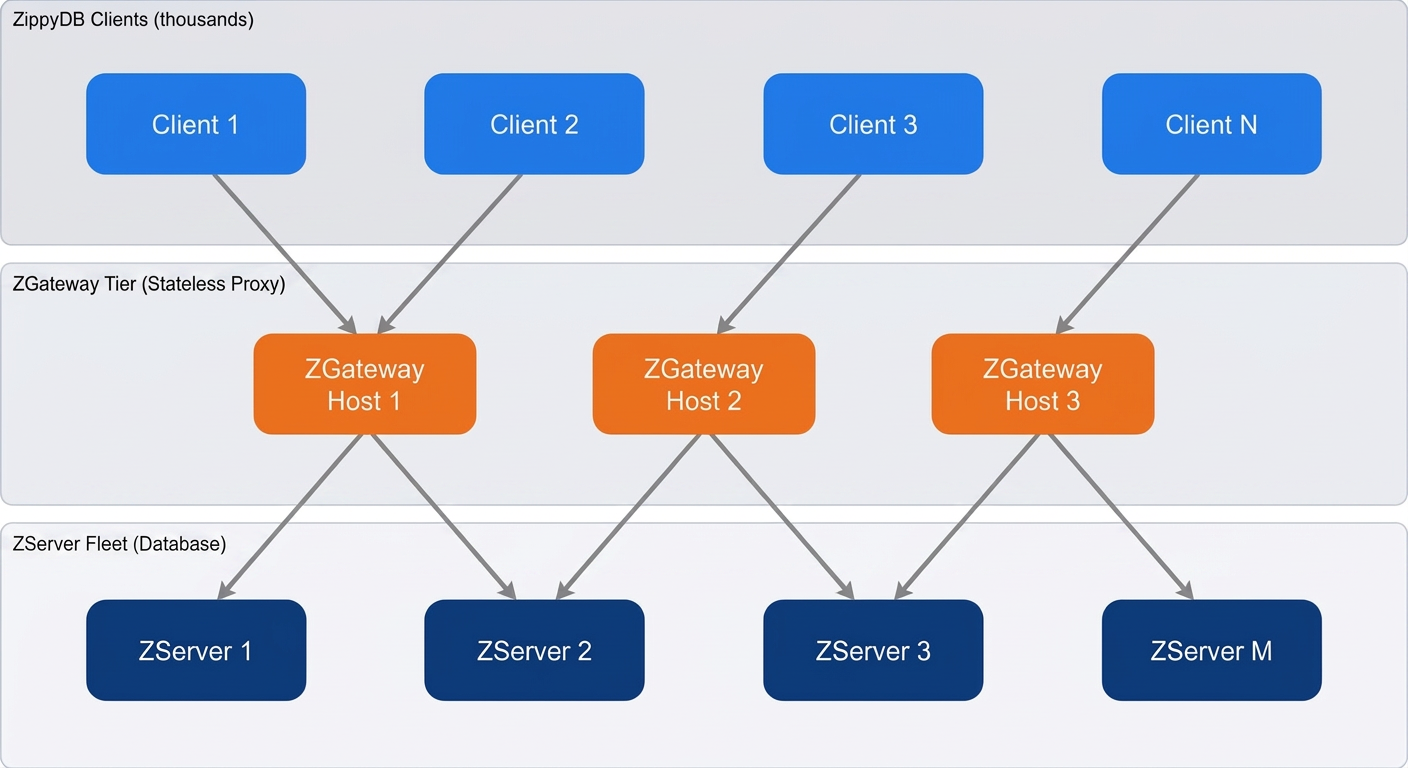
"The tradeoff is a hop and one more tier to operate; the trade pays off when the client population is large, diverse, and not yours to change," the team noted in their official engineering retrospective. By moving connection management into the proxy, they effectively moved the "solving" of these problems into the one place where they could actually be addressed.
Furthermore, the team emphasizes that ZGateway is not just a passive conduit. It utilizes Meta’s hyperscale service mesh, ServiceRouter, to ensure clients remain physically close to their gateways, minimizing latency despite the additional hop.
Implications: The Future of Distributed Infrastructure
The success of ZGateway has opened new frontiers for Meta’s infrastructure, moving beyond simple proxying toward a "programmable tier." The implications of this evolution are threefold:

1. Agent-Operated Heuristics
The future of ZGateway lies in autonomous management. Currently, human engineers and cron jobs tune the threshold knobs and load-shedding parameters. The next generation of the platform intends to expose internal telemetry to AI agents. These agents will be capable of diagnosing tier-wide health issues, identifying noisy tenants in real-time, and applying remediation strategies faster than any human on-call engineer could.
2. Strategic Co-location
While ZGateway is currently a distinct, centralized tier, Meta is exploring "pushing" parts of the gateway closer to the ZServer hosts for latency-critical workloads. By keeping the connection management and admission control in the central regional tier while moving data-locality-sensitive components closer to the database, Meta aims to optimize performance without re-creating the fragility of the old direct-access model.
3. Hard Fault Isolation via Multi-processing
As ZGateway grows in responsibility, its internal complexity increases. To prevent a memory-intensive task from impacting the entire proxy host, Meta is working toward splitting the gateway into a multi-process architecture. By isolating the connection/TLS front-end, request workers, and cache components into separate processes, the team can ensure that a failure in one component does not cascade, creating a more robust "fault-isolated" system by construction.
In conclusion, ZGateway represents a pivotal shift in distributed systems engineering. By accepting the necessity of an extra network hop, Meta has built a tier that is not merely an intermediary, but a sophisticated, adaptive, and highly scalable management layer. It proves that in the world of hyper-scale computing, the most effective way to manage chaos is to move the complexity to a central, programmable, and hardened tier.

 Rifan Muazin
 Sagoh
Sagoh
 Laily UPN
 Iffa Jayyana
 Suro Senen
 Lina Hope
 Lina Irawan