
 Iffa Jayyana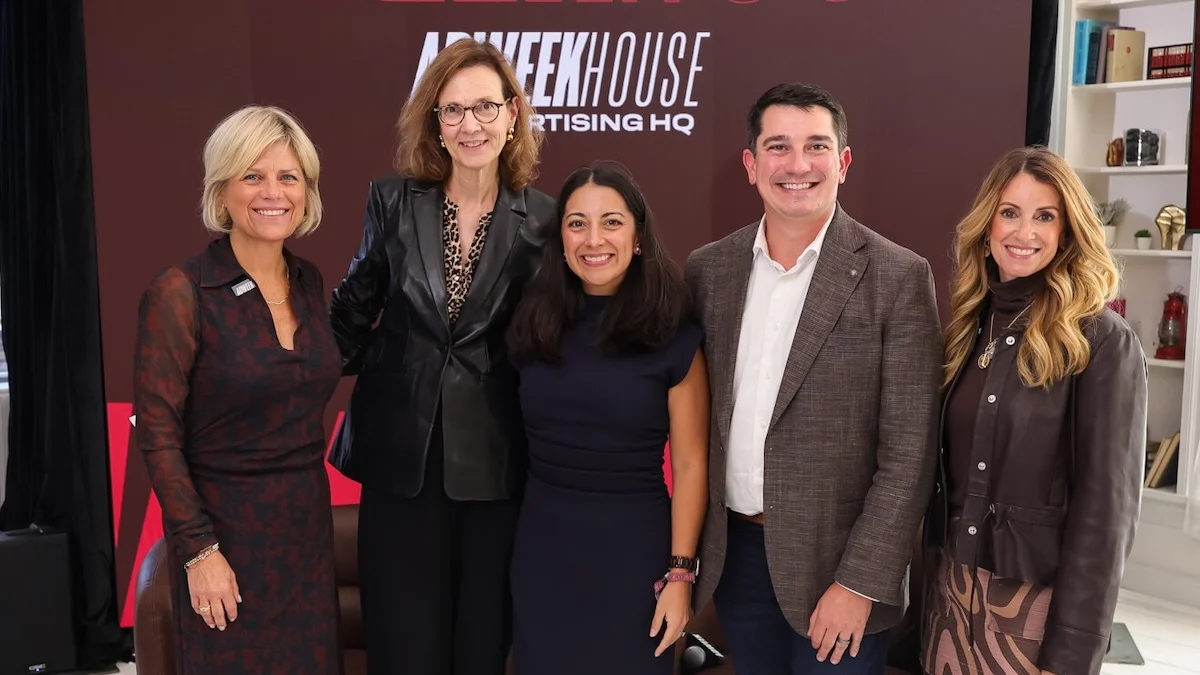
This post was created in partnership with Weber Shandwick
In the contemporary marketing landscape, the intersection of rapid technological advancement and tightening budgetary constraints has forced a fundamental rethink of the agency-client relationship. As generative AI automates routine tasks and streamlines operational workflows, the industry is witnessing a paradoxical shift: while data processing becomes more mechanical, the necessity for profound human collaboration has never been greater.
During a high-level roundtable panel at the ADWEEK House Advertising HQ Marketing Vanguard event, industry titans gathered to dissect the evolving architecture of modern marketing teams. The consensus was clear: the most successful brands are those that have dismantled the traditional “vendor-client” hierarchy in favor of a fluid, integrated partnership model that prioritizes agility, psychological safety, and, above all, human-centric creativity.
The Paradigm Shift: Moving Beyond the "Agency Reveal"
The roundtable, co-hosted by Weber Shandwick, featured insights from Jenny Rooney, chief brand and community officer at ADWEEK, and Karen Pugliese, CEO of Weber Shandwick. They were joined by C-suite executives from three major Weber Shandwick clients—Unilever, Supergoop!, and PurposeBuilt Brands—to discuss the delicate alchemy of blending in-house expertise with external agency support.
For years, the industry operated on a rigid, sequential model: the brand would issue a brief, the agency would disappear into a siloed creative process, and the result would be presented in a high-stakes, "big reveal" meeting. Today, that model is increasingly viewed as an anchor on progress.
"We want to get into it with brands when the clay is still wet," explained Karen Pugliese. "Because that’s how we make the work better together. That’s what collaboration looks like; how we get to great work."
This sentiment was echoed by Jon Bellante, CMO of PurposeBuilt Brands. Bellante revealed that his organization intentionally brought on Weber Shandwick to facilitate a more integrated, transparent workflow. "We ultimately wanted to move faster and, essentially, get rid of the agency reveal," Bellante stated. "We needed a partner that was going to be an extension of our team—someone we could collaborate with on an ongoing, iterative basis rather than waiting for a polished, final presentation."
Chronology of an Evolving Relationship
To understand the current shift, one must look at the trajectory of the marketing-agency dynamic over the last decade. Historically, brands viewed agencies as tactical execution arms. The rise of digital marketing in the 2010s saw a pivot toward internalizing core competencies, leading to a period of tension where brands sought to bring creative work in-house to save costs and increase speed.
However, the current era of AI-driven efficiency has created a new middle ground.
- Phase 1 (The Silo Era): Rigid hand-offs and limited communication between internal marketing teams and external partners.
- Phase 2 (The In-Housing Boom): A desire to control data and creative outputs internally, often leading to burnout and a lack of external perspective.
- Phase 3 (The Collaborative Ecosystem): The current stage, where high-performing teams view the agency as a "plug-and-play" extension of their own internal culture, enabled by AI to focus on high-value, strategic creative work.
This evolution is not just about logistics; it is about cultural integration. As Melanie Cappella, chief growth officer of cooking aids and mini meals at Unilever Foods U.S., noted, the timing of agency involvement is the single biggest factor in the quality of the final output. "Being involved in the early phases and making sure that you see the brief, you see the assignment that’s going over to the agency partners, and that you are in the first early rounds of shaping an idea, can really leave an impact," Cappella observed. When collaboration happens at the ideation stage rather than the execution stage, the agency becomes a co-author rather than a sub-contractor.
Leadership in the Trenches: The "In the Work" Philosophy
Perhaps the most compelling takeaway from the ADWEEK panel was the shift in leadership style required to foster this level of collaboration. Lauren Weinberg, CMO of Supergoop!, described a management approach that prioritizes "flat" communication structures to accelerate decision-making.
Weinberg’s approach is defined by being "in the work"—a state of constant engagement where leaders do not merely sign off on projects but participate in the friction of the creative process.
"Whenever we review work in a group setting, I always go last because I want to make sure everyone else’s voice is heard before I say whatever I’m going to say," Weinberg explained. This, she argues, is not just a polite social convention; it is a strategic necessity. By encouraging divergent perspectives and allowing for open debate, her team can iterate rapidly, avoiding the "groupthink" that often plagues hierarchical organizations.
This style of leadership requires a high degree of vulnerability. It demands that executives admit they don’t have all the answers and that they trust their agency partners enough to let them see the "ugly" early stages of a campaign.
The Human Element in the Age of AI
As artificial intelligence begins to dominate headlines and budgets, there is an underlying anxiety regarding the future of the human workforce. However, the panelists provided a nuanced perspective: AI is not a replacement for creativity; it is a catalyst for human-centric skills.
When hiring, Weinberg looks for employees who possess a "growth mindset"—a specific willingness to experiment with AI tools. But she is quick to note that technical proficiency is only the baseline. As AI takes on the heavy lifting of data analysis, scheduling, and basic content generation, the premium on "humanity" increases.
"It’s those kinds of skills—creativity, communication, and being in touch with culture—combined with the right mindset and the ability to be agile, that I think are most important in a world where you can have AI take on different tasks," Weinberg added.
The "humanity space," as defined by the panel, involves:
- Cultural Intelligence: Understanding the nuances of consumer behavior that data models might miss or misinterpret.
- Emotional Resilience: The ability to navigate the ambiguity of the creative process.
- Cross-Functional Communication: The ability to translate complex, AI-generated insights into actionable, brand-aligned creative strategies.
Implications for Future Marketing Strategies
What does this mean for the future of marketing departments? The implications are three-fold:
1. The Death of the "Vendor" Model
Brands that continue to treat agencies as simple service providers will likely struggle to compete with organizations that treat partners as extensions of their own team. The "black box" approach—where a brand sends a brief and waits for a miracle—is becoming obsolete.
2. The Rise of "Agile Creative"
The future belongs to teams that can move from concept to execution in days, not weeks. This requires a high level of trust, where agency and brand teams operate in shared digital workspaces, iterating in real-time. The ability to "fail fast" and pivot based on early testing is the new hallmark of success.
3. The New Skill Set
CMOs are no longer just looking for "creatives" or "analysts." They are looking for "orchestrators"—individuals who can bridge the gap between AI-driven efficiency and human-driven strategy. Hiring for adaptability and a culture of continuous learning is becoming more critical than hiring for specific, static technical skills.
Conclusion: Collaboration as a Strategic Imperative
The consensus from the ADWEEK and Weber Shandwick roundtable is a call to action for marketing leaders everywhere. While technology will continue to reshape the tools we use, it cannot replicate the messy, friction-filled, and ultimately beautiful process of human collaboration.
As the industry moves forward, the brands that win will be those that have successfully balanced the cold, hard logic of AI with the warm, unpredictable intelligence of human teams. By removing the barriers between agencies and brands, fostering an environment where leaders are "in the work," and prioritizing human-centric skills in an age of automation, brands can ensure they remain not just relevant, but resonant.
In the end, the most sophisticated AI tool in the room will always be a team of humans who have learned how to think, create, and adapt together.

 Asep Darmawan
 Rifan Muazin
 Laily UPN


 Suro Senen
 Lina Hope
 Lina Irawan