
 Lina Irawan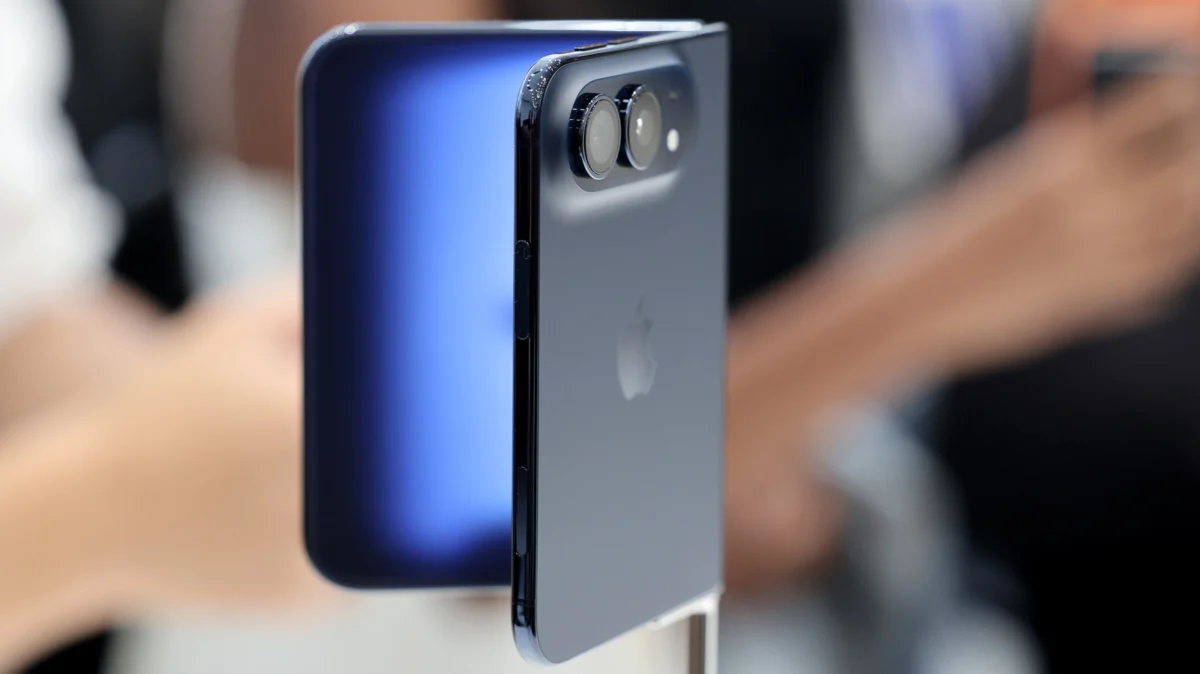
The smartphone industry has reached a critical inflection point. For over a decade, the "slab" form factor—a glass rectangle with minimal physical movement—has dominated the pockets of consumers worldwide. However, the maturation of flexible display technology has ushered in a new era of hardware innovation: the foldable. While Apple has historically taken a "wait and see" approach to emerging hardware trends, the upcoming launch of the iPhone Duo on October 23 represents the company’s most significant strategic pivot in a decade.
As the tech world counts down to the Duo’s release, the landscape is already saturated with sophisticated, high-performance alternatives from Xiaomi, Oppo, Motorola, and Samsung. These non-US giants have spent years refining the "passport" foldable form factor, creating a competitive environment that is as much about software optimization and battery efficiency as it is about the physical folding mechanism.
The Chronology of the Foldable Race
The journey to the iPhone Duo did not happen in a vacuum. It is the culmination of years of iterative development by industry incumbents who recognized that the future of mobile productivity lies in a device that fits in a pocket but expands into a tablet.
- 2019–2021: The Formative Years: Samsung pioneered the mainstream foldable market with its early Galaxy Z Fold iterations. While initial units faced durability concerns, they successfully established the "book-style" fold as the standard for power users.
- 2022–2024: The Refinement Phase: Competitors like Xiaomi and Oppo began challenging Samsung’s dominance by focusing on hinge mechanics, screen crease reduction, and weight distribution. During this time, Apple remained conspicuously silent, focusing on refining its core iPhone Pro lineup.
- August 2026: Samsung launches the Galaxy Z Fold8, a pivotal moment where the company abandoned its original, boxy aesthetic in favor of the now-popular, ergonomic "passport" shape.
- Late 2026: Xiaomi unveils the 18 Fold, proving that lighter, thinner, and more camera-centric foldables were not only possible but commercially viable.
- October 2026 (Forthcoming): The global launch of the Apple iPhone Duo. With pre-orders opening mid-October, the industry is bracing for a shift in consumer behavior as Apple’s massive ecosystem finally enters the foldable fray.
Hardware Arms Race: Comparing the Titans
The "passport" form factor has become the industry gold standard. It balances the utility of a large inner display (typically around 7.6 inches) with a manageable, narrow outer display for one-handed use. However, when we break down the hardware specifications, Apple faces stiff opposition.
The Xiaomi Advantage: Efficiency and Optics
The Xiaomi 18 Fold has emerged as a performance benchmark. By utilizing advanced materials, Xiaomi managed to bring the weight down to 219 grams—a significant 35 grams lighter than the iPhone Duo’s 254 grams. In the mobile world, where a few grams can dictate long-term user comfort, this is a distinct advantage. Furthermore, Xiaomi’s aggressive camera strategy—incorporating a triple-lens system with superior optical zoom—highlights a gap in the iPhone Duo’s offering. For photography enthusiasts, the Duo’s omission of a dedicated periscope-style telephoto lens may be its greatest weakness.
Samsung’s "Passport" Pivot
Samsung’s Galaxy Z Fold8 is perhaps the most direct threat to Apple’s market share in the United States. Having moved away from its signature square-ish design to a more elongated, usable format, Samsung is now offering a device that feels familiar yet revolutionary. Priced at $1,900, it sits just $100 below the entry-level iPhone Duo, positioning the two devices as direct rivals for the premium consumer dollar. Reviewers have praised the Z Fold8’s display, giving it high marks for media consumption, though it lacks the sheer optical versatility found in the more expensive, specialized "Ultra" variants of the Samsung line.
Oppo and Motorola: The Battery and Durability Frontier
Perhaps the most intriguing entries come from Oppo and Motorola, both of which are aggressively pushing the boundaries of what consumers should expect in terms of endurance. The Oppo Find N6 is a masterclass in engineering, measuring a mere 8.93mm when closed. When compared to the iPhone Duo’s 11.3mm thickness, the difference is palpable.
More importantly, Oppo has integrated a 6,000mAh battery, a massive leap over current industry averages. Paired with 80W wired fast charging, the Find N6 addresses the number one complaint of foldable users: battery life. Similarly, the Motorola Razr Fold has captured attention with its industry-leading 6,000 nits of peak brightness and a robust triple-camera system, proving that Motorola is no longer content with "budget" foldables but is actively gunning for the flagship crown.
The Software Differentiator
If Apple is to succeed where others have faced criticism, it will be through the strength of its ecosystem. The introduction of iOS 27 for the iPhone Duo is not merely a reskin of the standard interface; it is a fundamental reimagining of how mobile software interacts with flexible hardware.
Early reports on iOS 27 suggest that Apple has mastered the "continuity" aspect of the user experience. Animations that transition seamlessly between the cover display and the internal screen feel fluid, and the OS includes nuanced modes for multitasking that are designed to leverage the increased screen real estate without feeling cluttered. While Samsung and Xiaomi offer powerful hardware, their Android-based "skins" have occasionally been criticized for fragmentation. Apple’s "walled garden" approach promises a level of stability and app optimization that could win over power users who are currently frustrated by the inconsistent software experiences on other foldable devices.
Economic and Market Implications
The launch of the iPhone Duo is expected to cause a significant ripple in the global market.
- Market Legitimacy: Apple’s entry into the foldable space validates the category for the average consumer. For years, foldables were "enthusiast" devices. With the Apple brand behind the form factor, we expect a surge in mass-market adoption.
- Pressure on Pricing: The $2,000 price point for premium foldables is currently standard, but with Apple setting its price at $2,000, competitors like Samsung, Xiaomi, and Oppo will be under immense pressure to either lower their prices or increase their feature sets to maintain their "value" proposition.
- Global vs. Local Strategies: While Xiaomi and Oppo dominate in Asia with aggressive pricing and innovative hardware, their limited availability in the US market has allowed Samsung and Apple to maintain a duopoly. However, as "global versions" of these Chinese devices become more accessible, the barrier to entry for international consumers is lowering, creating a more interconnected global market.
The Path Ahead
As we look toward October 23, the industry is in a state of high alert. The iPhone Duo is not just another phone; it is a declaration that the foldable era has officially arrived.
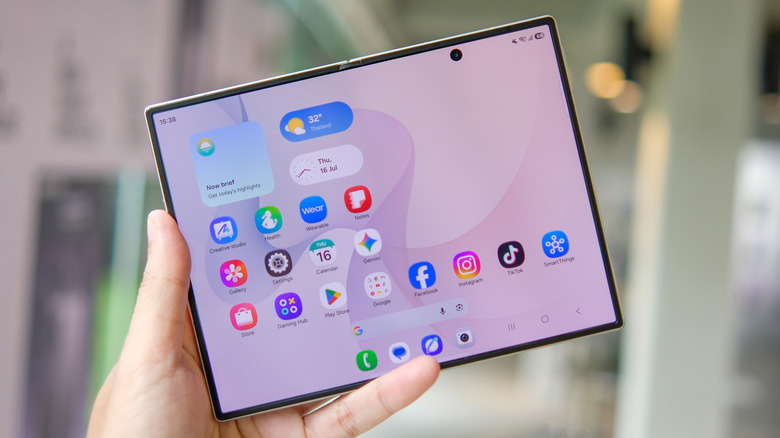
Apple’s challenge is clear: it must prove that its late arrival was a result of calculated perfection rather than a lack of vision. It must overcome the hardware weight disadvantages posed by Xiaomi and the sheer battery and durability prowess demonstrated by Oppo and Motorola.
However, if the history of the smartphone industry has taught us anything, it is that Apple rarely wins by being the first to market. It wins by being the most polished. The battle for the future of the pocket-sized computer has begun, and with a lineup of innovative, high-performance, and increasingly thin devices hitting the market, the true winner is undoubtedly the consumer. The foldable phone is no longer a gimmick; it is the new standard of mobile excellence.



 Suro Senen
 Laily UPN
 Iffa Jayyana
 Rifan Muazin

 Lina Hope