Lina Irawan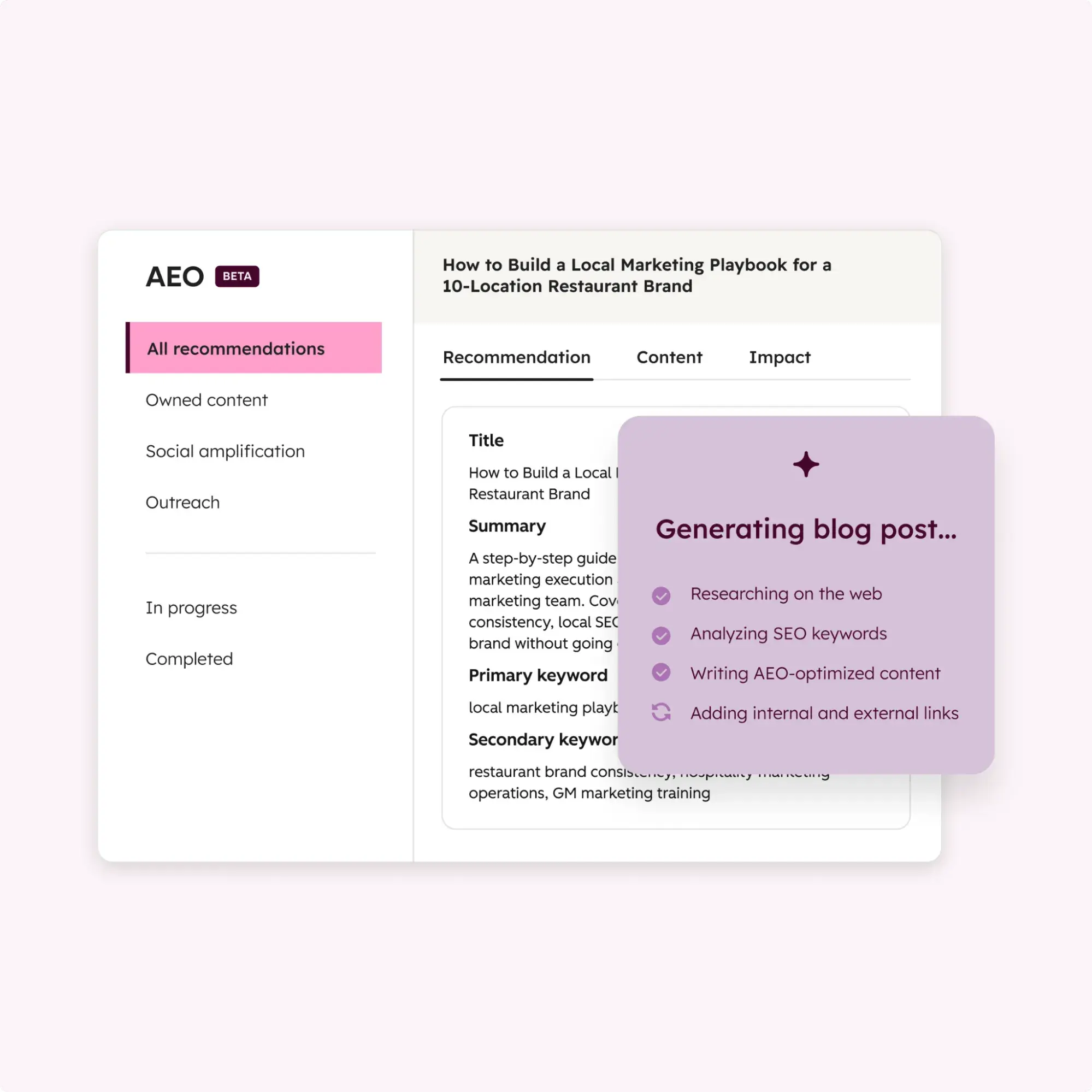
In the history of digital marketing, the most significant competitive advantages have consistently belonged to those who recognized the transition of consumer attention before the rest of the market caught up. We saw it in the early days of paid search, when cost-per-click was negligible; we saw it when content marketing first broke the dominance of traditional display advertising; and we saw it when email marketing offered a direct, unfiltered line to the customer.
Today, the digital landscape is undergoing its most profound shift since the invention of the search engine: the rise of the Answer Engine. As buyers increasingly bypass traditional search results in favor of AI-driven, synthesized responses, "Answer Engine Optimization" (AEO) has transitioned from a theoretical concept to the most critical growth lever for modern B2B and B2C brands.
Main Facts: The Paradigm Shift in Discovery
The fundamental shift in consumer behavior is no longer a prediction; it is an active reality. When a potential buyer begins researching software categories, comparing vendor features, or seeking solutions to complex problems, they are increasingly turning to tools like Perplexity, ChatGPT, and AI-integrated search engines.
Unlike traditional SEO, which focuses on ranking a link to drive traffic to a landing page, AEO is about being the source of truth. When an AI provides a summary of a software category, it cites its sources. If your brand is consistently cited as an authority, you are building brand equity and awareness before the buyer ever clicks a link.
The current window of opportunity is narrow. Most organizations are still treating AI discovery as an extension of standard SEO, failing to recognize that the mechanics of "answering" are fundamentally different from the mechanics of "indexing." Brands that capture this space now are effectively securing "digital real estate" that will be significantly more expensive and difficult to claim once the algorithms normalize and the competition catches on.

Chronology: From Keyword Matching to Intent Synthesis
To understand why AEO is the next major hurdle, one must look at the evolution of search:
- The Era of Keyword Matching (2000–2010): Success was defined by stuffing meta-tags and repeating keywords. It was a game of manipulating the algorithm’s understanding of relevance.
- The Era of Value-Based Content (2010–2020): Google’s updates (Panda, Penguin) forced marketers to focus on user experience and high-quality, long-form content. SEO became synonymous with content marketing.
- The Era of AI-Driven Discovery (2023–Present): We have moved into the era of Synthesis. Buyers no longer want a list of 10 links to read; they want a consolidated answer that weighs pros, cons, and social proof. The "Search Engine" is becoming an "Answer Engine."
Growth teams that recognized this transition in late 2023 and early 2024 have already begun building the infrastructure required to dominate these new interfaces. We are currently in the "adoption phase," where early movers are establishing the playbooks that will define category leadership for the next decade.
Supporting Data and Strategy
Growth marketing teams are notoriously data-driven, yet many are currently flying blind regarding AI-referred traffic. Without proper attribution, AEO efforts are often mischaracterized as "organic search," leading to inaccurate assessments of channel efficiency.
Identify High-Intent Channels
Not all AI interactions are equal. A user asking a generic "What is CRM?" question is in a vastly different stage of the funnel than a user asking, "Compare HubSpot vs. Salesforce for a 50-person startup." Growth teams must differentiate these interactions.
Tools like the HubSpot Brand Visibility Dashboard are proving essential here. By leveraging citation analysis, marketers can break down:

- Source Attribution: Which engines (Perplexity, ChatGPT, Gemini, etc.) are actually sending high-intent traffic?
- Query Analysis: Which specific prompts are triggering your brand’s inclusion in the conversation?
- Conversion Pathing: How does a user who enters through an AI-cited answer behave differently than a traditional organic lead?
Scaling Content for Citation
The biggest barrier to AEO is the "Content Gap." Traditional content cadences—a few blog posts a month—are insufficient to dominate category questions. Answer engines require structured, authoritative, and concise information.
Marketing leaders are now utilizing AI-driven "Content Agents" to bridge this gap. These agents allow teams to:
- Identify Missing Authority: Scan the existing content library against the questions users are asking AI engines.
- Generate Structured Answers: Draft content that is specifically formatted for extraction by LLMs (Large Language Models).
- Maintain Brand Integrity: Ensure that the research-backed output reflects the company’s unique voice and ICP (Ideal Customer Profile) data.
Official Perspectives and Industry Implications
The consensus among growth strategists is that the "wait and see" approach is a liability.
"The window of opportunity for AEO is closing," says a lead strategist at a top marketing tech firm. "In the early days of Google, you could rank for competitive terms with a well-structured site. Now, you need authority. With AI, we are seeing that same consolidation of authority. If you aren’t the brand being cited in the summary today, the AI will build a bias toward your competitors that becomes increasingly hard to break."
The implications are clear:

- Budget Reallocation: Marketing budgets are shifting from broad-reach display advertising to "AI visibility" initiatives.
- Unified Attribution: Teams are moving away from siloed reporting. The modern stack integrates AI-referred lead data directly into the CRM, allowing for an accurate calculation of CAC (Customer Acquisition Cost) for AI-driven discovery.
- Operational Shifts: Content teams are evolving into "Content Engineers," focusing on the technical structure of their information to ensure it is "crawlable" and "citeable" by AI models.
Implications for the Future: Building the Moat
As we look toward the next 18 to 24 months, the market will likely see a "Citation War." Just as businesses fought for the top three spots on page one of Google, they will now fight for the top citations in AI responses.
The teams that succeed will be those that treat AEO not as a "marketing task" but as a core growth pillar. This requires three distinct phases:
- Visibility: Implementing tracking to see where the brand is currently being cited (or ignored).
- Production: Scaling the creation of answer-first content that directly addresses the pain points identified in AI prompts.
- Measurement: Connecting every citation to an acquisition metric—from lead generation to closed-won revenue.
The Competitive Advantage
The most significant implication of this shift is the "compounding effect" of early investment. Because LLMs learn from the data they are fed, being the first to consistently provide the most helpful, accurate, and relevant answers creates a feedback loop. The AI learns that your brand is the authority, and it begins to cite you more frequently, which increases your traffic, which allows you to gather more data to optimize further.
Conversely, those who ignore this shift will find themselves invisible. In an AI-driven future, if you are not in the answer, you do not exist to the buyer.
Conclusion
The transition from search engines to answer engines is not a temporary trend; it is the fundamental evolution of the internet. For growth marketers, this represents the most significant opportunity since the inception of the digital funnel. By leveraging tools like HubSpot’s AEO suite, teams can move from passive observers to active participants in the new AI-led discovery economy.

The playbook is currently being written by the early movers. The question for every CMO and growth leader is not whether they should invest in AEO, but whether they can afford to remain invisible while their competitors claim the top spots in the answers of the future. The window is open—but it is beginning to slide shut.

 Suro Senen
 Raul Delapena Setiawan
 Laily UPN
 Iffa Jayyana
 Rifan Muazin
 Lina Hope