
 Basiran
In a significant move to reshape the defensive landscape of digital security, AI research firm Anthropic has officially launched a new program aimed at fortifying the world’s most sensitive infrastructure. By integrating its advanced "Claude" models with the operational expertise of top-tier cybersecurity firms, the company intends to proactively identify and remediate vulnerabilities within critical infrastructure and open-source software before they can be exploited by malicious actors.
This initiative marks a pivot for the generative AI sector, moving from theoretical discussions about safety to practical, high-stakes application in the real world. As global reliance on digital systems for energy, water, and communications grows, so too does the urgency of protecting the code that underpins these essential services.
The Convergence of AI and Cybersecurity
The new program is defined by a "long-term commitment" to defensive security. Anthropic is pairing its frontier AI models and internal engineering talent with a coalition of industry giants, including Accenture, Booz Allen Hamilton, CrowdStrike, Deloitte, Dragos, Hitachi, Insane Cyber, Nozomi Networks, Palo Alto Networks, PwC, and Rockwell Automation.
The core objective is to overcome a persistent problem in the cybersecurity sector: resource scarcity. While professional defenders possess deep domain expertise, they are often overwhelmed by the sheer volume of code, the complexity of modern networks, and the constant evolution of threat vectors. Anthropic’s role is to act as a force multiplier, using Claude to parse complex datasets, scan code for vulnerabilities, and assist in incident response and red-teaming activities.
Chronology of the Initiative
The road to this announcement has been marked by several key developments in how AI labs engage with public safety:
- Initial Engagement: Over the past several months, Anthropic began pilot programs, offering technical support and access to its models to more than half of the U.S. states. The goal was to assist in scanning and patching code for critical systems.
- Open-Source Feedback Loop: During these engagements, maintainers of large open-source projects began requesting more granular access to the findings generated by the models. This led to a realization that the traditional "black box" approach to AI security was insufficient.
- The Opt-in Scanner Launch: In response, Anthropic launched an opt-in scanning service for open-source software, providing projects with free, periodic vulnerability assessments.
- Formal Program Announcement: On Thursday, the company solidified these efforts into a formal partnership model, establishing a framework for collaboration between AI developers and the private security sector.
Bridging the Resource Gap: Supporting Data
The urgency of this initiative is backed by the current state of digital security, where the "threat landscape" has become increasingly asymmetric. Anthropic noted in its official blog post that the defenders of critical infrastructure are currently facing a "severe resource shortage."

Data from recent years highlights the scale of the challenge. According to industry reports, there is a global shortage of millions of cybersecurity professionals, even as the number of common vulnerabilities and exposures (CVEs) reaches record highs annually. By automating the triage and initial analysis phases of security assessments, Anthropic’s models aim to free up human security experts to focus on complex, high-level defensive architecture rather than manual code reviews.
Furthermore, the company has emphasized that its goal is not to replace human experts, but to augment them. In the pilot phases, the model-assisted reports helped developers identify security weaknesses that had previously gone unnoticed, specifically in legacy codebases that are notoriously difficult to audit manually.
Official Responses and Strategic Philosophy
The philosophy driving this initiative is rooted in the belief that AI can be a "force for good" in security, provided it is deployed with transparency. Anthropic has been candid about the limitations of its technology. In its announcement, the company acknowledged that "critical infrastructure is hard to defend in many ways that AI cannot fix."
"We are recognizing their expertise in these domains and offering our support," the company stated, emphasizing that the human-in-the-loop approach remains non-negotiable.
The security industry, usually cautious about relying on AI for critical operations, has largely welcomed the collaboration. By partnering with firms like Dragos and Rockwell Automation—companies that specialize in Industrial Control Systems (ICS) and Operational Technology (OT)—Anthropic is ensuring that its models are constrained by the physical realities of power grids and water treatment facilities, rather than just abstract software vulnerabilities.
The "Opt-In" Paradigm for Open-Source
A critical component of this initiative is the new opt-in scanning service. Open-source software forms the backbone of the global internet, yet it is often maintained by volunteers or small teams with limited budgets for security audits.

Anthropic’s service provides:
- Periodic Scans: Automated, recurring checks of project repositories.
- Proof of Concept: Explanations of how a vulnerability could theoretically be triggered.
- Suggested Patching: AI-generated code snippets designed to fix identified flaws.
However, the company remains transparent about the risks of AI-driven scanning. They explicitly noted that while these reports are generated quickly, they may occasionally contain inaccuracies. This necessitates a "trust but verify" workflow, where the AI serves as an automated auditor whose findings are always reviewed by human maintainers.
Implications for the Future of Defense
The implications of this program are twofold. First, it addresses the "AI arms race" concern. As generative models become more proficient at finding and exploiting vulnerabilities, there has been a fear that bad actors would use these tools to launch more sophisticated attacks. By proactively funneling these capabilities to defenders, Anthropic is attempting to ensure that the "Blue Team" (defenders) maintains a technological edge over the "Red Team" (attackers).
Second, the initiative signals a shift toward the standardization of "secure-by-design" principles. The long-term goal is to automate the vast majority of vulnerability triage and patching, eventually leading to the development of new security architectures and coding standards that are inherently resilient to common exploits.
Global Security and National Resilience
Beyond individual companies, the impact on national resilience is profound. The inclusion of U.S. state governments in the program underscores the federal priority of protecting municipal infrastructure—such as water systems—which have recently become targets for state-sponsored cyber actors.
As the program matures, the lessons learned from this "small cohort of providers" will likely be scaled. If the automation of triage proves successful, we may see a transition toward a model where AI-driven security assessments become a standard requirement for all critical software development lifecycles.
Conclusion: A New Era of Collaboration
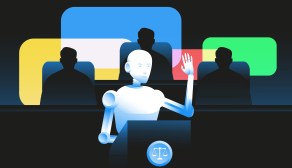
The partnership between Anthropic and the broader cybersecurity ecosystem represents a maturation of the AI industry. By moving away from the isolated development of frontier models and toward deep, collaborative integration with the existing security infrastructure, the industry is taking a necessary step toward addressing the systemic risks of our digital age.
While AI is not a panacea for the vulnerabilities inherent in complex, aging, or improperly configured systems, it represents the most significant upgrade to the defender’s toolkit in decades. As this program progresses, the success of the initiative will be measured not just by the vulnerabilities found, but by the tangible improvement in the security posture of the infrastructure upon which modern society relies.
For now, the focus remains on learning—which strategies work, which processes need adjustment, and how to balance the speed of AI with the precision required for mission-critical systems. If successful, this collaborative model could set the gold standard for how future technology firms and government entities tackle the existential challenges of the 21st-century digital landscape.

 Layla Zulfa
 Rifan Muazin
 Laily UPN
 Iffa Jayyana

 Suro Senen
 Lina Hope
 Lina Irawan