Dwi Wanna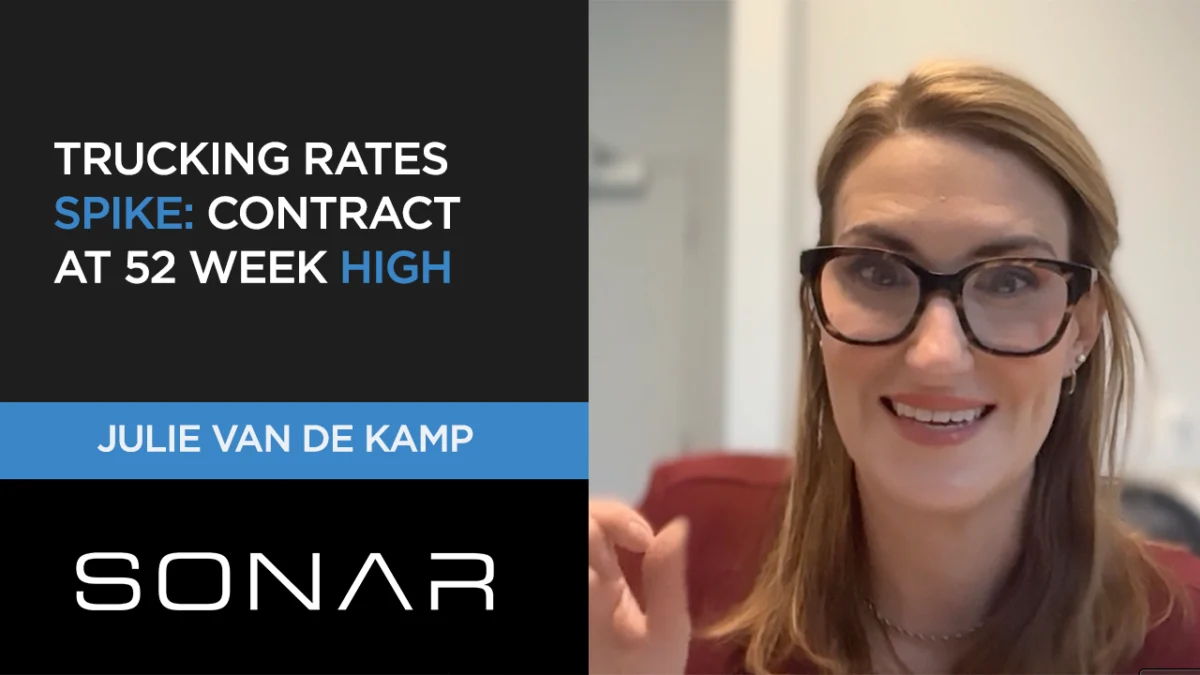
The logistics landscape is undergoing a significant recalibration. According to the latest data from FreightWaves SONAR, contract truckload rates have surged to a 52-week high of $2.72 per mile—excluding fuel—representing an 18% year-over-year increase. This sharp climb, coupled with a 50% year-over-year spike in spot rates, indicates a fundamental shift in the power dynamics between shippers and carriers. As legacy pricing models are discarded in favor of current market realities, the transportation sector is bracing for a sustained period of elevated costs and complex logistical hurdles.
Main Facts: The New Economic Reality of Trucking
The current freight environment is characterized by a "reset" of long-term agreements. For years, shippers held the upper hand, maintaining low-cost contracts that shielded them from market volatility. That era has effectively ended. With the gap between contract rates and the National Truckload Index (NTI) narrowing, carriers are no longer willing to absorb the inflationary pressures of rising operational costs without passing them on to the consumer.
"Contract rates have reached a 52-week high at $2.72 per mile plus fuel—that’s up 18% year over year," noted Julie Van de Kamp during the recent SONAR market briefing. "We are absolutely seeing some of those contracts between carriers and shippers re-upping and resetting at higher rate levels."
This shift is not merely a statistical anomaly; it is a structural change. When contract rates climb to record highs, it signals to the broader economy that transportation expenses will continue to be a primary driver of goods-based inflation for the foreseeable future.
Chronology of Market Shifts
To understand how the industry arrived at this point, one must look at the recent timeline of market activity:
- Pre-Labor Day Baseline: Freight demand experienced a standard seasonal rhythm throughout the summer. However, a slight post-holiday pullback occurred in early September, briefly tempering expectations.
- The Rebound: By early October, truckload demand had ticked up approximately 1.25% week-over-week, effectively erasing the post-holiday dip and returning to pre-Labor Day volume levels.
- The Weather Factor: In early October, Tropical Storm Isaias made its presence felt in the Gulf Coast region. This weather event served as a catalyst for immediate, localized supply chain disruption, specifically impacting tender rejections in markets like Mobile and Montgomery, Alabama.
- Technological Integration: Simultaneously, the industry saw the rollout of new intermodal rate benchmarking tools, allowing for a more sophisticated, multi-modal approach to cost management as shippers look for alternatives to traditional van-only transit.
Supporting Data and Analytics
The data provided by SONAR paints a picture of a market that is consistently tight. The Outbound Tender Reject Index (OTRI), a key barometer for capacity, has remained range-bound but elevated, fluctuating between 13% and 14%. This suggests that while there is no catastrophic capacity collapse, the market is consistently operating at a level where shippers must compete aggressively for available trucks.
The Spot vs. Contract Gap
The narrowing spread between spot and contract rates is the most critical metric for logistics managers. When the NTI rises 50% year-over-year, the "contract-to-spot" arbitrage that shippers previously enjoyed is effectively neutralized. Carriers are now using the high spot market as a baseline for contract negotiations, essentially forcing shippers to pay a premium for guaranteed capacity.
Localized Disruption: The Gulf Coast Impact
Weather remains an unpredictable variable in the freight equation. The impact of Tropical Storm Isaias provides a case study in how localized events trigger broader logistical headaches. When weather makes road conditions hazardous or forces port closures, tender rejections in that specific region spike. As trucks are diverted or delayed, inbound capacity into the affected region tightens, driving up costs for shippers trying to move goods into impacted zones like the Alabama Gulf Coast and the Florida Panhandle.
Official Insights: The Role of Technology in Risk Mitigation
During the SONAR update, the importance of predictive technology was highlighted as a mandatory component for modern supply chain strategy. Using tools like the "Business Impact Index" and real-time weather overlays, logistics managers can now visualize potential disruptions before they fully manifest.
"The Business Impact Index is among my preferred tools for assessing storm-related freight risk," Van de Kamp explained. By layering road closure data and power outage statistics over freight volume metrics, companies can proactively reroute shipments or adjust expectations for delivery windows. This transition from reactive to proactive logistics is no longer a luxury; it is the standard for surviving high-volatility periods.
Furthermore, the introduction of intermodal rate benchmarks into the SONAR platform offers a significant competitive advantage. As van rates hit historic highs, the ability to rapidly compare intermodal lanes—including rail ramp proximity and potential cost savings—provides a necessary "pressure valve" for shippers looking to reduce their total landed cost.
Broader Implications for the Supply Chain
The current market environment carries several long-term implications for the industry:
1. The Death of the "Cheap Lane"
Shippers can no longer expect to rely on low-cost, legacy contract lanes. The industry-wide reset means that companies must now build higher freight budgets into their annual financial planning. The days of sub-market pricing are likely over for the next several quarters.
2. Strategic Diversification
With van rates surging, shippers are being forced to diversify their modal mix. The increased interest in intermodal solutions, as evidenced by the new SONAR features, suggests that businesses are actively seeking ways to move freight via rail to hedge against truckload volatility.
3. Compliance and Liability Risks
As the market remains tight, the pressure on carriers to increase speed and volume can lead to corners being cut, which in turn increases the risk of cargo theft, insurance gaps, and compliance failures. The upcoming Brokerage Compliance Symposium highlights the industry’s focus on these risks. Navigating the regulatory landscape—including FMCSA rules and carrier liability—is now just as important as securing the rate itself.
4. The FreightTech Evolution
The industry is moving toward a tech-first approach. Whether it is through the FreightTech100 innovations being celebrated at the upcoming F3: Future of Freight Festival or the granular data provided by platforms like SONAR, the winners in this cycle will be those who can leverage data to make faster, more informed decisions than their competitors.
Conclusion
The combination of 52-week high contract rates, persistent tender rejections, and unpredictable weather patterns suggests that the freight market is in a state of sustained transition. For shippers, the strategy must shift from price-seeking to capacity-securing. For carriers, the current environment provides the leverage needed to restore margins after years of suppressed pricing.
As we look toward the remainder of the year, the volatility in the Gulf Coast and the upward trajectory of the NTI serve as reminders that the supply chain is a fragile, interconnected system. Staying ahead requires a combination of robust data analytics, a willingness to adopt new modal strategies, and a rigorous approach to compliance and risk management. The logistics landscape of 2026 and beyond will be defined by those who can successfully navigate this new era of expensive, but essential, freight capacity.

 Lina Irawan
 Raul Delapena Setiawan
 Laily UPN
 Iffa Jayyana
 Rifan Muazin
 Suro Senen
 Lina Hope