Nana
Nana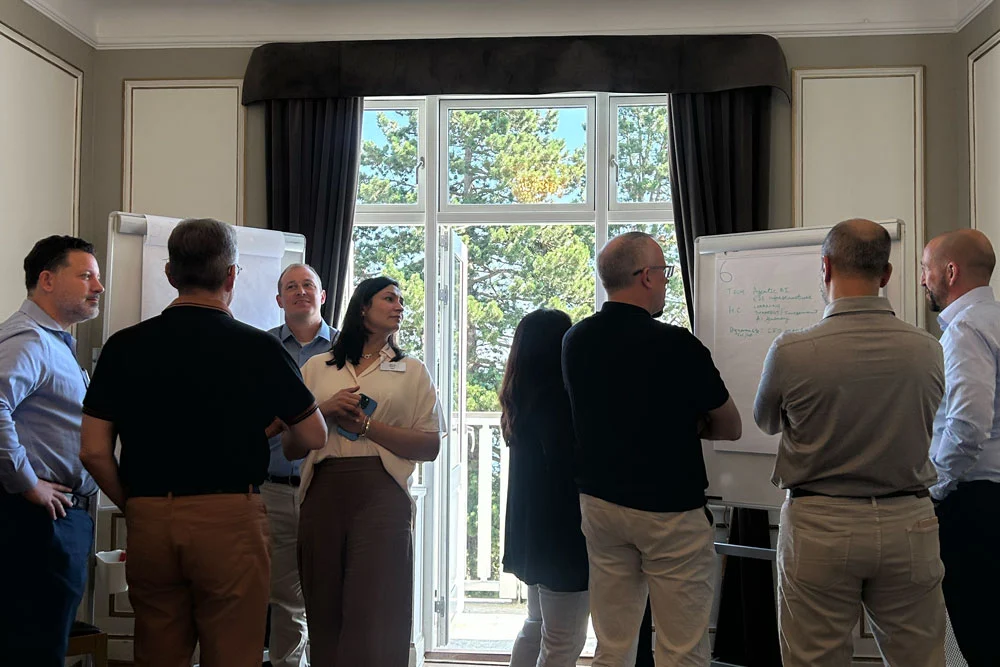
In late August 2026, Microsoft co-founder Bill Gates released a landmark essay that sent ripples through the global business community. While the tech visionary is no stranger to prognosticating on the future of computing, this particular dispatch carried a tone of sobering caution. Gates’ analysis of the unbridled march of artificial intelligence (AI) serves as a philosophical and strategic anchor for leaders across all sectors—particularly those in procurement—who are currently grappling with the tension between technological efficiency and human capital.
For Chief Procurement Officers (CPOs), the arrival of advanced AI is not merely an IT upgrade; it is an existential challenge to the operating models that have defined the function for decades. As automation promises to rewrite the rules of productivity, the mandate for leadership has shifted from managing processes to safeguarding the very role of the human worker.
The Gatesian Warning: A Turbulent Transition
To describe Bill Gates’ recent essay as "bleak" would be a simplification of a nuanced, albeit deeply concerning, argument. Gates does not shy away from the potential for catastrophic disruption. He paints a landscape where the transition to an AI-driven economy will likely be one of the most turbulent periods in modern history.
The essay explicitly flags three primary risks that keep even the most optimistic technologists awake at night:
- Mass Disruption of Labor: The widespread displacement of jobs as AI capabilities move from repetitive administrative tasks to complex analytical and strategic decision-making.
- The Democratization of Harm: The ease with which bad actors—or simply misguided systems—can leverage AI to cause systemic damage, from cybersecurity breaches to the erosion of supply chain integrity.
- The Stunting of Human Development: The fear that over-reliance on synthetic intelligence may degrade critical thinking, creativity, and the developmental pathways for younger generations.
While Gates balances these warnings with an acknowledgment of the potential for unprecedented productivity gains and scientific breakthroughs, his message is clear: we cannot afford the luxury of celebrating the benefits before we have addressed the systemic risks. For CPOs, this is a call to move beyond the "techno-optimist" narrative and engage in a more rigorous, risk-adjusted approach to AI integration.
The CPO Dilemma: Rethinking the Operating Model
The urgency of this debate was brought into sharp focus during the Ovation CPO retreat held this past July. The event served as a crucible for some of the world’s most influential procurement leaders to confront the uncomfortable realities of their digital transformation roadmaps.
During a session specifically designed to challenge established norms, CPOs were tasked with a provocative exercise: break their current operating models and be brutally honest about the impact of AI on team structure and headcount. The results were jarring.
The Great Headcount Contradiction
For years, the industry narrative has been that automation would "free up" staff to pursue higher-value, strategic work. However, the internal logic of the function is beginning to fracture. CPOs are now caught between two irreconcilable narratives:
- The Empowerment Thesis: That AI removes the "drudgery" of procurement, allowing teams to focus on supplier relationships, sustainability, and innovation.
- The Cost-Reduction Mandate: That CFOs and CEOs are increasingly viewing AI as a primary lever to slash operational expenditure, with headcount reduction being the most immediate and quantifiable outcome.
The data emerging from the retreat was telling. Participants cited potential headcount reductions ranging from 30% to 80% as a plausible outcome of full-scale AI adoption. While these figures were reached in a workshop designed to test the limits of strategic imagination, they are no longer just hypothetical. They represent a significant shift in how CPOs view the long-term viability of their departments. If 80% of current roles can be automated, what remains of the human element in procurement?
The Philosophical Shift: Workers vs. Consumers
The most profound contribution to the Ovation discourse came from Larry Kramer, President and Vice Dean of the London School of Economics. Kramer challenged the attendees to rethink the fundamental identity of the people they manage.
For decades, the global business model—and the procurement function specifically—has viewed people primarily through the lens of consumers. This framework has driven the relentless pursuit of cost reduction, lean efficiency, and hyper-competition. Procurement has been the champion of this model, squeezing every cent of value out of global supply chains to satisfy the insatiable demand for cheaper, faster, and better goods.
However, Kramer argued that if we continue to prioritize the "consumer" identity over the "worker" identity, we risk a total collapse of social stability. When AI enables the replacement of workers, the very people who were once the engine of the economy are discarded to serve the convenience of the consumer.
Protecting Human Dignity
Transitioning to an era where we view people as workers first demands a radical departure from current procurement orthodoxy. It requires:
- A Shift in Metrics: Moving away from pure cost-reduction KPIs toward metrics that account for employee retention, skill development, and community impact.
- Government Intervention: Acknowledging that the market alone cannot self-correct the social inequalities caused by rapid automation.
- Multilateralism: Rebuilding international frameworks to ensure that global labor standards are not eroded in the race to the bottom by AI-enabled cost cutting.
Implications for the Modern CPO
While the high-level philosophical debates regarding the nature of work may not appear on a daily to-do list, they are rapidly becoming the most urgent issues for enterprise leadership. The CPO of 2030 will be less of a "procurement manager" and more of a "steward of human-machine integration."
Strategic Recommendations for Future-Proofing
- Transparency in Transformation: Leaders must be honest with their teams about the capabilities of AI. Avoiding the conversation only leads to anxiety and a loss of talent.
- Upskilling for Co-existence: Rather than assuming AI will simply replace roles, CPOs must invest in "Human-in-the-Loop" systems where AI handles the data processing, but the human retains the authority for ethical, social, and strategic judgment.
- Redefining Value: Procurement functions must pivot toward measuring the quality of the relationship between humans and technology, rather than just the efficiency of the transaction.
- Corporate Citizenship: CPOs have a duty to ensure that their supplier base is not engaging in exploitative labor practices, particularly as those suppliers also move toward aggressive AI-driven automation.
Conclusion: The Path Ahead
The tension between the technological potential of AI and the human imperative of meaningful work is not a problem to be "solved" in a single fiscal year; it is a permanent condition of the modern era. Bill Gates’ warning serves as a reminder that the "turbulent times" are not coming—they are already here.
For the procurement leader, the task is to ensure that while the function evolves to capture the efficiencies of the digital age, it does not lose its moral compass. We must move beyond the narrow focus of cost efficiency and embrace a leadership style that views the human worker not as a cost to be minimized, but as the essential foundation upon which the future of our enterprises—and our society—must be built.
As we look toward the horizon, the true measure of a CPO’s success will not be the percentage of headcount reduced or the speed of procurement cycles, but the ability to guide an organization through this transition with both human dignity and institutional integrity intact. The debates occurring at forums like Ovation are merely the beginning. The real work—the human work—is only just starting.

 Lina Irawan
 Raul Delapena Setiawan
 Laily UPN
 Iffa Jayyana
 Rifan Muazin
 Suro Senen
 Lina Hope