Asro
Asro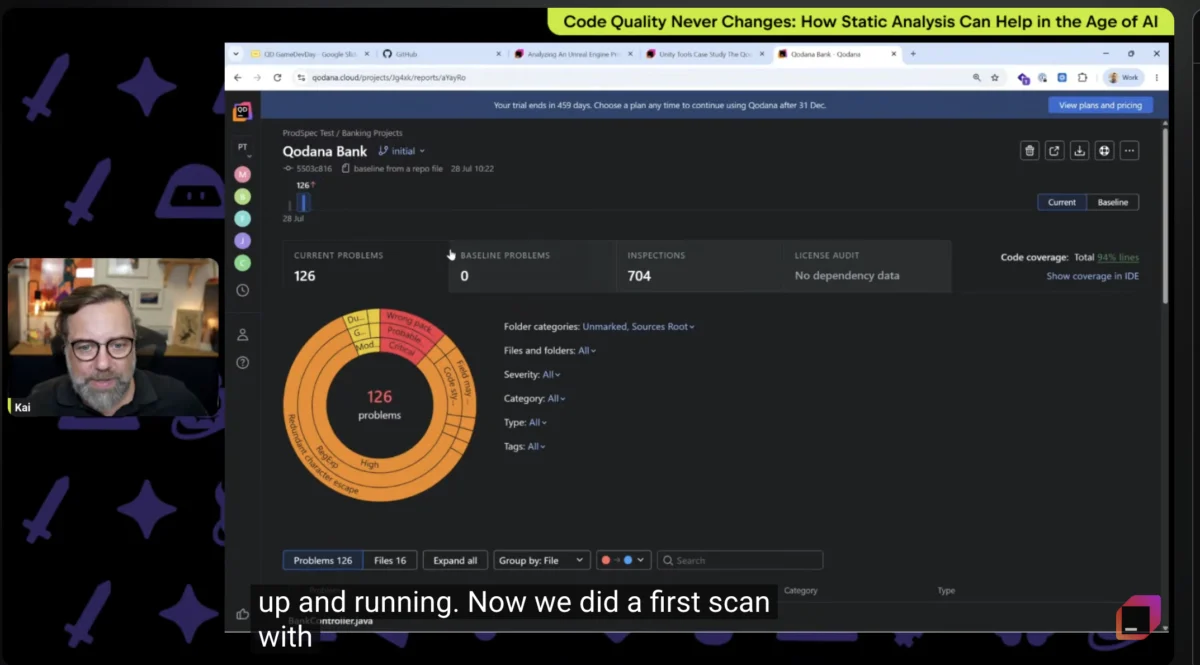
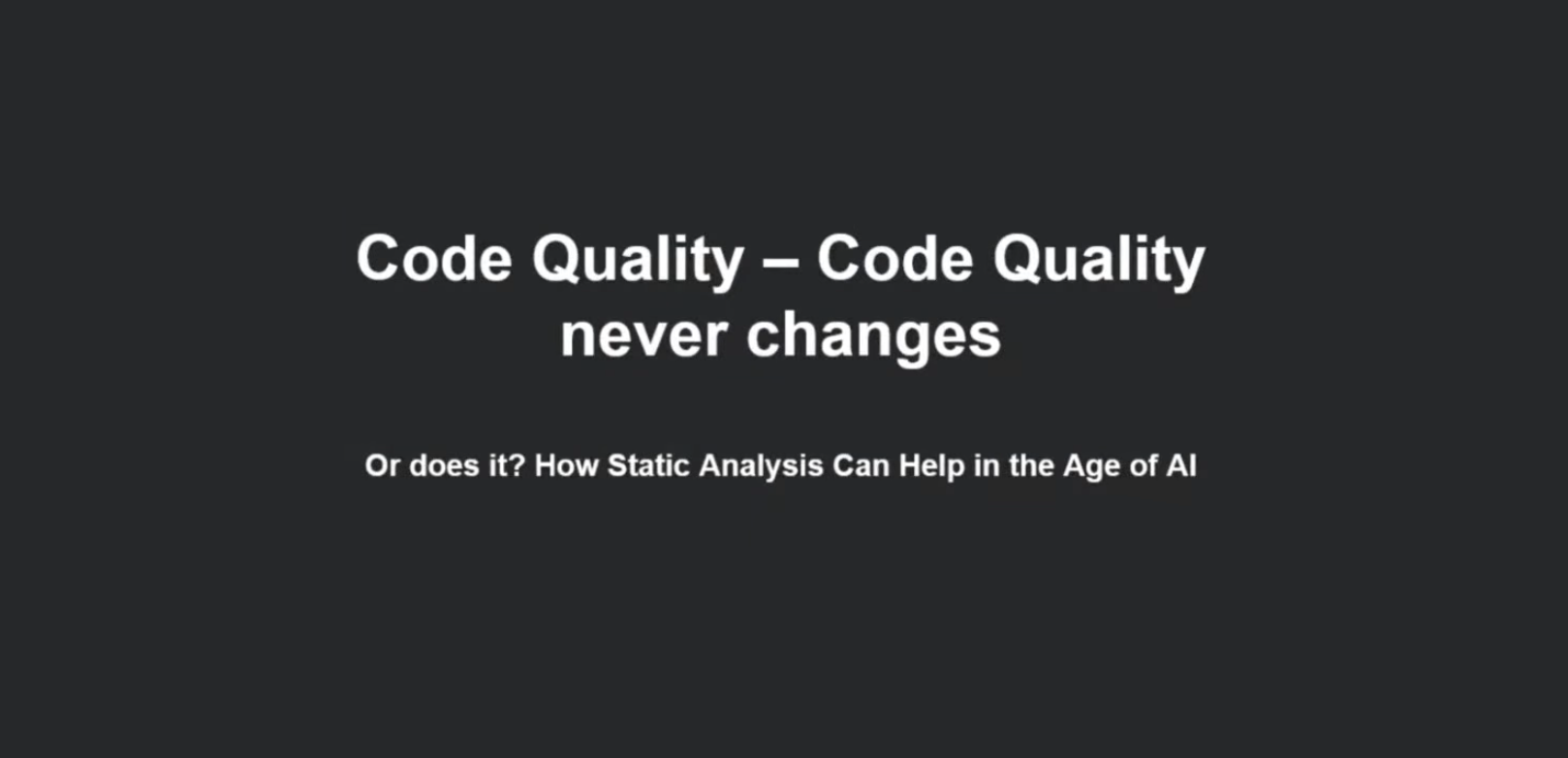
In the fast-paced world of modern software engineering, the definition of "code quality" is currently undergoing a radical, often volatile, transformation. As artificial intelligence (AI) tools become deeply embedded in the developer workflow—with reports suggesting that up to 95% of developers in sectors like game development now utilize AI assistance—the industry faces a critical crossroads. Does the rapid acceleration of code production through AI come at the cost of the structural integrity of our digital infrastructure?
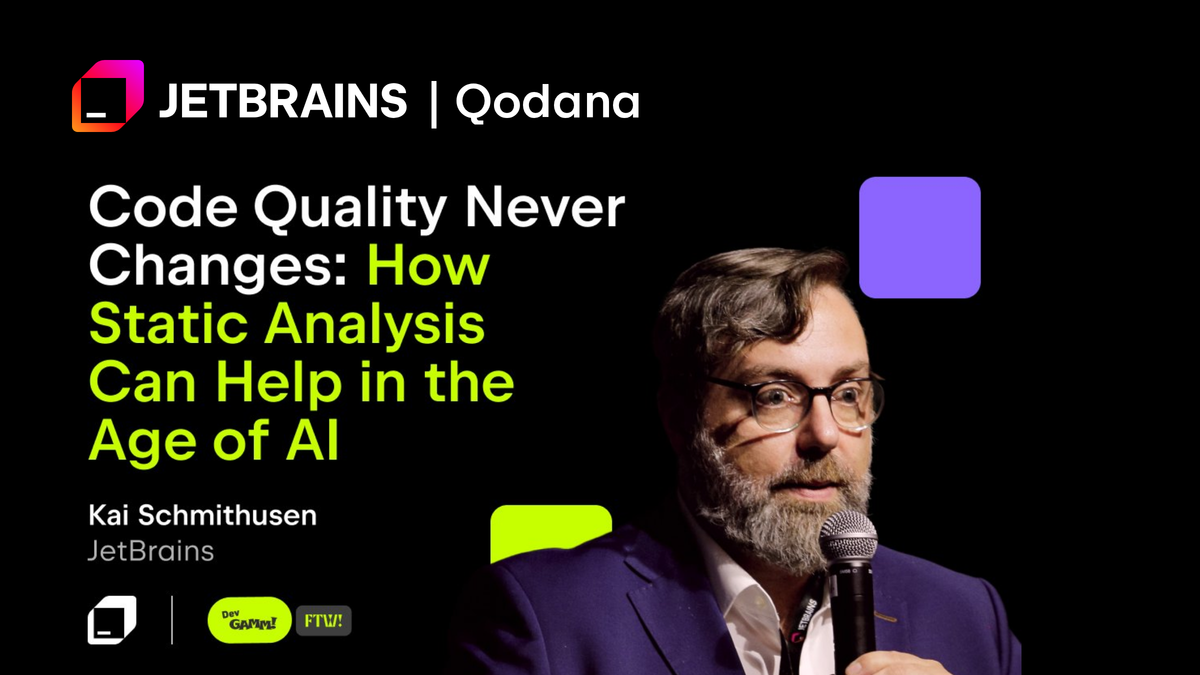
This inquiry, explored in depth by industry expert Kai Schmithuesen at the 2026 JetBrains Game Development Day, highlights a growing tension: while AI allows teams to prototype and iterate with unprecedented speed, it also introduces a significant volume of technical debt, security vulnerabilities, and logic errors. The challenge for today’s engineering leads is no longer just about shipping features—it is about balancing the velocity of AI with the rigorous, deterministic guardrails of traditional static analysis.
Main Facts: The New Reality of Code Production
The fundamental shift in software development is one of scale. Where a developer might have historically written a few hundred lines of code in a productive session, an AI-augmented developer can now generate thousands of lines in a fraction of the time. However, this increased throughput is not a panacea.
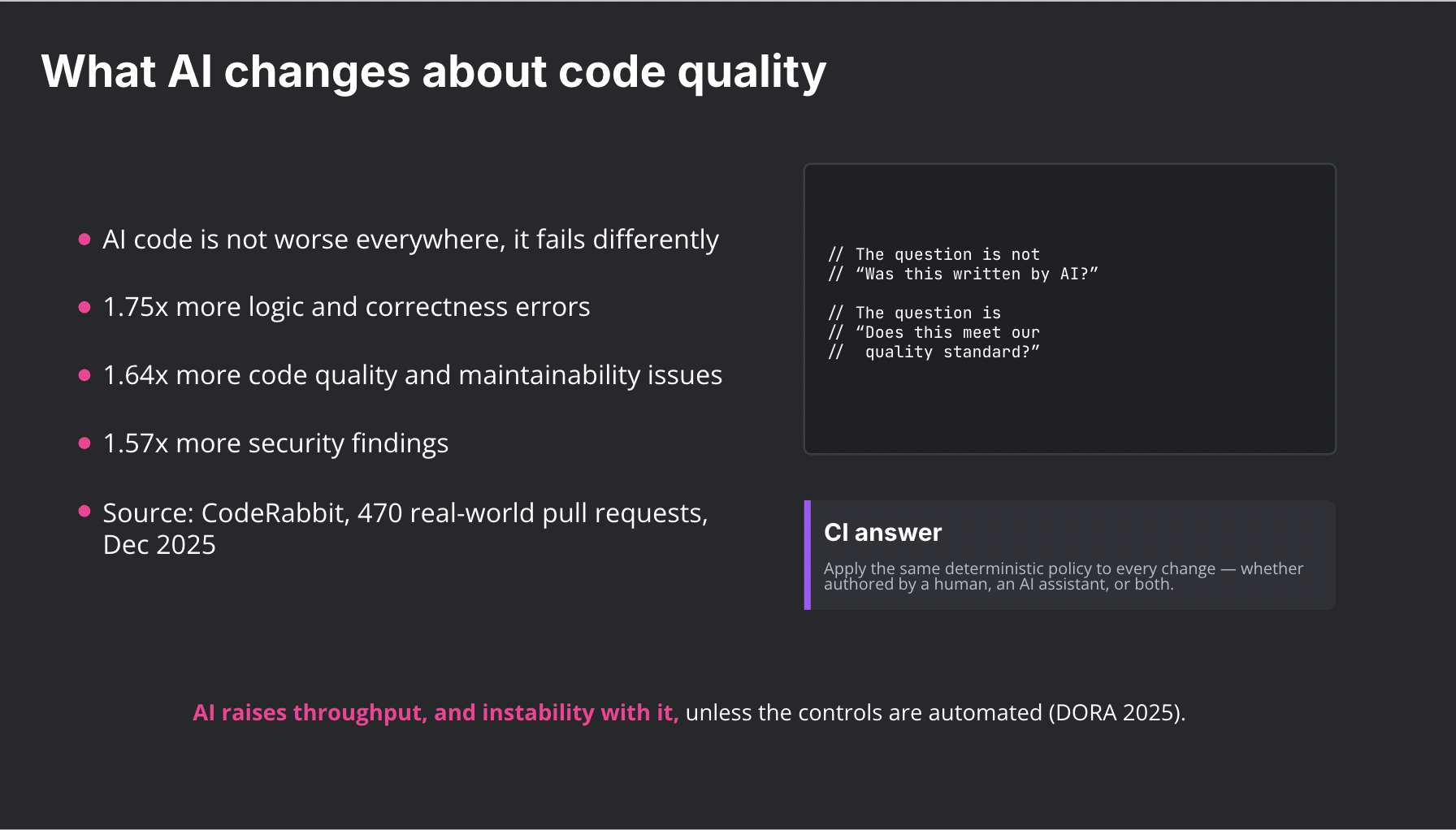
Recent industry data suggests that AI-generated code, while efficient, is not inherently superior in quality to human-written code. In fact, studies from organizations like CodeRabbit indicate that AI-generated output can produce up to 1.7 times more issues than human-authored code. These issues range from performance bottlenecks and stability regressions to critical security flaws, such as remote code execution vulnerabilities.

The core dilemma is that while AI excels at pattern matching and rapid boilerplate generation, it lacks a fundamental understanding of "intent." It does not inherently prioritize long-term maintainability or project-wide architectural consistency, leading to a sprawling, often disconnected codebase that can be difficult for human teams to audit or refactor.
Chronology: From Manual Craft to AI Acceleration
The evolution of code development can be traced through three distinct phases:
- The Manual Era: Development was characterized by painstaking, line-by-line craftsmanship. Quality was managed primarily through peer code reviews and manual testing. While slower, this method ensured high levels of human oversight and adherence to architectural standards.
- The Rise of Static Analysis: As projects grew in complexity, static analysis tools (like Qodana) became essential. These tools provided deterministic, repeatable checks for syntax, security, and performance. They served as the industry’s "quality gatekeepers," ensuring that large-scale software remained stable over long lifecycles.
- The AI Integration Phase (Present Day): We have entered an era where AI agents are integrated directly into IDEs. These agents are now tasked with writing, debugging, and refactoring code. The primary challenge of this era is that the sheer volume of code produced threatens to overwhelm existing review processes, necessitating a hybrid approach where AI and static analysis work in a symbiotic loop.
Supporting Data: The Cost of Compromised Quality
The business implications of ignoring code quality are severe. History is replete with examples of high-profile projects failing due to preventable technical flaws.
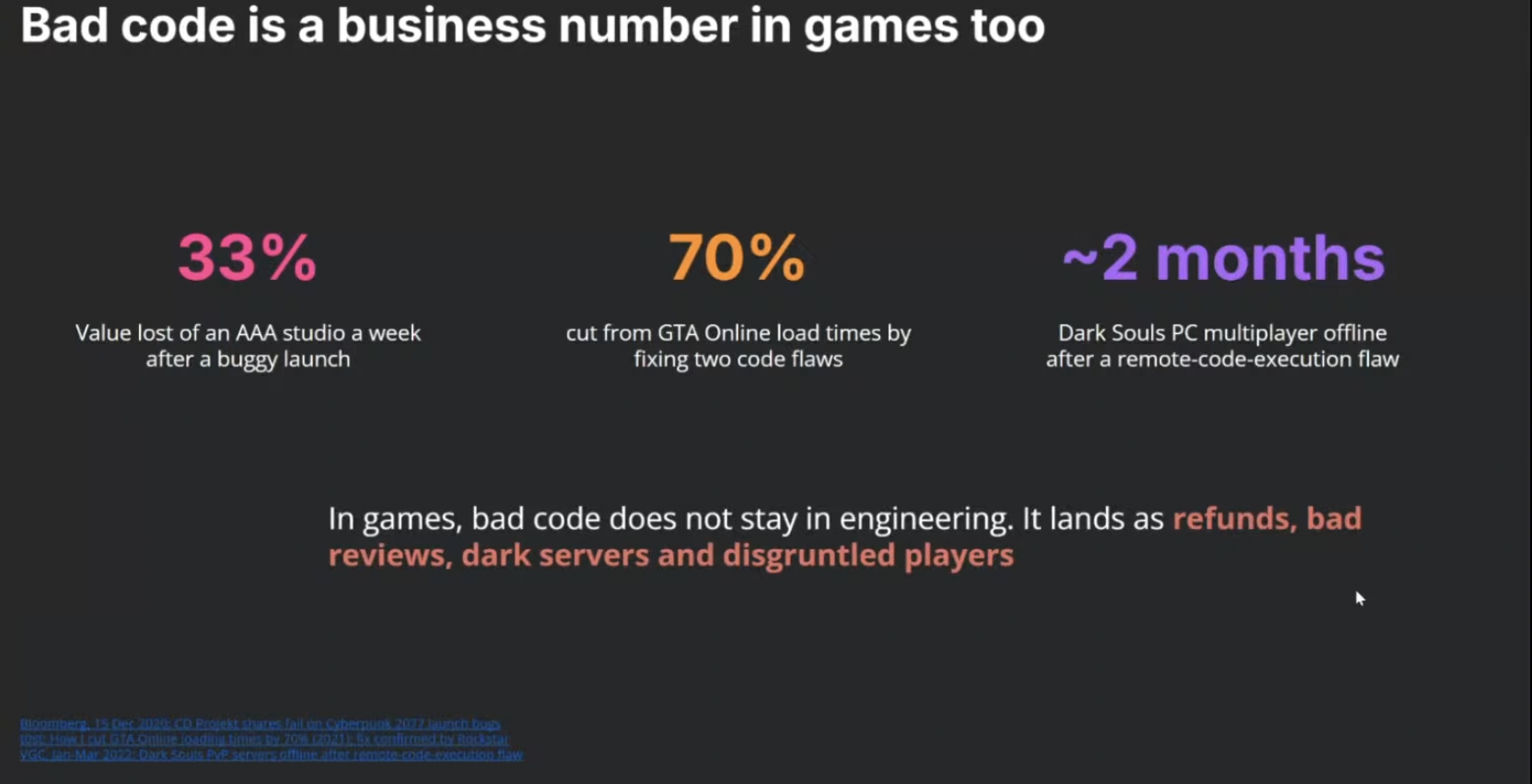
- Financial Impact: One notable AAA studio saw its market value drop by 33% just one week after a botched product launch, directly attributed to stability issues.
- Optimization Successes: Conversely, when code quality is prioritized, the results can be transformative. In a famous case, a player-led investigation into Grand Theft Auto revealed that two minor code flaws were responsible for massive load-time inefficiencies. By addressing these, load times were slashed by 70%—dropping from six minutes to two.
- Security Vulnerabilities: Security remains the most pressing concern. A major title was forced offline for two months due to a remote code execution vulnerability. In the modern gaming landscape, where players expect constant engagement, a two-month outage is often fatal to a game’s community and revenue stream.
The data indicates that when static analysis is paired with AI-driven development, the results are overwhelmingly positive. Studies have shown that teams combining these methodologies can reduce vulnerability counts in code moving to production by as much as 33%, while simultaneously decreasing token usage (and thus cost) by 72% to 92%.
Official Perspectives: The Role of Deterministic Tools
Industry leaders, including the team behind JetBrains Qodana, argue that the "wild west" of AI coding must be tamed by deterministic systems. Unlike AI, which can provide different answers to the same query depending on the prompt or context, static analysis is entirely deterministic. If a tool finds an issue, it provides a clear, repeatable link to the specific line of code and the standard being violated.
This is particularly relevant with the advent of regulations like the EU’s Cyber Resilience Act. As legal frameworks begin to mandate a formal "Software Bill of Materials" (SBOM), the ability to trace every line of code to its origin and verify its security becomes a compliance necessity. AI models, which are often "black boxes," struggle to provide this level of auditability.
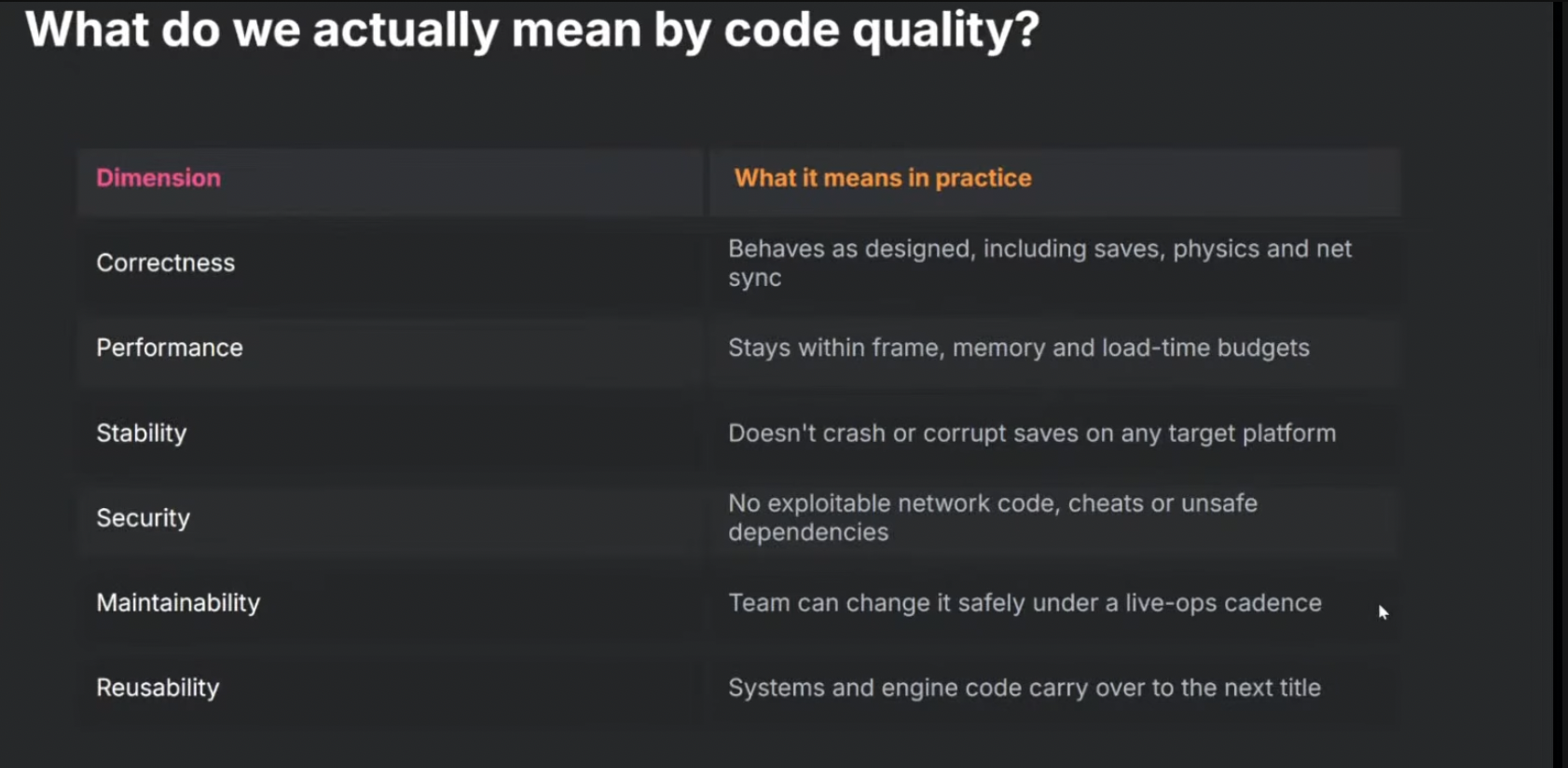
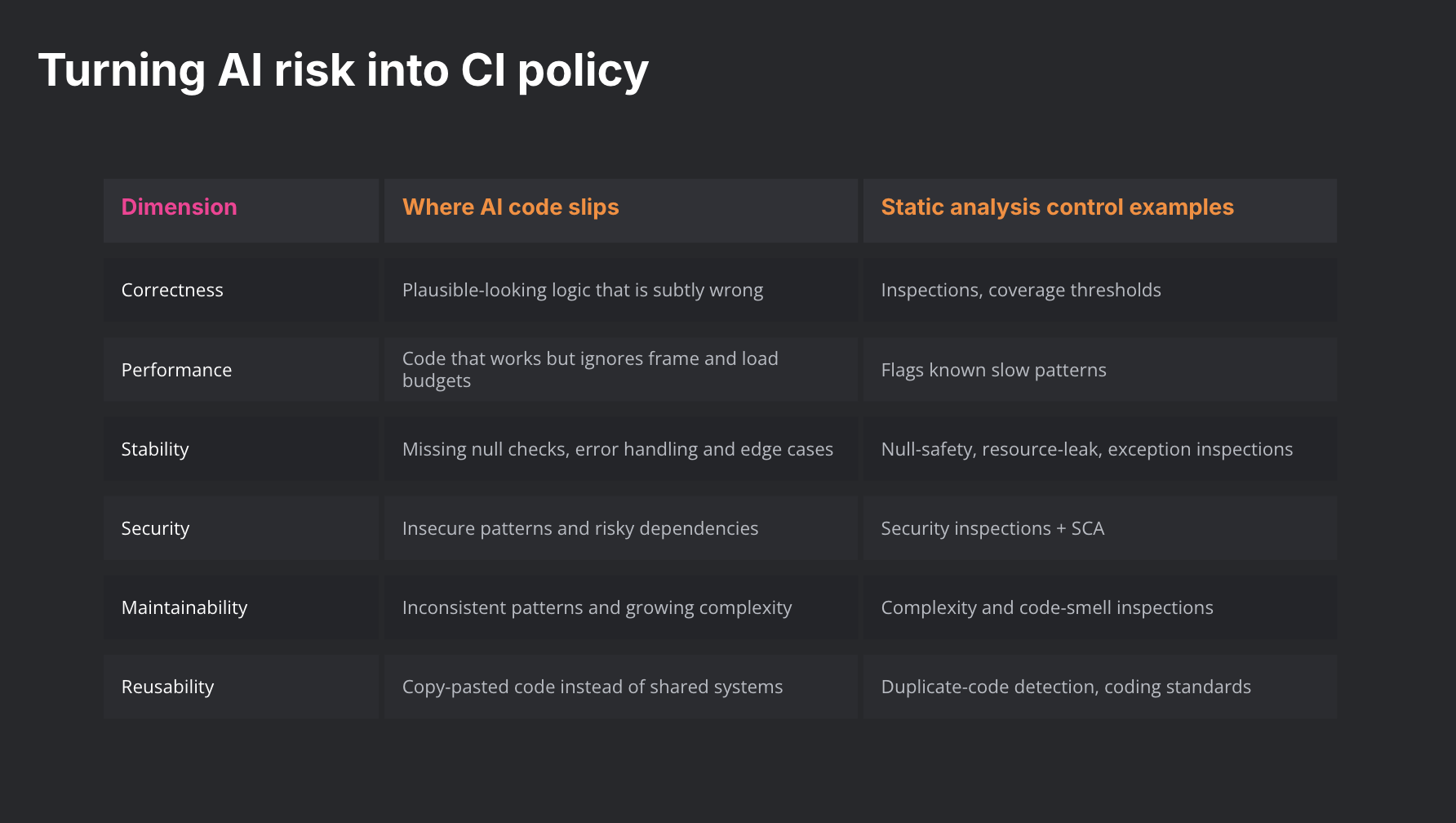
Why Static Analysis Still Matters:
- Correctness: Validating that code performs as designed.
- Performance: Ensuring that resources are managed efficiently—critical for high-performance applications like game engines.
- Stability: Identifying potential crashes and memory leaks.
- Maintainability: Preventing the accumulation of "code smells" and duplication that make long-term projects (those spanning 10+ years) unworkable.
Implications: Building a Resilient Pipeline
The future of software development is not a choice between AI and static analysis; it is an integration of both. The most effective pipeline follows a "Hybrid Loop" model:
- Generation: A human developer or an AI agent writes the code.
- Initial Scan: Static analysis tools (such as Qodana) perform a rapid, automated scan on the changes.
- Refinement: If issues are found, the AI agent is instructed to fix them, utilizing the feedback provided by the static analysis.
- Verification: The static analysis tool re-confirms that the AI’s fix meets the project’s quality standards.
- Merge: Only once the code passes the automated "gatekeeper" is it merged into the main branch.
This process ensures that the speed of AI is harnessed without sacrificing the structural integrity of the application. Furthermore, modern tools are becoming more "agent-aware." For instance, features like "Hooks" in IDEs (such as JetBrains Rider) allow AI agents to automatically call formatting and linting tools before suggesting code to the user. This forces the AI to adhere to company-wide coding standards, turning the AI from a loose cannon into a disciplined assistant.
Addressing the "Slowdown" Myth
A common concern is that adding these layers of analysis will slow down the development pipeline. However, experts emphasize that modern static analysis is designed for incremental checks. By focusing only on the code that has been changed—rather than scanning the entire repository every time—teams can maintain a feedback loop that takes only seconds or minutes. Investing these few minutes upfront prevents hours, or even weeks, of debugging and emergency patching down the line.
Conclusion: The Path Forward
The "AI-First" approach to development is an inevitability, but it must be tempered by a "Quality-First" mindset. As we move toward 2027 and beyond, the teams that will succeed are those that view their AI tools not as autonomous replacements for human engineers, but as high-velocity components within a broader, rigorously monitored ecosystem.
By leveraging the deterministic precision of static analysis alongside the creative speed of AI, developers can finally bridge the gap between rapid iteration and professional-grade stability. The tools exist, the data is clear, and the standard for software excellence remains as high as ever. The question is no longer whether we can use AI to build the future, but how effectively we can govern that AI to ensure the future is robust, secure, and maintainable.

 Nila Kartika Wati
 Neng Nana
 Basiran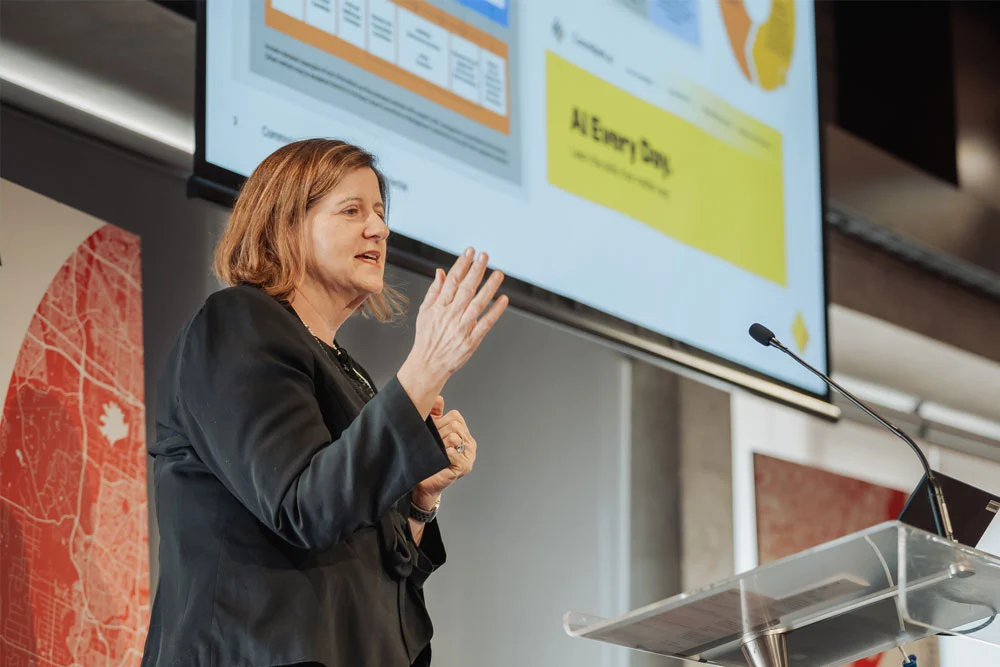
 Iffa Jayyana
 Raul Delapena Setiawan
 Rifan Muazin