
 Nana
Nana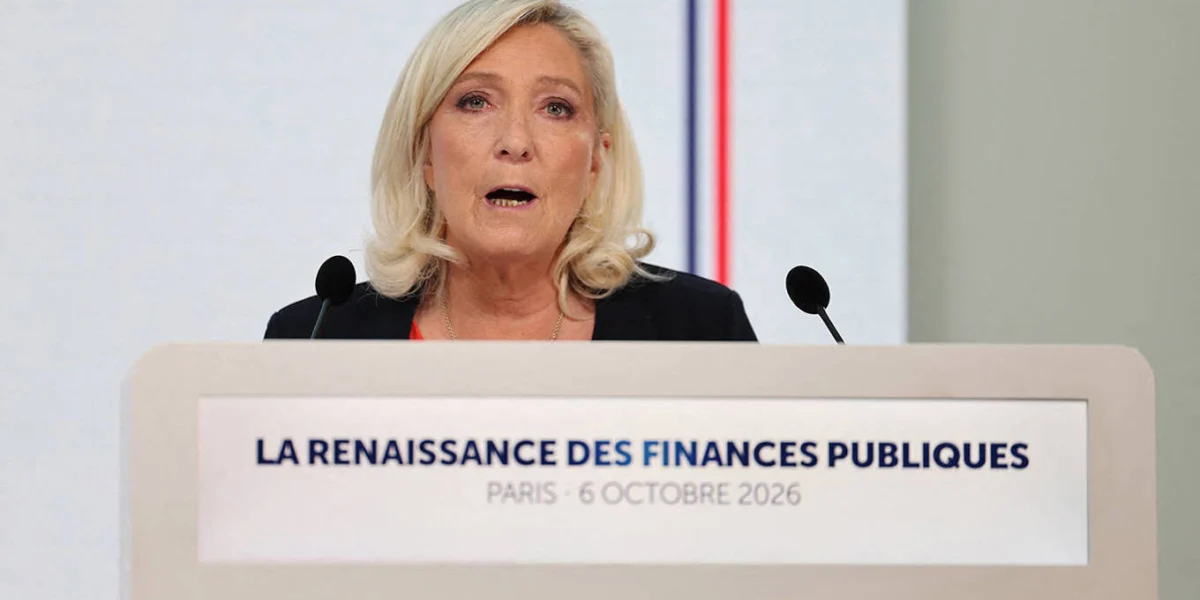
By Laurent Warlouzet
October 9, 2026
In the hallowed halls of French political discourse, the term "austerity" has long been a scarlet letter—a radioactive policy prescription that historically heralded the end of careers and the trigger for mass civil unrest. Yet, in a pivot that has stunned analysts and energized her base, Marine Le Pen, the perennial standard-bearer of the National Rally (RN), has unveiled a comprehensive economic platform centered on rapid fiscal consolidation.
This move represents a seismic shift for the French far-right. By shedding the populist protectionism that defined her previous campaigns, Le Pen is attempting a high-wire act: reconciling the demands of international bond markets with a nationalist agenda that once promised an endless expansion of the welfare state. Her success in this endeavor will not only dictate her political future but could redefine the trajectory of the nationalist right across the European Union.
The Core Mandate: A New Economic Doctrine
Marine Le Pen’s latest policy framework, unveiled in Paris this week, discards the "big-spending" rhetoric that characterized her 2017 and 2022 campaigns. Instead, she has embraced the language of fiscal responsibility, signaling an intent to tackle France’s ballooning sovereign debt through rigorous spending cuts and structural reform.
The central pillar of her program involves a "sovereign fiscal correction," aimed at reducing the French budget deficit to meet the European Union’s 3% limit within three years. For a party that once advocated for a retreat from the Eurozone and a rejection of Brussels-imposed budgetary discipline, this represents a profound ideological metamorphosis. The program prioritizes the streamlining of public administration, a reduction in social subsidies for non-citizens, and a pivot toward industrial productivity over state-funded consumption.
Chronology: The Evolution of a Nationalist Economic Strategy
To understand the weight of this shift, one must view it through the lens of the National Rally’s institutional journey over the last decade.
- 2012–2017: The Protectionist Era: Under the shadow of the Eurozone crisis, Le Pen campaigned on "economic patriotism." Her proposals were heavily protectionist, advocating for the return of the franc and massive state intervention to shield domestic industries from globalization.
- 2020–2022: The "Purchasing Power" Pivot: As inflation began to bite, Le Pen moved away from the controversial "Frexit" rhetoric, focusing instead on tax cuts on energy and essential goods. While popular, these policies were criticized by economists for being fiscally unsustainable.
- 2024–2025: The Institutionalization Phase: Following a series of strong electoral showings, the party recognized that the "credibility gap" was the only remaining barrier to the Élysée Palace. The RN began courting business leaders and institutional investors, softening its stance on EU regulations.
- October 2026: The Austerity Unveiling: In a speech at the Palais Brongniart, Le Pen officially signaled that the party would prioritize balanced budgets over radical social spending, effectively adopting the orthodox economic language of the center-right.
Supporting Data: The Fiscal Reality Behind the Shift
The urgency of Le Pen’s pivot is underscored by the sobering economic data facing the French state. As of late 2026, France’s debt-to-GDP ratio remains near an all-time high, hovering above 115%. With interest rates remaining elevated compared to the post-pandemic era, the cost of servicing this debt has become one of the largest line items in the national budget.
Comparative Economic Indicators (2026 Projections)
| Indicator | France Current Status | EU Target |
|---|---|---|
| Budget Deficit (% of GDP) | 5.2% | 3.0% |
| Public Debt (% of GDP) | 116.4% | 60.0% |
| Unemployment Rate | 7.8% | N/A |
| GDP Growth | 0.9% | N/A |
The data reveals the trap: France can no longer finance its expansive social model through debt alone. Le Pen’s advisors argue that the current trajectory is untenable, and that by "pruning the deadwood" of the French bureaucracy, she can lower taxes on labor while simultaneously satisfying the demands of international rating agencies. Whether such deep cuts can be implemented without triggering the social volatility for which France is famous remains the primary point of contention among economists.
Official Responses and Political Repercussions
The reaction to Le Pen’s "austerity-nationalist" synthesis has been predictably polarized.
The Government Perspective
The incumbent administration, led by a coalition of centrists, has dismissed the plan as a "cynical masquerade." Government spokesperson Élisabeth Beaumont noted, "One cannot claim to defend the French worker while simultaneously slashing the very social safety nets that sustain them. Ms. Le Pen is attempting to wear the mask of a fiscal conservative while her core supporters still demand the largesse of a protectionist state."
The Business Community
Corporate leaders have expressed cautious optimism. "There is a recognition that the status quo is not viable," said a senior executive at a leading CAC 40 firm. "If Le Pen is serious about deregulation and reducing the tax burden on industry, she will find a sympathetic ear. However, the market remains wary of the potential for social unrest that often accompanies rapid fiscal contraction."
The Far-Left Reaction
The radical left, led by the remnants of the Nouveau Front Populaire, has labeled the program a "betrayal of the people." They argue that Le Pen is trading the interests of the working class for the approval of the financial elite in London and Frankfurt.
Implications: A New Era for Europe’s Nationalist Right?
The implications of Le Pen’s move extend far beyond the borders of France. If she successfully navigates this transition, she provides a roadmap for other European nationalist parties—such as the AfD in Germany or the League in Italy—to bridge the gap between anti-establishment rhetoric and governing competence.
The "Competence Trap"
The primary risk for Le Pen is the "Competence Trap." By adopting mainstream fiscal orthodoxy, she risks alienating the disillusioned, lower-income voters who fueled her rise. If she moves too far toward the center, she risks becoming indistinguishable from the traditional center-right, thereby neutralizing the very protest vote that gives her movement its power.
The European Integration Dilemma
Furthermore, Le Pen’s commitment to fiscal discipline necessitates a degree of cooperation with Brussels. To lower borrowing costs, she must convince the European Central Bank and the European Commission that France is a reliable partner. This creates a cognitive dissonance within her party: can a movement built on sovereignty and national identity truly submit to the technocratic oversight required by the Stability and Growth Pact?
The Geopolitical Calculus
Internationally, this pivot is likely an attempt to sanitize her image for foreign investors. By signaling that a "Le Pen France" would be a fiscally responsible member of the Eurozone, she aims to neutralize the "risk premium" that traditionally plagues far-right candidates in sovereign debt markets.
Conclusion: The Final Verdict
Marine Le Pen’s foray into the world of fiscal consolidation is a gamble of historic proportions. She is betting that the French electorate is more concerned with the existential threat of national decline—evidenced by debt and stagnation—than they are with the preservation of specific welfare entitlements.
The irony is palpable: the leader who rose to prominence by railing against the "globalist" institutions of Europe is now attempting to play by their rules to secure power. Whether this transformation is a genuine ideological evolution or a tactical maneuver designed to disarm her critics will be the defining narrative of the next electoral cycle.
As the 2027 presidential election approaches, the French public finds itself at a crossroads. They are being asked to choose between the comfortable decline of the current model and the radical, untested austerity of a nationalist leader who has decided that, to save the nation, she must first balance its books. For Europe, the result of this experiment will serve as a bellwether for the future of democratic governance in an age of populism. The era of the "anti-system" candidate is over; the era of the "system-ready" nationalist has begun.


 Lina Hope
 Basiran
 Laily UPN
 Iffa Jayyana
 Rifan Muazin
 Suro Senen

 Lina Irawan