
 Nana Muazin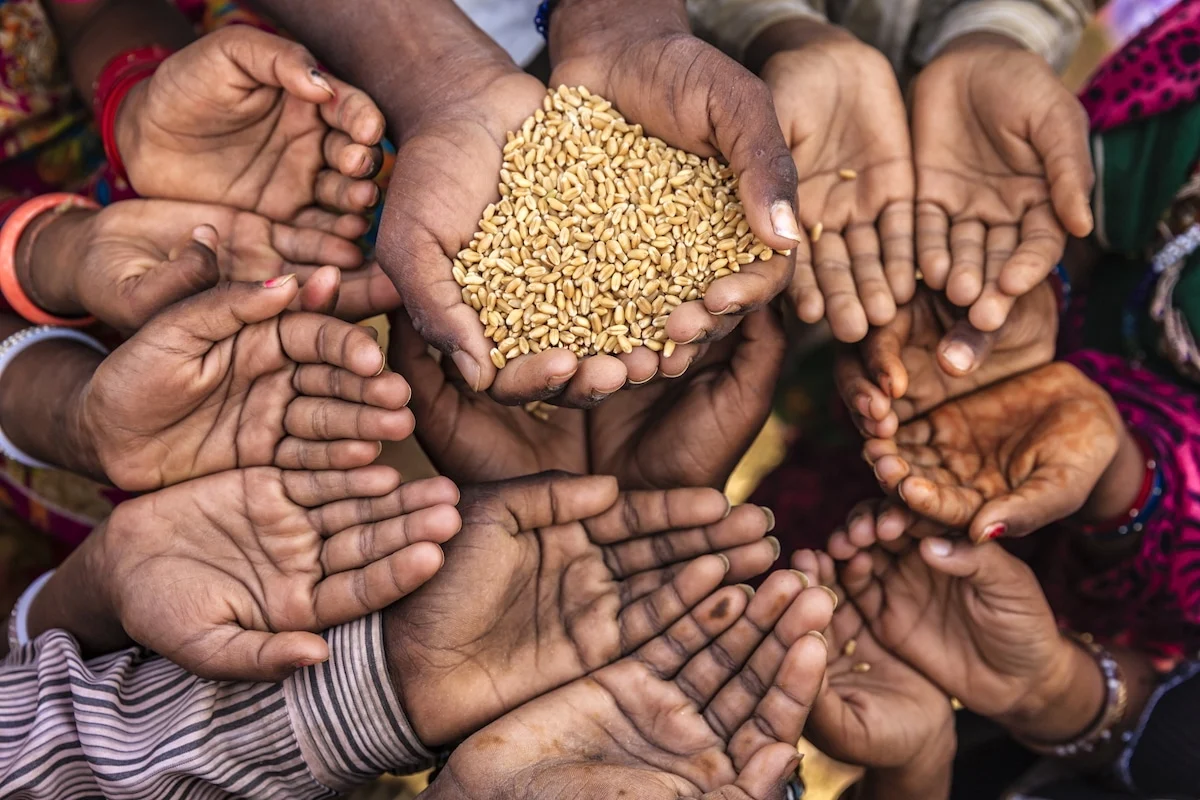
Despite a modest decline in global hunger rates, a sobering new report from five specialized United Nations agencies reveals a world deeply divided by food insecurity. While some regions are beginning to recover from the post-pandemic economic shock, others—particularly in Africa and western Asia—are sinking deeper into a crisis characterized by soaring costs and systemic instability.
The State of Food Security and Nutrition in the World (SOFI) 2025 report, released by the Food and Agriculture Organization (FAO) in collaboration with the International Fund for Agricultural Development (IFAD), the World Food Programme (WFP), UNICEF, and the World Health Organization (WHO), paints a complex picture of a global food system struggling to balance progress with the realities of climate change and geopolitical conflict.
Main Facts: The Numbers Behind the Crisis
The data from 2024 provides a snapshot of a fragile global recovery. Approximately 673 million people, or 8.2% of the world’s population, suffered from hunger in 2024. This is a decline from the 8.7% recorded in 2022 and 8.5% in 2023. In raw numbers, this represents between 638 and 720 million individuals, a reduction of roughly 15 million people compared to 2023.
However, the headline figures mask a darker underlying trend. While the global average is moving in the right direction, the progress is profoundly uneven. The report categorizes the situation as "moderate or severe food insecurity," noting that while this metric fell to 28% of the global population (2.3 billion people) in 2024, the ability of low-income nations to provide healthy, nutritious food to their citizens remains in a state of decay.
For the most vulnerable, the cost of a healthy diet has transitioned from a manageable expense to a luxury, with 545 million people in low-income countries now unable to afford basic, nutritious sustenance—a sharp increase from 464 million just five years ago.
A Chronological Perspective: The Road to 2025
To understand the current state of food insecurity, one must look back at the convergence of crises that began in 2020.
- 2020–2021: The Pandemic Shock: The global response to COVID-19 disrupted supply chains, causing the first major spike in food insecurity in decades. Latin America and the Caribbean saw hunger peak at 6.1% during this period.
- 2021–2023: The Inflationary Surge: The world experienced a dramatic rise in food price inflation, climbing from a median of 2.3% in December 2020 to 13.6% by early 2023. In low-income nations, this inflation peaked at a devastating 30% by May 2023, effectively pricing millions out of the market.
- 2024: The Bifurcation: The latest data shows a split. Asia, along with Latin America and the Caribbean, has begun a downward trend in undernourishment. Conversely, Africa and western Asia have seen their hunger rates rise, driven by prolonged food crises and the lingering effects of global value chain disruptions.
- The 2030 Horizon: Looking forward, the UN agencies project that 512 million people will remain in a state of chronic undernourishment by 2030, with 60% of these individuals located in Africa.
Supporting Data: Regional Disparities and Economic Barriers
The divide in food security is best illustrated by regional performance. In Asia, the percentage of the population facing undernourishment fell to 6.7%, down from 7.9% in 2022. Similarly, Latin America and the Caribbean saw a reduction to 5.1%, encompassing 34 million people.
These gains, however, are starkly contrasted by the situation in Africa, where the proportion of the population facing hunger has surpassed 20%, impacting 307 million people. In western Asia, the situation is equally dire, with 12.7% of the population—more than 39 million people—facing daily hunger.
The primary driver for this disparity is the inability to afford a healthy diet. While the global number of people unable to afford such a diet has actually decreased to 2.6 billion, the demographic shift reveals that the burden is concentrating heavily in low-income and lower-middle-income countries. For instance, in lower-middle-income nations (excluding India), the number of people who cannot afford a healthy diet has risen to 869 million, up from 791 million in 2019.
Official Responses: A Call for Structural Transformation
The release of the SOFI 2025 report has triggered an urgent call to action from global leaders.

FAO Director-General QU Dongyu emphasized that while the global decrease in hunger is "encouraging," it is not enough. "We must recognize that progress is uneven," he stated. "To achieve our goals, we must work collaboratively and innovatively with governments, organizations, and communities to address the specific challenges faced by vulnerable populations, especially in regions where hunger remains persistent."
WHO Director-General Dr. Tedros Adhanom Ghebreyesus highlighted the progress made in child nutrition, specifically regarding stunting and breastfeeding, but cautioned against complacency. "There is still much to be done to relieve millions of people from the burdens of food insecurity and malnutrition," he noted.
IFAD President Alvaro Lario framed the issue through the lens of economic investment. "In times of rising food prices and disrupted global value chains, we must step up our investments in rural and agricultural transformation," Lario said. "These investments are not only essential for ensuring food and nutrition security—they are also critical for global stability."
UNICEF Executive Director Catherine Russell focused on the human cost, particularly regarding the next generation. "Over 190 million children under the age of 5 are affected by undernutrition," she said, stressing that this robs them of their physical and mental potential. She called for a focus on social protection programs and educating parents on the availability and importance of locally produced, nutritious food.
Implications: The Path Toward Zero Hunger
The implications of the 2025 findings are clear: the world is currently off-track for the Sustainable Development Goal (SDG) of Zero Hunger. The combination of Russia’s war in Ukraine, extreme weather events tied to climate change, and the legacy of pandemic-era economic policies has created a "new normal" of volatility.
Policy Recommendations
The report outlines a strategic path forward, urging nations to adopt:
- Transparent Monetary Policies: Aimed at containing inflationary pressures that disproportionately affect food prices.
- Targeted Fiscal Measures: Implementing time-bound social protection programs to act as a buffer for the most vulnerable households during price spikes.
- Investment in Agrifood R&D: Building resilience through better market information systems, improved transportation infrastructure, and sustainable agricultural practices.
The Human Cost of Inaction
The failure to act has long-term consequences. Undernutrition in children under five leads to permanent developmental setbacks, affecting both the physical health and economic productivity of entire nations for generations. Furthermore, when food prices remain volatile, the resulting hunger is a known catalyst for civil unrest and mass migration, threatening global geopolitical stability.
As the UN agencies continue to monitor the situation, the message is unequivocal: food is a basic human right, not a luxury. The global community must pivot from reactive emergency aid to proactive, long-term systemic investment. Without a significant shift in how low-income nations are supported in their agricultural development, the goal of a hunger-free world will remain a distant, unattainable ideal.
The 2025 SOFI report serves as both a scorecard of past failures and a blueprint for a more resilient future. The question remains whether the international community has the political will to bridge the gap between those who can afford to thrive and those who are struggling simply to survive.


 Laily UPN
 Lina Hope
 Iffa Jayyana
 Rifan Muazin
 Suro Senen
 Lina Irawan