
 Nana Wu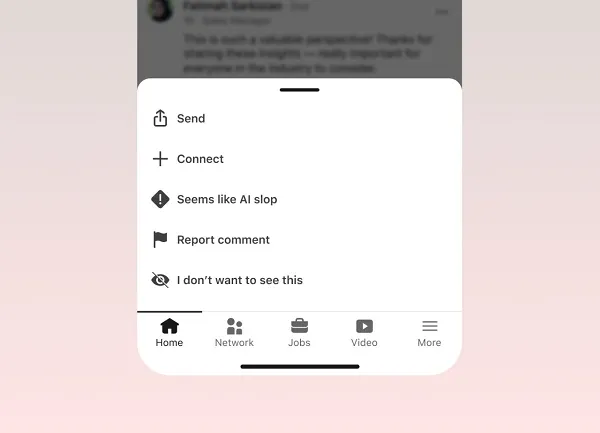
The professional social media landscape is undergoing a profound transformation. As generative artificial intelligence tools become increasingly accessible, platforms are grappling with a deluge of low-quality, automated content—a phenomenon colloquially dubbed "AI slop." LinkedIn, the world’s preeminent professional network, has emerged at the forefront of this battle, deploying sophisticated machine learning frameworks to maintain the integrity of its user experience. By leveraging human feedback and iterative model training, the platform is attempting to stem the tide of repetitive, insight-poor content that threatens to drown out authentic professional discourse.
The Genesis of the Problem: Defining "AI Slop"
To address the issue, one must first define it. LinkedIn describes "AI slop" as generic, repetitive, or derivative content that provides no genuine value, insight, or professional contribution to its community. This content often manifests as formulaic posts, hallucinated achievements, or automated commentary that lacks human nuance.
The proliferation of this content has had a detrimental effect on the platform’s "signal-to-noise" ratio. For users relying on LinkedIn for career networking, industry news, and thought leadership, the intrusion of machine-generated fluff has created a sense of "AI overwhelm." This digital clutter not only obscures meaningful connections but also erodes user trust in the platform’s ecosystem. As the volume of synthetic content increases, the skepticism of the average user rises, leading to a climate where even high-quality, human-generated content is viewed with suspicion.
Chronology: From User Reporting to Algorithmic Defense
The escalation of this issue prompted LinkedIn to take decisive action in the latter half of 2024.
- August 2024: LinkedIn officially rolled out a reporting mechanism that allowed users to flag content as suspected "AI slop." This move was a strategic pivot, shifting from a passive observation of the trend to an active, community-driven moderation approach.
- September 2024: The response from the user base was overwhelming. Less than three weeks after the feature’s launch, LinkedIn reported that over 1 million users had utilized the tool to clean up their feeds. This massive influx of user reports provided the platform with an unprecedented dataset for training its moderation models.
- October 8, 2024: LinkedIn’s Vice President of Engineering, Tim Jurka, provided a transparent look into the technical architecture behind the platform’s defense systems. This marked a shift in corporate communications, as the company moved to explain the how and why of its moderation efforts to a skeptical public.
Technical Architecture: The Teacher-Student Framework
The core of LinkedIn’s defense strategy relies on a sophisticated "teacher-student" machine learning setup. According to Jurka, this architecture is designed to evolve in tandem with the tactics of those generating low-quality AI content.
In this framework, "teacher" models—large, high-capacity AI systems—are tasked with identifying emerging patterns of AI-generated junk. Because these models are designed for high-level pattern recognition, they act as the primary filters for identifying new "slop" trends. Once identified, this content is used to create high-quality training data. This data is then fed to "student" models—smaller, more efficient systems—which are trained to rapidly detect and categorize similar patterns in real-time.
This recursive process is akin to a high-speed feedback loop. By using AI to identify AI, LinkedIn ensures that its moderation tools remain dynamic. As malicious actors change their prompting strategies or content generation techniques to bypass filters, the "teacher" models observe these shifts, update the criteria, and re-train the "student" models to catch the new variants.
The Role of Agentic Workflows and Human-in-the-Loop Oversight
Beyond the teacher-student model, LinkedIn has deployed a fleet of specialized "AI agents." Each agent is assigned a specific policy or set of parameters. For instance, some agents are programmed to analyze the tone and structure of posts claiming to celebrate professional achievements, while others scrutinize promotional content.
Crucially, this system is not entirely autonomous. LinkedIn has integrated a "human-in-the-loop" (HITL) component to address edge cases. When an agent encounters a piece of content that is too complex or ambiguous to categorize definitively under existing policy, the system escalates that example to a human moderator. The reviewer provides a decision, which is then fed back into the agent’s logic. This allows the AI to learn from human intuition, effectively bridging the gap between cold, algorithmic calculation and nuanced human judgment.

Supporting Data: Precision and Impact
The efficacy of these measures is supported by recent performance metrics. LinkedIn has reported that its refined classifiers, bolstered by the agentic workflows, have reached 94% precision in detecting AI slop for posts distributed beyond a user’s immediate network.
The tangible impact on the user experience has been significant. LinkedIn’s internal data suggests that views of identified AI slop have been reduced by 40%. For a platform that processes millions of posts daily, a 40% reduction in low-quality content represents a monumental shift in the overall quality of the user feed. This reduction addresses a clear market demand: users want a return to "human-first" networking, and they are increasingly willing to support platforms that actively curate their content streams.
Implications for the Future of Social Media
The rise of AI-generated content has brought the social media industry to a crossroads. If left unchecked, platforms risk becoming "dead internet" zones, where automated bots converse with other automated bots, and human users are relegated to the periphery.
The Erosion of Authenticity
The fundamental issue is that generative AI often mimics the structure of quality content without capturing the essence. Authentic thought leadership is built on years of professional experience, unique perspectives, and emotional resonance. Generative AI, by contrast, is built on the statistical probability of word sequences. When users engage with AI slop, they are essentially viewing a "scrapbook" of ideas that lack the soul of human experience. This disconnect is why many users feel a sense of fatigue when scrolling through AI-heavy feeds.
The Demand for an "AI Off-Switch"
As the quality of the average social media feed declines, the demand for user-controlled filters is likely to grow. LinkedIn’s success in implementing a reporting button suggests that users are not inherently anti-AI, but they are anti-junk. They want tools that empower them to curate their environment. Other platforms—including Meta, X, and TikTok—are likely watching LinkedIn’s progress closely. If LinkedIn’s "slop-reduction" strategy leads to higher engagement and user retention, it may set a new industry standard for platform governance.
The Professional Evolution
For creators, this era necessitates a shift in strategy. In a world where AI can churn out 1,000 generic posts in an hour, the value of unique, human-centric storytelling will skyrocket. Professionals who focus on developing a distinct voice, sharing proprietary data, and offering contrarian or deeply personal insights will find their content standing out more than ever. The "slop" filter is not just a tool for moderation; it is a catalyst for rewarding genuine, high-effort content.
Conclusion: A New Era of Moderation
LinkedIn’s war on AI slop is a case study in modern platform management. By combining community-sourced data with cutting-edge AI architecture, the platform is demonstrating that it is possible to fight fire with fire. However, the battle is far from over. As generative AI models become more sophisticated, the "slop" will inevitably become more difficult to detect.
The success of these efforts will ultimately depend on LinkedIn’s ability to remain one step ahead of the generative tools. For now, the platform has established a clear precedent: the future of professional networking lies in the human element. By clearing away the digital weeds of AI-generated noise, LinkedIn is attempting to ensure that the professional discourse remains a space for humans to connect, learn, and grow—rather than a playground for machines. As other platforms face similar pressures, the techniques pioneered by LinkedIn may well become the blueprint for the next generation of social media moderation.


 Evan Lee Salim
 Jia Lissa
 Basiran
 Neng Nana
 Iffa Jayyana
 Raul Delapena Setiawan
 Rifan Muazin
 Asro
Asro