Lina Irawan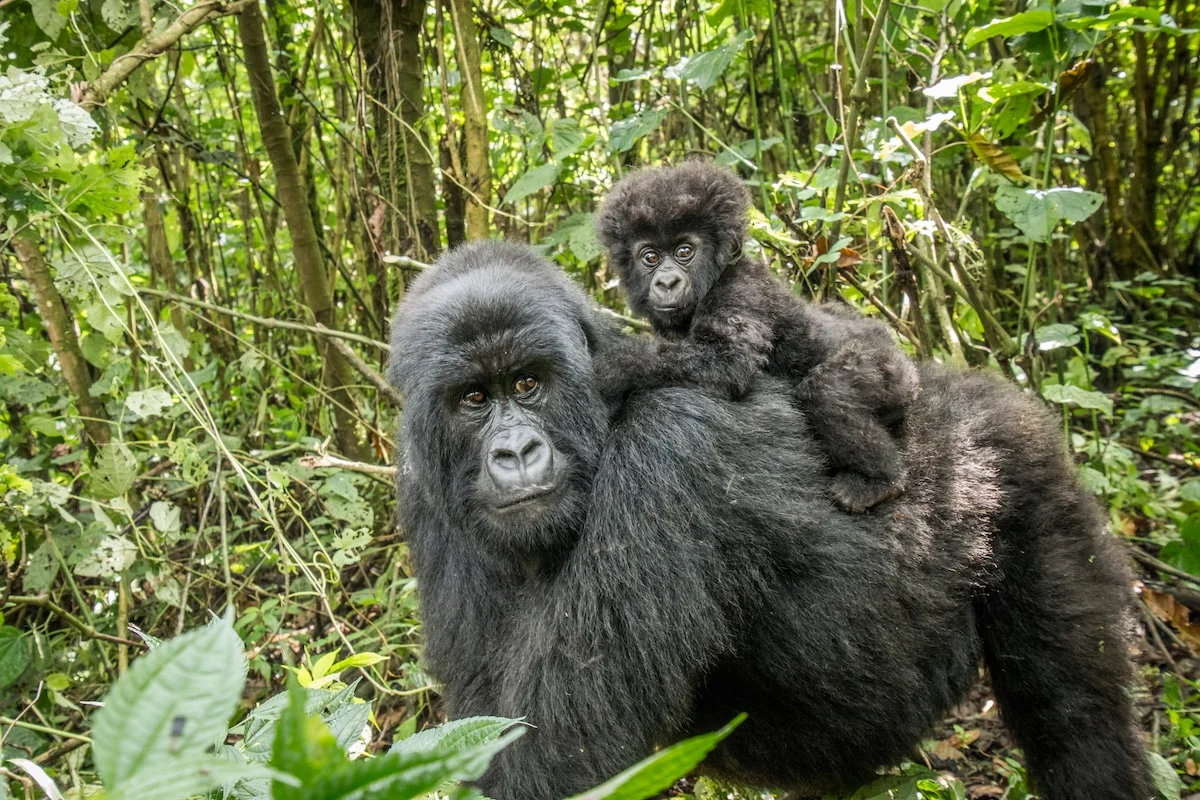
The Democratic Republic of the Congo (DRC), a nation synonymous with unparalleled ecological wealth, stands at a precarious crossroads. As the global community scrambles to meet climate targets and halt the accelerating rate of biodiversity loss, the DRC government has initiated an aggressive expansion of its fossil fuel sector, effectively opening more than half of its landmass to oil and gas exploration.
This decision, which threatens some of the planet’s most critical carbon sinks and irreplaceable wildlife habitats, has ignited a firestorm of opposition from environmental scientists, human rights advocates, and local Indigenous communities. A new report from Earth Insight, Forests to Frontlines: Oil Expansion Threats in the DRC, paints a harrowing picture of what is at stake: the destruction of millions of acres of primary rainforest, the displacement of millions of people, and a massive, irreversible blow to the global fight against climate change.
The Scope of the Threat: A Nation Auctioned Off
The DRC is home to the second-largest tropical rainforest on Earth, a vital lung for the planet. It shelters an astonishing array of biodiversity, including endangered mountain gorillas, eastern lowland gorillas, bonobos, forest elephants, and thousands of endemic bird and plant species.
According to the Earth Insight report, the government’s latest move involves an auctioning round for 52 new oil blocks, which, when combined with three previously awarded concessions, threatens roughly 64 percent of the country’s pristine forest cover. In total, 53 percent of the country is now effectively designated for oil and gas development. This footprint includes 165.1 million acres of intact tropical forest, 20.5 million acres of protected areas, and 21.3 million acres of designated "Key Biodiversity Areas."
Perhaps most alarmingly, the drilling plans encroach directly upon the Cuvette Centrale, the world’s largest tropical peatland complex. These peatlands are a global treasure, storing approximately 30 gigatons of carbon—the equivalent of several years of total global fossil fuel emissions. Disturbing this soil to facilitate drilling could trigger a catastrophic release of greenhouse gases, undermining the very climate stability the world is struggling to maintain.
A Chronology of Escalation
The current crisis did not emerge overnight; it is the culmination of a multi-year pivot toward fossil fuel dependency that has defied international conservation trends.
- Pre-2022: The DRC maintained a complex relationship with its natural resources, balancing economic development needs with the stewardship of its massive forest assets.
- 2022: The Congolese government launched a controversial auction for 30 oil and gas blocks. This move was met with significant international outcry, as many of these blocks overlapped with protected national parks and peatlands. Despite the backlash, the government proceeded, signaling a shift in national priorities.
- 2023–2024: During this period, concerns grew regarding the transparency of the licensing process. Civil society organizations in the DRC, such as CORAP (Coalition des Organisations de la Société Civile pour le Suivi des Reformes et de Action Publique), began documenting the impacts on local land rights and the lack of consultation with forest-dependent communities.
- July 2025: The current crisis reached a fever pitch with the expansion of the licensing round. The new auction covers a broader geographic area than the 2022 effort, directly threatening the newly established Kivu-Kinshasa Green Corridor—a project meant to foster ecological connectivity and sustainable development.
The Human Cost: 39 Million Lives in the Balance
While the environmental implications are stark, the human cost is perhaps more profound. It is estimated that approximately 39 million Congolese citizens reside within the areas slated for oil and gas development. These include numerous Indigenous and forest-based communities whose cultural identities, livelihoods, and survival are inextricably linked to the health of the rivers and forests of the Congo Basin.
For these communities, the forest is not merely a carbon store or a biodiversity hotspot; it is a grocery store, a pharmacy, and a spiritual home. The introduction of industrial oil infrastructure—roads, pipelines, and extraction facilities—would inevitably fragment these lands, lead to pollution of vital water sources, and trigger human rights violations.
Pascal Mirindi, a campaign coordinator for Notre Terre Sans Pétrole (Our Land Without Oil), captured the sentiment of the local opposition in a recent statement: "Imagine: 39 million Congolese people… and 64% of our forests could be directly affected. Where is the logic? Where is the coherence? We are reminding our leaders that the Congolese people are the primary sovereign. We will not remain silent while certain people organize themselves to sell off our future."

Official Perspectives and the Contradiction of Policy
The DRC government has frequently framed its pursuit of oil as a necessary step for economic development and poverty alleviation. Officials argue that the nation has a right to capitalize on its natural resources, much like Western nations did during their own industrialization phases.
However, critics point to a deep-seated contradiction in this policy. The government is simultaneously promoting the Kivu-Kinshasa Green Corridor—a project designed to protect biodiversity and sequester carbon—while auctioning off 72 percent of that very corridor for oil drilling. This duality has led international observers to question the credibility of the DRC’s climate commitments. If the government’s actions undermine the integrity of its own conservation projects, its potential for sustainable, "green" development is severely compromised.
Earth Insight’s report highlights this hypocrisy: "Rather than steering away from fossil fuel expansion, the government has dramatically widened the reach of oil concessions, putting at risk the ecological integrity of the Congo Basin."
Implications for the Global Climate
The implications of the DRC’s drilling plans extend far beyond its borders. The global climate system relies on the Congo Basin to act as a heat regulator and carbon sponge. If the Cuvette Centrale is degraded, the risk of "runaway" climate change increases.
Furthermore, the expansion signals a dangerous trend in global resource management. If a nation holding such high-value ecological assets decides that extraction is more profitable than preservation, it provides a precedent for other resource-rich developing nations to abandon conservation in favor of short-term fossil fuel revenue.
The international community, including donor nations and climate financiers, faces a significant challenge. The Earth Insight report calls for:
- Immediate Cancellation: The 2025 licensing round must be halted, and all future hydrocarbon expansion should be abandoned.
- Respect for Human Rights: The land and resource rights of Indigenous Peoples and local communities must be legally recognized and upheld.
- Financial Realignment: International donor support must be strictly tied to tangible biodiversity and climate commitments, ensuring that financing for the DRC supports sustainable development rather than fossil fuel extraction.
- Governance Reform: Environmental decision-making must be decentralized, ensuring that civil society and local community members have a seat at the table and a mechanism to hold the government accountable.
Conclusion: A Turning Point
The situation in the Democratic Republic of the Congo is more than a local environmental dispute; it is a test of whether the global community can truly value the preservation of the planet’s most critical ecosystems over the expansion of the fossil fuel industry.
As Anna Bebbington, an Earth Insight research manager, noted, "Oil and gas development in these fragile ecosystems would have devastating impacts on biodiversity, communities, land rights and the global fight against climate change."
The path forward requires a shift in perspective. True prosperity for the DRC lies in protecting its most valuable assets—its forests, its water, and its people—rather than selling them off for a commodity that the world is actively trying to phase out. The voices of the 39 million people living in the shadow of these oil blocks, and the integrity of the second-largest rainforest on the planet, deserve to be prioritized. Without urgent intervention and a reversal of these licensing policies, the world risks losing a crown jewel of its natural heritage, and with it, a critical shield against the worst impacts of climate change.

 Laily UPN
 Lina Hope
 Iffa Jayyana
 Rifan Muazin
 Suro Senen