
 Pevita Pearce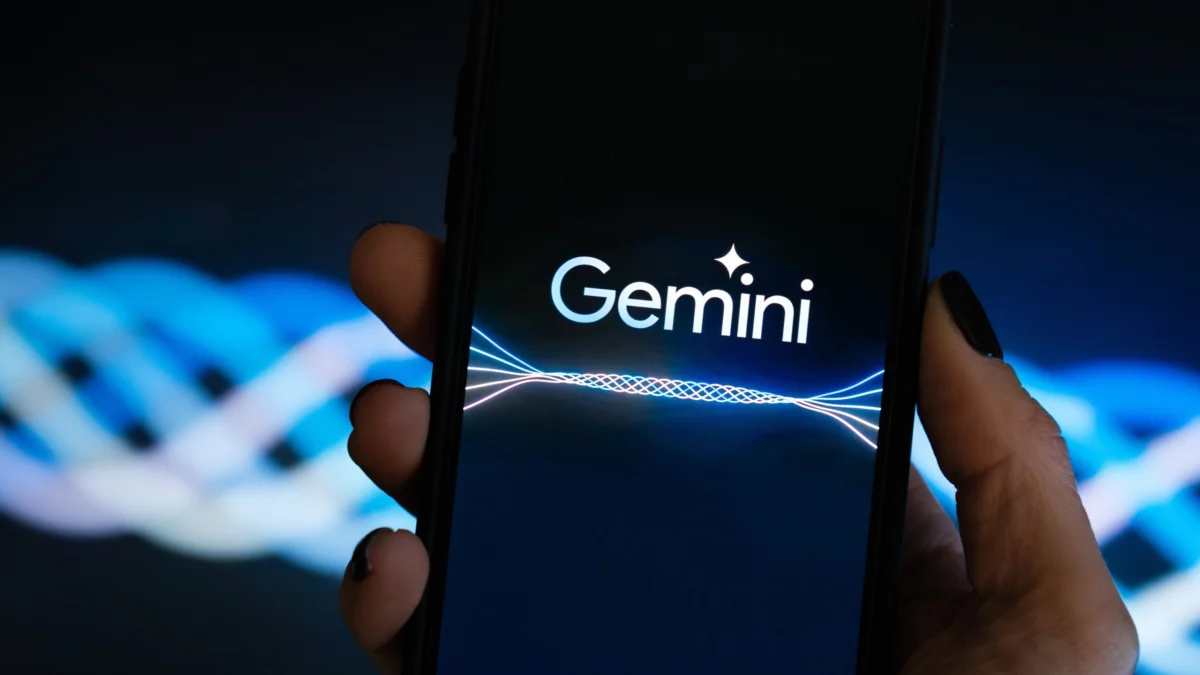
The race to define the future of corporate productivity has shifted. For the past two years, the technology industry has been preoccupied with the "chatbot era"—an age of Large Language Models (LLMs) that could draft emails, summarize documents, and generate code. However, at the "Gemini at Work 2026" event this week, Google signaled a definitive pivot toward the next frontier: the era of the autonomous, agentic workforce.
Google’s latest announcement introduces a "universal agent" designed not merely to assist, but to operate. By delegating complex, multi-step tasks to AI that can navigate enterprise systems, choose optimal underlying models, and coordinate workflows across platforms, Google is making a strategic play to become the primary operating system for the modern enterprise.
The Shift to Autonomous Orchestration
Google’s vision, as outlined by Google Cloud CEO Thomas Kurian, centers on the idea that work should no longer be a series of manual inputs. "You give it objectives, not instructions," Kurian stated during his keynote. "Work now starts in the prompt window."
This new Gemini enterprise agent is designed to function as an autonomous entity. Unlike static chatbots, these agents possess dedicated identities, complete with their own @agents.company.com email addresses and persistent storage. They are capable of functioning as digital project managers or analysts, operating across sessions, days, and varying business responsibilities.
Perhaps most significantly, the agent operates in an "omnipresent" fashion. It can be accessed via command-line interfaces (CLIs), integrated into third-party applications, or deployed as a "headless" agent that works in the background without a user interface. This ubiquity allows the agent to span the divide between Google Workspace, Microsoft 365, Slack, and external enterprise software, effectively acting as a glue that binds disparate corporate systems together.
Chronology of the Agentic Evolution
The industry’s move toward agents did not happen overnight. To understand the significance of Google’s announcement, one must look at the progression of generative AI over the last few years:
- 2023: The Chatbot Foundation. The industry focused on "Human-in-the-loop" interfaces. LLMs like ChatGPT and early versions of Gemini served as sophisticated autocomplete tools for text and code.
- 2024: Integration and RAG. The focus shifted to Retrieval-Augmented Generation (RAG). AI was given access to internal corporate databases, allowing models to provide more accurate, company-specific answers.
- 2025: Tool Use and Automation. Models began to gain the ability to "call" tools. They could trigger external APIs, send emails, or update calendar entries.
- 2026: The Agentic Era. With this week’s Gemini update, the focus has shifted to orchestration. Agents can now plan long-term tasks, spawn sub-agents to handle specific sub-components of a project, and manage complex, multi-day workflows without constant human intervention.
Supporting Data: Why Choice Matters
One of the most disruptive aspects of Google’s new architecture is its model-agnostic approach to tasks. Google is moving away from the "one size fits all" model strategy. The Gemini agent is programmed to evaluate the complexity of a task and select the most efficient model for the job—whether that is a high-powered Gemini Ultra model, a more efficient mid-tier model, or even external offerings like Anthropic’s Claude.
"The best model for the task is not always the largest one," Thomas Kurian noted. By separating the agentic layer from the LLM layer, Google is effectively commoditizing the underlying AI models. This provides a clear cost-benefit advantage to enterprises, allowing them to optimize their spending by routing simple tasks to smaller, cheaper models while reserving expensive, high-intelligence models for complex analytical work.
Independent analysts suggest this is a "unique value proposition." By allowing enterprises to use whatever model makes sense for a specific workload, Google is positioning itself as a neutral arbiter of AI quality, rather than just a model vendor.
Implications for the C-Suite
The introduction of autonomous agents brings both massive potential and significant risk. As organizations begin to deploy these systems, the role of the CIO and CISO is undergoing a fundamental change.
Governance and the "Off-the-Rails" Risk
Mahmoud Ramin, a research director at Info-Tech Research Group, emphasizes that the primary challenge for the coming year will be governance. "As organizations unleash the power of agent autonomy, it raises the pivotal and non-negotiable requirement of enforcing governance," Ramin noted.
When an agent is granted the power to communicate with other agents and access sensitive databases, the "blast radius" of a potential error increases exponentially. Unlike a human employee who might make a single, isolated mistake, an autonomous agent could theoretically propagate a faulty logic across an entire enterprise workflow in seconds.
To mitigate this, Google has built in strict permission settings. Enterprise-dictated security protocols, audit trails, and identity management are non-negotiable components of the Gemini agent architecture. The goal is to ensure that while the agent has autonomy, it remains within a "sandbox" of organizational policy.
The Battle for the "Gatekeeper" Role
Carmi Levy, an independent tech analyst, suggests that the real prize of the AI era is not the model itself, but the "agent layer."
"The agent layer could be the ultimate prize of the AI era, and it largely explains why every vendor announcement seems to essentially claim the same thing," Levy said. By embedding itself into the workflow—managing the emails, the spreadsheets, the Slack channels, and the code repositories—Google is attempting to become the "gatekeeper" of the new enterprise operating system.
If Google succeeds in becoming the primary interface through which employees interact with their data, they will have successfully shifted the value of the cloud from "storage and compute" to "automated intelligence orchestration."
Official Responses and Industry Outlook
Google’s strategy is clearly designed to appeal to existing Google Workspace customers, who can leverage their existing investment in the Google ecosystem to bridge the gap toward AI-native workflows. However, the company faces an uphill battle in convincing skeptical IT decision-makers that these agents are safe for mission-critical operations.
"Whether CIOs and CISOs can trust it to run mission-critical business processes indefinitely without doing something stupid enough to generate damaging headlines is another story altogether," Levy remarked.
Despite these concerns, the shift appears inevitable. As competitors like Microsoft, OpenAI, and Meta continue to refine their own agentic offerings, the market is moving toward a future where "work" is defined by the objectives set in a prompt box rather than the manual keystrokes of a human.
For the enterprise, the message from the "Gemini at Work 2026" event is clear: the era of the human-led task is yielding to the era of the agent-led workflow. The companies that thrive will be those that can successfully balance the immense productivity gains of autonomous agents with the ironclad governance required to keep those agents under control.
As we look toward the remainder of the year, the focus will likely shift from what these agents can do to how we can safely govern what they will do. The race for the AI infrastructure layer has officially entered its most intense phase, and Google’s move to act as an open, orchestrating agent represents a significant escalation in the industry’s most consequential competition.

 Nila Kartika Wati
 Nana Wu
 Basiran
 Neng Nana
 Iffa Jayyana
 Raul Delapena Setiawan
 Rifan Muazin
 Asro
Asro