
 Neng Nana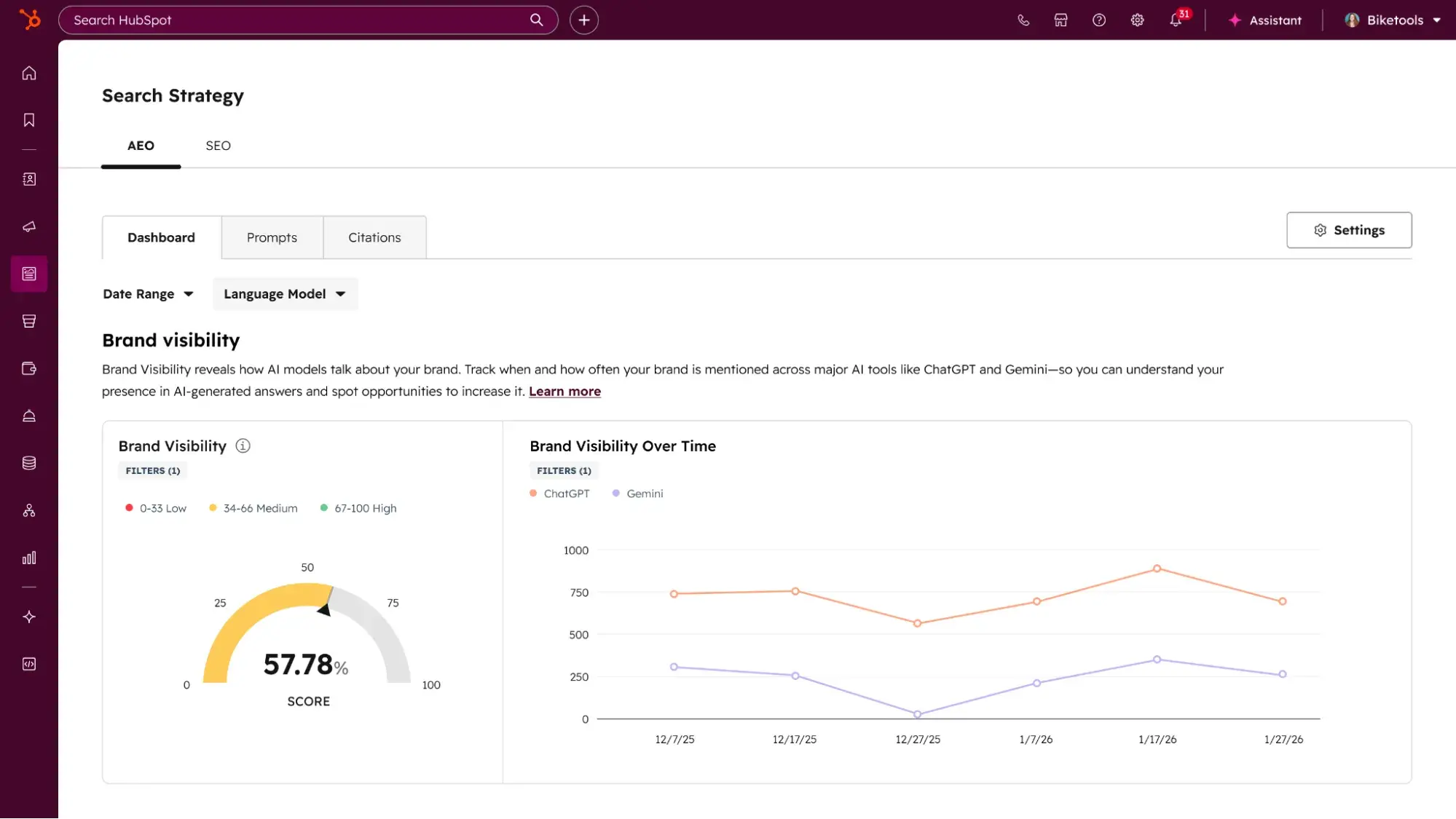
The digital marketing landscape is undergoing a seismic shift. For decades, the industry has been anchored by Search Engine Optimization (SEO)—a discipline focused on maneuvering content to the top of traditional blue-link search results. Today, that foundation is being challenged by the rise of Answer Engine Optimization (AEO). As AI-powered search experiences like ChatGPT, Perplexity, and Google’s AI Overviews become the primary interface for consumer discovery, the rules of engagement are being rewritten.
For marketing agencies, this transition is no longer a theoretical trend; it is a client-mandated reality. Agency partners are increasingly reporting that clients are asking pointed questions: "Why are my competitors appearing in AI-generated answers while we are not?" and "How is our agency future-proofing our brand against the decline of traditional organic traffic?"
For agencies, the challenge is clear: How do you deliver AEO at scale without collapsing under the weight of manual data management?
The New Search Paradigm: Understanding the AEO Shift
To understand the urgency behind AEO, one must look at the fundamental change in how information is retrieved. Traditional SEO relies on the "click-through" model, where a user searches, evaluates a list of links, and visits a domain. AEO, by contrast, relies on the "answer" model. AI engines crawl, synthesize, and present a definitive answer directly on the results page.
This shift creates a "winner-take-all" dynamic. If your brand is not cited as a source in an AI-generated summary, you effectively disappear from that user’s journey.

Chronology of the Search Transition
- 2022 and Prior: The "Golden Age" of SEO, defined by keyword density, backlink volume, and technical site health as the primary drivers of traffic.
- Late 2022 – 2023: The launch of generative AI tools brings the concept of "hallucination-free" information retrieval to the forefront. Brands realize that being "the answer" is more important than being "the result."
- 2024 – Present: Agencies begin pivoting service models from traffic-volume-based KPIs to visibility-based metrics, focusing on citations, brand sentiment in AI models, and share-of-voice within LLM outputs.
The Scalability Bottleneck
For a boutique agency managing five clients, AEO might be a manual task performed in spreadsheets. For a mid-to-large agency managing twenty or more portfolios, however, manual management is a death knell for profitability.
The Hidden Costs of "Manual" AEO
- Tool Sprawl: Teams often attempt to patch together visibility trackers, AI crawlers, and reporting tools. This "Frankenstein" stack creates data silos, forcing analysts to spend more time aggregating data than interpreting it.
- Inconsistent Benchmarking: Without a centralized source of truth, "Share of Voice" for Client A may be measured differently than for Client B, leading to inaccurate performance reports and client dissatisfaction.
- The "One-Off" Trap: Many agencies currently treat AEO as an ad-hoc project. This is unsustainable. Without a repeatable infrastructure, every client engagement feels like a new, high-effort pilot program.
To move toward a sustainable service model, agencies must stop thinking of AEO as a task and start treating it as an integrated layer of their existing SEO and content strategy.
Supporting Data: The Impact of Visibility
The business case for AEO is increasingly supported by performance data. Internal data from HubSpot suggests that organizations that actively optimize for AEO generate 2.6x more leads than those relying solely on legacy SEO practices.
This disparity exists because AI users tend to be in a higher-intent "discovery" phase. When an AI engine cites a brand, it does so with an implicit endorsement of authority. This "authority transfer" is significantly more powerful than a simple ranking in a list of ten links.
Key Performance Indicators (KPIs) for the AEO Era:
- Brand Visibility Score: An aggregate measurement of how often a brand is mentioned in response to industry-specific queries.
- Citation Frequency: The number of times an AI engine references the brand’s domain as a factual source.
- Share of Voice (AI): The percentage of time a brand is mentioned in response to high-volume, non-branded search queries compared to competitors.
Infrastructure: Building a Repeatable Process
To scale, agencies require a unified platform that combines monitoring, content optimization, and reporting. The goal is to move from reactive "firefighting" to proactive "visibility management."

1. Unified Monitoring
Centralizing data into a single dashboard—such as the HubSpot AEO Brand Visibility Dashboard—is the first step. By tracking visibility scores and citations in one place, agencies can spot trends across their entire client portfolio. If a specific client’s visibility drops in the "financial services" vertical, the agency can immediately identify if the issue is a technical site error or a broader content gap.
2. The Content-to-Citation Pipeline
Once the visibility gap is identified, the agency must produce content that satisfies the logic of AI engines. This requires a shift in writing style. AI engines prefer:
- Structured Data: Clearly defined headers and schema markup that help machines understand the hierarchy of information.
- Authoritative Tone: Content that provides direct answers to specific, long-tail questions.
- Contextual Relevance: Aligning content with the specific entity relationships the AI is currently learning.
Using tools like HubSpot’s AEO Recommendations, agencies can bridge the gap between "what the AI sees" and "what the writer needs to create." This transforms the content creation process from a creative guessing game into a data-backed roadmap.
Implications for Agency-Client Relationships
The move toward AEO forces a maturation of the agency-client relationship. Clients no longer want to hear about "keyword rankings" alone; they want to know how their brand is being represented by the new intermediaries of the web.
The New Reporting Standard
Agencies must pivot their monthly review meetings to include:

- AI Visibility Trends: Showing the client that their brand is gaining traction in AI conversations.
- Competitor Benchmarking: Using hard data to show why a competitor is winning a specific category, and the specific content strategy needed to displace them.
- ROI Correlation: Tying the increase in AI visibility directly to the growth in lead volume and site traffic.
By making reporting part of the automated workflow, agencies remove the manual burden of creating monthly presentations, allowing account managers to focus on high-level strategy and client retention.
Expert Perspectives: The Future of the Industry
Industry analysts suggest that we are reaching a "tipping point." According to market trends, firms that fail to adapt their infrastructure by the end of the next fiscal year will find themselves at a significant disadvantage.
"The agencies that will win in the next five years are not necessarily the ones with the best writers or the best coders," says a lead digital strategist. "They are the ones who have built the best systems. If you are still pulling data manually, you are competing against agencies that have automated their entire intelligence loop. It’s a race to the most efficient process."
The consensus is clear: AI search is not a passing phase. It is the next evolutionary step of the internet. The infrastructure to deliver it efficiently is the primary differentiator between an agency that is merely "surviving" the transition and one that is thriving in it.
Conclusion: Systemizing for Success
The transition to AEO is arguably the most significant disruption in the history of digital marketing. However, for agencies, it is also a tremendous opportunity.

By building a repeatable system—one that utilizes integrated platforms to monitor, create, and report—agencies can turn a potential threat into a core service offering. Clients are already asking for AEO. They are looking for partners who understand the mechanics of the AI-driven web and can provide a roadmap to dominance.
The question for agency leadership is no longer whether to invest in AEO, but how quickly they can build the infrastructure to scale it. The firms that prioritize this systemization now will define the standard for the next decade of digital marketing. In a world of generative search, the most valuable asset an agency can possess is not just data, but a scalable, automated system that turns that data into sustained brand growth.

 Suro Senen
 Raul Delapena Setiawan
 Laily UPN
 Iffa Jayyana
 Rifan Muazin
 Lina Hope
 Lina Irawan