
 Basiran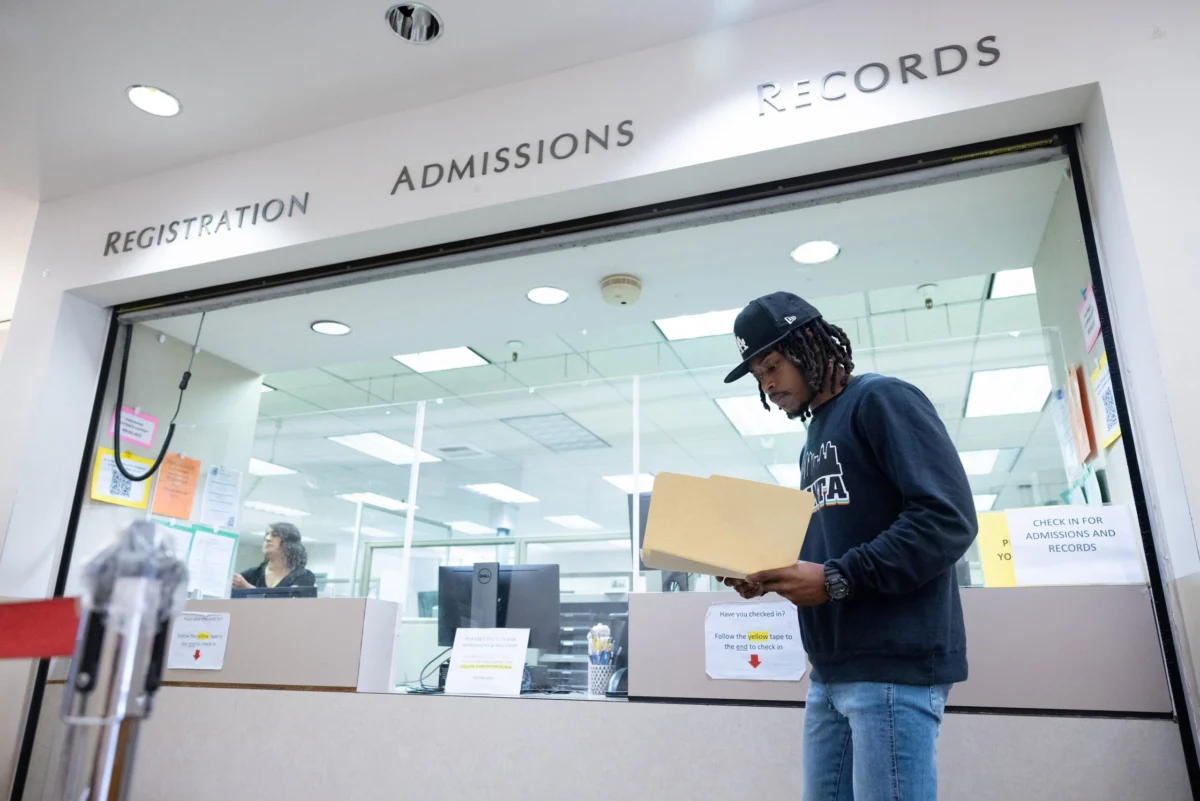
Higher education in the United States is currently navigating a profound existential crisis. For decades, the sector relied on a foundation of implicit trust: families would invest significant financial resources and four years of a young adult’s life on the faith that a university degree was a reliable ladder to middle-class stability and career longevity. Today, that foundation is fracturing.
As prospective students and their families gain access to unprecedented amounts of third-party data, the "marketing-first" approach once employed by admissions offices is failing to keep pace with the scrutiny of the digital age. Institutions that once controlled their own narratives now find themselves competing with a sprawling ecosystem of public data, independent rankings, and firsthand accounts from alumni. The central question for colleges is no longer how they describe themselves, but whether their claims hold water under the cold, hard lens of empirical evidence.
The Asymmetry of Information: Front-End vs. Back-End
The current landscape of higher education transparency is characterized by a stark, persistent asymmetry. Admissions departments are marvels of modern communication; they offer high-gloss brochures, immersive virtual tours, and granular details about campus life, faculty accolades, and degree requirements. This is the "front end"—the sales funnel designed to drive enrollment.
However, the "back end"—the post-graduation reality—is often shrouded in shadow. While accreditors and state agencies typically track basic metrics like first-year placement or completion rates, there is a systemic failure to capture the long-term professional trajectory of graduates. Most institutions operate as if their responsibility ends on commencement day, failing to track where alumni land three, five, or ten years after leaving campus.
This is more than a technical oversight; it is a fundamental trust problem masquerading as a data problem. Families cannot evaluate the value proposition of a degree if the institution is either unable or unwilling to provide evidence of long-term return on investment (ROI). When a college promises that a specific program leads to career mobility, that claim is only as credible as the longitudinal data supporting it.
A Chronology of the Trust Deficit
The erosion of public confidence in higher education did not happen overnight. To understand the current climate, one must look at the historical evolution of the relationship between the academy and the public.
- The Post-War Boom (1950s–1980s): During this era, higher education enjoyed nearly unchallenged prestige. A degree was widely considered an automatic ticket to professional success. Trust was institutional and absolute.
- The Rise of the "Consumer" Model (1990s–2010s): As tuition costs began to outpace inflation, students shifted from being viewed as scholars to "consumers." Universities began acting more like corporations, focusing on branding and competitive marketing. This period saw the birth of the modern admissions marketing machine.
- The Digital Transparency Awakening (2015–Present): The proliferation of tools like the U.S. Department of Education’s College Scorecard and independent financial health trackers changed the game. Suddenly, families could look up median earnings by program and student debt loads. The "blind faith" era effectively ended.
- The Current Crossroads (2026): We are now at a tipping point where traditional brand prestige is no longer a substitute for verifiable outcomes. The institutions currently thriving are those that have begun to embrace "Radical Transparency," proactively sharing both their successes and their failures.
The Data Gap: What Institutions Aren’t Telling You
Genuine transparency requires an institution to track metrics that many currently ignore. Income growth, career pivots, and the ability of a degree to adapt to changing industry demands are the true indicators of a program’s success. Yet, these data points rarely appear on institutional websites.
The Problem with Selective Success
Marketing teams often rely on "anecdotal excellence"—the heartwarming story of a single graduate who landed a dream job at a Fortune 500 company. While these stories are technically true, they do not represent the aggregate experience of the student body. Relying on these outliers to define an institution’s value is a marketing exercise that actively obscures the truth.
Bridging the Knowledge Gap
To restore trust, institutions must undergo a systemic audit of their internal tracking. This involves:

- Breaking Down Silos: Currently, admissions, career services, and alumni relations often function as disparate units. A cohesive data strategy requires these departments to share information so that the university understands the student journey from enrollment through mid-career.
- Publishing Multi-Year Data: Success is a marathon, not a sprint. Universities should track career outcomes over a five-to-ten-year horizon to demonstrate how their credentials provide sustained value.
- Contextualizing the Data: Transparency is not just about dumping raw numbers into a spreadsheet. It is about providing the context that allows families to compare institutions fairly, acknowledging the limitations of data while highlighting the trends that matter.
Official Responses and the Resistance to Change
Resistance to this level of transparency is common among institutional leadership. Many presidents fear that publishing data—especially in areas where an institution may underperform—will hurt their competitive standing. There is also the logistical challenge: many universities simply do not have the IT infrastructure to aggregate this type of longitudinal data.
However, the tide is turning. Education leaders are increasingly acknowledging that the lack of transparency is becoming a liability. Some institutions, particularly community colleges and regional universities, have begun to lead the charge. Because these schools are often deeply integrated into their local labor markets, they have a unique advantage: they can see exactly how their graduates move through local industry. They are discovering that being honest about outcomes—and showing how they are working to improve them—actually builds more institutional loyalty than hiding the numbers behind a wall of prestige.
The Implications: Why Transparency is the New Competitive Advantage
The shift toward transparency is not merely a moral imperative; it is a strategic necessity for survival in a shrinking market. As the demographic cliff approaches—a period of fewer traditional-age college students—the institutions that survive will be those that have successfully built a brand based on integrity.
1. The Death of Brand Prestige
The "prestige trap"—relying on a name or a century-old reputation—is losing its efficacy. In an era where students and parents can query data, a degree from an elite institution with poor outcomes will be scrutinized more heavily than ever before. Conversely, a less "famous" institution that can prove high wage growth and career stability will gain significant market share.
2. Lifelong Engagement
The current disconnect between alumni and their alma maters is a missed opportunity. If a university only reaches out for donations, it reinforces the perception that the institution is a "taker." If, however, the university provides ongoing career support, stackable micro-credentials, and professional networking throughout a graduate’s life, the "value" of the degree becomes a recurring, tangible benefit.
3. Accountability as a Value Proposition
Institutions that adopt radical transparency demonstrate a level of confidence in their product. By saying, "Here is our data—the good, the bad, and the work we are doing to improve," they signal to the market that they are partners in the student’s success. This honesty acts as a powerful filter, attracting students who are serious about their futures and who will, in turn, become more successful alumni.
Conclusion: A Higher Bar for the Future
Higher education is currently setting a higher bar for itself, though perhaps not by choice. The pressure from families, policymakers, and the public is mounting, and the old excuses—that education is "too complex to measure" or that "brand reputation speaks for itself"—no longer satisfy a public that is increasingly financially literate and skeptical of institutional claims.
Moving forward, the successful institution will be one that treats transparency not as a chore, but as its primary product. It is a commitment to the idea that an institution’s duty to its students does not end when they cross the stage at graduation. By breaking down data silos, embracing the realities of long-term career outcomes, and communicating with candor, colleges can rebuild the trust that has been lost.
The future belongs to the institutions that are brave enough to let the light in. Those that continue to operate in the shadows will likely find that, in an age of total information, their silence speaks volumes.


 Sagoh
Sagoh
 Jia Lissa
 Laily UPN
 Iffa Jayyana
 Rifan Muazin
 Suro Senen
 Lina Hope
 Lina Irawan