
 Neng Nana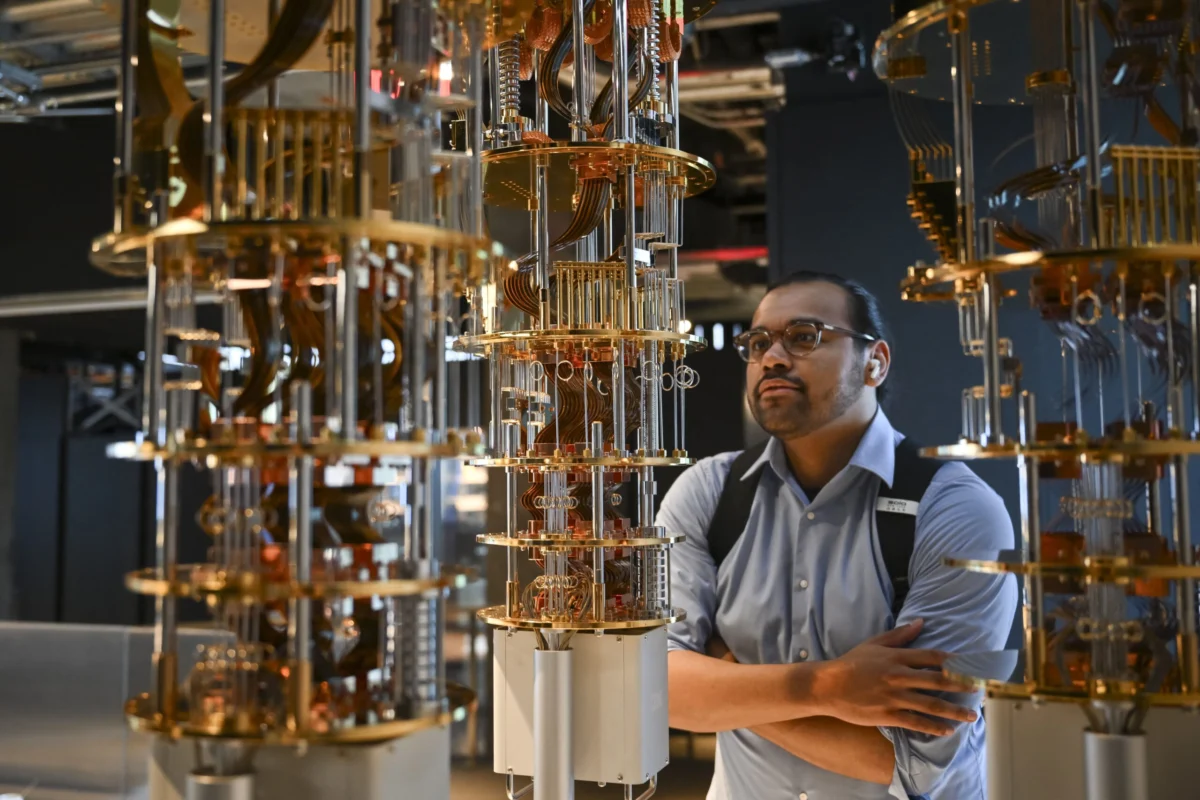
While the halls of Congress and the public consciousness remain fixated on the existential debates surrounding artificial intelligence—specifically whether future models might escape human oversight—a more immediate and mathematically certain threat is quietly accelerating. Quantum computing, a field once relegated to theoretical physics, is moving toward a tipping point that threatens to dismantle the very foundation of global digital security.
Unlike the speculative risks associated with AI, the quantum threat is tangible: the arrival of a cryptographically relevant quantum computer (CRQC) would render current public-key encryption, which protects everything from classified military communications to personal financial records and state secrets, essentially useless. As private firms and state actors race to harness quantum mechanics, the U.S. government is facing a critical window to transition its infrastructure to post-quantum cryptography (PQC) before the "locks" of the digital age are picked by machines capable of processing data at speeds previously thought impossible.
The Mechanics of the Quantum Threat
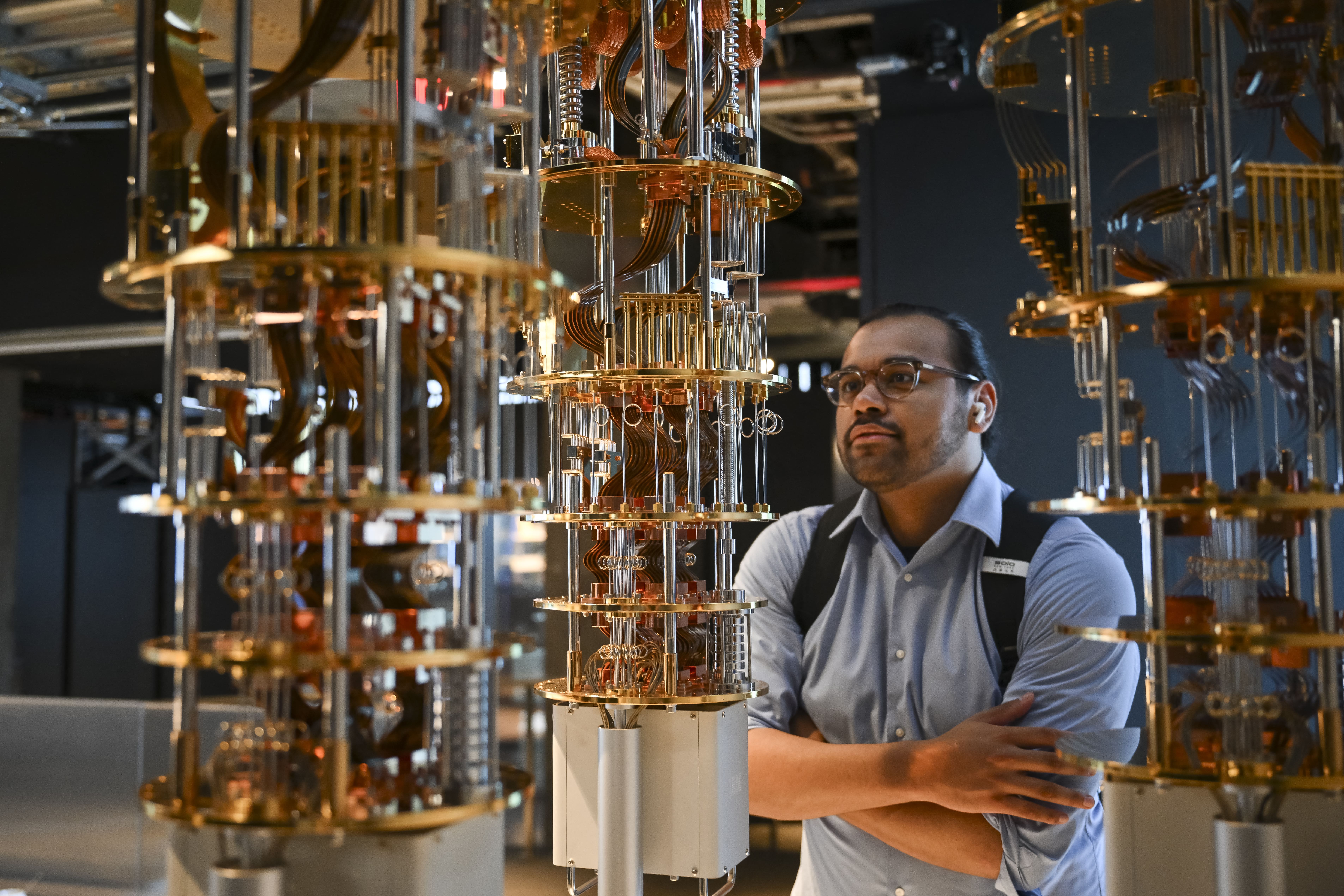
Quantum computers utilize qubits, which, unlike the binary bits of classical computers, can exist in multiple states simultaneously due to the principles of superposition and entanglement. This allows them to solve specific classes of complex mathematical problems in minutes that would take today’s most powerful supercomputers millions of years to calculate.
The primary danger lies in algorithms, such as Shor’s algorithm, which can efficiently factor large prime numbers—the mathematical bedrock upon which current encryption standards like RSA and ECC are built. When a sufficiently powerful quantum machine is realized, the encryption protecting global banking, national security, and critical infrastructure will be rendered obsolete overnight.
The "Harvest Now, Decrypt Later" Reality
Perhaps the most pressing concern is not the date a quantum computer comes online, but the data being intercepted today. Adversaries are currently engaged in a strategy known as "harvest now, decrypt later." They siphon off massive amounts of encrypted traffic—military communications, intelligence reports, and proprietary corporate data—and store it indefinitely. Once a functional quantum computer is available, these adversaries will be able to retroactively decrypt this sensitive information, exposing decades of accumulated secrets.
Chronology of the Transition
The U.S. government has recognized the urgency, shifting from research-based observation to active implementation mandates.
- 2022: The National Security Agency (NSA) formally identified the transition to quantum-resistant algorithms for National Security Systems, establishing the initial framework for CNSA 2.0 standards.
- 2024–2025: Research breakthroughs, including findings from organizations like the Caltech spinout Oratomic, demonstrated that the physical resources required to build a cryptographically relevant quantum computer are significantly lower than previously estimated.
- June 2026: The White House issued a landmark directive ordering federal agencies to adopt post-quantum cryptography. High-value systems are mandated to transition to PQC for key establishment by the end of 2030 and for digital signatures by the end of 2031.
- 2029 (Projected): Industry leaders, including Google, have signaled this year as a primary target for achieving operational post-quantum cryptographic transitions, setting a de facto deadline for the broader tech sector.
Supporting Data: The Resource Shift
For years, the consensus was that quantum decryption was a distant, multi-decade goal. Recent research, however, has compressed that timeline. To use a rough analogy: if researchers once believed that cracking a specific encryption standard would require the power equivalent to every lightbulb in Chicago, updated models suggest the task could eventually be accomplished with the energy needed for a single office building.
Furthermore, the geopolitical landscape adds urgency. China’s 15th Five-Year Plan explicitly identifies quantum technology as a pillar of future industry. Reports from the U.S.-China Economic and Security Review Commission indicate that Beijing is investing billions—with three state-backed regional venture funds totaling approximately $17.5 billion—to accelerate its quantum capabilities. While the specific allocation to quantum remains obscured, the strategic intent is clear: to achieve quantum supremacy as a tool of national power.
Official Responses and Strategic Policy
The federal response is now multi-pronged, focusing on both policy mandates and technical standards. The NSA’s move toward CNSA 2.0 is designed to ensure that the most sensitive national security communications are hardened against future quantum attacks.
However, policy experts and lawmakers argue that these mandates are only the beginning. The challenge lies in the "long tail" of legacy systems. Many government networks rely on hardware that is decades old; replacing or upgrading these platforms is a logistical nightmare that requires significant congressional funding and oversight.
The Need for Legislative Action
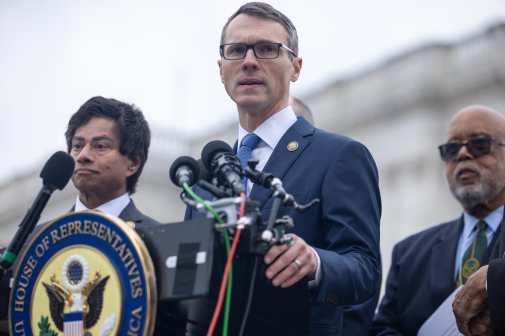
Legislators, particularly those on the Select Committee on the Strategic Competition Between the United States and the Chinese Communist Party, have begun to sound the alarm. The current consensus is that the U.S. government cannot wait for a "quantum event" to occur before taking action.
Key recommendations for Congress include:
- Comprehensive Exposure Assessment: The intelligence community must conduct a top-to-bottom audit of its exposure to quantum decryption, identifying which data sets are most at risk from the "harvest now" threat.
- Defense Infrastructure Overhaul: The Department of Defense must prioritize the modernization of satellites, undersea cables, and military communication networks, ensuring they are "quantum-agile"—capable of receiving software updates to encryption protocols without requiring total hardware replacement.
- Support for Critical Infrastructure: The private sector, particularly in banking, healthcare, and energy, needs federal guidance and resources to migrate their systems. Unlike the federal government, these sectors often lack the internal expertise to navigate the complex PQC transition.
Implications: A New Era of Security
The transition to post-quantum cryptography is not merely an IT upgrade; it is a fundamental shift in how the modern world secures its existence.
Beyond Encryption
While quantum-resistant algorithms are essential, they are not a silver bullet. Experts suggest that a "defense-in-depth" approach is required. This includes integrating hardware-based protections and emerging physical or molecular authentication technologies. As computing power evolves, so too must the layers of defense. The goal is to build a modular, agile security architecture that can adapt to new mathematical discoveries.
Avoiding Historical Mistakes
America has a history of reacting too slowly to technological shifts. The failure to grasp the implications of social media in foreign influence campaigns or the slow recognition of cyber-espionage in the early 2000s serve as cautionary tales. The quantum transition offers the United States a chance to be proactive.

If the nation waits until a quantum computer is fully operational to begin hardening its systems, it will be too late. The vulnerability of data that must remain secret for decades—such as nuclear codes, diplomatic intelligence, and individual genomic data—demands a wartime-level sense of urgency.
Conclusion: The Race Against Time
The uncertainty of the "quantum timeline"—the exact date when a machine becomes powerful enough to break modern encryption—is not an excuse for delay. It is an argument for immediate action. Congress, the private sector, and the intelligence community must view the quantum transition as a race for technological sovereignty.
As we stand on the precipice of the quantum age, the objective is clear: maintain the integrity of the digital world before the walls of current encryption crumble. The strength of the United States has historically been its ability to innovate, master, and deploy new technologies to safeguard the republic. That capability is being tested once again. The question is no longer whether quantum computers will change the world, but whether we will be prepared for them when they do.


 Iffa Jayyana
 Rifan Muazin
 Basiran
 Raul Delapena Setiawan
 Asro
Asro