
 Laily UPN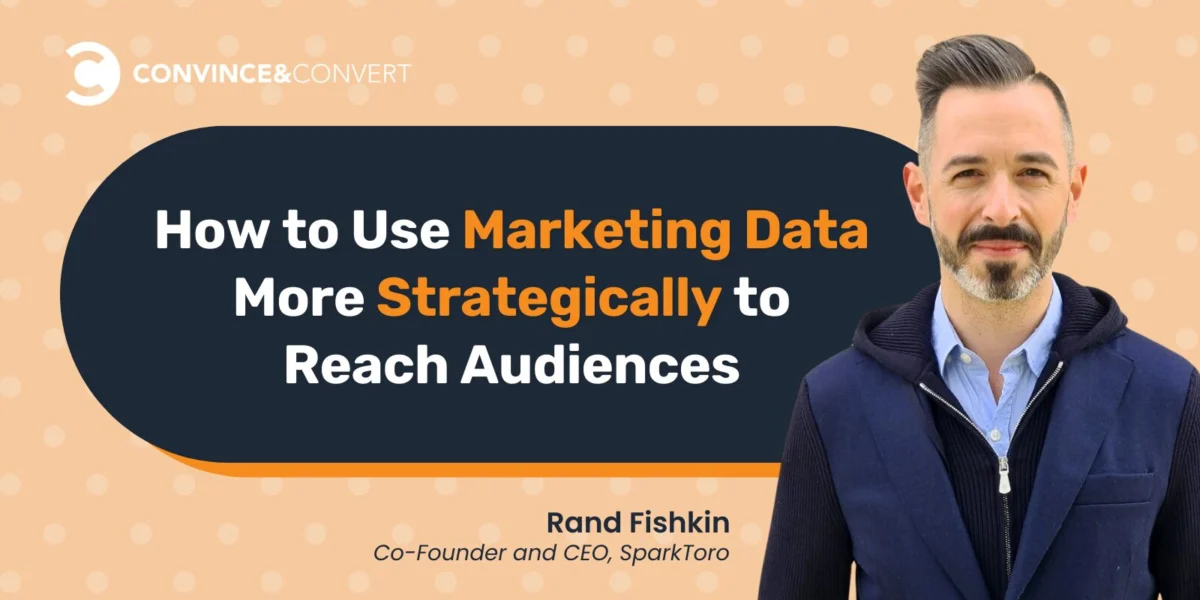
In the modern digital ecosystem, marketing departments have become heavily reliant on a familiar, high-velocity loop: allocate budget to Google Ads, optimize for LinkedIn lead generation, and deploy Facebook retargeting pixels to "capture" the audience. It is a system built on the promise of granular attribution, clear return on investment (ROI), and comfort. However, a growing chorus of industry leaders is beginning to challenge this status quo, suggesting that this reliance on "safe" platforms may be creating a massive blind spot in our collective marketing strategies.
Are we optimizing for the right metrics, or are we simply optimizing for the metrics that are easiest to report to stakeholders? According to Rand Fishkin, founder of audience intelligence platform SparkToro, the industry is currently suffering from a crisis of attribution—and it is costing brands millions in wasted potential.
The Myth of the "First-Touch" Attribution
To understand the current marketing landscape, we must look at the chronology of a typical customer’s journey. For years, marketers have operated under the assumption that the channel which receives the final "click" before a conversion deserves the credit. If a customer searches for a brand on Google and clicks a paid ad, the ad platform takes the credit.
But as Fishkin points out, this is a flawed narrative. "A ton of what happens in Google is actually a response to something else," Fishkin explains. "People who performed a search query in Google, very rarely was that a spontaneous first-touch thing. It was like, ‘Oh, I heard about this software,’ so I went to Google and searched for it. Of course, the attribution looks like Google drove all the value. No, Google was just the middleman."
This revelation highlights a dangerous trend: marketers are pouring billions into "middleman" platforms while ignoring the actual sources of discovery—the podcasts, the influencers, the niche communities, and the conferences where the brand was first introduced to the consumer. By focusing exclusively on the final stage of the journey, businesses are failing to nurture the top-of-funnel awareness that creates long-term brand equity.
The Power of Niche Communities: A New Strategic Mandate
If traditional paid advertising is the "safe bet," then targeting niche, highly relevant communities is the "high-reward" alternative. The core philosophy of this shift is simple: find where your audience already spends their time and integrate your brand into those spaces without being intrusive.
This is the central value proposition of SparkToro. The tool allows marketers to move past demographic guesswork and observe the actual online habits of their target audience. By identifying which podcasts they listen to, which influencers they follow, and which websites they frequent, companies can pivot from broad-spectrum advertising to targeted, high-value engagement.
Case Studies in Strategic Redirection
The effectiveness of this approach is best illustrated through real-world application. Fishkin highlights two distinct examples of success through audience-centric strategy:
- The Podcaster’s Growth Strategy: A creator looking to boost sponsorship revenue did not turn to expensive social media ads. Instead, they used audience data to identify influential figures with massive followings on X (formerly Twitter) and YouTube. By inviting these influencers as guests, the podcaster leveraged the influencers’ existing audiences, which in turn attracted high-value sponsors. The ROI was not measured in clicks, but in audience growth and brand authority.
- The Tech Event Organizer: Similar to the podcaster, a tech event organizer used audience intelligence to identify speakers who held the attention of their ideal target demographic. By securing speakers who were already trusted by the audience, the organizer attracted premium sponsors who were eager to reach that specific, vetted cohort.
In both instances, the strategy focused on leveraging existing trust rather than attempting to manufacture it through paid placements. By meeting the audience where they are, these entities effectively shortened the sales cycle and created more authentic, enduring connections.
The Rise of "Zero-Click" Marketing
Perhaps the most radical departure from traditional marketing is the concept of "zero-click" marketing, a term popularized by Amanda Natividad, VP of Marketing at SparkToro.
In a world saturated with "Click Here" buttons and aggressive gated content, zero-click marketing suggests that the best way to build a brand is to provide value directly on the platform where the user resides—without demanding an immediate exit to your website.
Consider the success of Chartr, a data storytelling firm. Rather than using ads to drive traffic to their site, they utilized the Reddit community "r/dataisbeautiful." They shared high-quality, insightful data graphics that required no call-to-action. By providing value and engaging in a community-first manner, they built massive brand recognition and trust. When the time came for those users to seek out data-related services, Chartr was already the authority in their minds.
This strategy is not about vanity metrics; it is about establishing a "mental availability" that traditional ads often fail to achieve. By removing the friction of a "click," marketers can engage users in a more natural, authentic environment.
The Responsibility of Being "Data-Informed"
While data is the backbone of this new approach, it is not a panacea. Fishkin emphasizes that data must be used as a compass, not a crutch. Over-reliance on quantitative data—such as in-app clicks or conversion rates—often leads to a "data-driven" fallacy where companies optimize for the wrong things.
"I’m not saying don’t be data-informed, but I think it pays to be responsible in your recognition of what problems data can solve and what it can’t solve," says Fishkin.
For instance, quantitative data might show you exactly where users click in your app, but it will never tell you why they are frustrated or why non-users have chosen a competitor. This requires qualitative research: customer interviews, deep-dive surveys, and direct, human-to-human engagement.
Implications for Future Strategy
For marketing teams, the implications of this shift are significant:
- Reallocation of Budgets: If 10% of your current paid spend is yielding zero incremental growth, that budget should be redirected toward creative, community-led initiatives.
- Broadening the Definition of ROI: Marketing leadership must move away from "last-click" attribution and toward a more holistic understanding of the customer journey. This means accepting that some marketing efforts are designed to build reputation rather than immediate leads.
- Culture of Experimentation: Shifting away from "safe" Google and Facebook ads requires a organizational shift. Stakeholders must be educated on why reach, sentiment, and community engagement are valid, long-term indicators of success.
Final Reflections
The era of blind faith in paid advertising platforms is waning. As digital noise continues to reach a saturation point, the brands that win will be those that stop treating their customers as data points to be captured and start treating them as members of a community to be served.
By leveraging data to understand where your audience actually lives, breathes, and solves problems, you can bypass the "middleman" and build a brand that resonates on a deeper level. As Rand Fishkin reminds us, the goal is not to chase numbers—it is to be strategic with your attention. In an age of infinite digital choices, that attention is the most valuable currency you have.

 Ammar Sabilarrohman
 Layla Zulfa
 Raul Delapena Setiawan
 Dwi Wanna
 Muslim
 Nana Wu

 Rifan Muazin