
 Muslim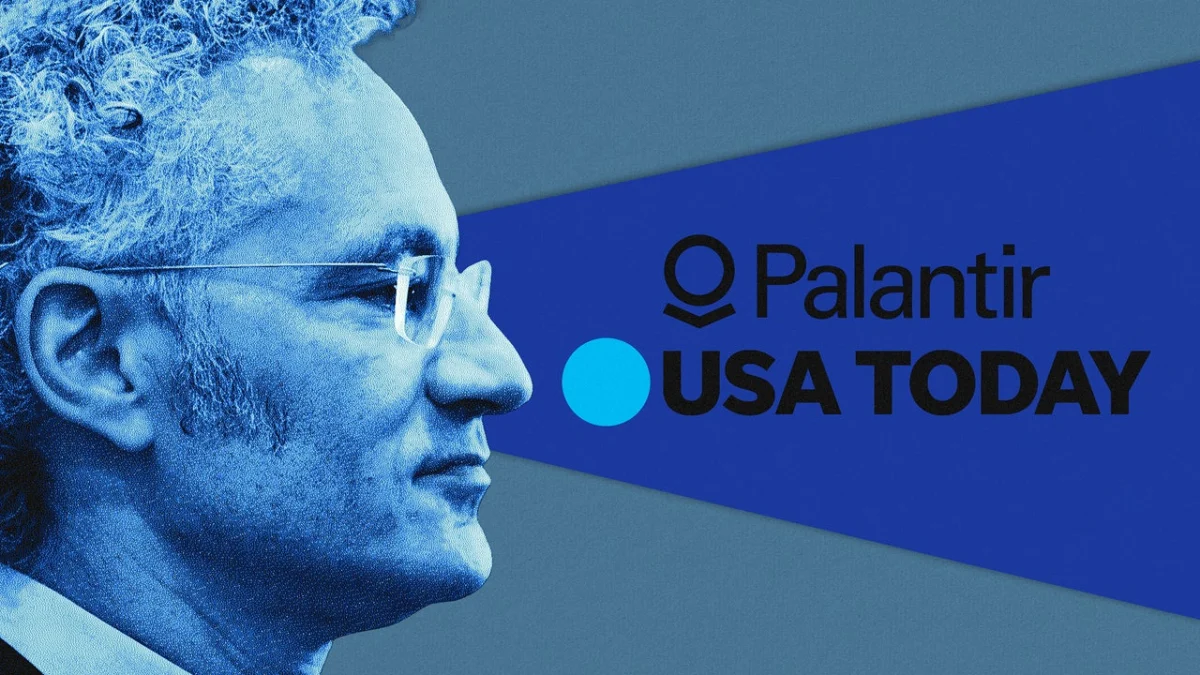
When USA Today Co.—the nation’s largest newspaper chain—announced a strategic partnership with data-analytics giant Palantir in August, CEO Mike Reed framed the move as a critical evolution for a legacy publisher struggling to navigate the digital age. For a company that manages the flagship USA Today alongside more than 200 local publications, the pivot is marketed as a necessary technological upgrade to stem the tide of circulation declines and shifting consumer habits.
However, the deal has ignited a firestorm within the company’s own ranks. Unionized journalists across 31 newsrooms, represented by the NewsGuild-CWA, have launched a formal revolt, demanding the termination of the contract. At the heart of the conflict is a fundamental clash between corporate modernization and journalistic ethics, raising uncomfortable questions about surveillance, public trust, and the future of the fourth estate in an era of AI-driven data mining.
The Strategy: "An Intelligence Organization"
During a Palantir conference held last month, CEO Mike Reed unveiled an ambitious vision for the future of the newspaper chain. The company aims to consolidate years of fragmented, siloed reader data into a single, unified system. By leveraging Palantir’s proprietary software, USA Today plans to personalize newsletters, optimize affiliate link targeting, enhance content discovery, and—perhaps most importantly—convert anonymous casual visitors into loyal, registered subscribers.
To illustrate the platform’s potential, Reed presented a live demonstration featuring an “anonymized” user persona named “Marcus.” As Reed walked the audience through the software’s capabilities, he described a continuous feedback loop driven by real-time reader behavior.
“We’re actually an intelligence organization now,” Reed declared during the presentation, “because of the shift to online and the data we have on consumers.”
For leadership, the logic is sound: in a digital landscape dominated by algorithmic feeds and generative AI chatbots, newspapers can no longer afford to be mere content factories. They must become data-driven entities that understand their readers with the same granularity as big-tech firms.
The Backlash: A Crisis of Trust
The response from the newsroom was immediate and fierce. The NewsGuild-CWA, representing the company’s unionized staff, issued a joint letter decrying the partnership. The core of their argument is not merely technological, but moral.
Palantir, led by the outspoken CEO Alex Karp, is a company deeply embedded in the defense and intelligence sectors. It maintains significant federal contracts, including for the Department of Defense’s “Project Maven,” a controversial data-fusion platform. Perhaps most significantly for journalists, Palantir has long provided data services to U.S. Immigration and Customs Enforcement (ICE).
For reporters tasked with covering immigration policy, civil rights, and public protests, the association with Palantir creates a severe conflict of interest. Staffers fear that by utilizing a platform built by a primary contractor for immigration enforcement, the news organization compromises its independence and violates the trust of its readers—particularly those in immigrant communities.
“Every problem we have with this partnership really comes down to trust,” said Mike Davis, an investigative reporter at the Asbury Park Press, in an interview with Straight Arrow News.
A Chronology of Decline and Consolidation
To understand the current tension, one must look at the company’s history since the 2019 merger between the legacy Gannett and GateHouse Media. The years following that merger have been defined by aggressive cost-cutting.

- 2019: Gannett and GateHouse merge, creating the largest newspaper publisher in the United States.
- 2020–2023: The company initiates multiple rounds of layoffs, significantly thinning the ranks of local newsrooms. By 2024, the total workforce had been roughly halved.
- 2025: As of the most recent SEC filings, the company employed approximately 7,500 people, with roughly 15% unionized.
- August 2026: USA Today Co. announces the partnership with Palantir during an investor call.
- September 2026: NewsGuild-CWA members issue a formal demand to terminate the partnership, citing ethical concerns.
Throughout this period, leadership has consistently maintained that these austerity measures were necessary to combat falling print revenue—which still accounts for $1.1 billion annually—and to pivot toward digital-first distribution. CEO compensation has frequently remained a point of contention, rising even as the company faced stagnant or declining median employee pay.
Industry Context: The Normalization of Surveillance
USA Today is far from the first media organization to entangle itself with Palantir or to face scrutiny over data practices. The intersection of journalism and surveillance-adjacent technology is becoming increasingly common:
- Thomson Reuters: The news organization has long been criticized for supplying data used in federal immigration surveillance tools.
- Axel Springer: The owner of Politico and Business Insider has partnered with Palantir to gain deeper insights into audience behavior.
- Fox News Digital: Reports indicate that Fox has utilized Palantir to build internal platforms for article production and workflow management.
- Marketing Integration: Firms such as Stagwell and Zeta Global have utilized Palantir for sophisticated ad-targeting, blurring the lines between consumer marketing and data-intensive intelligence.
The controversy is deepened by the presence of Peter Thiel, Palantir’s cofounder and chairman. Last month, Axel Springer awarded Thiel its 2026 Axel Springer Award, citing his “transformative impact on the digital age.” However, many journalists recall that it was Thiel who secretly bankrolled the Hulk Hogan lawsuit against Gawker Media, an action that led to the site’s bankruptcy and closure. For many at USA Today, this history is not a relic of the past, but a warning of the company’s underlying hostility toward the independent press.
The Future: Content for Humans and Machines
The tension over Palantir exists against the backdrop of an even larger existential shift: the role of generative AI in the newsroom.
While USA Today currently maintains a policy prohibiting AI-generated articles, its newsrooms are increasingly reliant on AI for investigative tasks, such as automating the processing of public records requests, headline generation, and digital publishing workflows. Furthermore, the company is actively feeding its historical and real-time journalism into its own AI products, such as the “DeeperDive” answer engine.
These efforts are coupled with licensing deals with tech giants like Meta, Amazon, and Microsoft, aimed at training AI models on journalistic output. Simultaneously, the company has joined a class-action lawsuit against Google, alleging that the search giant’s ad-tech dominance has artificially suppressed publisher revenue.
This dual strategy—suing one tech giant while partnering with another—highlights the chaotic environment in which modern publishers operate. As Mike Reed stated during the investor call, “We recognize that we have to create and format content for humans and for machines.”
Implications for the Future of News
The revolt at USA Today serves as a case study for the entire media industry. As traditional revenue streams continue to dry up, publishers are increasingly turning to the same data-fusion and predictive-analytics tools used by the military and intelligence agencies.
The central question remains: Can a news organization, which relies on its reputation for objectivity and public service, maintain that role while adopting the infrastructure of a surveillance-state contractor?
For the unionized staff at USA Today, the answer is a firm no. They argue that the tools a company chooses to adopt define its priorities. By choosing Palantir, they contend, USA Today is signaling that it prioritizes the optimization of user behavior over the preservation of journalistic integrity.
As the standoff continues, the outcome will likely set a precedent for how legacy media organizations handle the pressure to modernize. Whether these publications can successfully pivot to an “intelligence-driven” model without sacrificing the very trust that keeps readers coming back remains the industry’s most pressing, and perhaps most dangerous, experiment.


 Lina Irawan
 Suro Senen
 Laily UPN
 Iffa Jayyana
 Rifan Muazin

 Lina Hope