
 Reynand Wu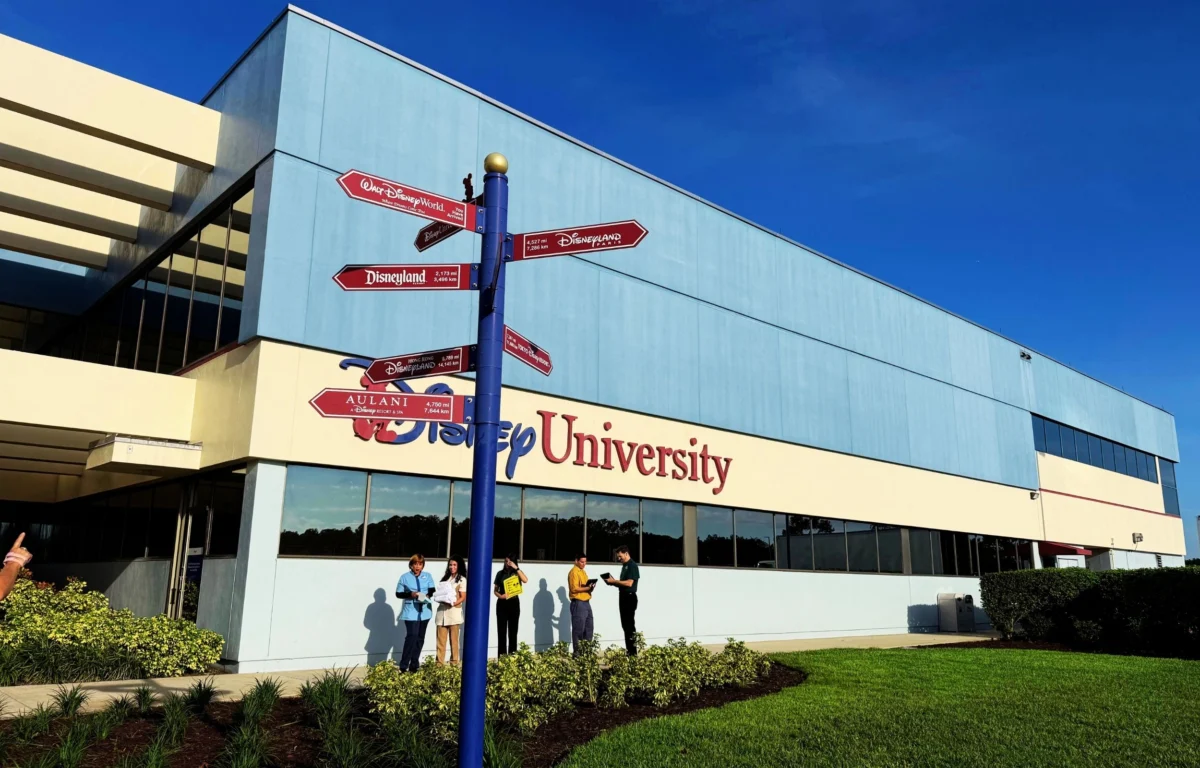
Disney is a brand synonymous with "magic." It is a word the company leverages to describe everything from a fireworks display over Cinderella’s Castle to the efficiency of its custodial staff. However, to the seasoned business observer, this whimsical branding often acts as a smoke screen. Behind the facade of pixie dust lies one of the most sophisticated, data-driven, and hyper-disciplined operational frameworks in global business history.
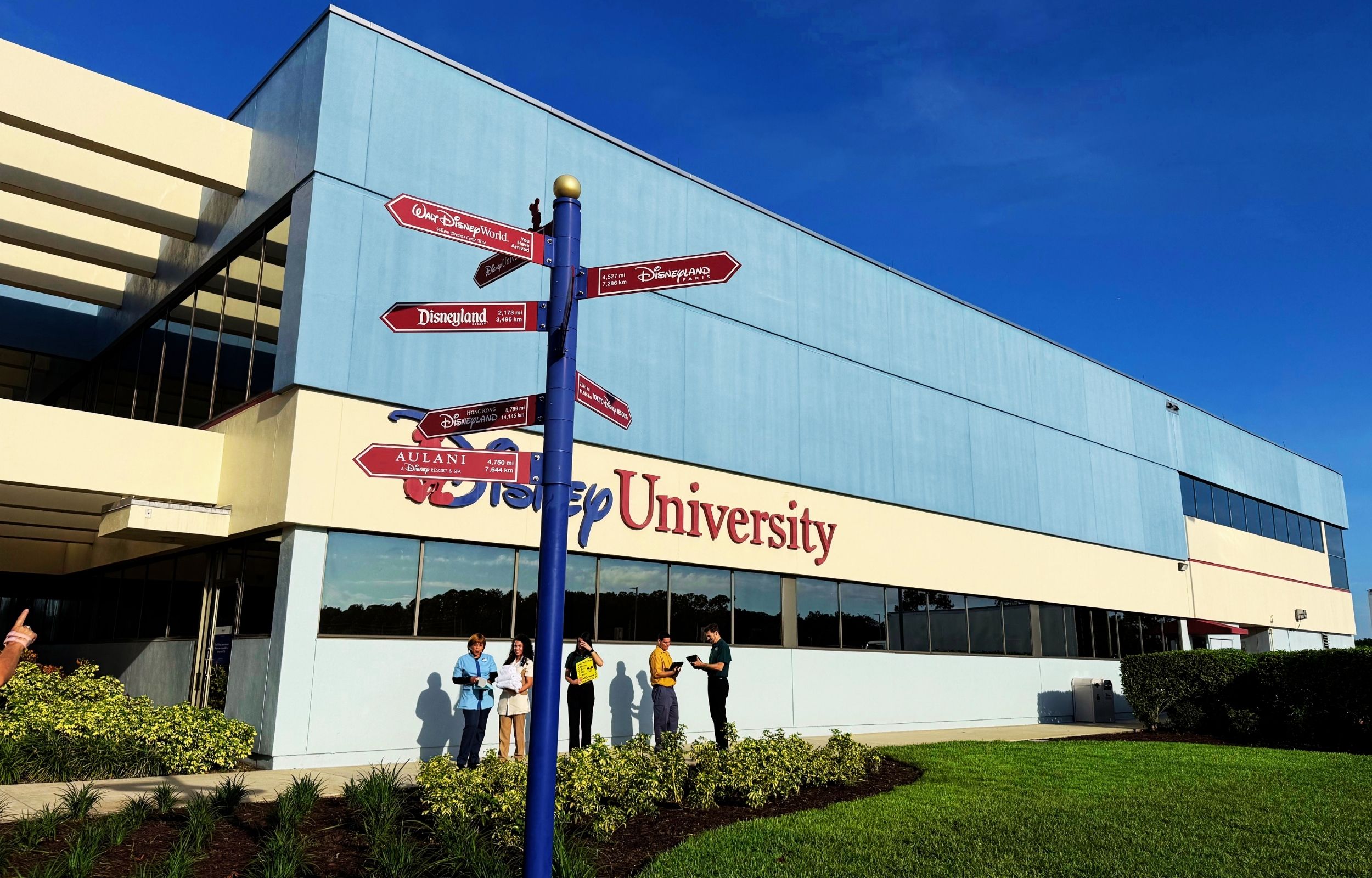
To understand how a company of this scale maintains such consistent quality, one must look toward the engine room: Disney University. Located in the heart of the Florida resort, this facility serves as the crucible where "cast members"—the company’s term for employees—are forged. Far from being a mere orientation center, it is a masterclass in human resource management, operational design, and organizational culture. By deconstructing the training methodologies practiced here, entrepreneurs can glean actionable insights that transcend the theme park industry and apply to any growing organization.
The Operational Reality: A Chronology of "Traditions"
The Disney training experience begins with "Traditions," an orientation seminar that has remained the bedrock of the company’s internal culture for decades. When a new hire enters Disney University, they are not merely being taught the mechanics of their specific job; they are being indoctrinated into a philosophy of service.
The chronology of a Disney cast member’s development follows a rigorous, non-linear path:
- The Immersion Phase: New hires are introduced to the history and heritage of the Walt Disney Company, establishing a common language and a shared set of values.
- The Simulation Phase: Before ever interacting with a guest, employees move to mock environments—fake lobbies, kitchens, and ride control rooms—where they perform their tasks in a low-stakes, controlled setting.
- The Feedback Loop: Once active in the field, cast members are encouraged to act as both practitioners and critics, providing constant feedback on the tools, uniforms, and processes they use.
- The Mobility Phase: As employees demonstrate competence, the company actively monitors their potential for cross-departmental movement, treating internal talent as a fluid asset rather than a static resource.
Lesson 1: The Art of the "Rehearsal" (The Nathan Fielder Principle)
One of the most striking aspects of Disney University is its commitment to simulated reality. Tucked away in the facility are exact replicas of hotel rooms, check-in desks, and back-of-house operational spaces. This approach mirrors the experimental methodology popularized by comedian Nathan Fielder in his HBO series The Rehearsal, where subjects practice high-stakes interactions in controlled, simulated environments until they are perfected.
Why Small Businesses Should Care
For many startups, the "sink-or-swim" mentality is often mistaken for a badge of honor. Founders frequently throw new hires into customer-facing roles with minimal preparation, hoping they will figure it out on the fly. Disney’s model proves this is a strategic error.
By allowing housekeepers to practice turning over a room or front-desk staff to role-play a difficult concierge request in a fake environment, Disney removes the "cost of learning" from the customer experience. For an entrepreneur, the takeaway is clear: Don’t let your customers be the training ground for your employees. Create safe spaces where your team can fail, analyze their mistakes, and refine their execution without the risk of damaging your brand reputation.
Lesson 2: Elevating the Task to the Mission
In a massive, complex organization, the greatest threat to quality is the fragmentation of purpose. It is easy for a parking attendant to view their role as merely "pointing cars to spots," or for an engineer to see their work as "fixing a line of code." Disney University systematically dismantles this narrow view through its core teaching: every job, regardless of its function, is in service of "creating happiness."
The "Judgment Call" Framework
No employee handbook can account for every edge case—a dropped ice cream cone, a lost child, or a ride malfunction. When a situation falls outside the scope of a standard operating procedure (SOP), the employee must make a judgment call.
If the employee’s only goal is "do my job," they will likely perform the bare minimum. If their goal is "create happiness," they have a North Star that guides their decision-making. This allows for decentralized authority. When employees understand the larger objective, they can resolve issues on the spot without needing to escalate to management. For entrepreneurs, this is the key to scaling: when your team understands the "why," they can be trusted to handle the "how" in any situation.
Lesson 3: Extreme Dogfooding and the Feedback Loop
Disney’s costuming department is a marvel of industrial logistics: 46 locations, 1,500 staff members, and over 2.5 million garments in circulation. Managing such a massive operation requires a commitment to "dogfooding"—the practice of using one’s own product under the most grueling conditions possible.
Applying the "Stress Test"
The design team doesn’t just sketch uniforms in a studio; they test them in the blistering Florida humidity and perform active-wear stress tests. They seek out the failure points.
This lesson is universal:
- For Hardware: Use your product until it breaks.
- For Software: Try using your app on an outdated device with spotty Wi-Fi.
- For Services: Attempt to cancel your own subscription through your own interface.
Furthermore, Disney excels at "closing the loop." By actively soliciting feedback from those who wear the costumes, the company transformed their custodial uniforms into four-way stretch, breathable, and highly functional garments. They didn’t just ask for opinions; they integrated the users into the design process. If you aren’t proactively building channels for your front-line employees and customers to report friction, you are missing the most valuable R&D data you have.
Lesson 4: The Internal Talent Ecosystem
Perhaps the most overlooked element of Disney’s success is its internal mobility. The company treats its internal workforce as a diverse talent pool that can be repurposed across vastly different business units.
Consider the journey of Ivan Diaz, the current director of transportation services. His career path did not follow a linear trajectory from entry-level driver to manager; instead, he was identified through an internal talent assessment that saw potential in his technical background for a broader leadership role.
Implications for the Modern Workplace
Many companies fall into the trap of "siloed hiring," where they look externally for a specific skillset rather than auditing their existing staff. When you view your employees as one-dimensional (e.g., "he is just a sales rep"), you ignore the latent talent they may possess.
Entrepreneurs should look "sideways" for talent. Often, the best candidate for a new, complex role is someone who already understands your culture, your brand, and your mission—even if their current job title is totally unrelated. Cross-training and internal mentorship programs aren’t just HR fluff; they are essential strategies for long-term retention and operational agility.
Conclusion: The Business of Intentionality
The "magic" of Disney is, in reality, the result of relentless intentionality. Whether it is the rehearsal of a guest interaction, the alignment of thousands of employees toward a single emotional goal, the rigorous testing of operational materials, or the strategic movement of internal talent, every action is designed to reduce uncertainty and enhance consistency.
For the entrepreneur, the lesson of Disney University is that culture is not an accident. It is a product of infrastructure, training, and a deep-seated belief that the smallest details determine the success of the largest ventures. By adopting these four pillars—rehearsal, mission-alignment, extreme dogfooding, and internal mobility—business leaders can build organizations that don’t just rely on magic, but on the disciplined, repeatable, and scalable excellence that makes the magic possible.


 Iffa Jayyana
 Raul Delapena Setiawan
 Laily UPN
 Rifan Muazin
 Suro Senen
 Lina Hope
 Lina Irawan