
 Suro Senen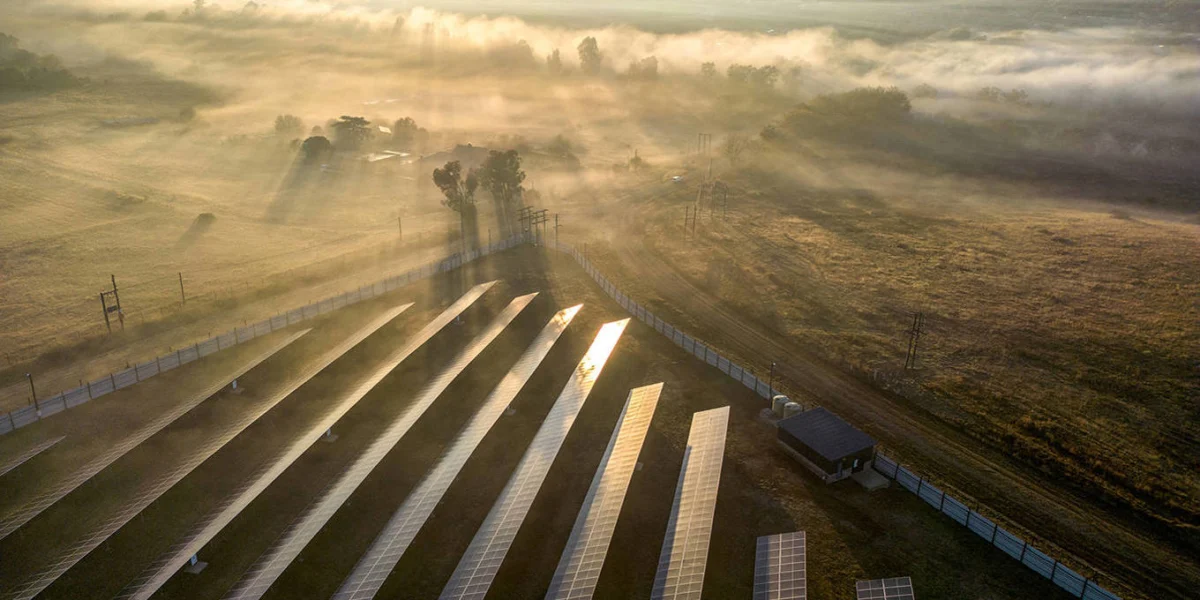
By Prasad Ananthakrishnan and Vera Songwe
October 7, 2026
The global economic landscape is currently defined by a striking financial paradox. In the United States, the tightening of monetary policy has driven dollar-denominated borrowing costs to punishing heights, forcing emerging markets into a corner. Conversely, on the other side of the Pacific, Chinese interest rates are plumbing historic lows as Beijing attempts to stimulate a sluggish domestic economy.
This divergence is not merely a statistical curiosity; it is a strategic opening. Following the recent state visit of President Xi Jinping to Washington, D.C., a fragile but palpable diplomatic thaw has emerged. For African nations, this geopolitical cooling offers a rare opportunity to pursue a "dual-track" investment strategy: partnering with the United States to secure natural gas assets for baseload power, while tapping into low-cost Chinese capital to build out the solar and energy storage infrastructure necessary for a sustainable future.
Main Facts: A Tale of Two Interest Rates
The primary economic driver for this opportunity is the widening gap between the Federal Reserve’s "higher-for-longer" interest rate regime and the People’s Bank of China’s (PBOC) accommodative stance.
As the US maintains elevated rates to combat persistent service-sector inflation, African sovereigns have seen their dollar-denominated debt service ratios balloon. Many nations are currently locked out of Western bond markets due to high yields, leading to a liquidity crunch. Meanwhile, China, facing a structural slowdown in its property sector and shifting demographics, has kept liquidity abundant.
The core proposal for African policymakers is to arbitrage this divergence. By utilizing Chinese capital—which is increasingly available at lower interest rates—to finance renewable energy projects, African nations can preserve their limited fiscal space. Simultaneously, by engaging with US expertise and private capital for natural gas development, they can ensure the grid stability required to support industrialization.
Chronology: From Trade War to Strategic Truce
The current diplomatic landscape is the culmination of a decade of intense friction, followed by a pivot toward pragmatic stabilization.
- 2023–2025: The Deep Freeze. Bilateral relations reached a nadir, characterized by aggressive decoupling policies, chip restrictions, and retaliatory trade tariffs. African economies suffered collateral damage, as project financing from both superpowers became increasingly tied to geopolitical alignment.
- August 2026: Informal backchannel negotiations between Washington and Beijing intensified, focusing on macroeconomic stability and the prevention of a global liquidity shock.
- September 2026: Preparatory meetings in Geneva established the framework for a high-level summit, prioritizing climate cooperation and energy security.
- October 7, 2026: President Xi Jinping’s state visit to Washington concludes. The primary output is a two-month extension of the existing trade truce, effectively delaying the implementation of further punitive tariffs.
- November 2026 (Upcoming): The APEC Summit in Shenzhen, where the focus will shift from trade friction to financial integration and digital economic cooperation.
- December 2026 (Upcoming): The G20 Summit in Miami, which will serve as the venue for finalizing multilateral debt restructuring agreements that include both US-backed institutional lenders and Chinese bilateral creditors.
Supporting Data: The Cost of Capital Gap
To understand the feasibility of this strategy, one must look at the bond yields and lending benchmarks. As of October 2026, the yield on the US 10-year Treasury has remained persistently above 4.5%, pushing the effective borrowing rate for many African nations in international capital markets well into the double digits.
In contrast, the Chinese 10-year government bond yield has trended toward 2.0%, reflecting the PBOC’s efforts to incentivize domestic consumption and fixed-asset investment. When these funds are directed through the Belt and Road Initiative (BRI) or regional development banks, the cost of capital is significantly lower than commercial dollar loans.
Furthermore, the "Green Premium"—the cost difference between fossil-fuel-based energy and renewable alternatives—is shrinking. China currently controls approximately 80% of the global solar supply chain. By utilizing Chinese credit to purchase this technology, African nations can bypass the inflationary pressures currently hitting Western manufacturing, effectively importing China’s deflationary manufacturing capacity.
Official Responses and Diplomatic Nuance
The response from Washington has been one of "cautious realism." Senior administration officials in the Treasury Department have signaled that while the US remains wary of Chinese influence in Africa, it recognizes the necessity of "competitive coexistence." The US is now pivoting its Africa strategy toward the "Partnership for Global Infrastructure and Investment" (PGII), which focuses on high-quality, transparent energy projects—specifically gas-to-power—that complement the climate goals of the US-Africa energy transition.
Beijing, meanwhile, has adopted a more collaborative rhetoric. During the D.C. summit, Chinese spokespersons emphasized that China’s excess industrial capacity in solar, batteries, and electric vehicles is a "global public good." By positioning its capital as the engine of the Global South’s green transition, China aims to secure long-term commodity partnerships while mitigating the impact of US-led trade restrictions.
African leaders, speaking through the African Union, have welcomed the thaw. There is a growing consensus that the era of "picking sides" is reaching its limit. As one regional minister noted during the post-summit press briefing, "Africa cannot afford to be the battlefield for a new Cold War. We need the gas for our factories today, and the solar for our children tomorrow. If the US and China can talk, so can we."
Implications: A New Strategic Calculus for Africa
The implications of this shift are profound and require a recalibration of African economic diplomacy.
1. Navigating the Debt Trap Narrative
African governments must be transparent about the terms of new loans. The goal is to leverage Chinese capital for productive infrastructure—specifically renewable energy storage—which generates the revenue needed to repay the debt. This stands in contrast to past infrastructure projects that were poorly scoped or lacked economic viability.
2. The Gas-to-Green Transition
The strategy of using US-backed gas projects as a transition fuel is pragmatic. Gas provides the "firm" power needed to stabilize grids that rely on intermittent solar and wind. By aligning with US standards for environmental and social governance (ESG), African nations can unlock private equity that would otherwise be wary of the political risks associated with Chinese-only projects.
3. Diplomatic Multi-Alignment
The "thaw" allows African nations to move away from the binary choice of the past five years. Diplomatic missions should prioritize "trilateral" projects. For instance, a solar farm could be built using Chinese technology and credit, while the electrical grid management and distribution software are developed by American firms. This creates a balanced ecosystem that incentivizes both superpowers to protect their shared interests in regional stability.
4. Regional Integration
The upcoming G20 summit in Miami represents a critical window. African nations must present a unified front, advocating for debt-relief mechanisms that treat Chinese and Western creditors equally. The stability promised by the US-China rapprochement is only as good as the institutional frameworks that support it.
Conclusion: Seizing the Moment
The window for this dual-track strategy is finite. The truce announced in Washington is, by definition, a temporary measure. As the world moves toward the G20 in Miami, the primary challenge for Africa will be to transform this diplomatic "breathing room" into tangible financial architecture.
By decoupling the source of their financing from the source of their technology, African nations can optimize their development costs. The divergence between Chinese low-cost liquidity and American technological and energy-sector expertise is not a sign of global instability to be feared, but a mechanism to be mastered.
If African leaders can balance these two gravitational forces, they will not only solve the immediate challenge of high borrowing costs but also lay the groundwork for a sustainable, resilient, and independent industrial future. The time to act is now, while the superpowers are talking—before the geopolitical winds shift once again.


 Evan Lee Salim
 Lina Hope
 Basiran
 Neng Nana
 Iffa Jayyana
 Raul Delapena Setiawan
 Rifan Muazin
 Asro
Asro