Lina Irawan
In a significant leap forward for digital content creation, Google has officially integrated its most advanced artificial intelligence models into Google Vids. This move effectively dismantles the traditional barriers to high-definition video production, offering users—from individual hobbyists and small business owners to enterprise professionals—a sophisticated, no-cost suite of AI-powered creative tools. By leveraging the power of Gemini Omni 1.1 Flash, Google is transforming the browser into a professional-grade production studio.
The Evolution of Video Production: From Complex Suites to AI Assistance
For decades, the creation of high-quality video content was restricted by a "triple barrier": the need for expensive hardware, the requirement for steep learning curves associated with professional editing software, and the significant time investment needed for post-production.
Google Vids, which began as a collaborative workspace tool, has now pivoted into a comprehensive generative AI platform. By incorporating Gemini Omni 1.1 Flash, Google has shifted the paradigm from "manual assembly" to "intelligent generation." Users no longer need to source individual clips or painstakingly synchronize audio; instead, they act as directors, guiding the AI through prompts to synthesize complex, high-definition visual narratives.
Chronology: Building the Future of Creative Work
The journey toward this milestone reflects Google’s broader strategy to weave generative AI into the fabric of the Workspace ecosystem:
- Initial Launch: Google Vids was introduced as an AI-powered video app for Workspace, designed to streamline communication within teams.
- The Integration Phase: Over the past year, Google engineers focused on refining model efficiency, specifically tailoring the Gemini Omni architecture to handle the high-bandwidth requirements of video rendering.
- The Current Expansion: With the latest update, the "Create AI videos" feature has been unlocked for all Google Account holders. This move signals a strategic shift, as Google aims to capture the burgeoning market of "prosumer" creators who require high-quality output without the enterprise-level overhead.
- The Horizon: Google has already announced the forthcoming integration of Gemini 3.8 Flash-Lite, which will introduce advanced text-to-speech capabilities, further narrowing the gap between amateur and professional-grade voiceovers.
Supporting Data: Why Gemini Omni 1.1 Flash Matters
The integration of Gemini Omni 1.1 Flash is not merely a marketing label; it represents a fundamental shift in how large language models (LLMs) process multimedia. Unlike previous iterations, which were text-centric, Omni models are natively multimodal. This means they can interpret, synthesize, and generate visual and auditory information simultaneously.
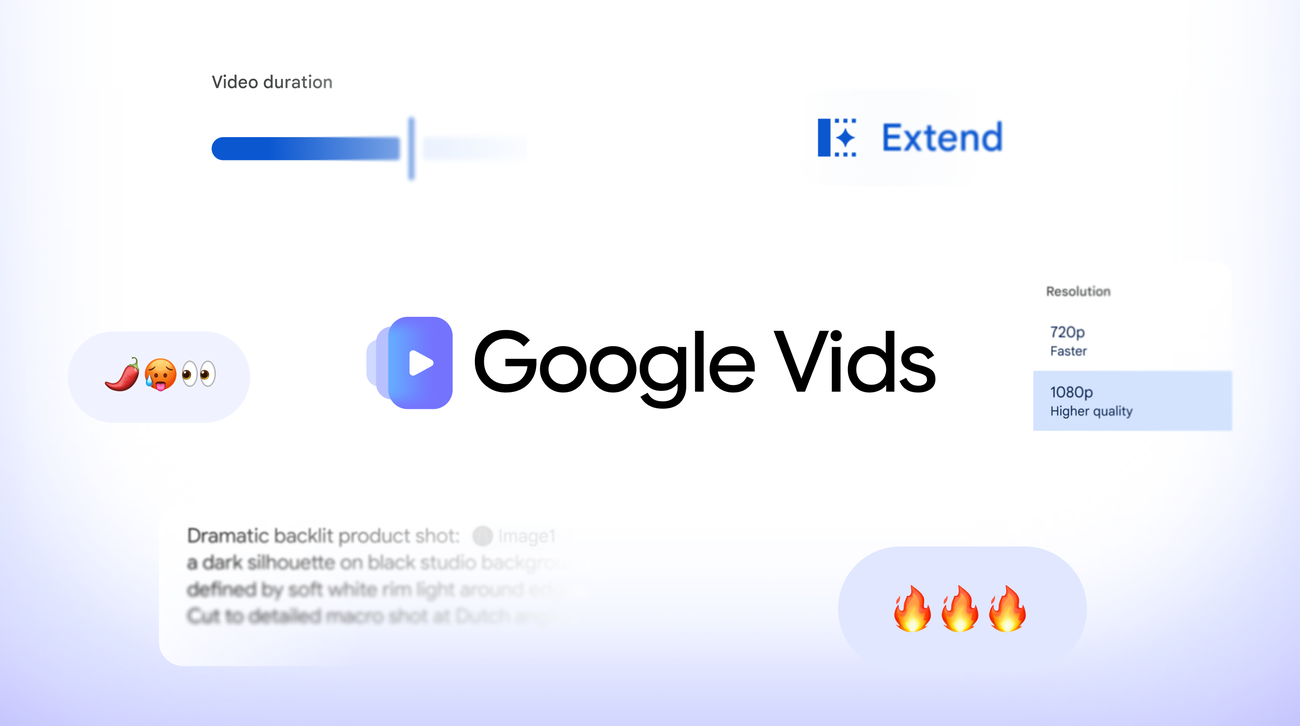
For the user, this translates to:
- Lower Latency: The "Flash" designation within the Gemini family indicates an optimization for speed, allowing for near-instant previewing of AI-generated scenes.
- Higher Fidelity: By training the model on vast datasets of high-definition imagery and cinematography, Google has enabled the generation of content that maintains color accuracy and spatial consistency.
- Efficiency: The model minimizes the "hallucination" factor common in earlier video generators by maintaining strict adherence to the user’s specific prompt-driven parameters.
Directing the Narrative: Control Meets Creativity
A common critique of early generative video tools was the lack of user agency; the AI would often produce results that felt disconnected from the user’s original intent. Google Vids addresses this by moving away from simple "one-click" generation toward a "director’s dashboard" approach.
The Toolkit of the Modern Creator
- Iterative Refinement: Users can generate, extend, and customize scenes. If a generated scene doesn’t fit the desired mood, the user can modify specific variables—such as lighting, camera angle, or scene duration—without discarding the entire project.
- Natural Language Direction: The interface allows for conversational editing. A user can request a change, such as "make the tone more professional" or "increase the color warmth," and the AI adjusts the underlying assets accordingly.
- Seamless Integration: Because Google Vids resides within the Workspace ecosystem, it integrates natively with Google Drive, Docs, and Slides. This allows users to pull data from existing presentations to form the backbone of their video story.
Ethical Considerations and Transparency
As AI-generated content becomes indistinguishable from reality, the issue of provenance has moved to the forefront of the technological discourse. Google has addressed these concerns head-on with the implementation of SynthID.
Every frame generated by Gemini Omni 1.1 Flash in Google Vids is embedded with an imperceptible digital watermark. This watermark, developed by Google DeepMind, is designed to survive common editing techniques, including cropping, resizing, and color adjustment. This is a critical step in maintaining digital trust, ensuring that viewers can verify whether a video was crafted by a human or generated by an AI model. This commitment to transparency serves as a blueprint for the industry at large.
The Road Ahead: Future-Proofing Communication
Google has signaled that this is only the beginning. The upcoming rollout of Gemini 3.8 Flash-Lite promises to revolutionize the auditory component of video production. By enabling natural-sounding voiceovers in over 100 languages, Google is effectively removing the language barrier for global content creators. A business owner in Tokyo, a student in São Paulo, and a community organizer in New York will all have the same ability to produce high-quality, narrated content in their native tongues.

The Business and Enterprise Angle
While the base features are available at no cost to personal accounts, Google has built a tiered ecosystem.
- Personal Use: Ideal for hobbyists, social media content, and personal branding.
- Workspace Business & Enterprise: For teams requiring high-volume production, these plans offer expanded generation pools and, crucially, centralized admin controls. These controls allow companies to maintain brand consistency by governing the style and tone of AI-generated content produced within their organization.
Implications for the Creative Industry
The democratization of video production via Google Vids will likely have several long-term implications:
- The Death of the "Placeholder" Presentation: The era of static slide decks is nearing its end. As video becomes as easy to generate as a document, business communication will shift toward dynamic, visually engaging narratives.
- The Rise of the "Director-Creator": We are witnessing the emergence of a new class of creators who do not need to be experts in Adobe Premiere or DaVinci Resolve. The value proposition is shifting from technical execution (the "how") to creative vision (the "what").
- Economic Shifts: The cost of content production will drop precipitously. For small businesses, this allows for a consistent cadence of high-quality marketing material that was previously financially out of reach.
Conclusion: A New Era of Accessibility
The integration of Gemini Omni 1.1 Flash into Google Vids is more than a product update; it is an acknowledgment that in the digital age, video is the primary language of communication. By removing the technical, financial, and skill-based barriers that have historically gatekept high-quality production, Google is effectively handing the camera to everyone.
Whether it is a startup launching its first product, a nonprofit highlighting its mission, or an individual sharing their story, the tools are now available to bring those visions to life in high definition. As we look toward the future, the question is no longer "Can I make this video?" but rather "What story will I choose to tell?"
To begin your journey, users can navigate to vids.new on their desktop browsers and select "Create AI videos." The digital studio is open, and the tools of a professional director are now at your fingertips.


 Pevita Pearce
 Suro Senen
 Laily UPN
 Iffa Jayyana
 Rifan Muazin

 Lina Hope