
 Asep Darmawan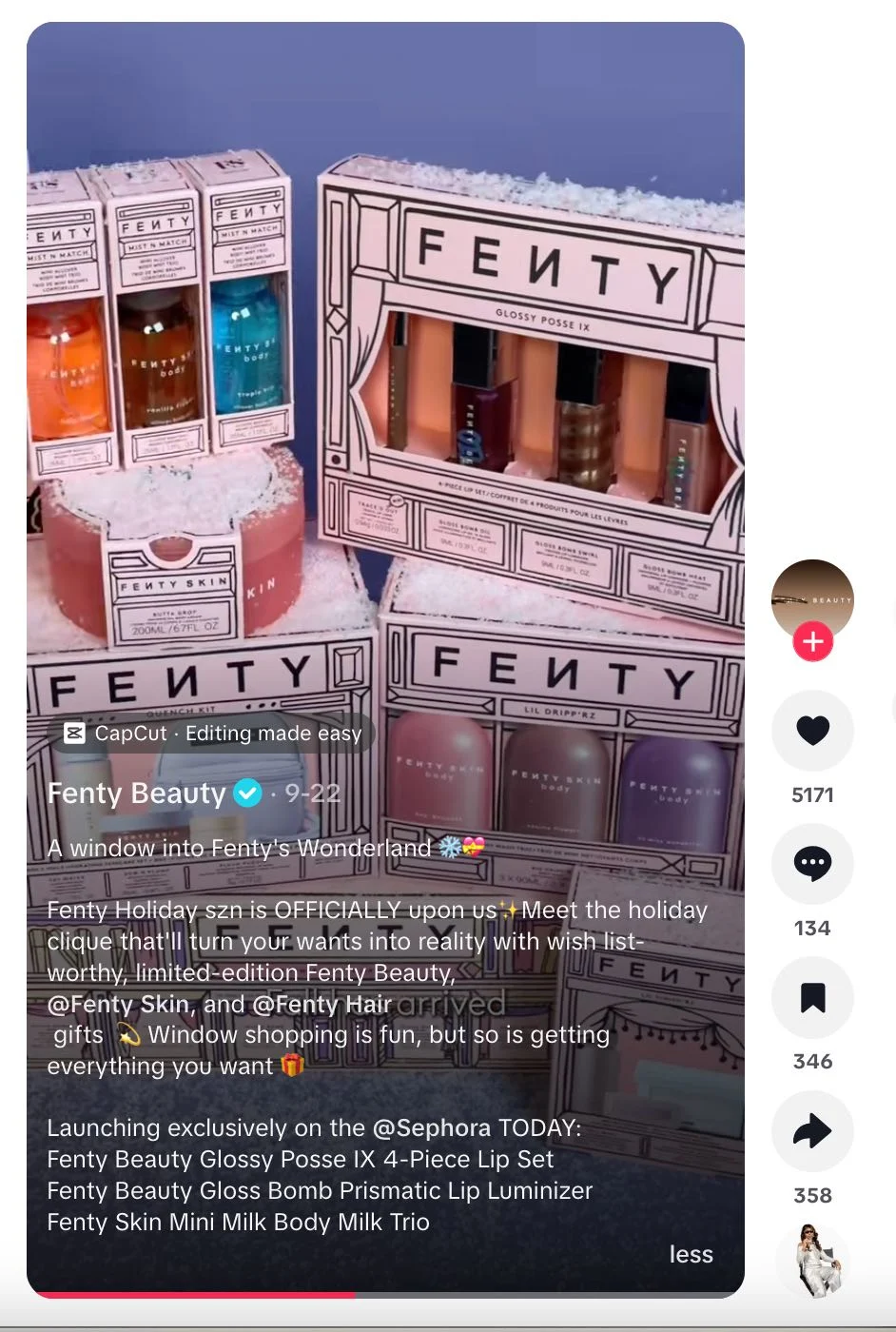
While Halloween candy still occupies prime shelf space, the machinery of the holiday retail season is already humming. Data from the Q3 2026 Pulse Survey by Sprout Social reveals a retail landscape in flux, defined by a critical tension: consumers are eager to hunt for deals, yet they are increasingly cautious about their spending. As the window for holiday shopping stretches from late summer into the final quarter of the year, brands find themselves in a high-stakes environment where timing, value-based messaging, and social-first commerce strategies will dictate success.
The Chronology of Consumer Intent: A Nuanced Strategy
The traditional "holiday rush" has been replaced by a protracted, multi-month discovery period. However, the data suggests that marketers must navigate this calendar with precision.
While 49% of consumers report that holiday campaigns launching as early as August increase their likelihood of making a purchase, there is a distinct difference between "awareness" and "immersion." When asked specifically when they prefer holiday messaging to dominate their feeds, half of all consumers pointed to October or November as the ideal window. Only 21% favored an August or September kickoff.
This paradox—where consumers welcome early inspiration but resist early holiday saturation—demands a two-phased approach. The "sweet spot" for 2026 involves using late summer to seed awareness and build consideration through non-denominational gift inspiration. By late October, brands can shift to a full-funnel holiday approach. This strategy, effectively utilized by brands like Fenty Beauty, allows for iterative testing. Fenty’s September launch of its limited-edition holiday collection, which garnered over 100,000 views on TikTok, serves as a masterclass in building momentum before the peak shopping frenzy begins.

Economic Headwinds and Price Sensitivity
The 2026 holiday season is being shaped by significant macroeconomic pressures. With tariffs and the ongoing cost-of-living crisis at the forefront of the consumer consciousness, price sensitivity is no longer a niche concern—it is a dominant force.
A striking 63% of shoppers are actively factoring rising costs into their holiday plans. Specifically, 36% of respondents have explicitly cited the avoidance of tariff-related price hikes as their primary motivator for starting their shopping early. Consequently, consumer spending projections are conservative: 56% of shoppers plan to reduce their overall holiday budget this year, compared to just 30% who feel confident enough to maintain their previous spending levels.
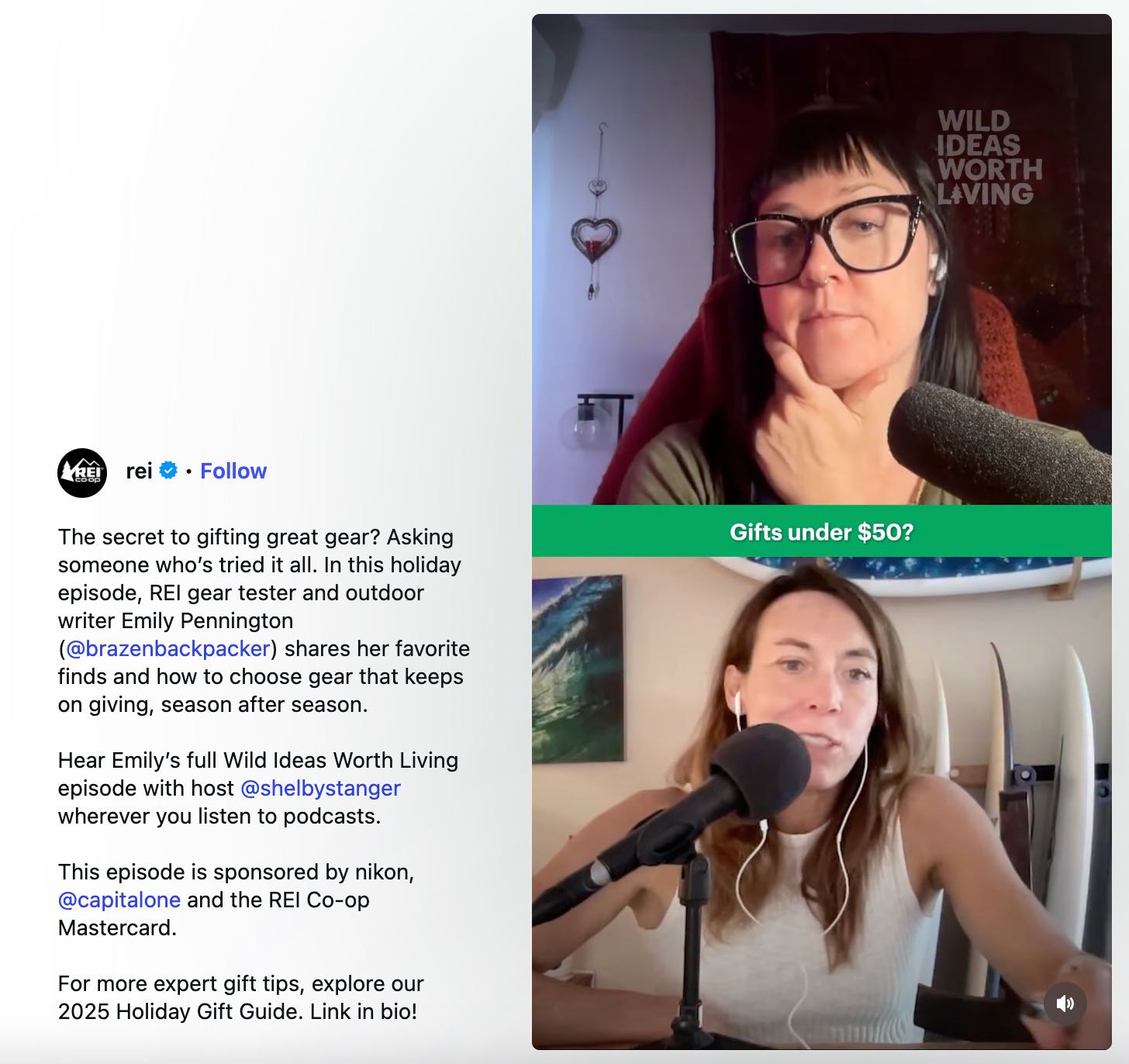
For brands, this does not necessitate a "race to the bottom" in terms of pricing. Instead, it requires a shift toward radical value transparency. Consumers are scrutinizing their purchases more closely, looking for tangible proof of quality, versatility, and longevity. Retailers who succeed in this environment are those who provide clear, budget-organized gift guides—such as REI’s strategy of promoting "expert picks under $50"—to help shoppers navigate economic anxiety while still participating in the gift-giving season.
The Social Media Paradigm: Discovery as the New Storefront
The days of social media serving merely as a top-of-funnel awareness tool are over. In 2026, social platforms have officially caught up to physical retail in terms of discovery. With 46% of consumers now utilizing social media as their primary venue for finding gifts, the platform has become the digital "main street" for the holiday season.
The trend is accelerating. Compared to the 2025 season, 28% of consumers plan to rely more heavily on social discovery, while half expect their usage to remain high. This presents a massive opportunity for brands to capture shoppers in the "pre-intent" phase—before they have finalized their shopping lists.
Drivers of Purchase Intent
Once a shopper discovers a product on social, the path to conversion relies on a cocktail of social proof and financial incentives:
- Promo Codes: These remain the undisputed king of purchase triggers, cited by 30% of consumers as their primary reason to buy.
- Product Action: 28% of shoppers are influenced by videos showing products in real-world scenarios.
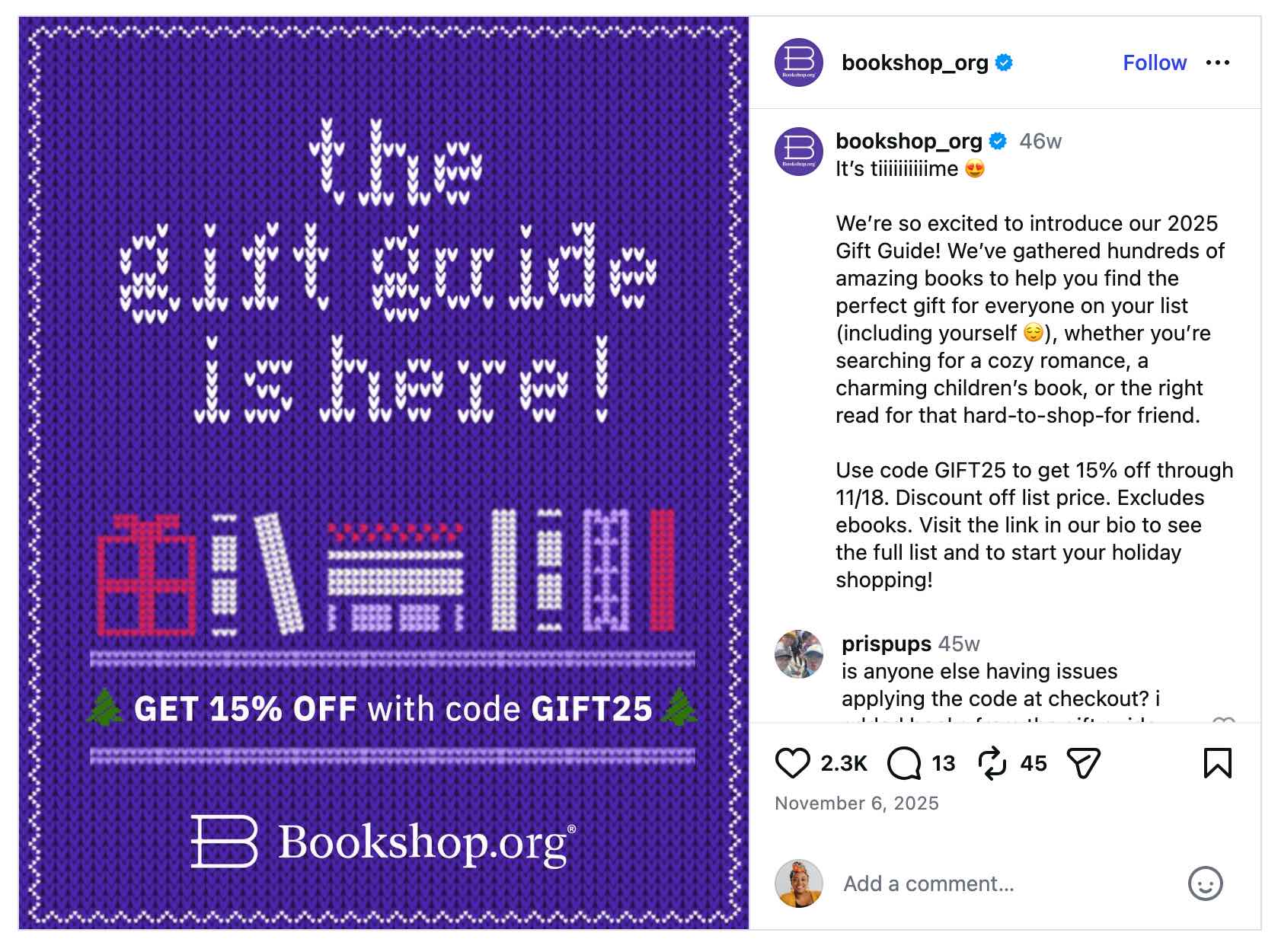
- Original Content & Influencers: A combined 48% of shoppers point to brand-created content or non-influencer user reviews as key factors in their decision-making process.
The implication is clear: a successful social strategy must be diverse. A feed consisting solely of promotional discounts will lose the consumer looking for education and inspiration. Conversely, a feed lacking clear calls-to-action or promo codes will lose the price-sensitive shopper.
Bridging the Gap: Social Commerce and Customer Care
The final frontier of the 2026 holiday strategy is the seamless integration of commerce and support. As platforms like TikTok and Instagram build out more robust shopping capabilities, the consumer expectation for a frictionless, in-app experience has spiked.
Over half (57%) of consumers are now willing to complete a purchase directly within a social app. This creates an urgent mandate for brands: remove friction. If a product is discovered on a social feed, the transition to the checkout page must be near-instant. Any technical glitch or delay in shipping information can lead to immediate cart abandonment.
Furthermore, the "social inbox" has become the new customer service desk. With 27% of consumers planning to use social channels for service inquiries more frequently than in previous years, the pressure on social media managers is immense. A question about sizing or inventory status is often the final hurdle before a purchase; if that question goes unanswered, the sale is lost.
Implications: Building a 2026 Holiday Blueprint
As brands finalize their strategies, the data from the Q3 2026 Pulse Survey suggests three fundamental priorities:
- Differentiate Timing: Use August and September to build brand affinity and product education. Reserve the "holiday-specific" messaging and promotional blitz for October and November to avoid consumer fatigue.
- Highlight Value, Not Just Discounts: Given the 56% of consumers planning to trim their budgets, marketing must emphasize the value proposition. Clearly organize product recommendations by price point and focus on content that demonstrates the longevity and quality of your offerings.
- Unify Discovery and Service: Treat your social media presence as a complete ecosystem. Ensure that your social commerce tools are optimized for direct checkout and that your customer support team is fully equipped to handle high-volume inquiries regarding logistics, sizing, and inventory.
Conclusion: The Path Forward
The 2026 holiday season is not necessarily a "smaller" season, but it is a "smarter" one. Consumers are more intentional, more budget-conscious, and more socially integrated than ever before. Brands that attempt to force traditional, late-season tactics onto this new reality risk being ignored. By contrast, brands that show up early with helpful, value-driven content and maintain a responsive, commerce-ready presence on social media will be best positioned to thrive in an increasingly competitive marketplace.
As the retail calendar continues to evolve, the brands that win will be those that view the holiday season not as a singular event, but as a continuous, year-round conversation that culminates in a seamless, helpful, and value-oriented shopping experience.
Frequently Asked Questions
When should brands start their holiday marketing campaigns?
While nearly half (49%) of consumers respond well to early engagement in August, the majority (50%) prefer a traditional start in October or November. The optimal approach is to use late summer for awareness-building and seasonal inspiration, transitioning to high-intent promotional messaging in the fall.
Are consumers spending more or less on holiday shopping this year?
Economic pressures, including concerns over tariffs and the cost of living, have led to a more cautious consumer. Over half (56%) of respondents plan to reduce their holiday spending, signaling that value-based marketing is more critical than ever.
Is social media a bigger part of holiday shopping in 2026?
Yes. Social media has reached parity with in-store shopping as a primary source for gift discovery (46%). Furthermore, 57% of consumers are now comfortable completing a purchase directly within a social app, making social commerce a vital component of the modern retail funnel.


 Nana Wu
 Suro Senen
 Nila Kartika Wati
 Raul Delapena Setiawan
 Dwi Wanna
 Muslim

