
 Jia Lissa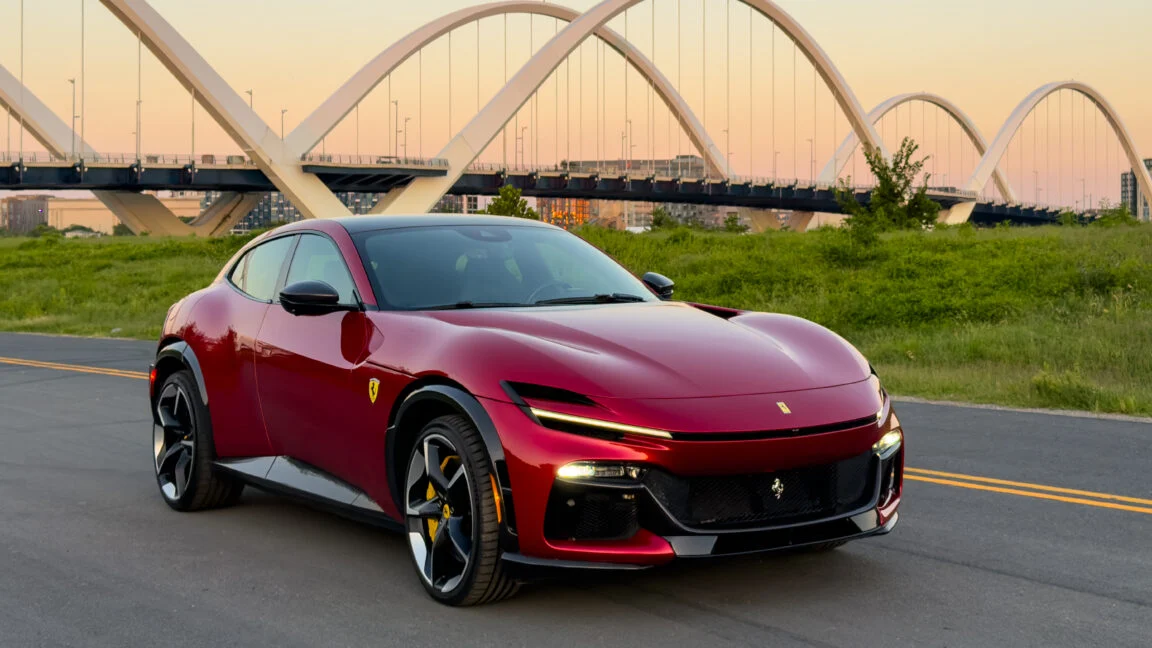
The automotive world has long held a singular image of Ferrari: low-slung, mid-engine masterpieces designed for the track and the occasional high-speed coastal cruise. Yet, in an era where the crossover has become the default language of the global luxury market, Maranello has finally spoken. The Ferrari Purosangue—Italian for "thoroughbred"—is not just an SUV; it is a fundamental rethinking of how a V12-powered grand tourer can accommodate four adults while retaining the soul of a supercar.
Main Facts: Maranello’s Bold Departure
The Purosangue is a radical departure for a company that once vowed it would never produce a four-door vehicle. Positioned not as a traditional "SUV" but as a high-riding, four-seat performance vehicle, it arrives with a naturally aspirated 6.5-liter V12 engine tucked behind the front axle. This front-mid-engine layout, coupled with a rear-mounted transaxle, achieves a near-perfect weight distribution, ensuring that despite its increased ride height, the Purosangue remains dynamically superior to almost anything in its class.
However, the vehicle’s brilliance is not solely found in its powertrain. The interior represents a complex interplay between traditional luxury and modern digital ergonomics. Unlike the controversial capacitive touch-only interfaces found in recent models like the 296 GTB, the Purosangue utilizes a refreshing array of physical controls on the steering wheel. This allows drivers to manage essential functions, such as Apple CarPlay integration—which dominates the primary digital instrument cluster—without ever needing to divert their eyes from the road.
Chronology: From Concept to Reality
The journey to the Purosangue was one of extreme secrecy and strategic hesitation. For years, Ferrari leadership, including the late Sergio Marchionne, hinted at a "utility vehicle" but stopped short of using the dreaded "SUV" label.
- 2018: Ferrari officially confirms the development of a utility vehicle under the project name "Purosangue."
- 2022: The official global unveiling occurs. The car immediately sparks debate regarding its design, its weight, and its place in the Ferrari stable.
- 2023-2024: Initial market testing confirms that the demand for the vehicle is unprecedented, leading to extended wait times that often exceed 24 months.
- 2025/2026: As the car hits the road in greater numbers, the focus shifts from "Will it sell?" to "Can it be a daily driver?" This latest evaluation underscores its utility in varied climates and terrains.
Supporting Data: The Cost of Performance
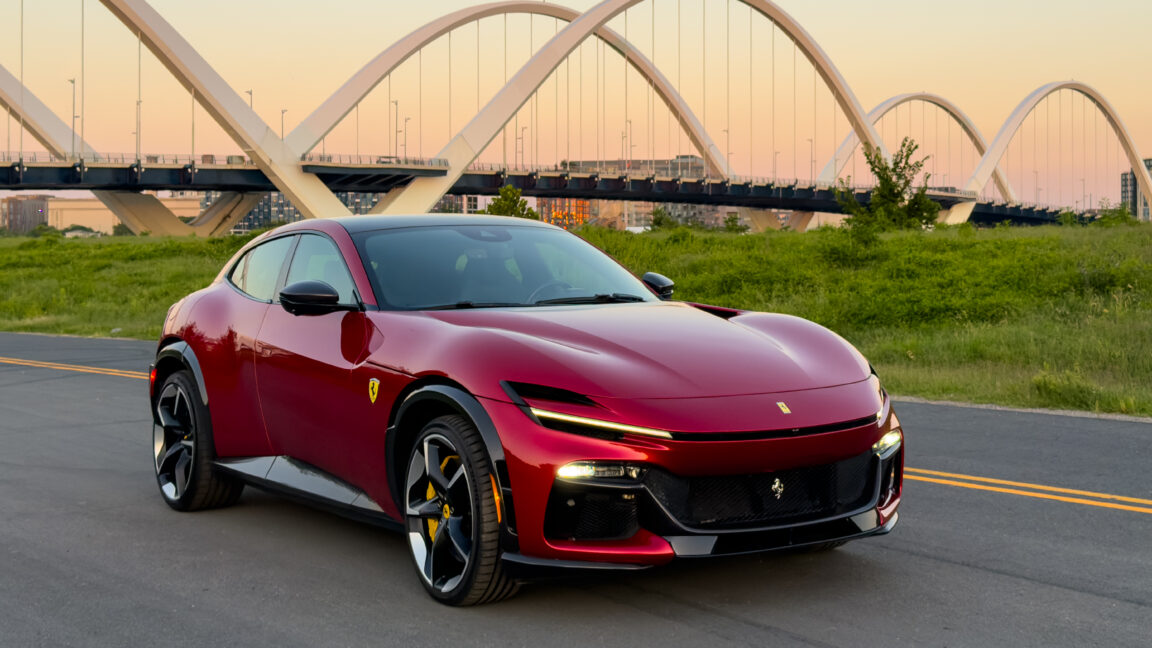
When discussing the Purosangue, one must address the financial reality of Maranello’s pricing strategy. The base MSRP starts at approximately $393,350. However, the "base" Ferrari is a theoretical construct. Through programs like Atelier and Tailor Made, owners can customize every stitch, leather grain, and paint finish. Our test vehicle, finished in the breathtaking Rosso Portofino—a deep, lustrous red that dances in the sun—carried a price tag of $576,544.
When compared to its direct competitors, the Purosangue sits in a vacuum. While the Aston Martin DBX and the Lamborghini Urus SE are formidable machines, they are built on different philosophies—often prioritizing raw SUV utility over the pure, analog sensation of a V12 engine.
Technical Specifications and Ergonomics
The cabin design is a study in "passenger-focused" technology. Ferrari has eschewed the industry-standard central infotainment screen, instead providing a dedicated, polarized display for the front-seat passenger. This screen allows for independent media control, though notably, it cannot mirror CarPlay, keeping the passenger’s focus separate from the driver’s navigation and vehicle data.
The climate and seating adjustments are managed through a pop-out rotating controller in the dash. While the haptic feedback and physical movement of the dial feel premium, the interface can be challenging while driving. The targets on the touchscreen are small, requiring a level of precision that is difficult to maintain on winding roads. A secondary, matching dial is placed between the rear seats, ensuring that passengers in the back enjoy the same high-tech, albeit occasionally finicky, control over their environment.
Official Responses and Engineering Philosophy
Ferrari engineers have consistently maintained that the Purosangue’s greatest strength is its versatility. During development, the goal was to provide "the Ferrari experience" for four people. The rear seats are remarkably supportive, designed to hold occupants in place during the lateral G-forces that this car is more than capable of generating.
Furthermore, the vehicle’s handling is bolstered by active suspension technology that mimics the agility of a much lighter car. While the combined fuel economy of 12 mpg (19.6 L/100 km) may seem archaic in the age of electrification, Ferrari justifies this by pointing to the purity of the naturally aspirated V12. For those seeking efficiency, the brand points toward their upcoming battery-electric models, like the Luce, which will fulfill the daily-driving duties that require a lower carbon footprint.
Implications: A New Era for Maranello
The implications of the Purosangue’s success are massive for the automotive industry. It proves that there is a significant, wealthy demographic that refuses to trade brand identity for utility. Ferrari has successfully bridged the gap between the practicality of a four-door vehicle and the visceral excitement of a sports car.
The "Daily Driver" Question
Can you drive a $500,000 Ferrari every day? The answer, according to our experience, is a resounding yes. Its height allows for easier entry and exit than a traditional supercar, and its AWD capabilities suggest that with the proper winter tires, it could navigate northern winters with ease. However, the 12 mpg fuel consumption means that owners will be spending significant time at the pump, a reality that differentiates the Purosangue from the practical EVs that are currently flooding the market.
Looking Ahead
The Purosangue is not just a car; it is a defensive move against the changing tide of the market. By entering the high-performance utility space, Ferrari has protected its margins and expanded its customer base without diluting its brand equity. As we look toward the future, the Purosangue will likely be remembered as the vehicle that allowed Ferrari to survive the transition from a specialized sports car manufacturer to a diversified luxury house.
Whether one views it as a sacrilege or a masterpiece, the Purosangue succeeds on its own terms. It offers the performance one expects from Maranello, wrapped in a package that makes it a viable, albeit thirsty, daily companion. It is a car that demands your attention, rewards your driving input, and forces you to reconsider what an SUV can—and should—be.
In conclusion, while the learning curve for the climate control interface is steep and the price tag is eye-watering, the Purosangue delivers on its promise. It is the most "Ferrari" way to transport four people, blending the classic V12 soundtrack with the modern necessity of usable space. For the discerning buyer, the options list is long, the waiting list is longer, and the experience is, quite simply, unparalleled.

 Suro Senen
 Evan Lee Salim

 Ali Ikhwan
 Lina Hope